
Driveway Paving in Plainville, NJ

Driveways Built to Last Decades

Professional asphalt and concrete driveway installation that handles New Jersey weather without cracking or settling.

A newly paved black asphalt driveway curves through a green lawn with trees and landscaping. A few pavers and tools are on the grass beside the driveway, and people are seen working in the distance.

Hear from Our Customers

A shiny blue dump truck with chrome accents is parked on a dirt lot, surrounded by trees and other trucks in the background under a partly cloudy sky.

Professional Driveway Installation Services

What You Get With Proper Installation

Your driveway becomes the foundation of your property’s first impression. When it’s installed correctly, you get smooth vehicle access every day without worrying about scraping your car’s undercarriage or dodging potholes.

Proper driveway paving means water flows away from your foundation instead of pooling near your garage. You avoid the constant cycle of patching cracks and filling holes that comes with rushed installation jobs.

The right materials and techniques give you a surface that handles New Jersey’s freeze-thaw cycles without heaving or cracking. Your investment pays off in reduced maintenance costs and improved property value that you’ll see when it’s time to sell.

Plainville Driveway Paving Contractors

Local Contractors Who Know Jersey Weather

We’ve been installing and repairing driveways throughout Plainville and surrounding New Jersey communities for years. We understand how the local soil conditions affect foundation stability and how our weather patterns impact material selection.

Our crews handle both residential driveway paving and commercial applications. We’ve seen what works long-term in this area and what fails after the first few winters.

Every project starts with proper site preparation because we know shortcuts in the base layer lead to expensive problems down the road. You’re working with contractors who live in the same climate and deal with the same weather challenges your driveway will face.

Two workers are paving a road; one operates an orange paving machine while the other smooths the fresh asphalt beside a grassy field under a partly cloudy sky.

Driveway Paving Process

How We Install Your New Driveway

We start by evaluating your existing surface and drainage patterns. If you’re replacing an old driveway, we remove the damaged material and assess the base underneath. New installations require proper excavation to ensure adequate depth for the base layer.

The foundation is everything in driveway paving. We install and compact a stone base that provides stable support and proper drainage. This step determines whether your driveway lasts five years or twenty-five years.

For asphalt driveway paving, we apply the material at the correct temperature and compact it properly while it’s still workable. Concrete driveways require careful attention to weather conditions and curing time. Both materials need proper finishing techniques to achieve the right surface texture and drainage slope.
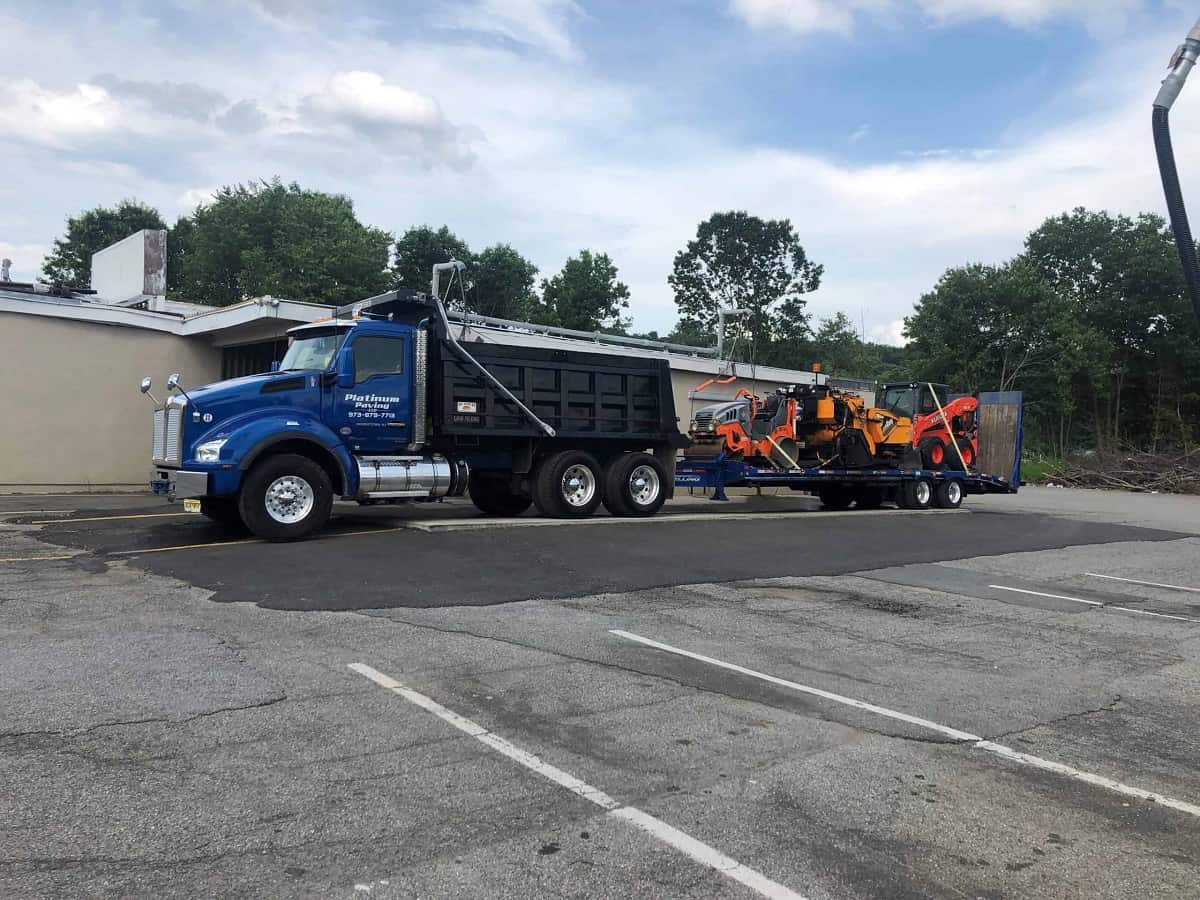
A blue dump truck is parked in a lot, towing a trailer that carries orange construction equipment. Trees and a building are visible in the background, and the parking lot is mostly empty.

Ready to get started?

Explore More Services

About Platinum Paving

Get a Free Consultation

Asphalt and Concrete Driveway Options

What's Included in Your Driveway Project

Your driveway paving project includes complete site preparation, proper base installation, and professional material application. We handle permits if required and coordinate with utility companies for any line marking needed before excavation.

Asphalt driveway installation works well for most Plainville properties and provides a cost-effective surface that’s easy to maintain. Concrete driveway paving offers longer lifespan and different aesthetic options but requires different maintenance approaches.

Both options include proper drainage design to direct water away from your foundation. We also handle driveway resurfacing when your existing base is solid but the surface needs renewal. Blacktop driveway repair services address specific problem areas without full replacement when that’s the more practical solution.

A newly paved asphalt driveway leads to a gray house. Yellow caution tape blocks the entrance, and construction materials and a white pickup truck are on the sides. Trees and dirt surround the area.
Most residential driveway paving projects take 1-3 days depending on size and complexity. The first day involves excavation and base preparation, which is the most time-consuming part. Asphalt application typically happens on day two, and you can usually drive on your new driveway within 24-48 hours. Weather conditions affect timing since we can’t install asphalt in rain or when temperatures are too cold. Concrete driveways need longer curing time before you can use them, typically 7 days for full strength.
Asphalt costs less upfront and handles freeze-thaw cycles better, making it popular in New Jersey. It’s easier to repair and can be resurfaced when it shows wear. Concrete lasts longer overall and offers more design options but costs more initially. Concrete can crack in cold weather if not installed properly, while asphalt becomes soft in extreme heat. Both materials work well in Plainville’s climate when installed correctly with proper base preparation. Your choice often comes down to budget, appearance preferences, and long-term maintenance plans.
Driveway paving costs vary based on size, material choice, site conditions, and preparation needed. Asphalt typically runs less per square foot than concrete, but both require similar base preparation costs. Removing existing material, dealing with drainage issues, or working around utilities affects pricing. The most expensive part is often the excavation and base work, not the surface material. We provide detailed estimates after evaluating your specific site because every property has different challenges. Investing in proper preparation saves money long-term even if it costs more initially.
Late spring through early fall offers the best conditions for driveway installation in New Jersey. Asphalt needs warm temperatures for proper installation and compaction, so we avoid winter months. Spring allows time for any frost heaving to settle, and fall completion gives the surface time to cure before winter weather. Summer heat can make asphalt too soft to work with during the hottest days. Concrete can be installed in cooler weather but needs protection from freezing during the curing process. Planning ahead helps ensure we can schedule your project during optimal conditions.
Asphalt driveways benefit from sealcoating every 2-3 years to protect against water penetration and UV damage. Keep the surface clean and address any cracks quickly before they spread. Avoid parking heavy vehicles in the same spot repeatedly, especially when it’s hot. Concrete driveways need occasional cleaning and sealing to prevent staining and freeze damage. Both materials last longer when you maintain proper drainage and avoid using deicing salts that can cause surface damage. Regular inspection helps catch small problems before they become expensive repairs.
Driveway repair makes sense when the base is still solid and damage is limited to surface issues. We can patch potholes, seal cracks, and resurface worn areas if the foundation underneath is stable. However, if you’re seeing widespread cracking, settling, or drainage problems, those usually indicate base failure that repair won’t fix permanently. Resurfacing works well for asphalt driveways showing surface wear but no structural problems. We’ll evaluate your current driveway honestly and recommend repair when it’s the right solution, but we won’t patch problems that need proper fixing.