
Driveway Paving in Hanover Neck, NJ

Get the Driveway Your Home Deserves

Professional asphalt and concrete driveway installation that increases your property value and eliminates those embarrassing cracks for good.

Freshly paved black asphalt driveway curves through a green lawn, bordered by stone edging. Paving Contractors Morris, Sussex & Somerset County, NJ have tools and paving stones visible on the grass, all surrounded by tall trees and a sunny sky.

Hear from Our Customers

A blue dump truck with "Platinum Paving" written on the door is parked on a dirt lot in NJ, surrounded by trees and other trucks under a partly cloudy sky. Trusted by Sussex & Somerset County as premier paving contractors Morris.

Residential Driveway Installation Services

What You Get With Professional Installation

Your driveway stops being a source of stress and starts being something you’re proud to pull into every day. No more avoiding eye contact with neighbors when they see those spreading cracks or that uneven surface that scrapes your car.

A properly installed driveway handles New Jersey’s freeze-thaw cycles without buckling or cracking. You get smooth, safe access to your home that actually adds value instead of detracting from it.

The right materials and installation mean you’re not calling for repairs every few years. You’re investing once in something that works for decades, not patching problems that keep coming back because the foundation work wasn’t done right the first time.

Hanover Neck Paving Contractors

We Know New Jersey Driveways

We’ve been installing residential driveways throughout New Jersey for years, and we understand what works in this climate. We’ve seen what happens when corners get cut, and we’ve fixed plenty of driveways that failed because the original contractor didn’t prepare the base properly.

We’re local contractors who live in the communities we serve. When we install your driveway, we’re not disappearing to the next state when the job is done.

Our crew knows the soil conditions in Hanover Neck and how to prepare a foundation that won’t shift or settle. We use materials that handle the temperature swings and moisture levels that come with New Jersey weather.

A worker in a blue shirt smooths the edge of freshly laid asphalt while another operates an orange paving machine on a rural road—Paving Contractors Morris, Sussex & Somerset County, NJ ensure quality results amid grass, bare trees, and a cloudy sky.

Driveway Installation Process

Here's How We Install Your Driveway

First, we evaluate your existing driveway and the underlying conditions. We’re looking at drainage, soil stability, and how the new surface will connect to your garage and the street. This assessment determines what prep work is needed.

Next comes excavation and base preparation. This is where most driveway failures start, so we don’t rush this step. We remove old materials, grade for proper drainage, and install a compacted stone base that won’t shift over time.

Then we install your new asphalt or concrete surface. We use proper thickness for residential traffic and finish with attention to drainage and smooth transitions. The surface needs time to cure properly, so we’ll walk you through what to expect during that period.
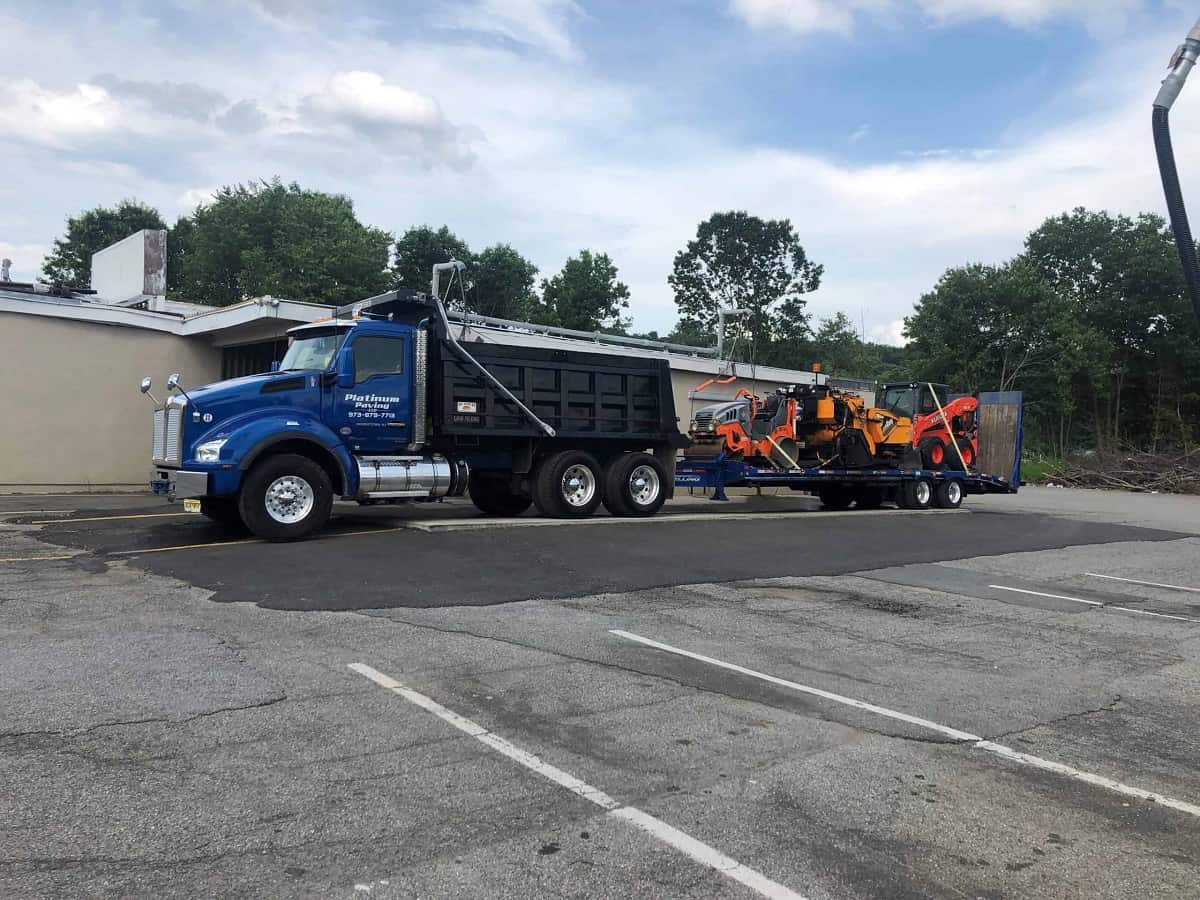
A blue dump truck with a black bed, used by Paving Contractors Morris, NJ, is parked in a lot towing a flatbed trailer with orange construction equipment. Trees and a building are visible in the Sussex & Somerset County background.

Ready to get started?

Explore More Services

About Platinum Paving

Get a Free Consultation

Asphalt and Concrete Driveway Options

What's Included in Your Installation

Every driveway installation includes proper excavation, base preparation, and installation of your chosen surface material. We handle permits when required and coordinate with utility companies if there are any underground concerns.

You get options for both asphalt and concrete, depending on your preferences and budget. Asphalt offers cost-effectiveness and easier repairs, while concrete provides longer lifespan and more design flexibility. We’ll explain the real differences so you can make the right choice for your situation.

We also handle the details that matter: proper grading for drainage, smooth transitions at the street and garage, and cleanup when the job is complete. Your new driveway comes with warranty coverage, and we provide maintenance guidance to help you protect your investment.

A newly paved asphalt driveway by Paving Contractors Morris, Sussex & Somerset County, NJ leads to a gray two-story house. Construction materials and a truck are nearby, with yellow caution tape blocking access. Trees surround the area.
Most residential driveway installations take 2-3 days from start to finish, depending on size and complexity. Day one typically involves excavation and base preparation. Day two covers the actual paving or concrete pour. If we encounter unexpected issues like poor drainage or unstable soil, it might add a day. Weather can also affect timing, especially for concrete work. We’ll give you a realistic timeline upfront and keep you updated if anything changes. You’ll usually be able to walk on the surface within 24 hours, but we recommend waiting 3-7 days before driving on it, depending on the material used.
Asphalt costs less upfront and is easier to repair if damage occurs. It handles freeze-thaw cycles well and can be resurfaced when it starts showing wear. The downside is it needs periodic sealing and typically lasts 15-20 years. Concrete costs more initially but can last 25-30 years with minimal maintenance. It offers more design options and won’t soften in extreme heat. However, concrete repairs are more complex and expensive. For most Hanover Neck homes, either option works well. Your choice usually comes down to budget, aesthetic preferences, and how long you plan to stay in the home.
Residential driveway costs vary based on size, material choice, and site conditions. Asphalt driveways typically range from $3-7 per square foot installed, while concrete runs $4-10 per square foot. A standard two-car driveway might cost $2,500-6,000 depending on these factors. Additional costs come from extra excavation, drainage work, or permit requirements. We provide detailed written estimates that break down all costs so you know exactly what you’re paying for. The cheapest bid isn’t always the best value if the contractor cuts corners on base preparation or uses inferior materials.
Most driveway replacements don’t require permits if you’re staying within the existing footprint. However, if you’re expanding the driveway, changing drainage patterns, or the work affects the street connection, permits may be required. New Jersey townships have different requirements, and some homeowner associations have their own approval processes. We’re familiar with local requirements and will handle permit applications when needed. It’s always better to check upfront than deal with violations later. We’ll review your specific situation during the initial consultation and advise you on any permit requirements.
Quality installations rarely have issues, but we warranty our work because we stand behind what we do. Our warranty covers defects in materials and workmanship, not damage from things like snow plows or tree roots. If problems develop that are related to our installation, we’ll come back and make it right. Most driveway issues that appear later trace back to poor base preparation or inadequate materials, which is why we don’t cut corners on the foundation work. We also provide maintenance guidelines to help you protect your investment and spot potential issues before they become expensive problems.
Late spring through early fall offers the best conditions for driveway installation in New Jersey. Asphalt works best when temperatures are consistently above 50 degrees, while concrete needs moderate temperatures and low humidity for proper curing. We avoid installation during freeze-thaw periods and heavy rain seasons. Summer can be ideal, but extreme heat makes asphalt work more challenging. Fall is often perfect – good weather, stable temperatures, and you get to enjoy your new driveway before winter. We can work in cooler months if needed, but spring and fall typically provide the best conditions for quality installation.