
Driveway Paving in Crestmoore, NJ

Your Driveway Problems End Here

Professional driveway paving that actually lasts through New Jersey winters and looks great year-round.

A newly paved black asphalt driveway curves through a green lawn with trees and landscaping. A few pavers and tools are on the grass beside the driveway, and people are seen working in the distance.

Hear from Our Customers

A shiny blue dump truck with chrome accents is parked on a dirt lot, surrounded by trees and other trucks in the background under a partly cloudy sky.

Residential Driveway Paving Services

What You Get With Professional Paving

Your driveway stops being a source of stress. No more dodging potholes or worrying about what visitors think when they pull up to your house.

A properly paved driveway handles everything New Jersey weather throws at it. Rain drains where it should instead of pooling in low spots that turn into ice rinks every winter.

You get a surface that looks professional and stays that way. Whether you choose asphalt or concrete, the result is a driveway that adds value to your property instead of detracting from it.

Crestmoore Driveway Contractors

We Know New Jersey Driveways

We’ve been handling residential driveway projects throughout Crestmoore and surrounding New Jersey communities for years. We understand local soil conditions, drainage requirements, and the specific challenges that come with our climate.

Our team uses professional-grade equipment and follows industry standards for every installation. We’re licensed, insured, and focused on delivering work that holds up over time.

Two workers are paving a road; one operates an orange paving machine while the other smooths the fresh asphalt beside a grassy field under a partly cloudy sky.

Driveway Installation Process

Here's How We Handle Your Project

First, we evaluate your existing driveway and property drainage. This tells us what prep work is needed and helps us recommend the best material for your situation.

Next comes excavation and grading. We remove old material if necessary and create the proper base for your new driveway. Getting this foundation right is what separates a driveway that lasts from one that starts cracking in two years.

Then we install your new surface using professional equipment. For asphalt, that means proper compaction and finishing. For concrete, it means correct mixing, pouring, and curing. We handle the details so you don’t have to worry about them.
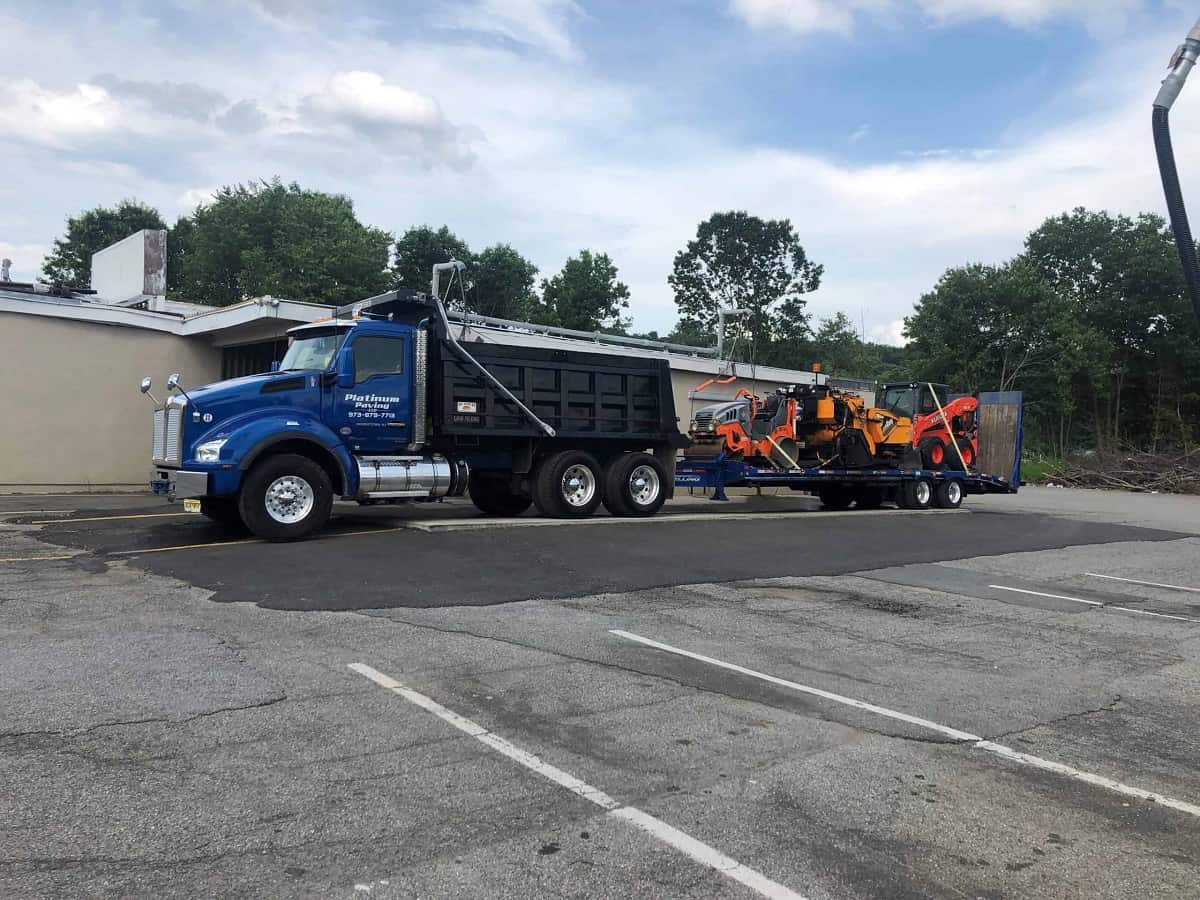
A blue dump truck is parked in a lot, towing a trailer that carries orange construction equipment. Trees and a building are visible in the background, and the parking lot is mostly empty.

Ready to get started?

Explore More Services

About Platinum Paving

Get a Free Consultation

Asphalt and Concrete Driveway Options

What's Included in Your Driveway Project

Every driveway paving project includes proper site preparation, professional-grade materials, and installation using commercial equipment. We handle permits when required and ensure your new driveway meets local specifications.

For asphalt driveways, you get a surface that’s ready to use quickly and handles freeze-thaw cycles well. Concrete driveways offer longer lifespan and more customization options, though they require more curing time.

We also provide driveway resurfacing when full replacement isn’t necessary. Sometimes your existing base is solid and just needs a new top layer. We’ll tell you honestly which approach makes sense for your situation and budget.

A newly paved asphalt driveway leads to a gray house. Yellow caution tape blocks the entrance, and construction materials and a white pickup truck are on the sides. Trees and dirt surround the area.
Most residential driveway installations take 2-3 days from start to finish. Day one typically involves excavation and base preparation. Day two is when we install the new surface. If weather cooperates and no unexpected issues come up, many projects wrap up faster. Concrete driveways need additional curing time before you can drive on them, usually 7 days. Asphalt driveways can typically handle light traffic within 24-48 hours, though we recommend waiting longer for heavy vehicles.
Both materials work well in New Jersey, but they have different strengths. Asphalt costs less upfront, handles freeze-thaw cycles better, and is easier to repair if damage occurs. Concrete lasts longer overall, offers more design options, and doesn’t need periodic sealing like asphalt does. Your choice often comes down to budget, how long you plan to stay in the house, and whether you want customization options like stamped patterns or colored concrete. We’ll walk through the pros and cons based on your specific situation.
Most driveway problems start with poor drainage or inadequate base preparation. Water that doesn’t drain properly gets under the surface and causes heaving when it freezes. Thin or poorly compacted base material can’t support vehicle weight properly. We prevent these issues by grading for proper drainage, using adequate base thickness, and compacting everything correctly during installation. The other major factor is using quality materials mixed and installed to specifications. Cutting corners on any of these steps leads to premature failure.
Driveway paving costs depend on size, material choice, site conditions, and how much prep work is needed. Asphalt typically runs less per square foot than concrete, but every project is different. A standard two-car driveway might range from a few thousand to several thousand dollars. The best approach is getting an on-site estimate where we can measure your space, evaluate current conditions, and discuss your preferences. We provide written estimates that break down costs so you know exactly what you’re paying for.
We handle both repairs and new installations. Sometimes your driveway just needs resurfacing, crack sealing, or patching specific problem areas. Other times full replacement makes more sense. During our initial evaluation, we’ll honestly assess whether repair or replacement gives you better value. Minor repairs can extend your driveway’s life significantly if the underlying structure is still sound. When the base has failed or damage is extensive, replacement becomes the more cost-effective long-term solution.
Maintenance requirements depend on your driveway material. Asphalt driveways benefit from seal coating every 2-3 years to protect against water penetration and UV damage. Concrete driveways need less regular maintenance but should be sealed periodically to prevent staining and moisture issues. Both materials last longer when you address small cracks quickly before they become bigger problems. We’ll give you specific maintenance recommendations based on your installation and can handle ongoing maintenance when you need it.