
Driveway Paving in Butterworth Farms, NJ

Your Driveway Problems End Here

Quality asphalt and concrete driveways that actually last through New Jersey winters.

A newly paved black asphalt driveway curves through a green lawn with trees and landscaping. A few pavers and tools are on the grass beside the driveway, and people are seen working in the distance.

Hear from Our Customers

A shiny blue dump truck with chrome accents is parked on a dirt lot, surrounded by trees and other trucks in the background under a partly cloudy sky.

Professional Driveway Installation Services

What You Get With Professional Installation

Your driveway becomes the foundation that supports your daily routine without you thinking about it. No more dodging potholes on your way to work. No more worrying about guests pulling into a cracked, uneven surface that makes your home look neglected.

You get smooth access that handles New Jersey’s freeze-thaw cycles year after year. The surface stays level, water drains properly, and your property value reflects the quality investment you made.

When neighbors drive past, they notice. When you pull in after a long day, you feel the difference between a professionally installed driveway and the patched-up alternatives that break down every few seasons.

Butterworth Farms Paving Contractors

We Know New Jersey Driveways

We at Platinum Paving have been installing residential driveways throughout the Butterworth Farms area because we understand what works in this climate. New Jersey winters are tough on pavement, and we’ve seen what happens when corners get cut.

You’re dealing with contractors who’ve handled hundreds of driveways in similar soil conditions and weather patterns. We know which materials hold up and which installation techniques prevent the cracking and settling that plague cheaper jobs.

The difference shows up three winters later when your driveway still looks new while others in the neighborhood need repairs.

Two workers are paving a road; one operates an orange paving machine while the other smooths the fresh asphalt beside a grassy field under a partly cloudy sky.

Driveway Paving Process

How We Install Your Driveway

First, we remove your existing surface completely and evaluate the base underneath. Most driveway problems start with poor foundation preparation, so we make sure the subgrade is properly compacted and graded for drainage.

Next comes the base layer installation. We use the right thickness of crushed stone, compact it in lifts, and grade everything to direct water away from your foundation. This step determines whether your driveway lasts five years or twenty.

Finally, we install your asphalt or concrete surface using professional-grade materials and equipment. The key is getting the right temperature, thickness, and compaction while conditions are optimal. Rush this part and you’ll see premature cracking within two seasons.
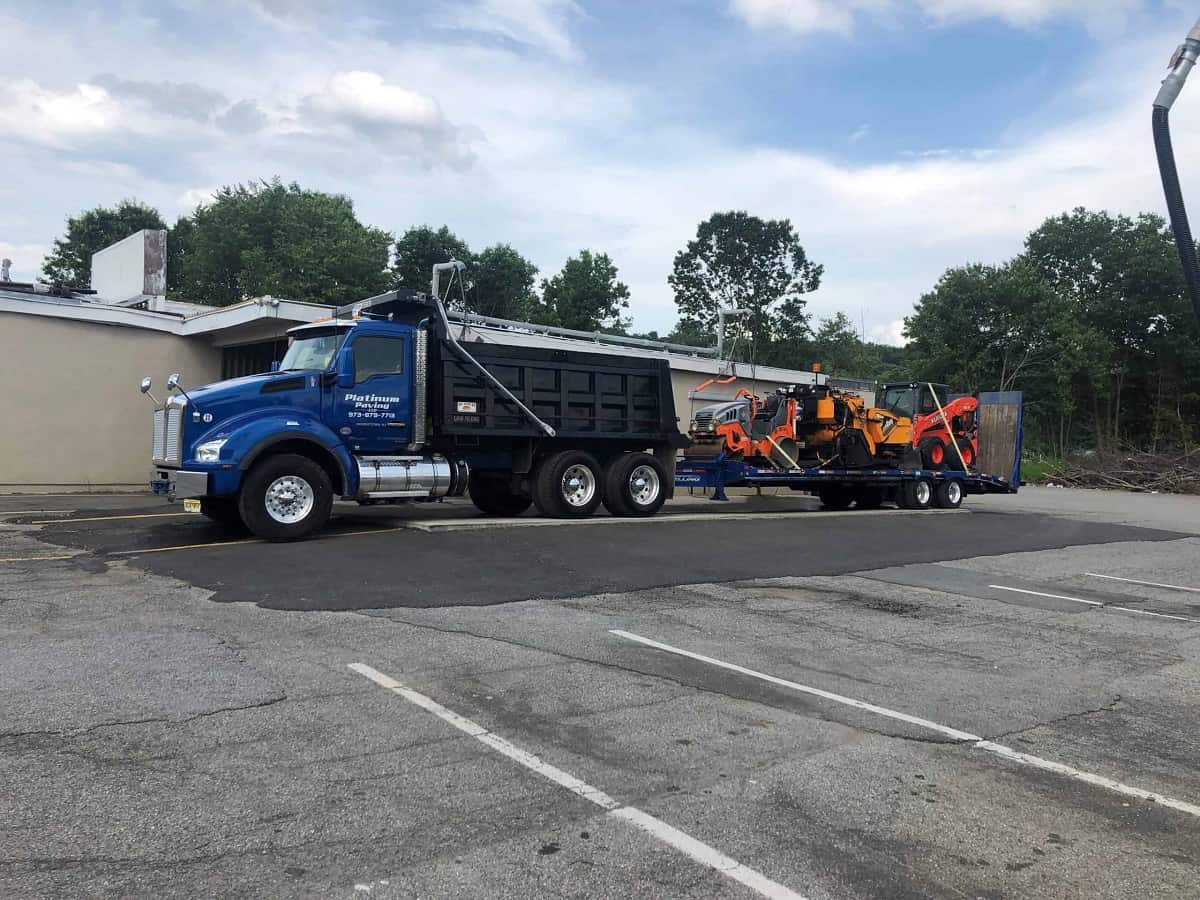
A blue dump truck is parked in a lot, towing a trailer that carries orange construction equipment. Trees and a building are visible in the background, and the parking lot is mostly empty.

Ready to get started?

Explore More Services

About Platinum Paving

Get a Free Consultation

Residential Driveway Paving Options

What's Included In Your Installation

Every driveway project includes complete removal of existing materials, proper base preparation, and professional installation of your chosen surface material. You’re not paying for shortcuts that create problems later.

We handle the permits, coordinate material delivery, and manage the timeline so you know exactly when your driveway will be accessible again. Most residential installations take two to three days from start to finish, depending on size and complexity.

You also get proper edge work, transition grading to existing surfaces, and cleanup that leaves your property looking better than when we started. The goal is a finished product that functions perfectly and enhances your home’s appearance for decades.

A newly paved asphalt driveway leads to a gray house. Yellow caution tape blocks the entrance, and construction materials and a white pickup truck are on the sides. Trees and dirt surround the area.
Most residential asphalt driveway installations take two to three days from start to finish. Day one involves removing the old surface and preparing the base. Day two covers base material installation and compaction. Day three is asphalt installation and finishing work. Weather conditions can affect timing, and we won’t rush the process if conditions aren’t right. You can typically drive on new asphalt within 24-48 hours, but we recommend waiting a full week before parking heavy vehicles or making sharp turns that might scuff the surface.
Asphalt costs less upfront and handles freeze-thaw cycles better because it flexes slightly with temperature changes. It requires periodic sealing every 3-5 years but can last 20+ years with proper maintenance. Concrete costs more initially but can last 30+ years with minimal maintenance. However, concrete can crack more easily in harsh winter conditions and repairs are more noticeable. For New Jersey’s climate, both work well when installed properly, but asphalt tends to be more forgiving of ground movement and seasonal temperature swings.
Residential driveway paving costs vary based on size, material choice, site conditions, and preparation requirements. Asphalt installations typically range from $3-7 per square foot, while concrete runs $4-8 per square foot. However, the real cost consideration is longevity and maintenance over time. A properly installed driveway that lasts 20+ years costs much less than a cheap installation that needs major repairs every few years. We provide detailed estimates that break down material, labor, and preparation costs so you understand exactly what you’re paying for.
Late spring through early fall offers the best conditions for driveway installation in New Jersey. Asphalt installation requires temperatures above 50°F for proper compaction and curing. Concrete can be installed in cooler weather but may require special additives or curing blankets. Summer installations cure faster but extreme heat can make working conditions challenging. We typically recommend scheduling installations between April and October, with late spring and early fall being optimal for both material performance and comfortable working conditions.
Yes, we handle permit applications when required and help you understand property line and setback requirements. Most driveway replacements don’t require permits if you’re staying within existing boundaries, but new installations or significant expansions often do. We review your property survey and local regulations before starting work. If your driveway connects to a public road, we coordinate with local authorities for any required inspections or approvals. This ensures your installation meets all local codes and doesn’t create issues when you sell your home.
Asphalt driveways need sealcoating every 3-5 years to protect against water penetration and UV damage. You should also fill any small cracks promptly to prevent water from reaching the base layer. Concrete driveways require less routine maintenance but benefit from periodic sealing and prompt repair of any cracks. Both materials last longer when you avoid using rock salt for ice removal and clean up oil spills quickly. The key is addressing small issues before they become major problems that require expensive repairs or complete replacement.