
Hear from Our Customers
You’re tired of watching your driveway crack after every winter. The pooling water, the uneven surface, the embarrassment when guests pull up. It’s not just annoying—it’s expensive.
A properly installed concrete driveway changes that. You get a surface engineered for New Jersey’s weather, not just poured and hoped for the best. The right base preparation, proper drainage, reinforced concrete with rebar—these aren’t extras, they’re what separate a 10-year headache from a 30-year investment.
Most homeowners in Sussex, NJ and throughout Morris and Somerset counties deal with the same problem: contractors who rush the job or skip steps to save time. You end up with a driveway that looks fine for a year or two, then starts falling apart. When concrete is installed correctly from the start, you’re looking at decades of use with minimal maintenance. No resurfacing every few years. No patching cracks every spring. Just a driveway that does its job.
We’ve been installing driveways across Morris, Sussex, and Somerset counties since before most of your neighbors moved in. We’re a family-owned operation, which means we’re still here when you need warranty work five years down the line.
We’re BBB accredited, fully licensed in New Jersey, and we carry the required commercial liability insurance. That matters when you’re trusting someone with a project that costs thousands of dollars and affects your home’s curb appeal every single day.
You’ll find our work throughout Sussex, Newark, Morristown, Dover, and dozens of other towns in the area. We know the soil conditions here. We know how water drains in different neighborhoods. We know which installation methods hold up and which ones fail after the first hard winter.
First, we assess your property’s drainage and grade. If water doesn’t have somewhere to go, it’ll destroy even the best concrete. We adjust the slope and install drainage systems where needed—not because it’s an upsell, but because it prevents the exact problems you’re trying to avoid.
Next comes excavation and base preparation. We remove the old surface, dig down to stable soil, and build up a compacted aggregate base. This is where most cheap jobs fall apart. Rushing the compaction or skimping on base depth means your concrete will crack within a few years, no matter how good the pour looks on day one.
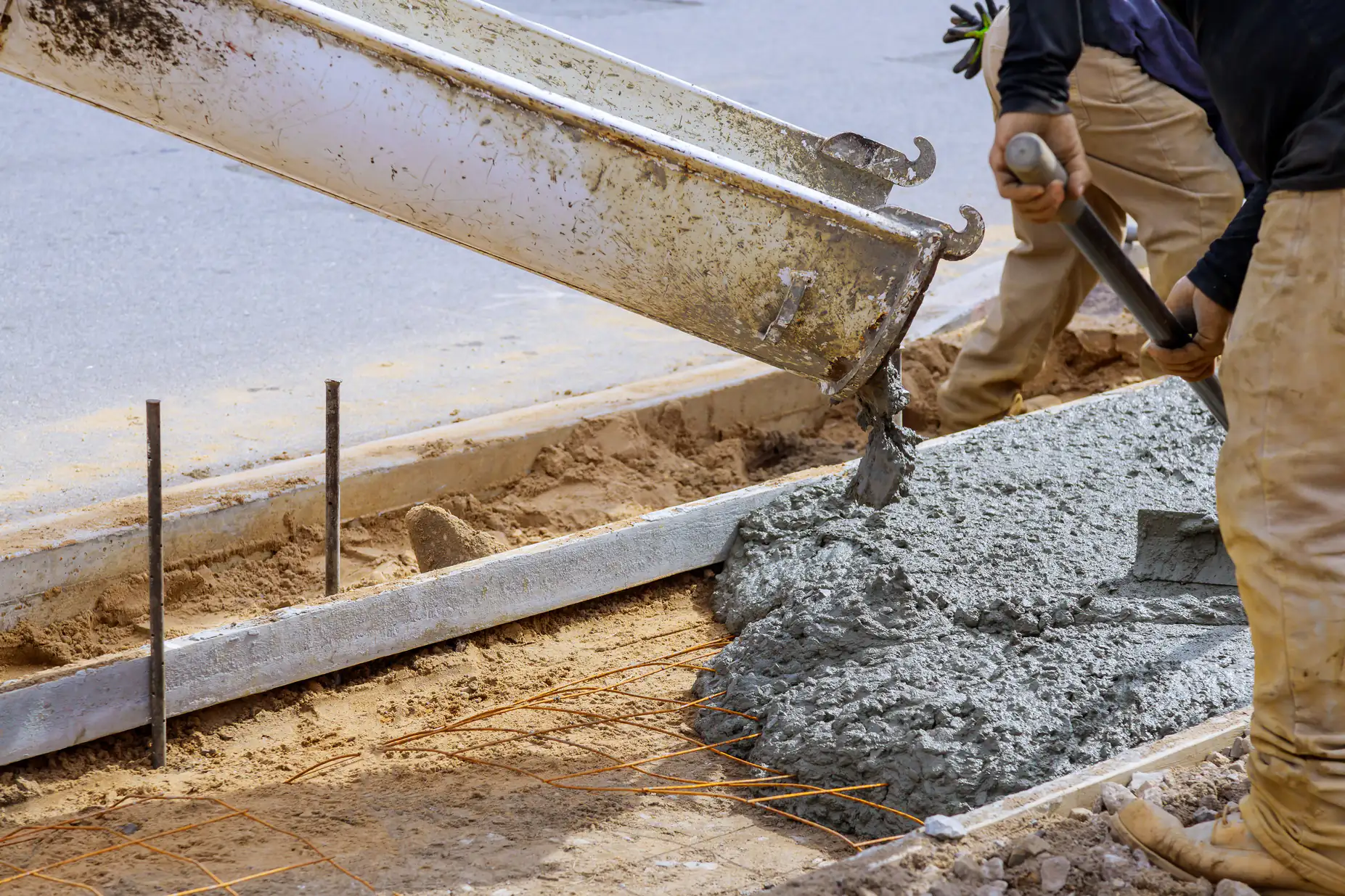
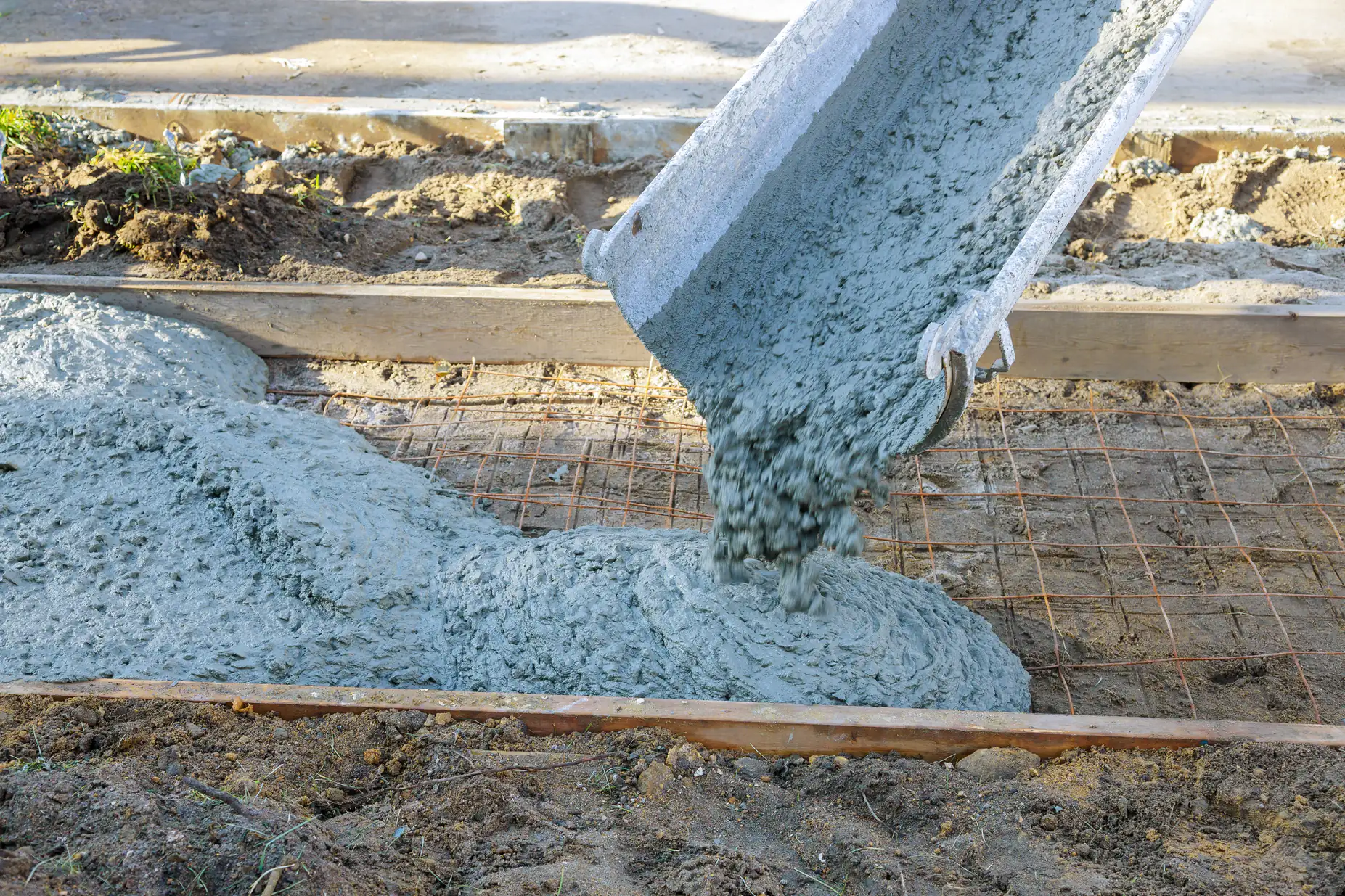
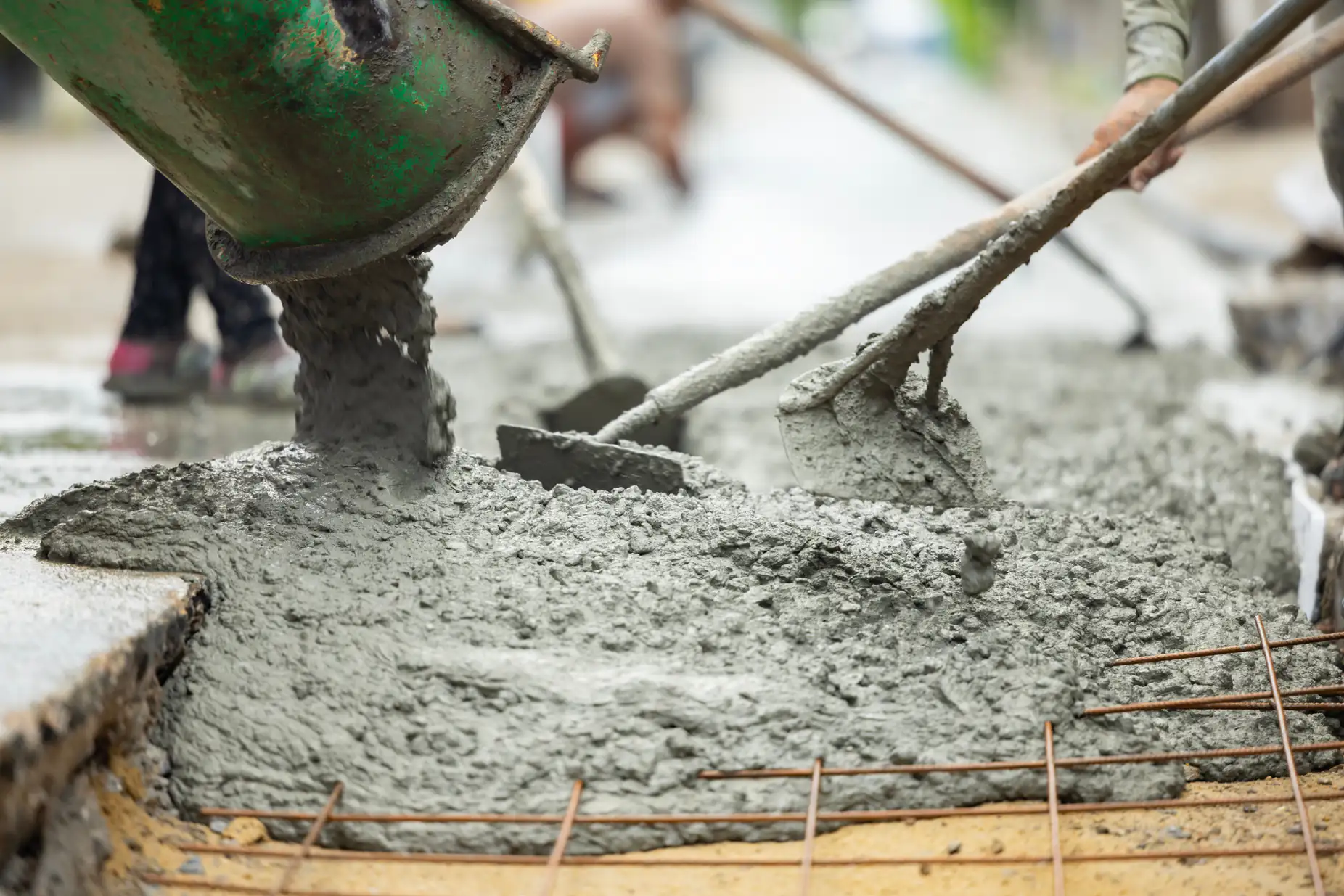
Then we form, reinforce, and pour. We use Portland cement mixes with rebar reinforcement, not just wire mesh. The concrete goes in at the right thickness for your specific use—heavier vehicles need more depth. We don’t pour in extreme temperatures or rain because it compromises the cure.
Finally, we finish and cure properly. Depending on what you want, that could be a standard broom finish or decorative stamped patterns. Either way, the concrete needs time to cure before you drive on it. We’ll tell you exactly when it’s safe to use, and we handle all the permits and inspections your municipality requires.

Ready to get started?
Your concrete driveway installation includes proper site preparation, which means we’re not just pouring over whatever’s there now. You get excavation, grading for drainage, and a compacted aggregate base that won’t shift or settle.
The concrete itself is reinforced with rebar, not the cheaper wire mesh some contractors use. Rebar costs more and takes longer to install, but it’s what keeps concrete from cracking when the ground freezes and thaws. We’re also not thinning out the mix or cutting corners on thickness—your driveway gets poured at the depth it needs based on vehicle weight and soil conditions.
In Sussex County and the surrounding areas, drainage is critical. Your installation includes grading adjustments and drainage solutions where needed. We’ve seen too many driveways fail because water had nowhere to go. If your property has drainage issues, we address them as part of the job, not as an expensive surprise later.
You also get all necessary permits pulled and inspections coordinated. Some towns in Morris and Somerset counties have specific requirements for driveway work. We handle that process so you don’t have to figure out what your local building department needs. And everything we install is backed by a comprehensive 5-year warranty covering defects in materials and workmanship.
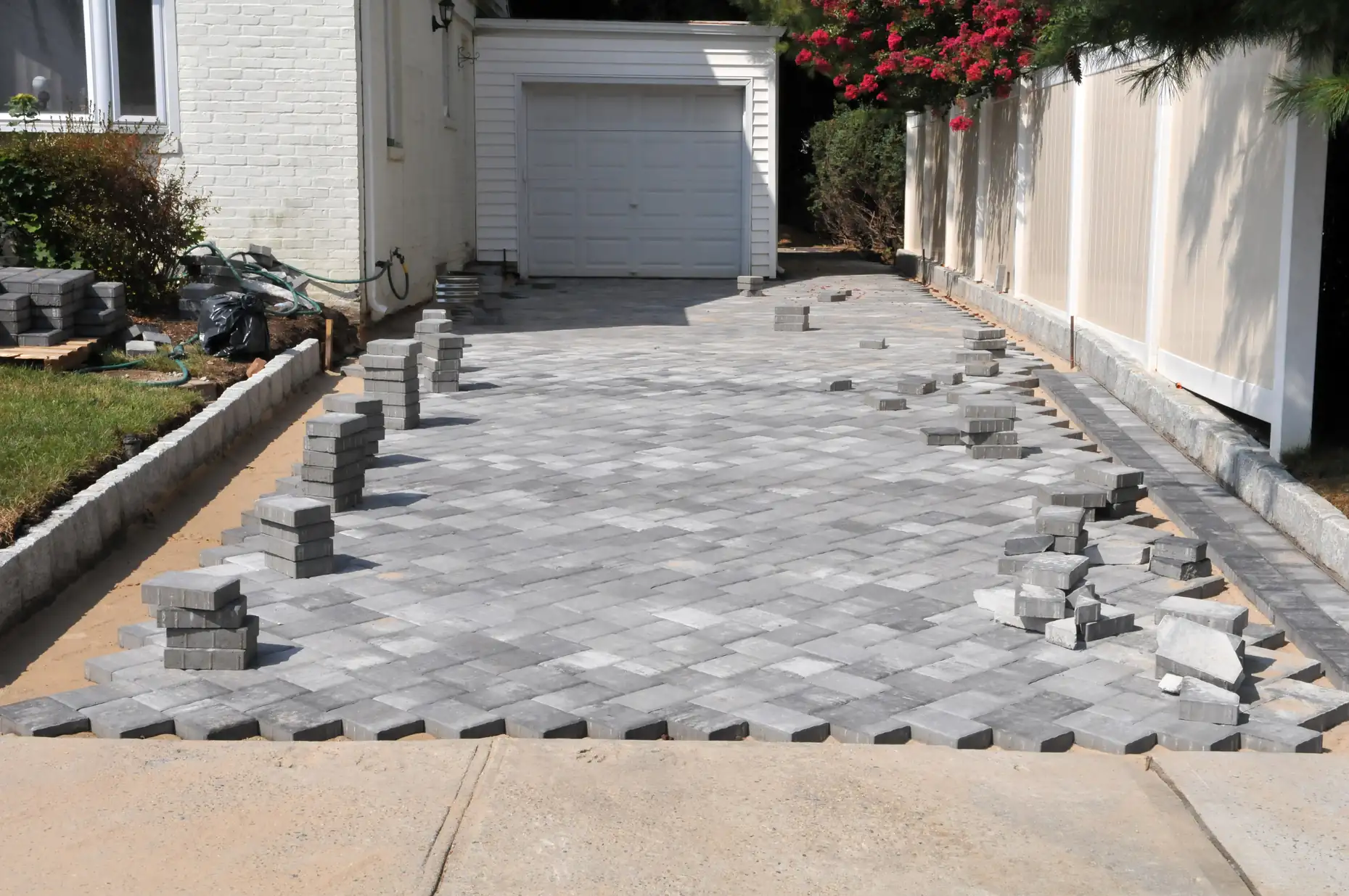
A properly installed concrete driveway in New Jersey should last 30 to 50 years with basic maintenance. That’s significantly longer than asphalt, which typically needs replacement after 15 to 20 years.
The key phrase is “properly installed.” Concrete that’s poured too thin, lacks adequate reinforcement, or sits on a poorly prepared base will start cracking within a few years. North Jersey’s freeze-thaw cycles are brutal—water gets into small cracks, freezes, expands, and makes those cracks worse every winter.
When we install concrete driveways in Sussex, NJ and surrounding areas, we’re accounting for those conditions from the start. Proper base preparation, correct concrete thickness, rebar reinforcement, and good drainage all contribute to longevity. Most of our customers in Newark and Morristown are still using driveways we installed 20+ years ago with nothing more than occasional cleaning and resealing.
Concrete costs more upfront—typically $6 to $12 per square foot in 2025, compared to asphalt at $3 to $7 per square foot. For a standard two-car driveway around 600 square feet, you’re looking at $3,600 to $7,200 for concrete versus $1,800 to $4,200 for asphalt.
But that upfront cost doesn’t tell the whole story. Asphalt requires resealing every 2 to 3 years at $300 to $800 per application. It also needs more frequent repairs and typically requires complete replacement after 15 to 20 years. Concrete needs minimal maintenance and can last 30 to 50 years when installed correctly.
Over the life of your driveway, concrete often costs less per year of use. You’re also not dealing with the hassle of regular maintenance or the disruption of replacement every 15 years. For homeowners in Morris and Somerset counties planning to stay in their homes long-term, concrete is usually the smarter investment. If you’re planning to sell in the next 5 years, asphalt’s lower upfront cost might make more sense.
We can install concrete in cooler weather, but not when temperatures drop below 40°F or when there’s precipitation. Concrete needs specific conditions to cure properly, and cold temperatures slow down that process significantly.
When concrete cures too slowly or freezes before it’s fully set, it loses strength and becomes prone to cracking. That’s why most concrete work in Sussex County and surrounding areas happens between late spring and early fall. We’re not being picky—we’re protecting your investment.
If you contact us during winter, we’ll schedule your project for the appropriate season and get you on the calendar early. That actually works in your favor because spring and summer fill up fast. Homeowners who reach out in January or February often get better scheduling options than those who wait until April when everyone suddenly realizes they need driveway work done.
Complete prevention isn’t possible—concrete will eventually develop some hairline cracks. But you can dramatically reduce cracking and prevent the kind of damage that requires expensive repairs. It comes down to installation quality.
First, the base has to be right. We excavate to stable soil, install a compacted aggregate base, and make sure it’s properly graded for drainage. A shifting or poorly drained base is the number one cause of concrete failure. Second, we use adequate reinforcement—rebar, not just wire mesh—and pour at the correct thickness for your specific use. Third, we install control joints at proper intervals. These are intentional weak points that control where minor cracks occur, keeping them straight and manageable rather than random and spreading.
In areas like Dover, Madison, and throughout Sussex County, we also account for local soil conditions and drainage patterns. Some neighborhoods have clay soil that expands and contracts more than others. Some properties have drainage issues that need to be solved before we pour. We’ve been working in this area for over 20 years, so we know what to watch for and how to address it before it becomes your problem.
Sealing isn’t required, but it extends your driveway’s life and makes maintenance easier. A good sealer protects concrete from water penetration, de-icing salt damage, and oil stains. In New Jersey, where we use a lot of road salt in winter, that protection matters.
You should wait at least 30 days after installation before applying sealer—the concrete needs time to fully cure first. After that, resealing every 2 to 3 years is a good maintenance schedule. It’s not expensive or complicated, and it prevents the kind of surface damage that leads to bigger problems down the road.
For decorative stamped concrete, sealing is more important because it protects the color and finish. But even standard gray concrete benefits from sealing, especially in high-traffic areas or if you park vehicles that might leak oil. We can recommend specific sealers that work well in our climate, or you can hire someone to do it. Either way, it’s a small investment that protects a much larger one.
Wait at least 7 days before driving on new concrete, and longer is better. Concrete reaches about 70% of its full strength in 7 days, but it continues curing and gaining strength for weeks after that.
We know that’s inconvenient. You’ve just paid thousands of dollars for a driveway and you can’t use it for a week. But driving on concrete too early can cause surface damage, cracking, or permanent tire marks. It’s not worth risking your investment to save a few days.
For homeowners in Sussex, Morristown, Newark, and surrounding areas, we recommend planning your installation when you can park on the street or make other arrangements for a week. If that’s not possible, we can sometimes phase the installation—pouring half the driveway, letting it cure while you use the other half, then completing the second section. It takes longer overall, but it keeps you from being completely stuck. Just let us know during the estimate if parking will be an issue and we’ll work out a solution.