
Hear from Our Customers
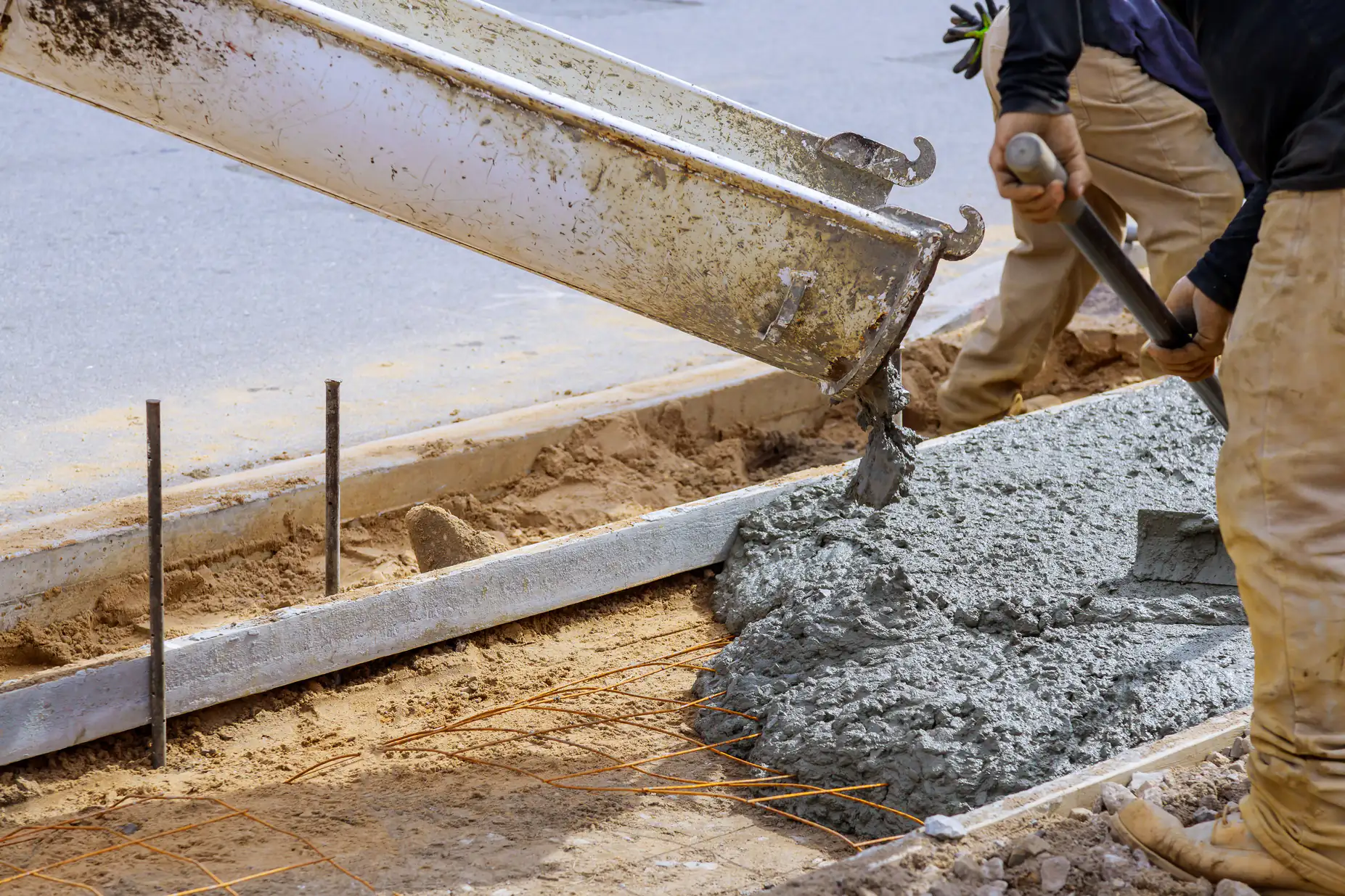
You’re looking at 30 to 40 years of use when concrete is installed correctly. That’s double what asphalt gives you, and it handles the summer heat without softening or developing ruts from parked cars.
The difference comes down to what happens before the concrete gets poured. Your property’s drainage patterns matter. The soil composition under your driveway matters. How the base gets compacted matters. Miss any of these, and you’re looking at cracks and settling within a few years.
Stanhope properties deal with clay soil that shifts with moisture changes and winters that regularly drop below freezing. That 10% expansion when water freezes? It exerts about 30,000 psi of pressure. Your driveway needs air-entrained concrete and proper base prep to handle that, or you’ll see damage fast.
When the work is done right, you get a surface that drains properly, resists cracking, and actually improves your property value instead of becoming another maintenance headache.
We work throughout Morris County, Sussex County, and Somerset County. We’ve seen what happens when contractors skip the soil analysis or rush the base work—you end up paying twice.
Our approach starts with understanding your specific property. Some Stanhope driveways need additional base preparation because of soil conditions. Others need enhanced drainage solutions because of how water moves across the lot. We figure that out before recommending concrete, asphalt, or another solution.
You’ll work with people who show up when they say they will, explain what’s happening at each stage, and give you pricing that doesn’t change halfway through the job. No cash-only demands. No two-hour quote expiration pressure tactics. Just clear communication about what your driveway needs and what it’ll cost.
You’ll get a callback within 24 to 48 hours after requesting a quote. We’ll schedule a site visit to look at your property’s grade, drainage, soil conditions, and how you’ll actually use the driveway. That determines the specs for your job.
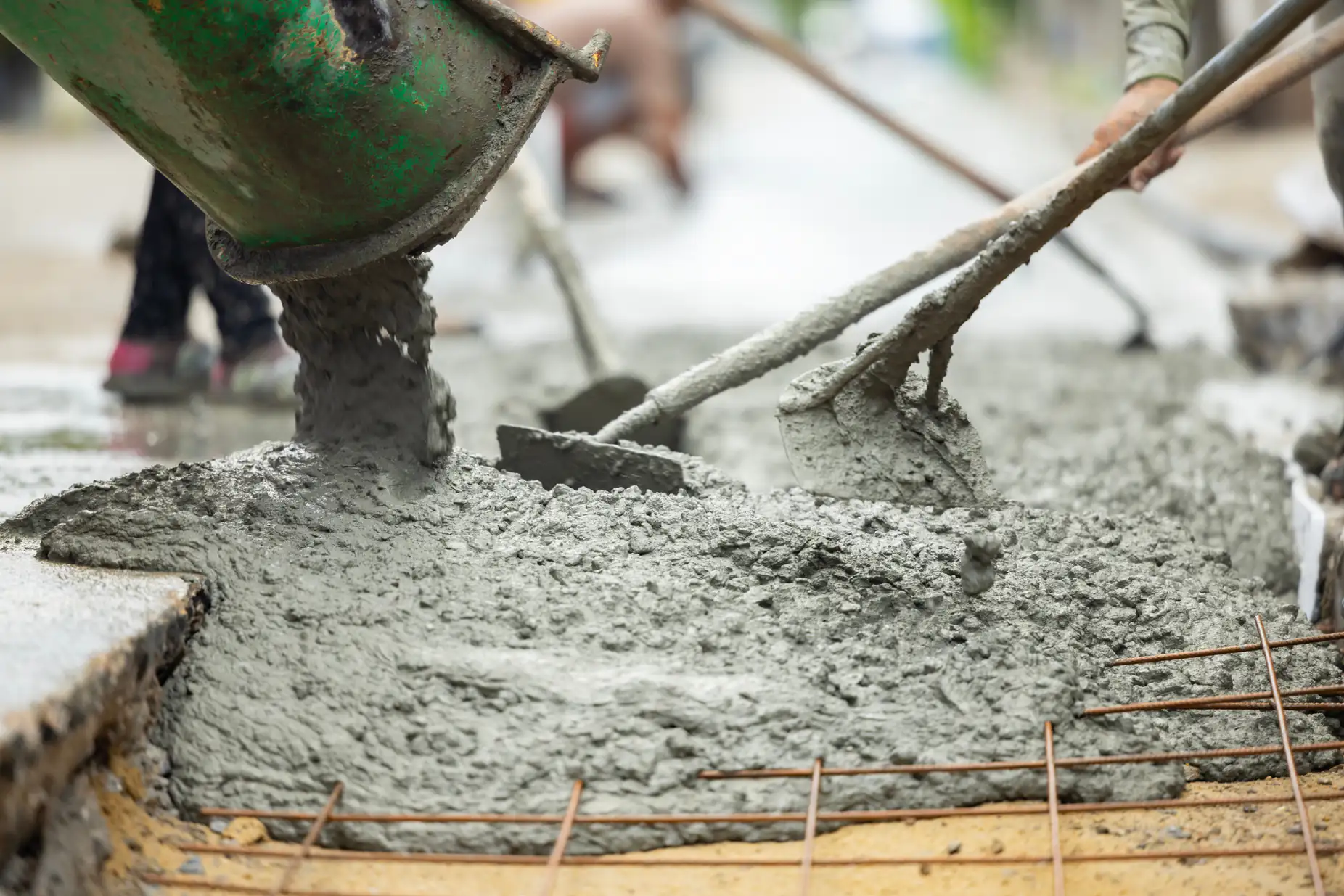
If you’re replacing an existing driveway, we handle the demo and disposal. If hazardous materials turn up, we’ll let you know before proceeding—no surprise charges after the fact. Then comes the base work: proper grading for drainage and a compacted aggregate base that won’t shift or settle.
For the concrete itself, we use Portland cement mixes with rebar reinforcement. The thickness and reinforcement get adjusted based on your property’s needs and expected traffic. We can do standard broom finishes or decorative stamped patterns if you want the look of pavers without the maintenance.
The concrete needs time to cure properly. You’ll know exactly when you can park on it and what to expect during that first season. We’re not rushing to the next job—we’re making sure this one is done right.

Ready to get started?
Your project includes full site preparation with proper grading to move water away from your foundation. We’re not just pouring concrete on top of whatever’s there—we’re building a base that accounts for Morris County’s soil conditions and climate.
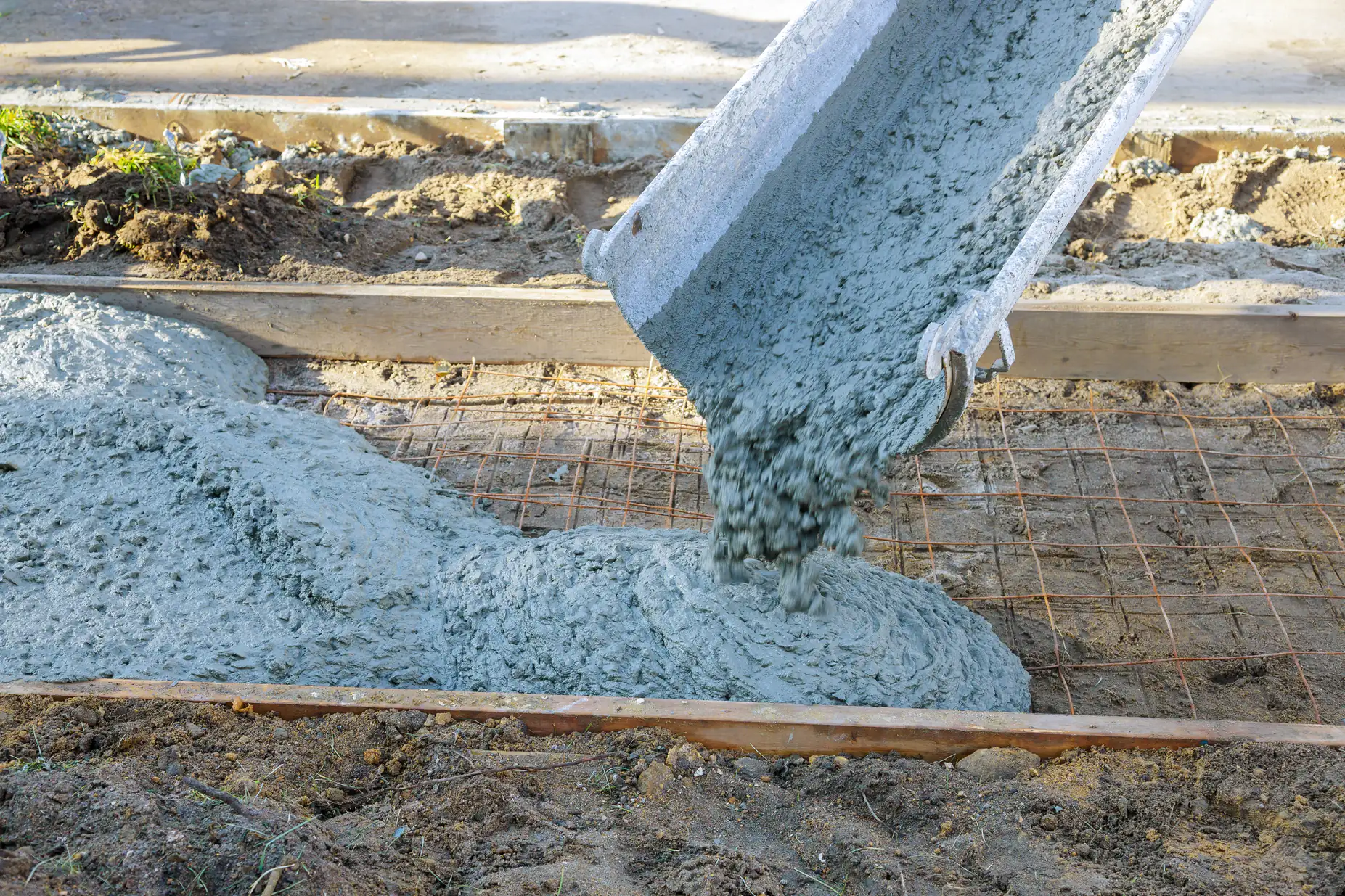
The concrete mix gets engineered for freeze-thaw resistance. That means air-entrained concrete that can handle the expansion and contraction cycles you get every winter in Stanhope. Rebar reinforcement goes in to prevent cracking from ground movement or heavy loads.
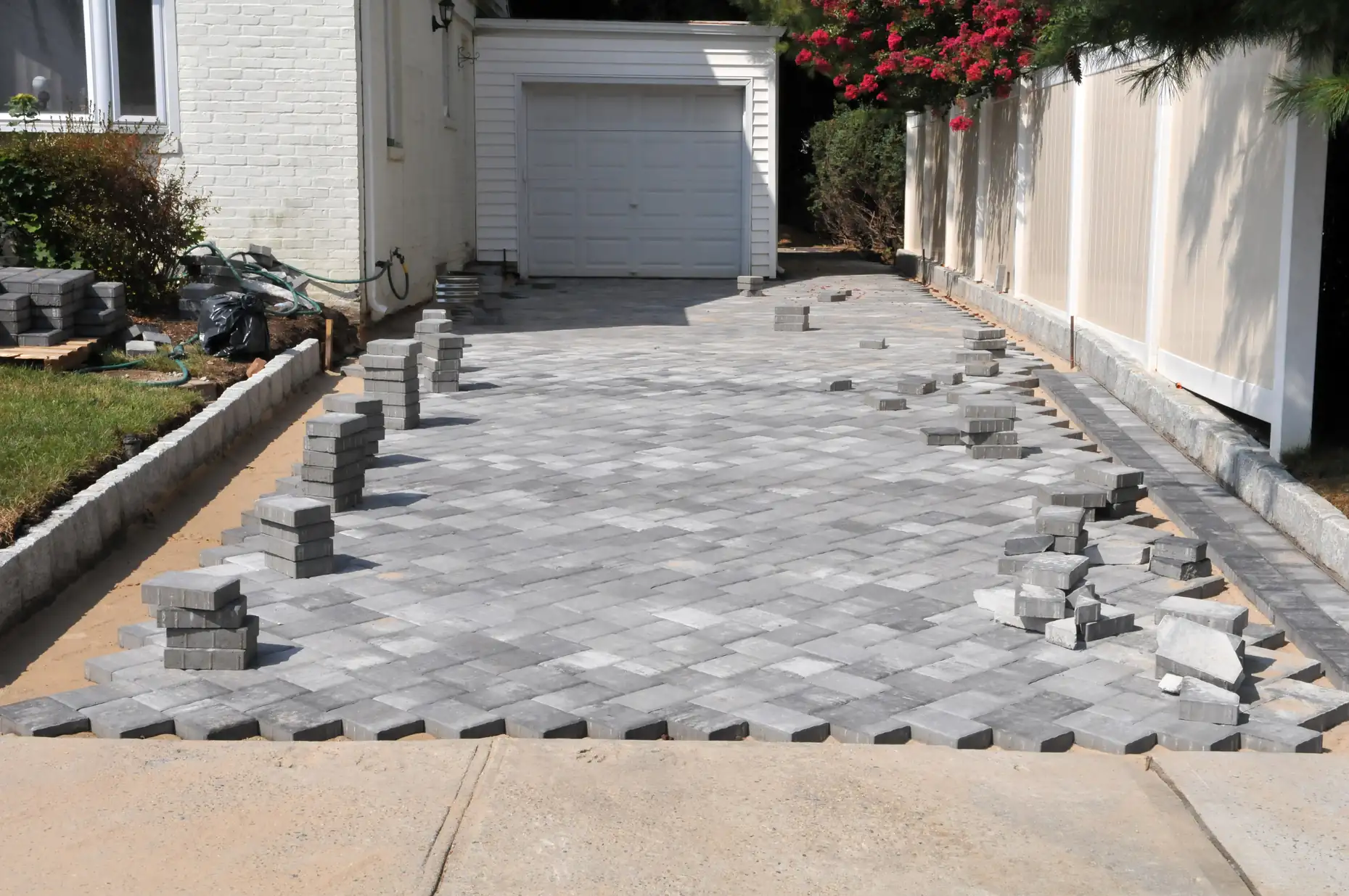
You’ll get options for finishing. A standard broom finish gives you traction in wet weather. Stamped concrete can replicate the look of stone, brick, or pavers at a fraction of the maintenance. Colored concrete is available if you want something beyond standard gray.
We handle the permits and make sure the work meets local codes. You get a five-year warranty on the installation. And if drainage issues come up during the job, we address them then—not after your new driveway starts pooling water.
In New Jersey, you’re looking at roughly $7 to $12 per square foot for concrete, with full installation including demo running around $25 per square foot. Your actual cost depends on your property’s specific conditions, but you’ll have that number upfront before any work starts.
You’re looking at 25 to 50 years with proper installation and basic maintenance. That’s significantly longer than asphalt, which typically gives you 15 to 20 years before needing replacement.
The lifespan depends heavily on installation quality. If the base isn’t properly compacted or drainage isn’t addressed, you’ll see problems within the first five years. Freeze-thaw damage happens when water gets into cracks, freezes, and expands—that’s why air-entrained concrete matters in New Jersey.
Basic maintenance extends that lifespan. Seal the concrete every few years to prevent water penetration. Keep the surface clean and address any minor cracks early before they spread. But if the foundation work is solid, your driveway should outlast most other exterior improvements you make to your property.
Late spring through early fall gives you the best conditions. Concrete needs temperatures above 50°F to cure properly, which makes April through October your ideal window in the Stanhope area.
Summer months are actually perfect because warm weather helps the concrete cure evenly and reach full strength faster. You want to avoid installation when overnight temperatures might drop below freezing during the first week after pouring—that can compromise the concrete’s structural integrity.
Rain isn’t necessarily a deal-breaker, but you need dry conditions during the actual pour and for at least 24 hours after. We monitor weather forecasts closely and will reschedule if conditions aren’t right. Rushing a concrete pour to meet a schedule is how you end up with problems down the road.
Concrete handles heat better and lasts longer. Asphalt can soften in summer temperatures and develop ruts where cars park regularly. If you’re planning to stay in your home long-term, concrete’s extended lifespan usually makes it the better investment.
Asphalt costs less upfront—typically $3 to $7 per square foot compared to $7 to $12 for concrete. But you’ll need to seal asphalt every few years and likely replace it decades sooner. Concrete’s maintenance requirements are lighter, and it doesn’t need the regular resealing that asphalt does.
For properties with drainage challenges or unstable soil, concrete’s rigidity can actually be a disadvantage. Asphalt flexes slightly with ground movement, while concrete will crack if the base settles unevenly. That’s why the site evaluation matters—we’ll tell you which material makes sense for your specific property conditions.
Water should move away from your house and off the driveway surface within a few hours of rain. If you see pooling that lasts for days, or if water runs toward your foundation or garage, you’ve got a drainage problem that needs fixing before installing new pavement.
Poor drainage causes more than just puddles. Water that sits on your driveway seeps into the base layer, weakening the foundation. In winter, that water freezes and expands, pushing up on the concrete and causing cracks or heaving. Over time, the base can wash out entirely, leaving you with sunken sections.
During the site evaluation, we look at your property’s grade, where water naturally flows, and whether you need additional drainage solutions like French drains or adjusted grading. Sometimes the fix is simple—adjusting the slope slightly. Other times you need more extensive drainage work. Either way, you’ll know before we pour concrete, not after problems appear.
We can get close with colored concrete and stamped patterns, but matching existing concrete perfectly is difficult. Concrete changes color as it ages and weathers, so even the same mix will look different when it’s new.
If matching is important, stamped concrete gives you the most options. We can replicate the texture and pattern of your existing hardscape and use integral color or stains to get in the same range. The new section will still look newer for the first year or two, but the difference becomes less noticeable as it weathers.
Another option is to tie the new driveway into your existing concrete patio installation work by creating a deliberate design contrast—using a different finish or adding a border that makes it clear the sections were installed at different times. That can actually look more intentional than trying to match perfectly and falling slightly short.
Small hairline cracks are normal as concrete cures and settles. Larger cracks that allow water penetration or create uneven surfaces indicate a problem with the base, installation, or drainage that needs attention.
Our five-year warranty covers installation-related issues. If cracks appear because of improper base preparation, inadequate reinforcement, or poor drainage that we should have addressed, we’ll fix it. What the warranty doesn’t cover is damage from extreme impacts, tree root intrusion, or ground movement from causes beyond normal settling.
The key is addressing cracks early. Small cracks can be sealed to prevent water infiltration. Once water gets in and freeze-thaw cycles start, small cracks become big problems. If you see cracking within the first few years, call us. We’ll evaluate whether it’s normal settling or something that needs repair work.