
Hear from Our Customers
You’re looking at 30 to 50 years of service life when concrete’s installed right. That’s double what you’d get from asphalt, with less maintenance headache along the way.
Here’s what changes. No more watching cracks spread every spring after the thaw. No more soft spots that turn into sinkholes by summer. No more wondering if this is the year you’ll need to replace the whole thing.
Concrete handles the freeze-thaw cycles that destroy other materials. When water gets in those hairline cracks and freezes, it expands with up to 30,000 PSI of pressure. That’s enough to split asphalt wide open overnight. Properly installed concrete with 4,000 PSI compressive strength and air entrainment? It flexes, survives, and keeps doing its job.
You also get a surface that won’t go soft in July heat or need resealing every other year. It holds up under heavy vehicles without rutting. And if you want it to look like something other than a gray slab, stamped and stained options give you that without sacrificing durability.
We work across Morris, Sussex, and Essex County. We’re based in Morris County, which means we understand exactly what your driveway faces: the freeze-thaw punishment, the soil conditions, the drainage issues that come with Roseland’s terrain.
Roseland sits in one of New Jersey’s wealthier communities, with properties averaging over $640,000. You’re not looking for the cheapest option. You’re looking for someone who’ll do it right the first time so you’re not dealing with this again in five years.
Owner Dominick oversees every job from start to finish. That’s not marketing talk—it’s how we operate. You get consistent quality because the same person who quotes your job is the one making sure it’s installed to spec.
First, we assess your site. That means looking at drainage patterns, soil stability, and existing base conditions. If water’s pooling anywhere or the ground’s settling unevenly, we catch it now—not after we’ve poured concrete.
Next comes excavation and base prep. We remove the old surface if needed, grade for proper drainage (minimum 1% slope), and compact the base layer in lifts. This isn’t optional. A solid base is the difference between concrete that lasts 40 years and concrete that cracks in three.
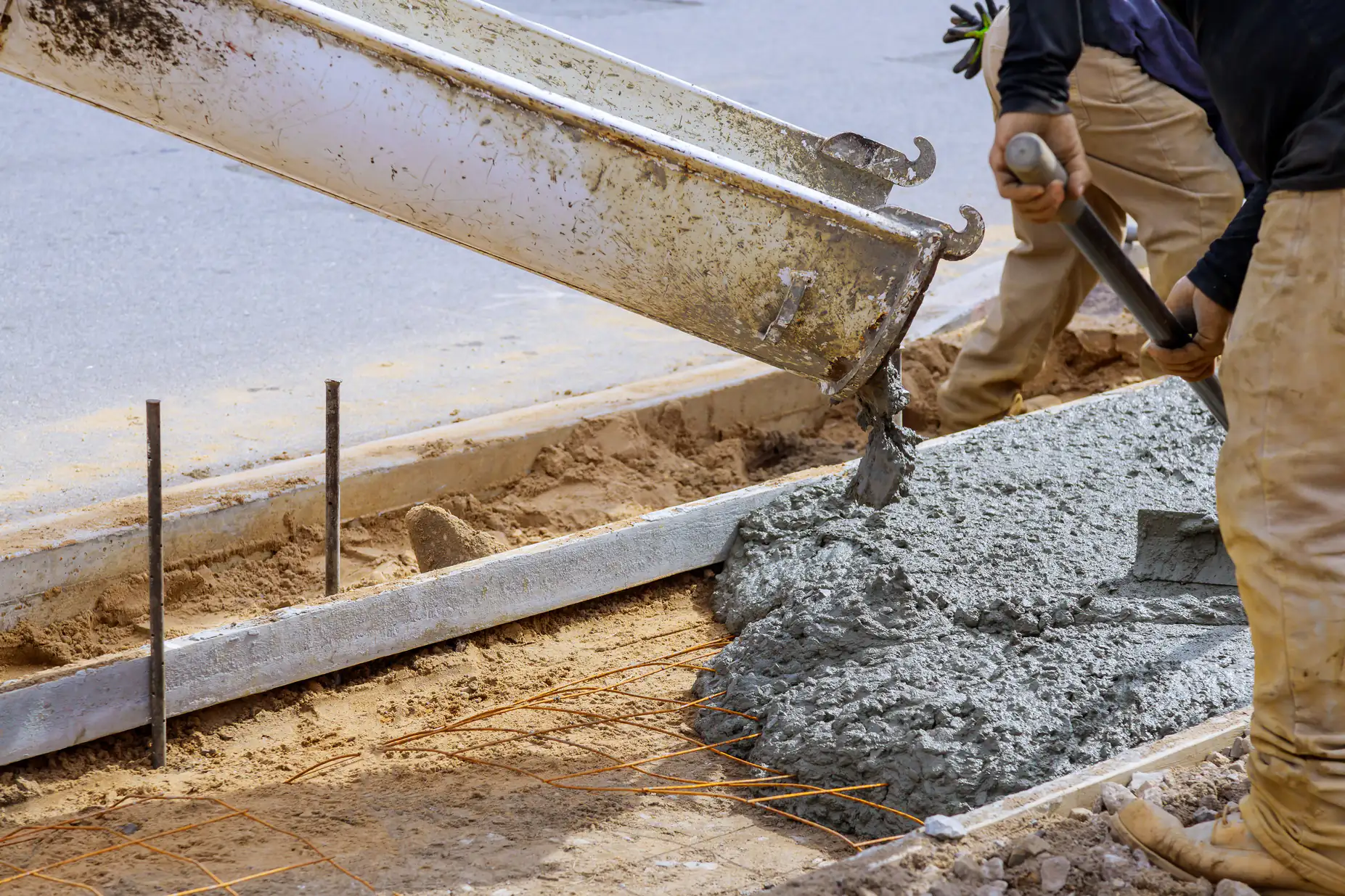
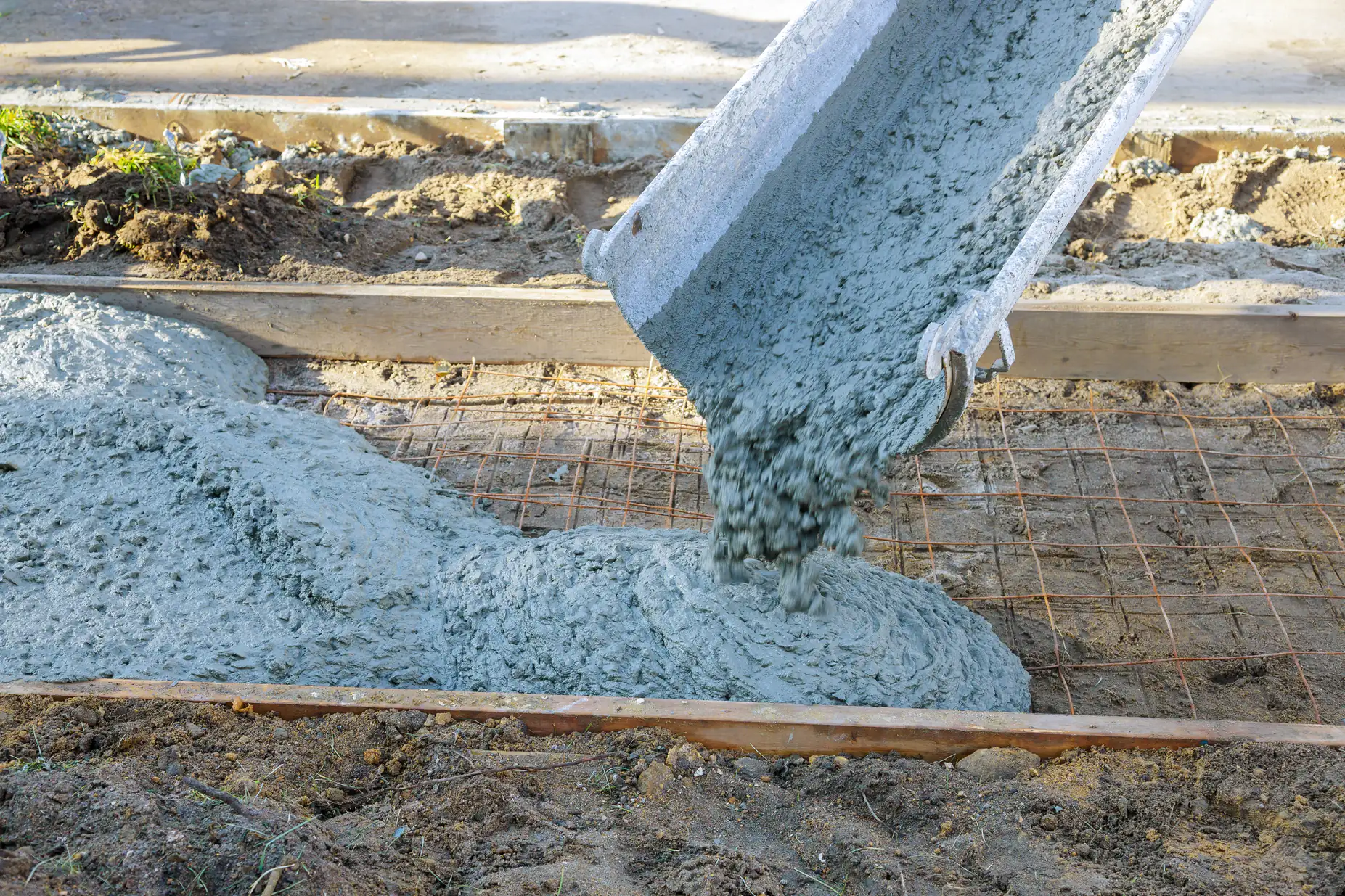
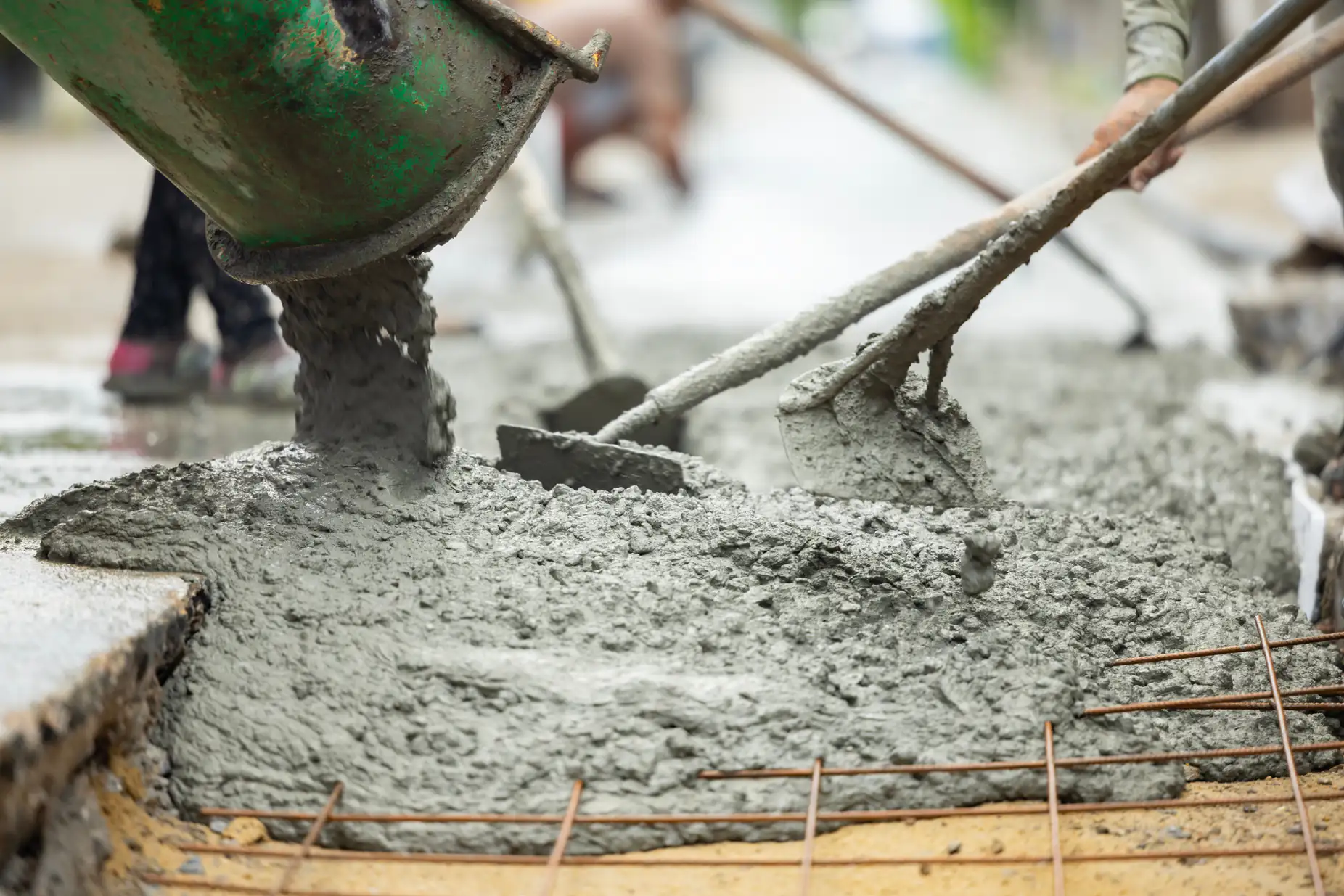
Then we set forms, install reinforcement (wire mesh minimum, rebar on 24-inch centers for larger driveways), and pour the concrete. We’re using Portland cement mixes designed for New Jersey winters, with air entrainment that creates tiny air pockets throughout the slab. Those pockets give water somewhere to expand when it freezes, instead of cracking your driveway apart.
Finishing comes next—whether that’s a basic broom finish for traction, or stamped patterns if you want something more custom. We control-joint the slab to direct any cracking to planned locations where it won’t be visible. Then it cures for at least seven days before you drive on it.

Ready to get started?
Every concrete driveway installation includes site preparation, proper grading for drainage, compacted base layers, and reinforcement. You’re getting 4,000 PSI minimum concrete with 5-7% air entrainment—the standard for freeze-thaw resistance in North Jersey.
In Roseland specifically, we pay attention to the soil conditions common in Essex County. The area’s clay-heavy soils expand and contract with moisture changes, which means we’re extra careful about base compaction and may recommend additional base depth depending on your site.
We also handle permits and make sure the work meets local requirements. Roseland has specific setback and drainage regulations. We know them. You don’t have to worry about getting a violation notice six months later because something wasn’t done to code.
Decorative options are available if you want them—stamped concrete that mimics stone or brick, staining for color variation, exposed aggregate for texture. These add cost, but they don’t compromise the structural integrity. You still get the same 30-50 year lifespan, just with a custom look.
Pricing in this area typically runs $7-$13 per square foot for standard concrete, higher if you add decorative finishes. A typical two-car driveway (around 600 square feet) runs $4,200 to $7,800. That’s not cheap. But when you divide that cost over 40 years instead of 15, the math changes.
A properly installed concrete driveway lasts 30 to 50 years in North Jersey, even with our harsh freeze-thaw cycles. The key word there is “properly installed.”
That means using concrete with at least 4,000 PSI compressive strength and 5-7% air entrainment. The air entrainment creates microscopic air pockets throughout the concrete that give water somewhere to expand when it freezes, instead of cracking the slab. Without it, you’re looking at major cracking within the first few winters.
It also means proper base preparation—compacted in lifts, graded for drainage, thick enough to prevent settling. And it means adequate reinforcement, whether that’s wire mesh, rebar, or fiber reinforcement. All of these factors determine whether your driveway makes it to 50 years or starts failing at 10.
Concrete costs more upfront but lasts twice as long and needs less maintenance. Asphalt is cheaper initially but requires resealing every 2-3 years and typically needs replacement after 15-20 years.
Here’s the practical difference. Asphalt goes soft in summer heat, can develop ruts under heavy vehicles, and deteriorates faster from salt and chemicals. It also requires more frequent maintenance to stay functional. Concrete handles temperature extremes better, supports heavier loads without deforming, and typically just needs a reseal every 5-10 years if you want to protect it.
For Roseland’s climate with 40+ freeze-thaw cycles every winter, concrete’s durability advantage becomes even more significant. The upfront cost difference usually evens out over the lifespan when you factor in maintenance and replacement timing. If you’re planning to stay in your home long-term, concrete makes more financial sense.
Standard concrete driveways in Roseland run $7-$13 per square foot, depending on site conditions and thickness requirements. Decorative options like stamping or staining add $1-$8 per square foot on top of that base cost.
For a typical two-car driveway around 600 square feet, you’re looking at $4,200 to $7,800 for basic installation. A larger driveway at 1,000 square feet runs $7,000 to $13,000. These prices include excavation, base prep, reinforcement, concrete, and finishing.
What drives cost up? Difficult access that requires hand work instead of equipment. Extensive excavation if your existing base is failing. Extra reinforcement for heavy vehicle loads. Decorative finishes. Challenging drainage situations that require additional grading or drainage solutions. We give you upfront pricing after assessing your specific site, so there are no surprise charges when the work’s done.
Wait at least seven days before driving on new concrete. For heavy vehicles or during cold weather, wait 10-14 days. This isn’t us being overly cautious—it’s about the chemistry of how concrete gains strength.
Concrete reaches about 70% of its full strength in seven days under normal conditions. That’s enough for passenger vehicles if you’re careful. But it continues curing and gaining strength for weeks after that. Full strength takes 28 days.
Drive on it too early and you risk surface damage, cracking, or permanent tire marks in the finish. You also risk deeper structural issues that won’t show up immediately but will shorten the lifespan of your driveway. Cold weather slows the curing process, which is why we extend the wait time when temperatures drop. It’s frustrating to have a new driveway you can’t use for a week, but it’s a lot less frustrating than having to repair or replace it prematurely.
All concrete will eventually develop some cracking—it’s the nature of the material. The goal is to control where cracks appear and minimize their size so they don’t compromise the driveway’s function or appearance.
We prevent random cracking through proper reinforcement (wire mesh or rebar), adequate concrete thickness (typically 4-6 inches depending on use), and control joints cut into the surface. Control joints are planned weak points that direct cracks to specific locations where they’re less visible and won’t spread. Think of them as pressure relief valves.
We also prevent cracking through proper base preparation and drainage. Most concrete failure comes from the base settling unevenly or water undermining the slab from below. When the base is solid and water drains away instead of pooling underneath, the concrete stays stable. Air entrainment in the mix prevents freeze-thaw cracking by giving water room to expand. These aren’t expensive add-ons—they’re standard practice for quality concrete work in North Jersey.
Yes. Stamped concrete, acid staining, exposed aggregate, and colored concrete are all options that work in North Jersey’s climate. You get the durability of concrete with a custom appearance that matches your home’s style.
Stamped concrete uses patterns and textures pressed into the surface before it fully hardens, mimicking stone, brick, or tile. Acid staining chemically reacts with the concrete to create color variations and depth. Exposed aggregate reveals the stones in the concrete mix for a textured, natural look. Integral color mixes pigment throughout the concrete rather than just on the surface.
These finishes add $1-$8 per square foot depending on complexity, but they don’t reduce the driveway’s lifespan or structural performance. You still get the same freeze-thaw resistance and load capacity. The main consideration is maintenance—decorative finishes may need resealing more frequently to maintain their appearance, typically every 2-3 years instead of 5-10 years for plain concrete.