
Hear from Our Customers
A concrete driveway that’s done right doesn’t crack after the first winter. It doesn’t settle unevenly or develop potholes that scrape your car’s undercarriage. It handles the weight of your vehicles without buckling, drains water away from your foundation instead of pooling it, and maintains your home’s curb appeal instead of detracting from it.
The difference isn’t the material. It’s the base preparation, the mix design, and the installation process. When the ground beneath your driveway is properly excavated and compacted, when the concrete is reinforced with rebar, and when the finish is applied at the right temperature and cured correctly, you get a surface that protects your property value instead of threatening it.
That’s what matters in Peapack and Gladstone, where the median home price sits around $887,000. Your driveway isn’t just pavement. It’s the first thing people see when they pull up to your home, and it’s one of the few exterior features that can either add value or subtract it depending on its condition.
We’re a third-generation family business that’s been serving North New Jersey for over 20 years. We’re licensed (NJ License #13VH08981600), insured, and BBB accredited with an A+ rating. We’re not new to this area, and we’re not going anywhere.
We know what Morris County weather does to driveways. We’ve seen what happens when contractors cut corners on base prep or use the wrong concrete mix. We’ve repaired enough failed installations to know exactly what separates driveways that last from ones that crack within three years.
You’re not hiring a crew that shows up with leftover materials and disappears when problems surface. You’re working with contractors who handle permits, provide written estimates with no hidden costs, and back our work with a 5-year warranty on materials and workmanship.
First, we excavate your existing driveway or prepare the ground if it’s new construction. This isn’t just digging. We’re removing material to the proper depth and ensuring the subgrade is stable enough to support the concrete and vehicle weight without settling.
Next comes base preparation. We install and compact aggregate base material in layers, creating a stable foundation that won’t shift or erode. This step determines whether your driveway lasts 10 years or 30. We also grade for proper drainage so water flows away from your foundation instead of pooling on the surface or seeping underneath.
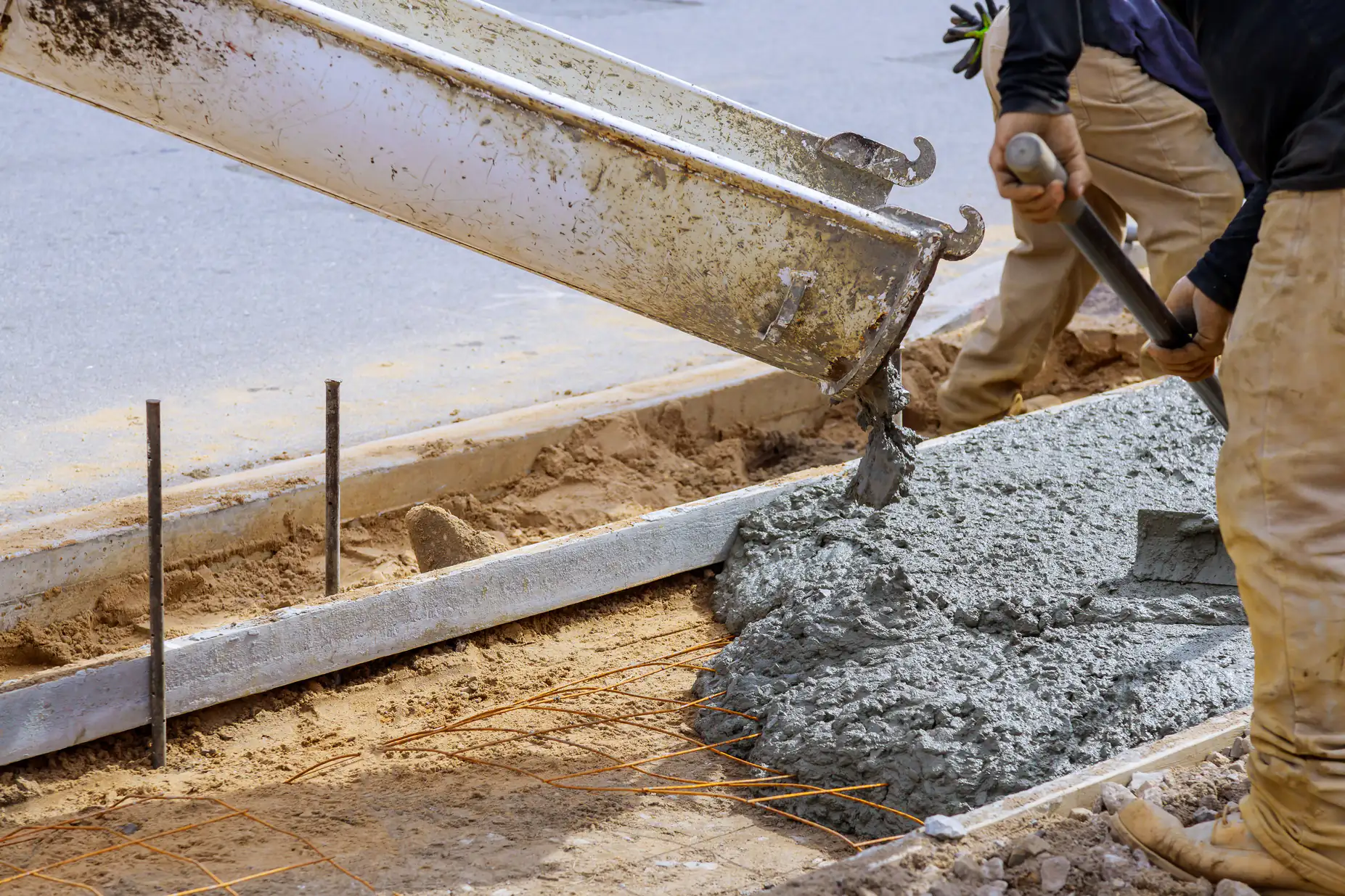
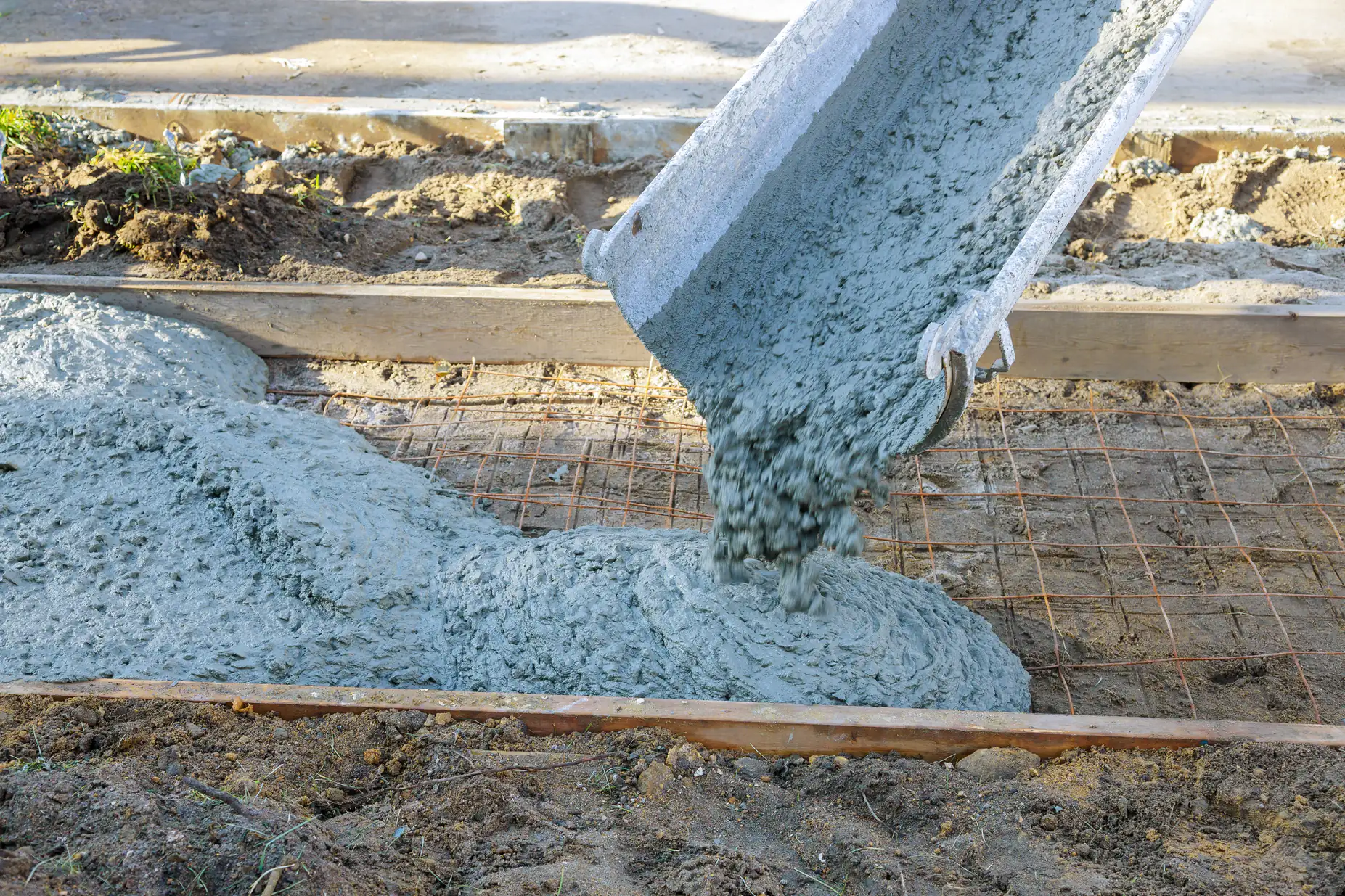
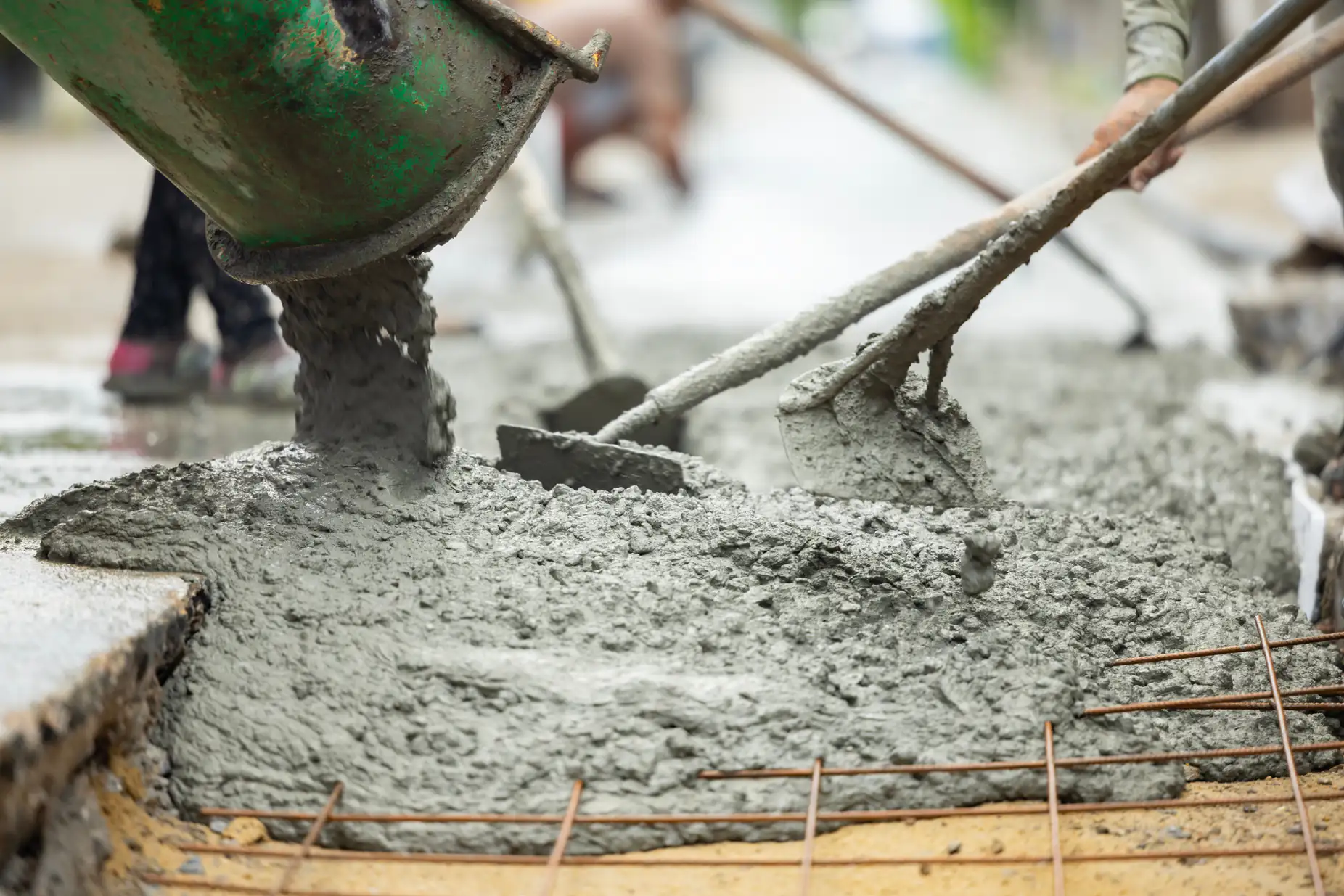
Then we form the driveway, install rebar reinforcement, and pour Portland cement concrete mixed to the right specifications for New Jersey’s climate. The concrete is finished to your preferred texture, whether that’s broom-finished for traction or stamped for a decorative look. We control joints to manage where cracks form, and we cure the concrete properly so it reaches full strength.
Most driveway projects wrap up in one to three days depending on size and complexity. You’ll know the timeline upfront, and we stick to it.

Ready to get started?
Every concrete driveway installation includes complete excavation and base preparation, proper grading for drainage, rebar reinforcement, and a finish that matches your preferences. We handle all required permits and coordinate inspections with local authorities so you don’t have to navigate that process yourself.
You also get transparent pricing with a detailed written estimate that breaks down costs. No surprise charges when the job’s done. And you get a 5-year warranty covering defects in materials and workmanship, which means if something goes wrong that’s our fault, we come back and fix it at no cost to you.
In Peapack and Gladstone, where properties are significant investments, you need contractors who understand that your driveway affects your home’s value. A well-installed driveway can improve your property value by one percent or more. On a $887,000 home, that’s nearly $9,000 in added value. A poorly installed driveway does the opposite.
We also offer decorative options like stamped concrete if you want something beyond standard gray. And after installation, we provide maintenance guidance so you know how to protect your investment long-term.
Concrete driveway costs in New Jersey typically run between $7 and $13 per square foot for standard installations with rebar reinforcement. A typical two-car driveway that’s 20 feet wide and 40 feet long (800 square feet) would cost between $5,600 and $10,400 depending on site conditions, thickness requirements, and finish options.
Several factors affect the final price. If your property has poor soil conditions or drainage issues, you’ll need more extensive base preparation, which adds cost. If you want decorative stamped concrete instead of standard broom-finished, that increases the price. And if your municipality requires engineering plans or special permits, those add $500 to $1,500 to the project.
The cheapest quote isn’t always the best value. Contractors who underbid often cut corners on base preparation or use thinner concrete than recommended. You end up with a driveway that cracks within a few years, and full replacement costs far more than paying for proper installation upfront. We provide detailed written estimates that break down exactly what you’re paying for so you can compare apples to apples.
A properly installed concrete driveway in New Jersey should last 25 to 30 years or longer with basic maintenance. That’s significantly longer than asphalt, which typically needs replacement after 15 to 20 years. But that lifespan depends entirely on installation quality and how well you maintain it.
New Jersey’s climate is tough on concrete. We experience 55 to 75 freeze-thaw cycles every winter, and water expands by 9 percent when it freezes in cracks. If your driveway wasn’t installed with proper base preparation, adequate thickness, and rebar reinforcement, it’ll start cracking within the first few years. Once cracks form, water gets in, freezes, expands, and makes the cracks worse.
The key to longevity is proper installation from the start and preventive maintenance afterward. That means sealing cracks when they’re small, avoiding harsh deicing chemicals that damage concrete, and keeping the surface clean. We provide detailed maintenance guidance after installation so you know exactly how to protect your investment.
Concrete costs more upfront but lasts longer and requires less maintenance than asphalt. Asphalt needs resealing every two to three years and typically requires replacement after 15 to 20 years. Concrete can last 30 years or more with minimal maintenance beyond occasional crack sealing.
Concrete also handles New Jersey’s freeze-thaw cycles better than asphalt when properly installed. It doesn’t soften in summer heat like asphalt can, which means you won’t get ruts from parked vehicles or tire marks. And concrete offers more design flexibility if you want decorative options like stamped patterns or colored finishes.
Asphalt makes sense if you need the lowest possible upfront cost or if you’re planning to move within a few years and just need something functional. But if you’re staying in your Peapack and Gladstone home long-term and want a driveway that protects your property value, concrete is the better investment. The higher initial cost spreads out over decades of use, and you avoid the ongoing maintenance expenses that asphalt requires.
Most New Jersey municipalities require permits for new driveway installation or major driveway replacement. Requirements vary by town, but you typically need to submit plans showing the driveway location, dimensions, and drainage details. Some municipalities also require engineering plans for larger driveways or properties with drainage concerns.
Permit costs usually range from a few hundred dollars to over $1,000 depending on project scope and local requirements. The process can take anywhere from a few days to several weeks depending on how backed up the local building department is. Some towns also require inspections at various stages of construction.
We handle all permit applications and coordinate required inspections as part of our service. You don’t have to navigate the bureaucracy yourself or worry about whether your installation meets local codes. We know what each municipality requires, and we make sure everything’s done correctly so you don’t run into problems when you eventually sell your home.
Some hairline cracks are normal in concrete as it cures and settles, especially at control joints where we intentionally create weak points to control where cracks form. These hairline cracks don’t affect the driveway’s structural integrity. But larger cracks that run across the slab or cracks that allow water penetration need attention.
If cracks appear within the first five years and they’re caused by installation defects or material failures, our warranty covers the repair at no cost to you. We’ll assess what caused the crack and fix it properly. If cracks develop after the warranty period or they’re caused by factors outside our control (like ground settling from utility work or tree roots), repairs are your responsibility, but we can handle them for you.
The key is addressing cracks early before they get worse. Small cracks can be filled and sealed relatively inexpensively. But if you ignore them, water gets in, freezes, expands, and turns small cracks into major structural problems that require expensive repairs or even full replacement. We provide guidance on monitoring your driveway and catching issues early.
You can typically walk on new concrete after 24 hours, but you should wait at least seven days before driving on it. Concrete reaches about 70 percent of its full strength in seven days under normal conditions, which is enough to handle vehicle traffic without damage. But it continues curing and gaining strength for 28 days.
Temperature affects curing time. In hot weather, concrete cures faster. In cold weather, it takes longer. We’ll give you specific guidance based on the conditions during your installation and the concrete mix we used. Following these guidelines protects your investment and prevents surface damage that can’t be easily repaired.
During the curing period, we’ll also advise you on protecting the surface from stains. Fresh concrete is more porous than fully cured concrete, so oil, grease, or other chemicals can penetrate deeper and become harder to remove. Once the concrete is fully cured and we’ve applied sealer if you opted for that, it’s much more resistant to staining and damage.