
Hear from Our Customers
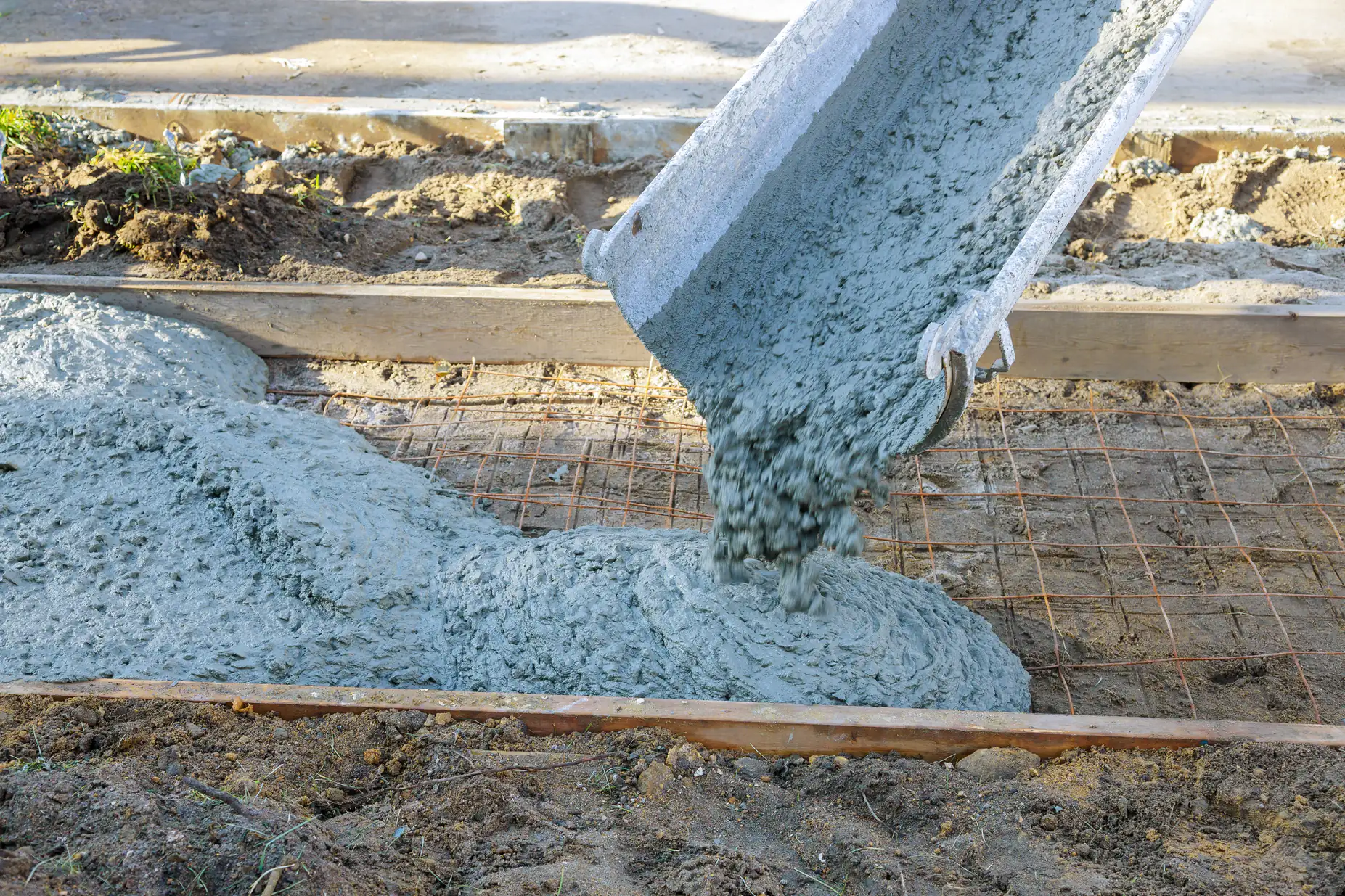
A concrete driveway that’s done right means you’re not dealing with resurfacing every few years. You get a surface that handles Morris County’s temperature swings without developing those spiderweb cracks that let water seep underneath.
The difference shows up in year five, year ten, year twenty. While your neighbors are patching and resealing, you’re pulling in and out without a second thought. That’s what proper base prep and the right concrete mix gets you.
Concrete lasts 25 to 50 years when it’s installed correctly. Asphalt? You’re looking at 15 to 20 years, maybe less if the base wasn’t done right. The upfront cost is higher, but you’re not paying for another driveway in 15 years. For Newton homeowners dealing with harsh winters, that math matters.
We’ve been handling driveway paving in Newton and across Morris County for three generations. That means we’ve seen what holds up through North Jersey winters and what fails after a few freeze-thaw cycles.
We’re not the biggest paving company in the state, and that’s intentional. Staying local means we know the soil conditions in Newton, we understand the permit requirements, and we’re still here when you need warranty work. You’re not calling a 1-800 number and getting transferred three times.
Every driveway we pour uses 4000-6500 psi concrete mix with rebar reinforcement. We handle the excavation, the base prep, the grading for proper drainage, and the finishing work. No subcontractors. No surprises on the invoice.
First, we excavate to the right depth and haul away the old material. Most driveways in Newton need 6-8 inches of excavation depending on soil conditions. If your ground is soft or you’ve got drainage issues, we’ll tell you before we start digging.
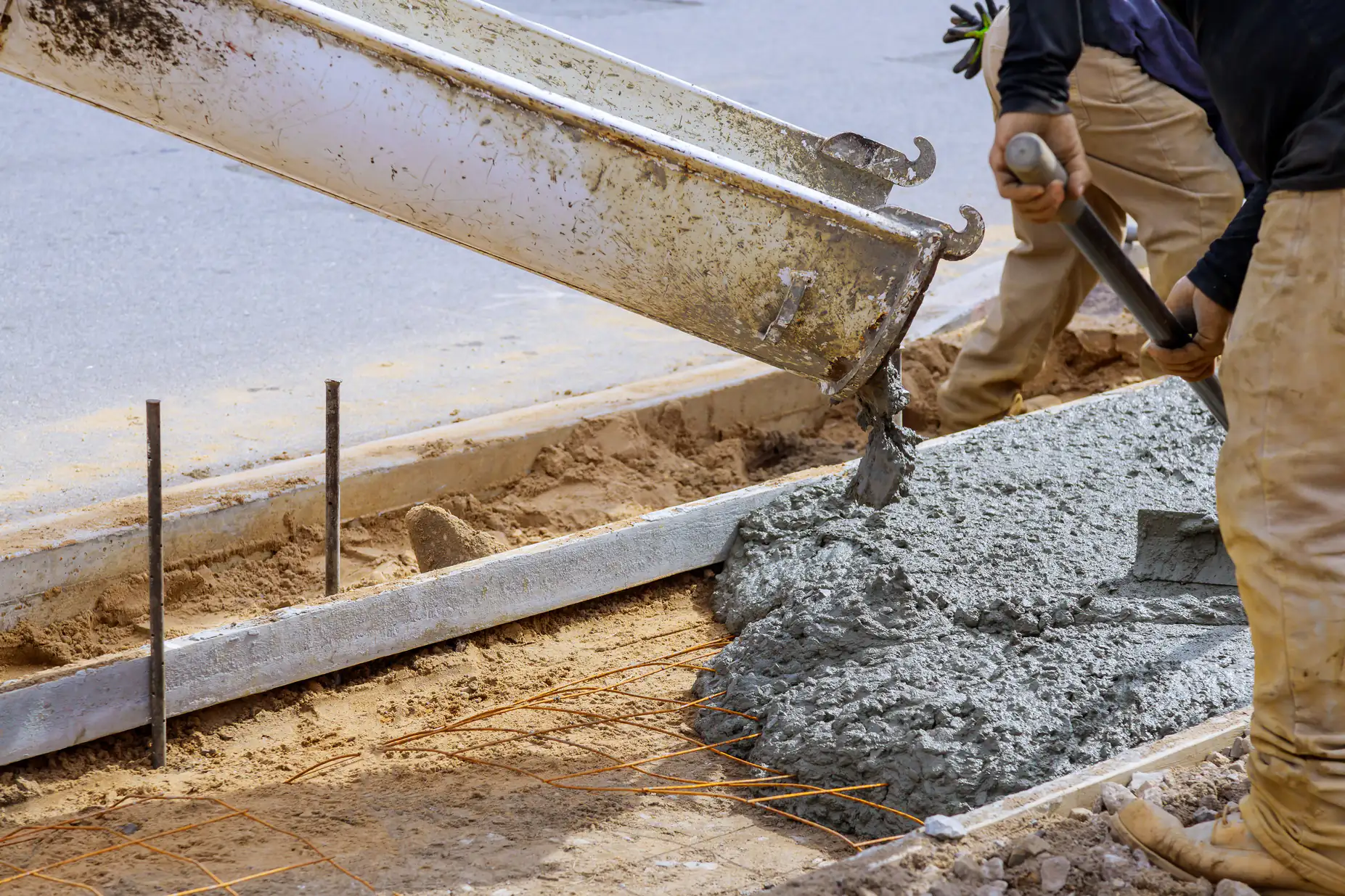
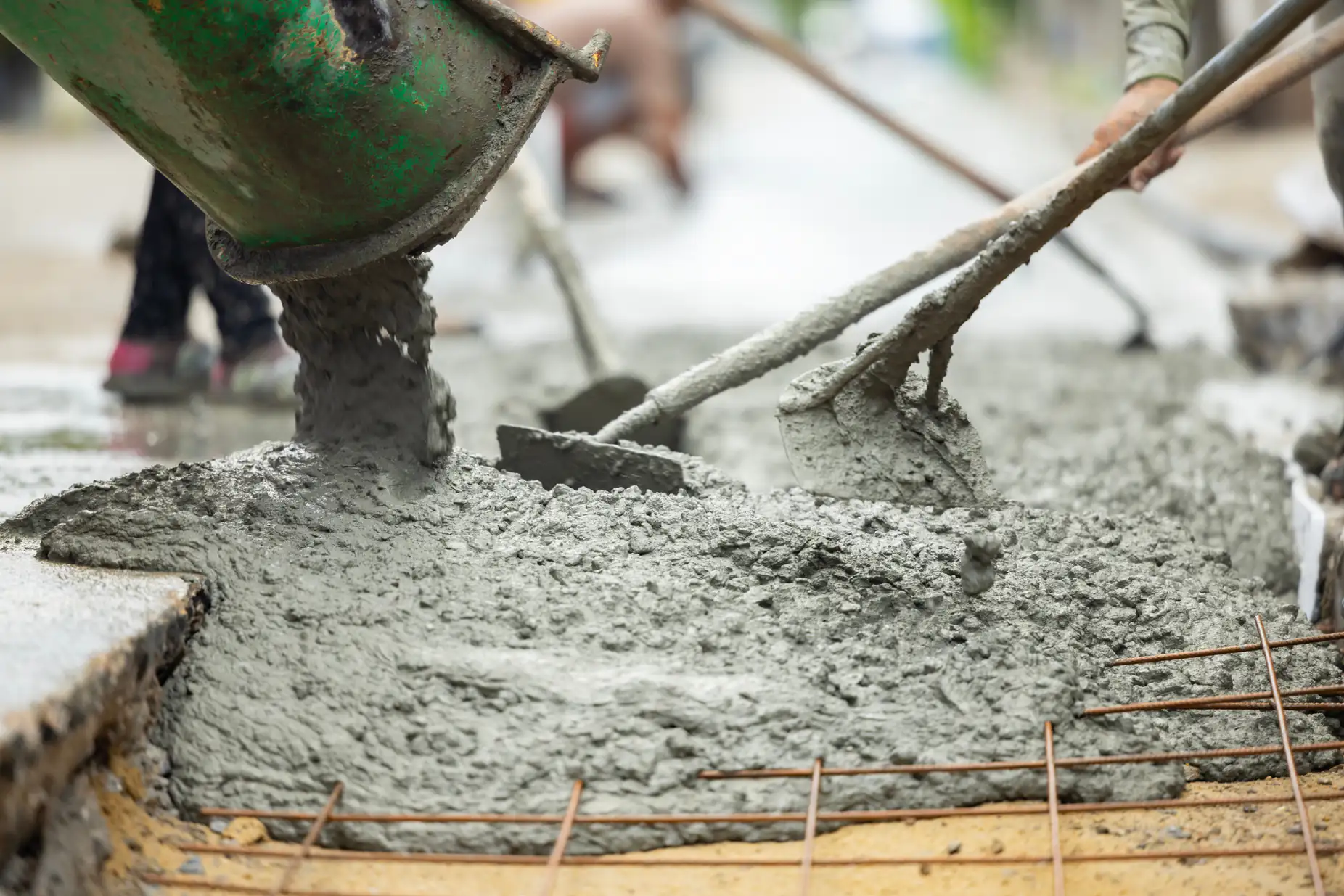
Next comes the base layer. This is where most problems start if it’s done wrong. We use compacted gravel, graded so water runs away from your foundation, not toward it. Then we set forms, place rebar for reinforcement, and pour the concrete at the right thickness for your vehicle load.
The concrete needs time to cure properly. You’re looking at 7 days before you can drive on it, longer if temperatures are cold. We’ll give you the exact timeline based on weather conditions. Once it’s cured, you’ve got a driveway that’ll handle whatever Morris County winters throw at it.

Ready to get started?
You get complete excavation and removal of your old driveway. We’re hauling away broken concrete or asphalt, not burying it under your new surface. The base gets compacted properly with the right gravel mix for Newton’s soil conditions.
We handle all the permit paperwork. Many towns in Morris County require permits for driveway work, and the requirements change depending on size and drainage. That’s on us to manage, not you.
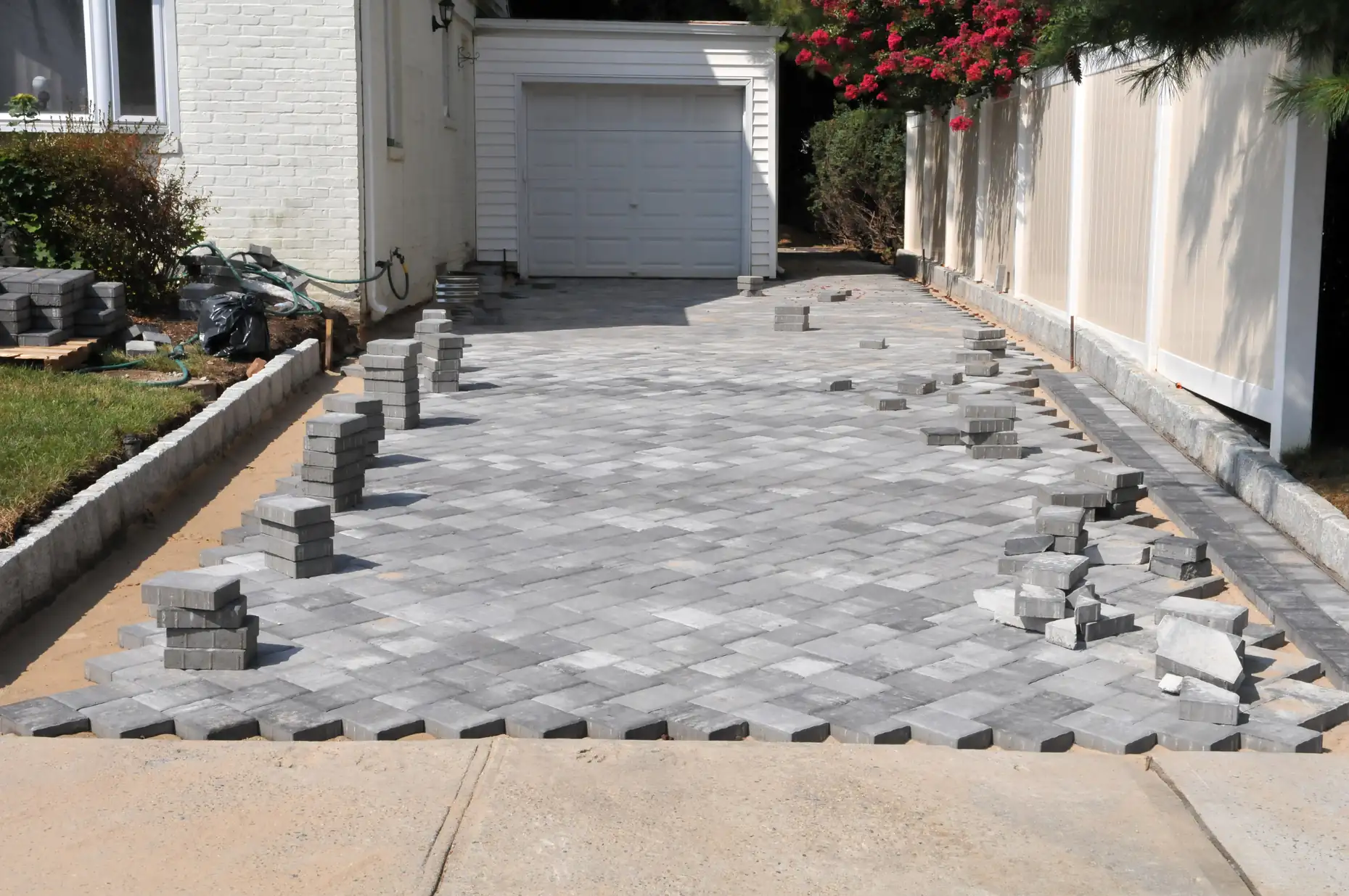
Concrete options include standard broom finish, exposed aggregate, or stamped patterns if you want something decorative. We also install concrete patios, walkways, and patio pavers if you’re doing multiple projects. The 5-year warranty covers our workmanship, and we’re local enough that you can actually reach us if something needs attention.
Pricing runs $7-$13 per square foot for standard concrete driveways in Newton, depending on site conditions and thickness requirements. We’ll give you an upfront number after looking at your property. No hidden fees for “unexpected” base work that any experienced contractor should’ve spotted during the estimate.
You’re looking at $7-$13 per square foot for a standard concrete driveway in Newton. A typical two-car driveway runs about 600-800 square feet, so figure $4,200 to $10,400 depending on thickness, site prep, and whether we’re dealing with drainage issues.
That’s higher than asphalt, which runs $3-$7 per square foot. But concrete lasts 25-50 years versus asphalt’s 15-20 years. You’re also not resealing every few years or dealing with the soft spots that develop when asphalt breaks down.
If your property has poor drainage or soft soil, expect the higher end of that range. We’re not padding the estimate – we’re doing the base work that keeps your driveway from settling and cracking in five years. The cost of asphalt driveway replacement adds up when you’re doing it twice as often.
Installation takes 1-3 days depending on size and site conditions. Demo and excavation usually happen on day one. Base prep, forming, and concrete pour happen on day two. Larger driveways might need a third day.
Then you wait. Concrete needs 7 days minimum before you can drive on it. In cooler weather, we’ll tell you to wait longer. Rushing this is how you end up with surface damage that can’t be fixed.
We’ll block off your driveway and give you a clear timeline before we start. If you need to park on the street for a week, you’ll know that upfront. Most Newton homeowners plan the work for when they can manage without driveway access for 7-10 days.
Yes, if it’s installed correctly. Concrete handles freeze-thaw cycles better than asphalt because it’s a denser material. Water has a harder time penetrating the surface, which means less expansion damage when temperatures drop.
Asphalt is petroleum-based, so it softens in summer heat and becomes brittle in winter cold. That’s why you see more cracking and potholing with asphalt in North Jersey. Concrete maintains its structure across temperature swings.
The key is proper installation. If the base isn’t compacted right or drainage is poor, concrete will crack just like asphalt. But when it’s done correctly with rebar reinforcement and the right mix design, concrete outlasts asphalt by decades in Newton’s climate. You’re still shoveling and salting, but the surface underneath isn’t deteriorating at the same rate.
Depends on what’s wrong with it. Small cracks under a quarter-inch can be sealed. Isolated sections with spalling or pitting can sometimes be patched. But if you’ve got wide cracks, multiple settling areas, or sections that have shifted, you’re looking at replacement.
Here’s the test: if water is getting under the slab and you’ve got drainage problems, repairs are just delaying the inevitable. The base is compromised, and patching the surface won’t fix what’s happening underneath.
We’ll tell you honestly whether repair makes sense or if you’re throwing money at a driveway that’ll need replacement in two years anyway. Sometimes a repair buys you time to budget for full replacement. Sometimes it’s just wasted money. We’ve been doing this long enough in Morris County to know the difference.
Most likely, yes. Newton and most Morris County towns require permits for driveway work, especially if you’re changing the size or altering drainage patterns. Requirements vary by municipality, but you’re typically looking at site plan approval and stormwater management compliance.
We handle the permit process. That includes submitting plans, dealing with the building department, and making sure the work meets local codes. You don’t need to take time off work to stand in line at town hall.
Skipping permits is a bad idea. If the town catches unpermitted work, they can make you rip it out and start over. When you sell your house, unpermitted improvements can kill a sale or force you to legalize the work retroactively. It’s not worth the risk to save a few hundred dollars in permit fees.
Stamped concrete uses patterns and coloring to mimic brick, stone, or pavers. Regular concrete is a smooth or broom-finished surface. Both use the same structural concrete underneath – the difference is purely aesthetic.
Stamped concrete costs more, usually $12-$18 per square foot versus $7-$13 for standard concrete. You’re paying for the additional labor and materials to create the pattern and color. It looks good, especially if you want your driveway to match a stamped concrete patio or walkway.
Maintenance is slightly higher with stamped concrete. You need to reseal it every 2-3 years to keep the color from fading and protect the surface. Regular concrete doesn’t require sealing, though it helps extend the life. If you’re going for curb appeal and don’t mind the upkeep, stamped concrete is worth considering. If you want low maintenance and maximum durability, stick with standard concrete.