
Hear from Our Customers
Your driveway stops being something you worry about every spring. No more standing water that seeps underneath and causes heaving. No more surface cracks that turn into expensive problems because the base wasn’t prepared correctly.
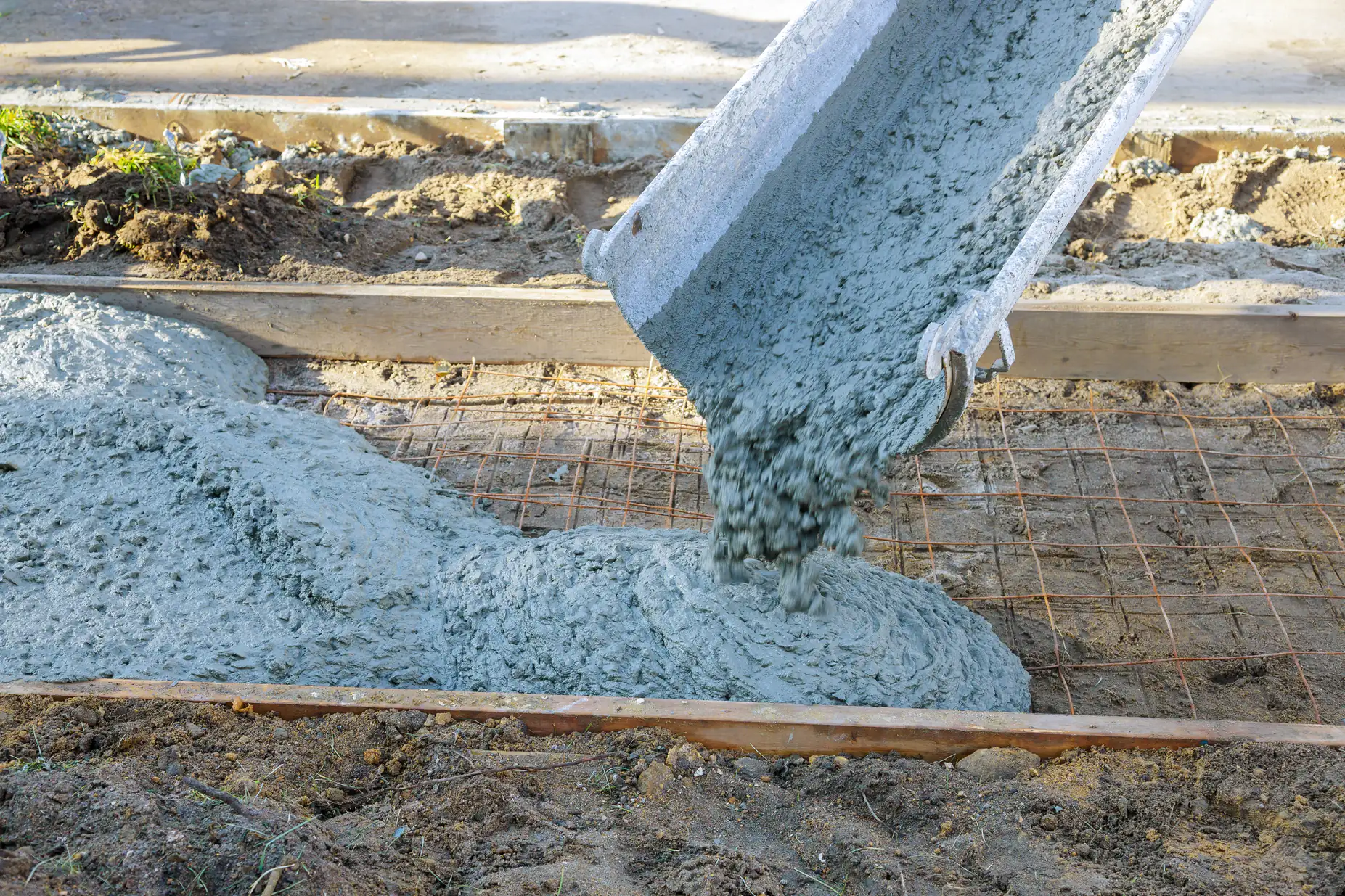
You get a concrete surface engineered for the exact conditions we deal with here in Morris County. That means Portland cement mixes designed to handle repeated freezing and thawing without breaking down. It means rebar reinforcement placed where it actually matters, not just thrown in to check a box.
The difference shows up in year five, year ten, year twenty. While other driveways around Long Valley start showing their age, yours still looks like it was poured last season. That’s what proper site prep, quality materials, and local expertise gets you.
We work exclusively in Morris, Sussex, and Somerset County because North Jersey weather requires specific knowledge. The freeze-thaw cycles here rank among the harshest in the state. Water gets into concrete, expands when it freezes, and creates constant stress that leads to cracking.
We’ve seen what happens when contractors from outside the area install driveways here. They use mixes that work fine in South Jersey but fail within three years up here. They skip crucial steps in base preparation because they don’t understand our soil conditions.
You’re hiring people who live in this weather, work in this weather, and know exactly what your driveway needs to survive it. We’re grounded in Morris County, and we’ve been getting this right since before stamped concrete became the standard for upscale residential work.
First, we assess your property’s drainage situation and soil stability. This isn’t a quick walkthrough. We’re looking at how water moves across your lot, where it pools, and what’s happening below the surface. If your soil can’t support the load properly, we address that before pouring anything.
Next comes excavation and base prep. We remove existing material down to stable soil, then build up a compacted aggregate base. This layer does the heavy lifting. It distributes weight, prevents settling, and gives water somewhere to go besides under your concrete. Most driveway failures start here, with contractors who rush this step.
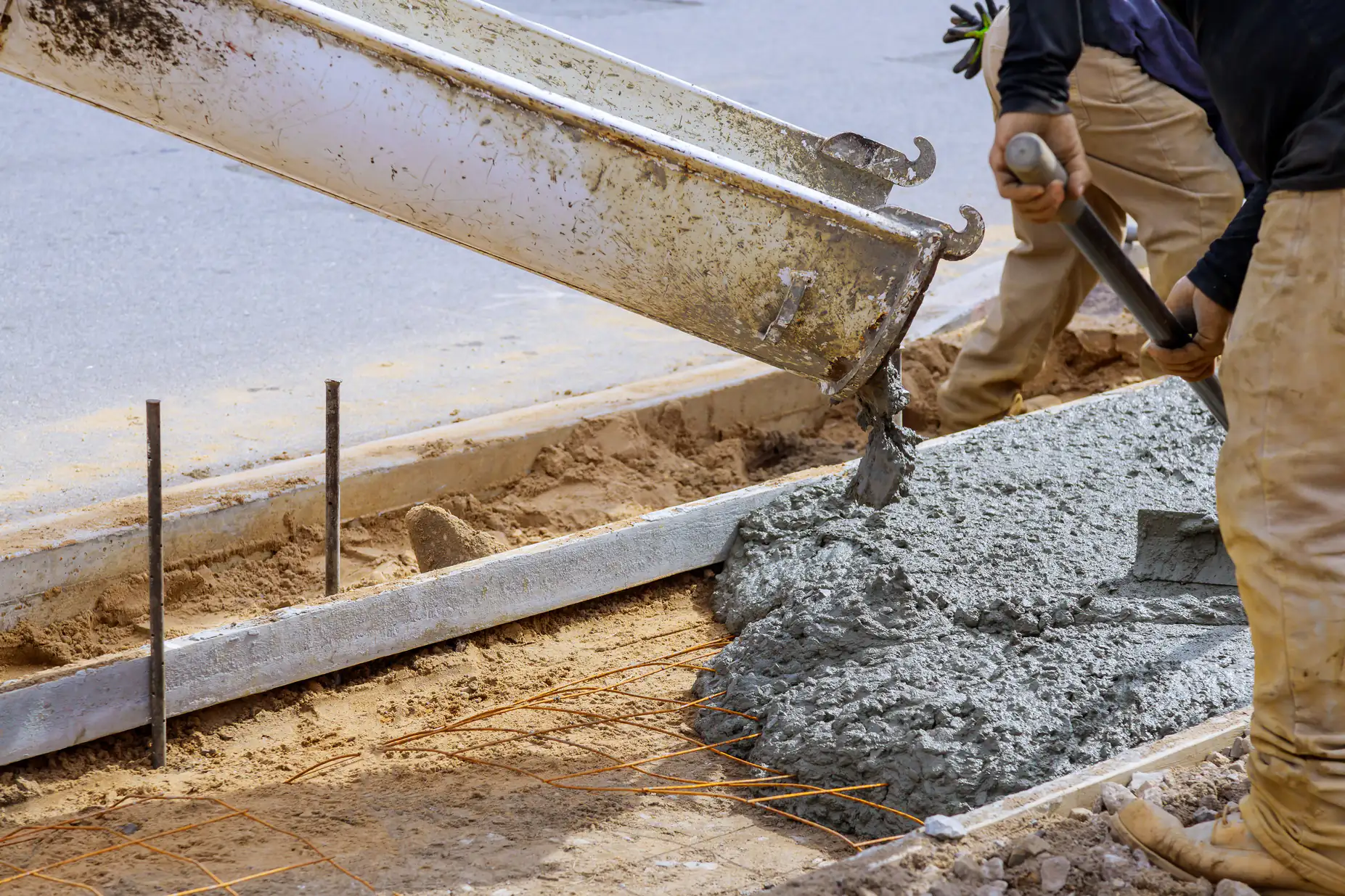
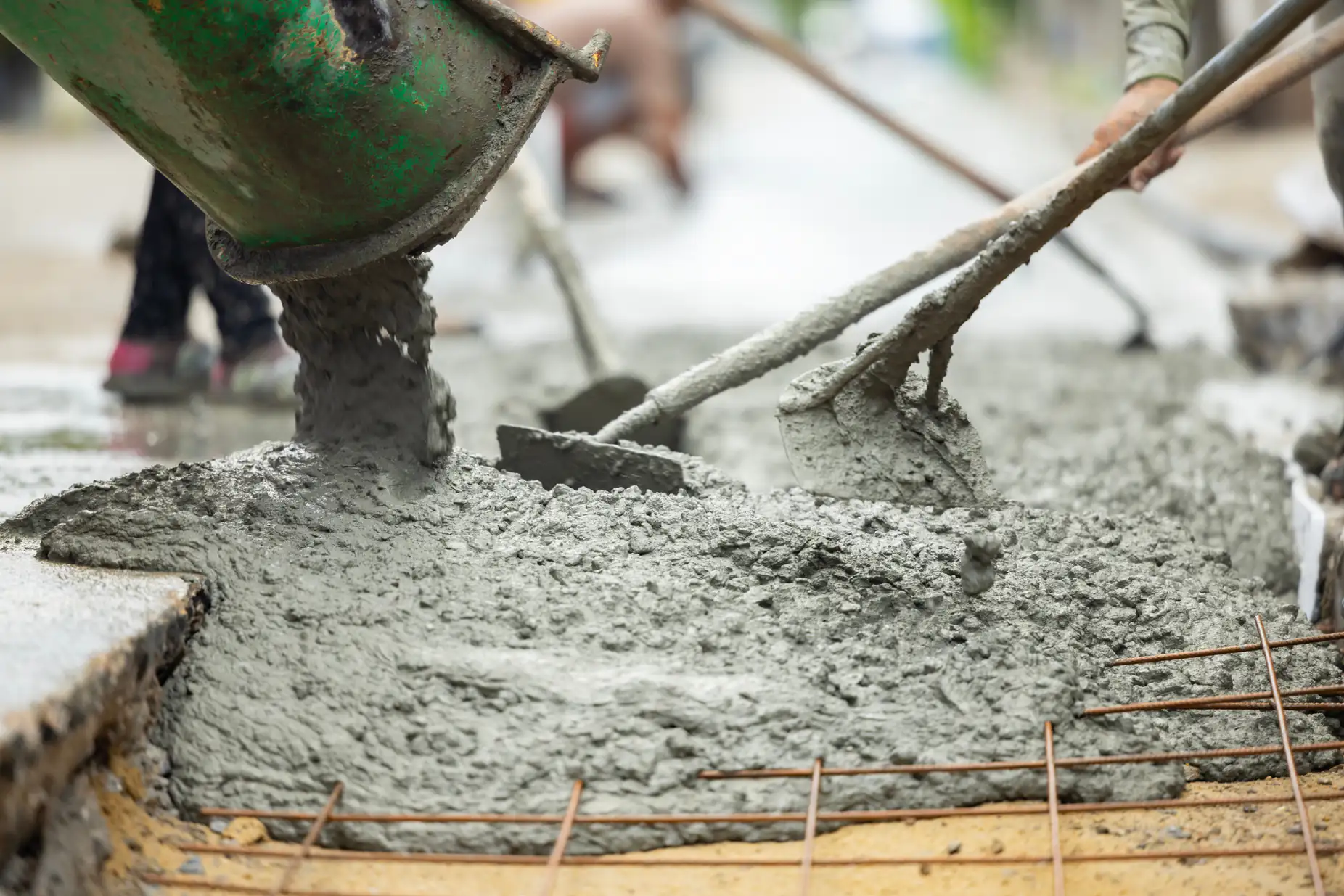
Then we form, reinforce, and pour. Rebar gets positioned to handle stress points. The concrete mix is specified for our climate. We pour when temperatures allow proper curing—nighttime temps below 50°F cause problems, so timing matters more than you’d think.
Finally, we finish the surface. If you’re going with stamped or decorative patterns, this is where your driveway stops looking like every other slab in the neighborhood. Then it cures for several days before you can drive on it. Rushing this causes surface damage that shows up immediately.

Ready to get started?
You can go with standard broom-finish concrete if you want a clean, functional surface that does its job without calling attention to itself. It’s the most affordable option and still lasts 30-plus years when installed correctly.
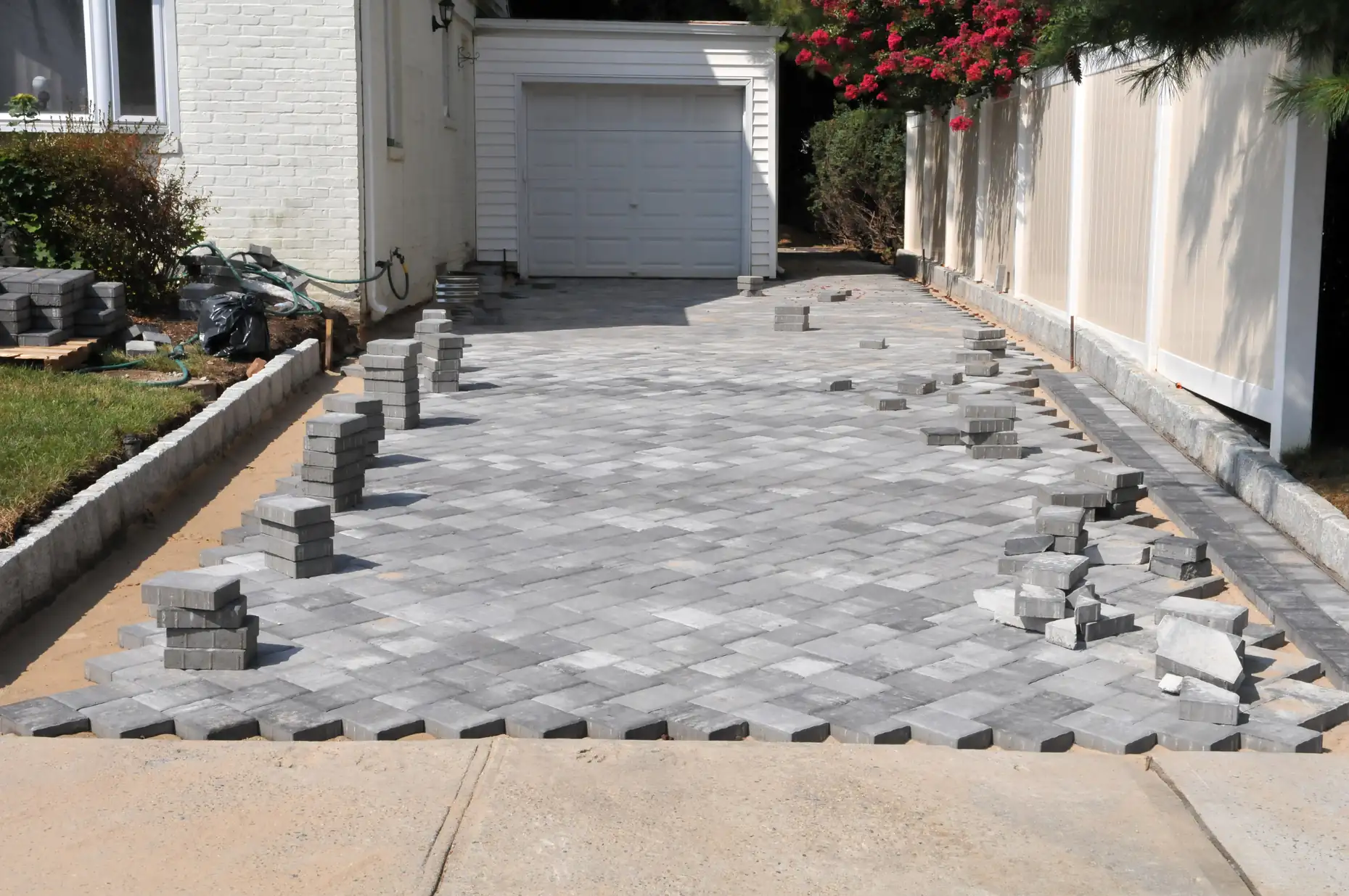
Or you can choose stamped concrete that mimics natural stone, brick, or slate. This is where most Long Valley homeowners land because the upcharge is reasonable and the curb appeal difference is significant. You’re looking at decorative patterns that complement your home’s architecture without the maintenance headaches of actual pavers.
We also handle concrete patios, walkways, and other flatwork using the same weather-resistant approach. Morris County’s climate doesn’t care whether it’s a driveway or a patio—it’ll destroy poorly installed concrete either way. So the same attention to drainage, base prep, and material selection applies across everything we pour.
Color options, border treatments, and pattern combinations give you plenty of ways to customize. The goal is a finished product that fits your property and your budget without compromising on the structural integrity that actually matters.
You’re looking at $7 to $13 per square foot for most residential concrete driveways in Morris County. Plain gray broom-finish concrete sits at the lower end of that range. Stamped or decorative patterns push you toward the higher end, sometimes reaching $15 to $18 per square foot depending on complexity.
A typical two-car driveway runs around 600 square feet, so you’re talking $4,200 to $7,800 for basic concrete, or $9,000 to $10,800 if you want stamped patterns and color. Those numbers include excavation, proper base prep, rebar reinforcement, and finishing work.
What drives cost up is usually site conditions. If we’re dealing with poor drainage that requires additional grading work, or if your existing driveway needs extensive removal, that adds to the total. We give you upfront pricing after assessing your specific property so there aren’t surprises halfway through the job.
A properly installed concrete driveway lasts 30 to 40 years in North Jersey if it’s built to handle freeze-thaw cycles. That means the right concrete mix, proper reinforcement, and a base that doesn’t shift or allow water penetration.
The driveways that fail early—within 10 to 15 years—usually have problems with the base layer or inadequate drainage. Water gets underneath, freezes, expands, and creates voids. Then the concrete settles unevenly and cracks. Once that process starts, it accelerates quickly.
Maintenance matters too. Sealing your concrete every few years protects the surface from water infiltration and extends its life. But even with zero maintenance, a well-built concrete driveway in Long Valley should give you 25-plus years before you’re thinking about replacement. Compare that to asphalt, which typically needs resurfacing every 15 to 20 years, and the value proposition becomes clear.
Concrete handles freeze-thaw cycles better than asphalt in Morris County’s climate. Asphalt is petroleum-based and softens in summer heat, then contracts in winter cold. That constant expansion and contraction leads to cracking and surface deterioration faster than concrete experiences.
Concrete costs more upfront—about $7 to $12 per square foot versus $4 to $7 for asphalt—but it lasts significantly longer. You’re looking at 30-plus years for concrete versus 15 to 20 for asphalt before major work is needed. Concrete also requires less maintenance over its lifetime.
The tradeoff is repair complexity. Small asphalt cracks can be patched relatively easily. Concrete cracks are more visible and harder to fix invisibly. But if the concrete is installed correctly with proper reinforcement and drainage, you shouldn’t be dealing with significant cracking in the first place. For Long Valley’s freeze-thaw conditions specifically, concrete is the more durable long-term choice.
Late spring through early fall gives you the most reliable conditions for concrete driveway installation in North Jersey. You need consistent temperatures above 50°F, including overnight, for proper curing. When nighttime temps drop below that threshold, the concrete cures unevenly and you get surface problems almost immediately.
Summer works, but extreme heat creates its own challenges. Concrete sets faster in high temperatures, which means we have less working time for finishing and stamping. It’s manageable, but not ideal for complex decorative work.
Early fall is often the sweet spot. Temperatures are moderate, soil conditions are stable, and there’s less risk of weather delays. Spring works too, once the ground has thawed completely and drainage patterns are clear. Winter installation is possible in theory but rarely worth the risk—too many variables that can compromise the final product. If you’re planning a concrete driveway project, reaching out in early spring to schedule for late spring or fall gives you the best outcome.
Most concrete driveway replacements in Long Valley don’t require a permit if you’re staying within your existing driveway footprint and not changing drainage patterns. But if you’re expanding the driveway, adding new impervious surface area, or altering how stormwater runs off your property, you’ll likely need approval from Washington Township.
Morris County has stormwater management requirements that affect larger paving projects. If your new driveway increases impervious coverage beyond certain thresholds, you may need to incorporate drainage solutions like permeable pavers in certain areas or install drywells to manage runoff.
We handle this regularly and can tell you during the initial assessment whether permits are needed for your specific project. If they are, we’ll walk you through what’s required. The last thing you want is to install a beautiful new driveway only to have the township flag it during a routine inspection. Better to know upfront and handle it correctly from the start.
We can get close, but matching existing stamped concrete perfectly is difficult because concrete changes color as it ages. Even if we use the same stamp pattern and color additives, your new driveway will look noticeably different from a patio that’s been down for five or ten years.
The better approach is usually to tie everything together with a complementary pattern or color scheme rather than trying to match exactly. If your existing patio uses a slate pattern, we might suggest a different stone texture for the driveway that coordinates without trying to be identical.
Another option is refreshing the existing concrete at the same time. If your patio or walkway is looking worn anyway, re-staining or re-sealing it when we install the new driveway brings everything to the same baseline. Then it all ages together and maintains a cohesive look. We’ll show you samples and discuss options during the planning phase so you can see what works best for your property.