
Hear from Our Customers
You’re not just getting a smooth surface. You’re getting a driveway that won’t embarrass you when guests pull up, won’t buckle after the first hard winter, and won’t need replacing in five years because someone cut corners on the base.
When water freezes, it expands with up to 30,000 PSI of pressure. That happens dozens of times every winter in Lincoln Park. If your concrete isn’t mixed right or the base isn’t prepared correctly, those freeze-thaw cycles will crack it apart.
We use 4,000 PSI concrete with air entrainment specifically designed for Morris County weather. The base gets excavated to the right depth for local soil conditions, graded for proper drainage, and compacted so it won’t shift. That’s what keeps your driveway intact for 25 to 30 years instead of needing repairs every spring.
We’ve been installing driveways across Morris, Sussex, and Somerset County for years. We’ve seen what happens when contractors skip steps or use the wrong materials for New Jersey’s climate. We’ve also seen driveways we installed a decade ago still performing exactly as they should.
Lincoln Park sits in one of the highest freeze-thaw zones in New Jersey. That means your driveway needs more than standard concrete and a quick pour. It needs proper thickness, the right mix design, and a base that accounts for how water moves through local soil.
We’re not the cheapest option, and that’s intentional. You’re paying for materials that last and installation that prevents the problems most homeowners don’t realize they’re signing up for until it’s too late.
First, we excavate to the correct depth based on your property’s soil and drainage. Most driveways need 6 to 8 inches of base material, but that depends on what we’re working with. If the ground isn’t stable or graded properly, nothing above it will hold up.
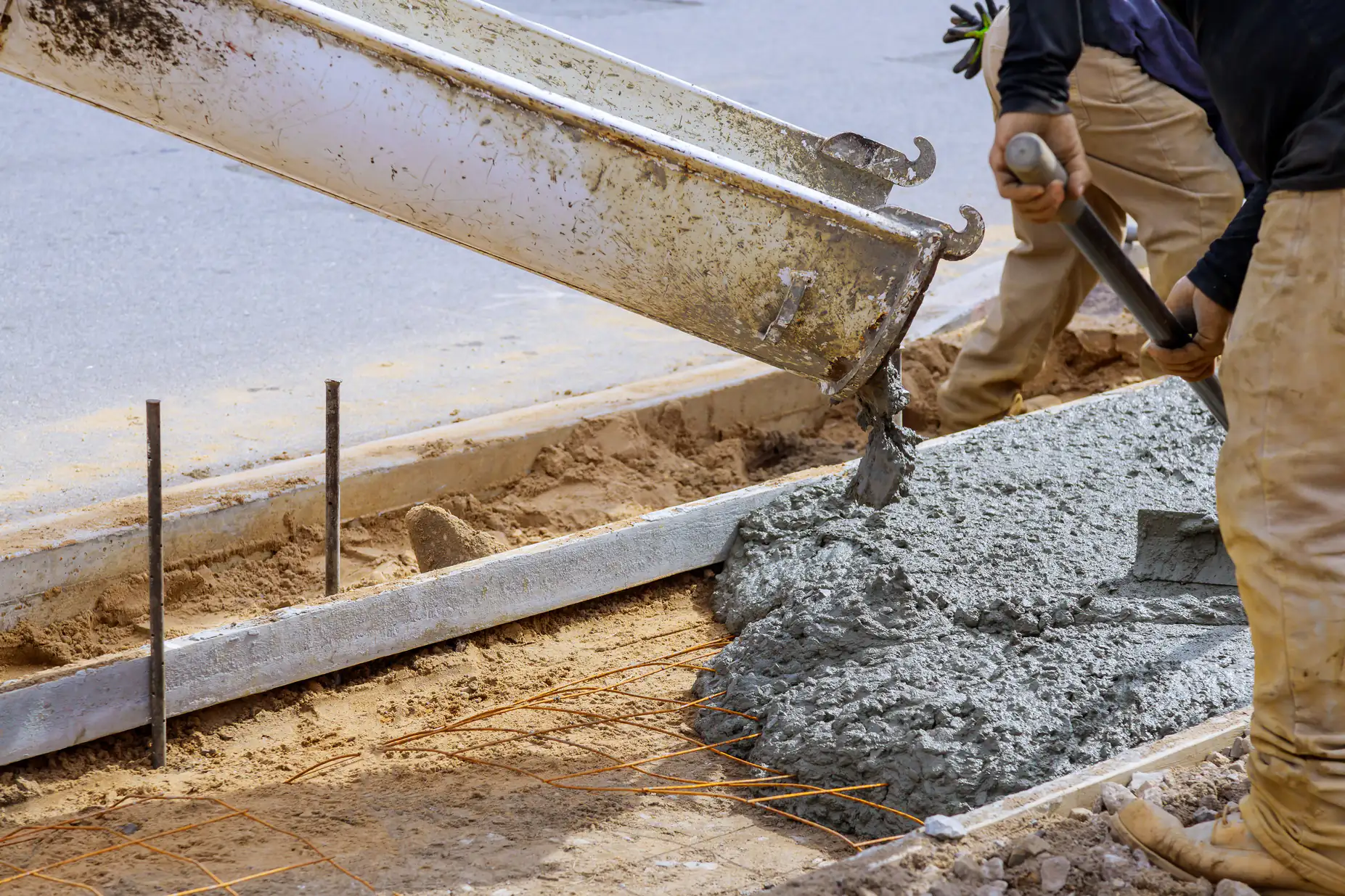
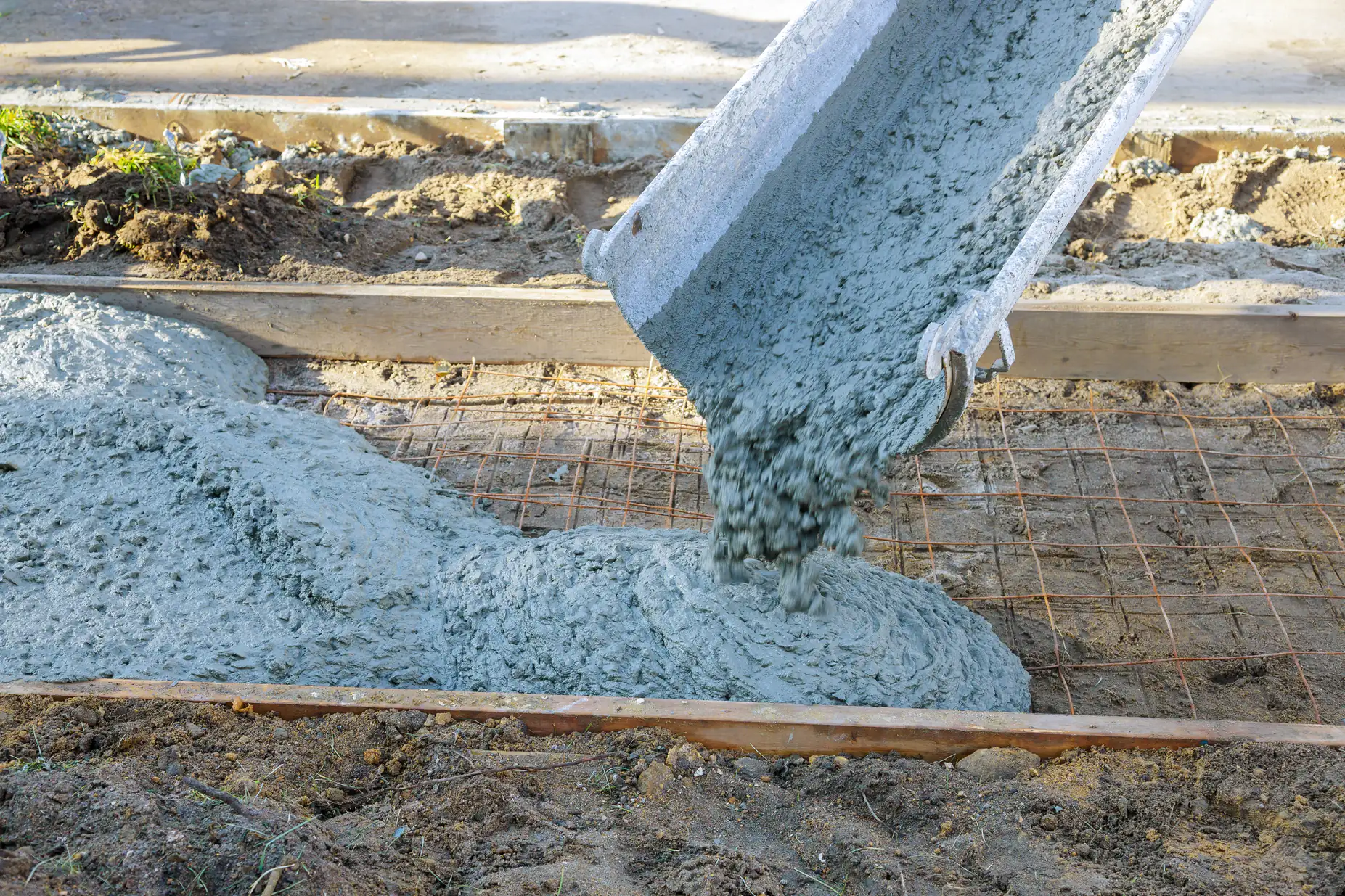
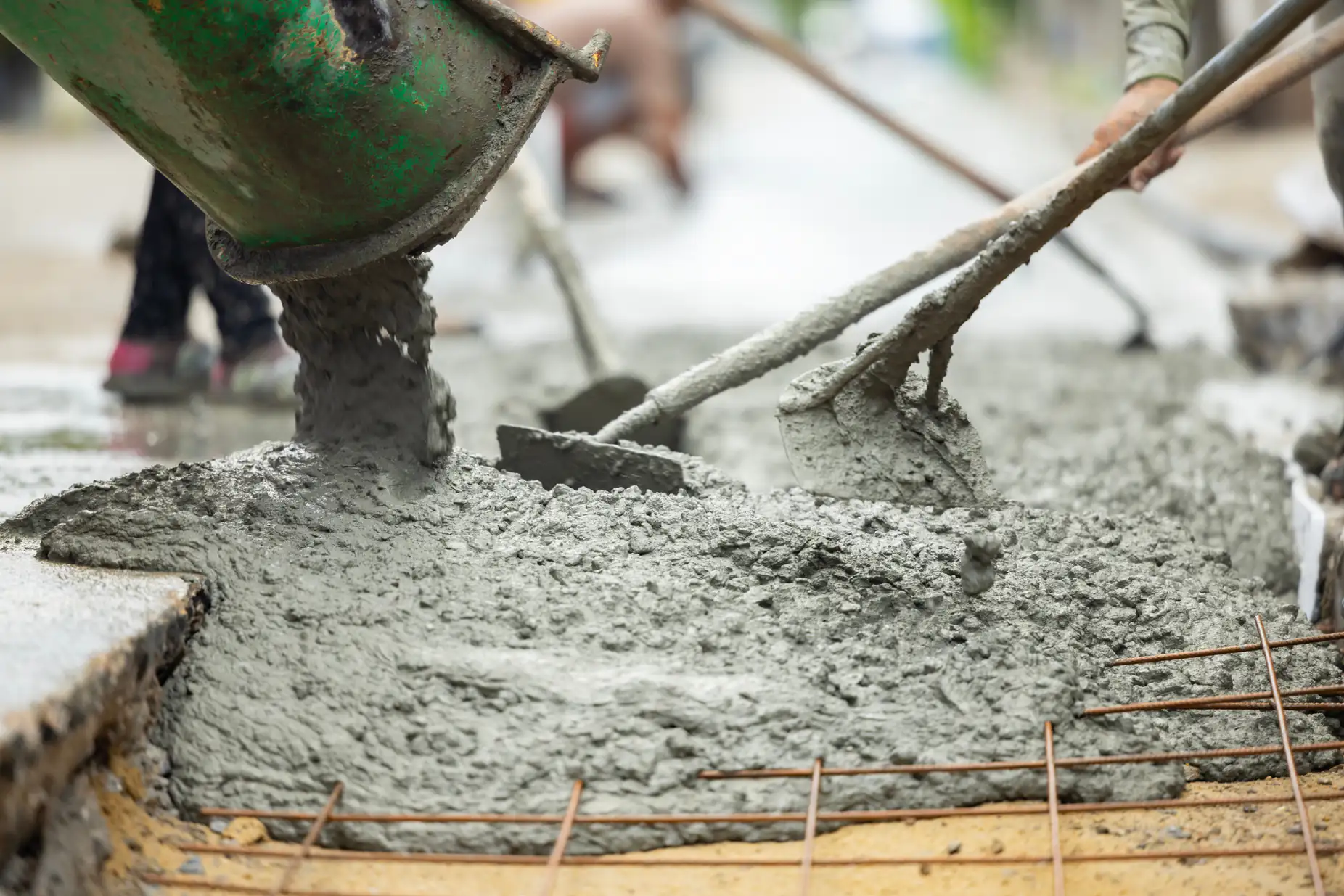
Next, we install and compact the base using crushed stone. This layer prevents shifting and controls water movement so it doesn’t pool under your concrete. Then we set forms, add rebar reinforcement, and pour Portland cement concrete mixed to handle freeze-thaw cycles.
The concrete gets finished based on what you need: broom finish for traction, exposed aggregate for grip and texture, or stamped patterns if you want something that looks like natural stone. After it cures, we remove the forms, clean up the site, and make sure water drains away from your foundation. The whole process typically takes three days, weather depending.

Ready to get started?
Every project starts with site evaluation and proper excavation. We’re looking at soil type, drainage patterns, and how water currently moves across your property. If there’s an existing driveway, we remove it completely so the new base sits on solid ground.
You get a compacted stone base, rebar reinforcement, and 4,000 PSI concrete with 5 to 7 percent air content. That air entrainment is non-negotiable in Lincoln Park because it’s what allows the concrete to expand and contract without cracking during freeze-thaw cycles.
For finishes, you can choose standard broom texture for safety and traction, exposed aggregate that shows the stone and provides extra grip, or stamped concrete that mimics brick, slate, or stone patterns. We also handle grading and sloping so water runs off properly instead of pooling or draining toward your foundation. Lincoln Park gets unpredictable weather, especially in spring and late summer, so controlling water is critical to long-term performance.
For a standard 600-square-foot driveway in Lincoln Park, you’re looking at $4,200 to $7,800 depending on site conditions, thickness, and finish. That’s roughly $7 to $13 per square foot for materials and installation.
Concrete costs more upfront than asphalt, but the 20-year total cost is nearly identical when you factor in maintenance and resurfacing. Asphalt needs sealing every few years and typically requires resurfacing or replacement around year 15. Concrete lasts 25 to 30 years with minimal maintenance if it’s installed correctly.
If your property has drainage issues, unstable soil, or requires extra excavation, that will add to the cost. Same goes for decorative finishes like stamped patterns or exposed aggregate. We give you a clear price after evaluating your site so there’s no guessing or surprise charges later.
Most concrete driveway installations take three days from excavation to final finishing. Day one is excavation and base preparation. Day two is forming, reinforcement, and pouring the concrete. Day three is finishing, curing, and cleanup.
Weather plays a big role in timing. We can’t pour concrete if it’s going to rain or if temperatures drop too low during the curing process. Late spring and early fall are the most reliable windows in Lincoln Park because temperatures stay stable and soil conditions are predictable.
After the pour, you’ll need to stay off the driveway for at least seven days while it cures. Full strength takes about 28 days, but you can drive on it after a week as long as you’re careful. Rushing that timeline is how driveways get surface damage that could’ve been avoided.
Concrete is rigid and lasts longer. Asphalt is flexible and costs less upfront. Both work in Lincoln Park, but they perform differently under North Jersey’s freeze-thaw cycles.
Concrete handles temperature swings better if it’s mixed and installed correctly. It doesn’t need sealing or resurfacing, and it typically lasts 25 to 30 years. Asphalt is more forgiving with ground movement, but it softens in summer heat and requires maintenance every few years. Most asphalt driveways need resurfacing around year 15 and full replacement by year 20.
If you want something that looks cleaner, requires less maintenance, and adds more to your property value, concrete is the better choice. If you’re working with a tighter budget and don’t mind periodic upkeep, asphalt works fine. Just know that over 20 years, the total cost evens out because of asphalt’s maintenance requirements.
It shouldn’t if it’s installed correctly. Cracking happens when water gets into the concrete, freezes, expands, and breaks the surface apart. That’s why we use air-entrained concrete with 5 to 7 percent air content and a minimum compressive strength of 4,000 PSI.
Those tiny air pockets give the concrete room to expand and contract without cracking under pressure. We also make sure the base is properly compacted and graded so water drains away instead of pooling underneath. If water can’t get under the slab, it can’t cause problems.
Lincoln Park experiences some of the highest freeze-thaw cycles in New Jersey, so this isn’t optional. Contractors who skip air entrainment or use lower-grade concrete are setting you up for expensive repairs within a few years. Small cracks you ignore in the fall turn into major damage by spring, and professional repairs can run anywhere from hundreds to several thousand dollars depending on severity.
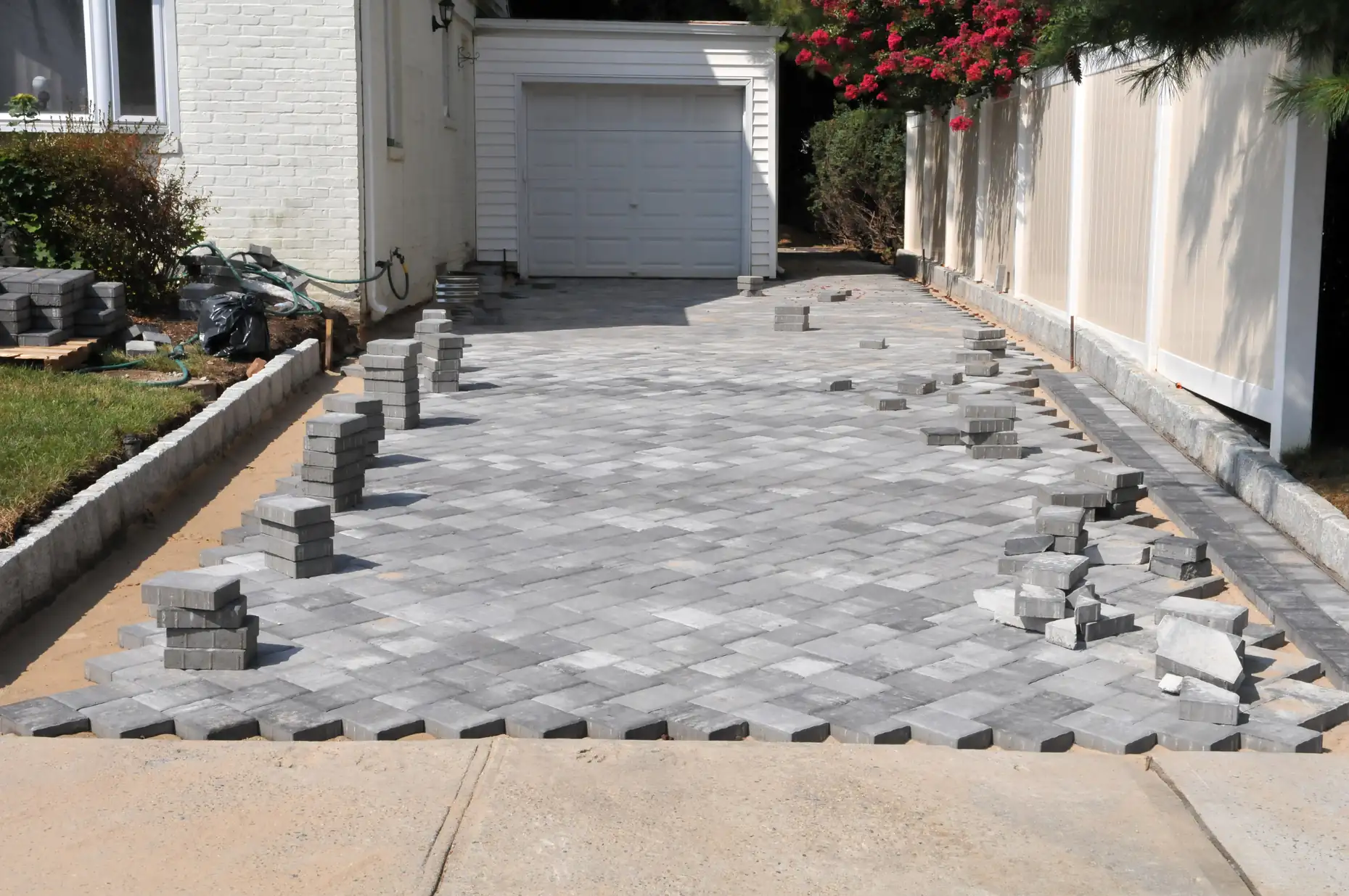
Yes. Concrete doesn’t have to look like a plain gray slab. You can choose stamped patterns that mimic brick, slate, flagstone, or wood. You can add color, borders, or exposed aggregate for texture and visual interest.
Stamped concrete is popular in Lincoln Park because it gives you the look of high-end pavers or natural stone without the maintenance. Exposed aggregate is making a comeback because it adds grip for safety, looks natural, and complements both modern and traditional homes.
Decorative finishes add to the cost, but they also add to your property value and curb appeal. If you’re planning to sell in the next few years, a well-designed concrete driveway can increase your home’s value by as much as $20,000 in some New Jersey markets. Even if you’re staying put, it’s one of the first things guests see when they pull up, and it makes a difference.
Most likely, yes. Lincoln Park typically requires permits for driveway installation or replacement, especially if you’re changing the size, grade, or drainage. Your contractor should handle the permit process as part of the job.
Permits exist to make sure the work meets local building codes and doesn’t create drainage problems for neighboring properties. If your driveway isn’t sloped correctly or if water runoff isn’t managed, it can cause foundation issues for you or your neighbors.
We handle permits and make sure everything is up to code before we start. That includes proper setbacks, drainage compliance, and any requirements specific to your property. Skipping permits might save time upfront, but it creates problems if you ever sell the house or need to file an insurance claim related to your driveway.