
Hear from Our Customers
Your driveway stops being a problem. No more standing water after storms. No more cracks spreading across the surface every spring. No more avoiding eye contact with neighbors because your driveway looks like a war zone.
You get a smooth, level surface that drains properly and holds up under actual use. That means daily traffic, New Jersey freeze-thaw cycles, and the occasional moving truck don’t turn your investment into a repair project two years later.
The difference shows up in winter. When other driveways in Franklin Park are cracking and heaving from ice, yours stays intact because it was poured at the right thickness, reinforced correctly, and graded for drainage from day one. That’s not luck—it’s how concrete work is supposed to be done.
Platinum Paving is a family-owned operation based in Morris County. We’ve installed concrete and asphalt driveways across Franklin Park, Somerset, and the surrounding areas since the early 2000s. We’re licensed, bonded, insured, and BBB accredited—not because we had to be, but because that’s how you run a real business.
We’re not the cheapest option, and we won’t pretend to be. The crews who quote you half our price are either skipping steps or using subpar materials. We use Portland cement mixes with rebar reinforcement and pour at proper thickness for New Jersey conditions. That costs more upfront, but it’s why our driveways last.
You’ll work with the same team from estimate to completion. No subcontractors. No vanishing after the deposit clears. We’re local, and we’re staying local—which means we actually care what your driveway looks like five years from now.
First, we assess your property. That means looking at drainage, soil conditions, and whether your existing driveway needs full removal or can be worked around. If there’s a drainage problem—and in Franklin Park, there usually is—we address it before pouring anything. Poor drainage is the number one reason driveways fail early.
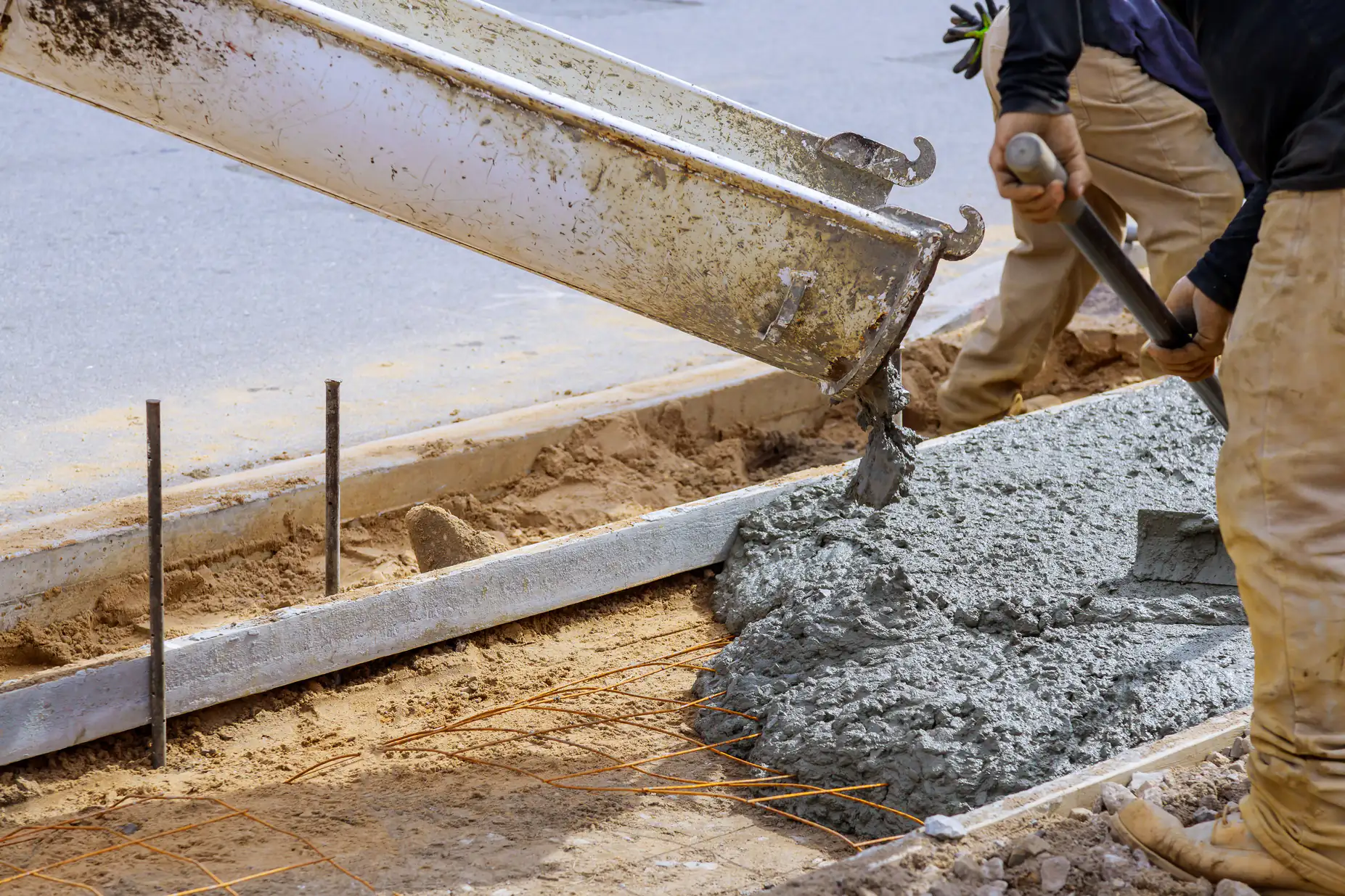
Next, we excavate and prep the base. For concrete, that means four to five inches of properly compacted aggregate, then four to five inches of reinforced concrete on top. We don’t shortcut the base work because that’s where most failures start. If the ground shifts, your driveway cracks—no matter how good the concrete is.
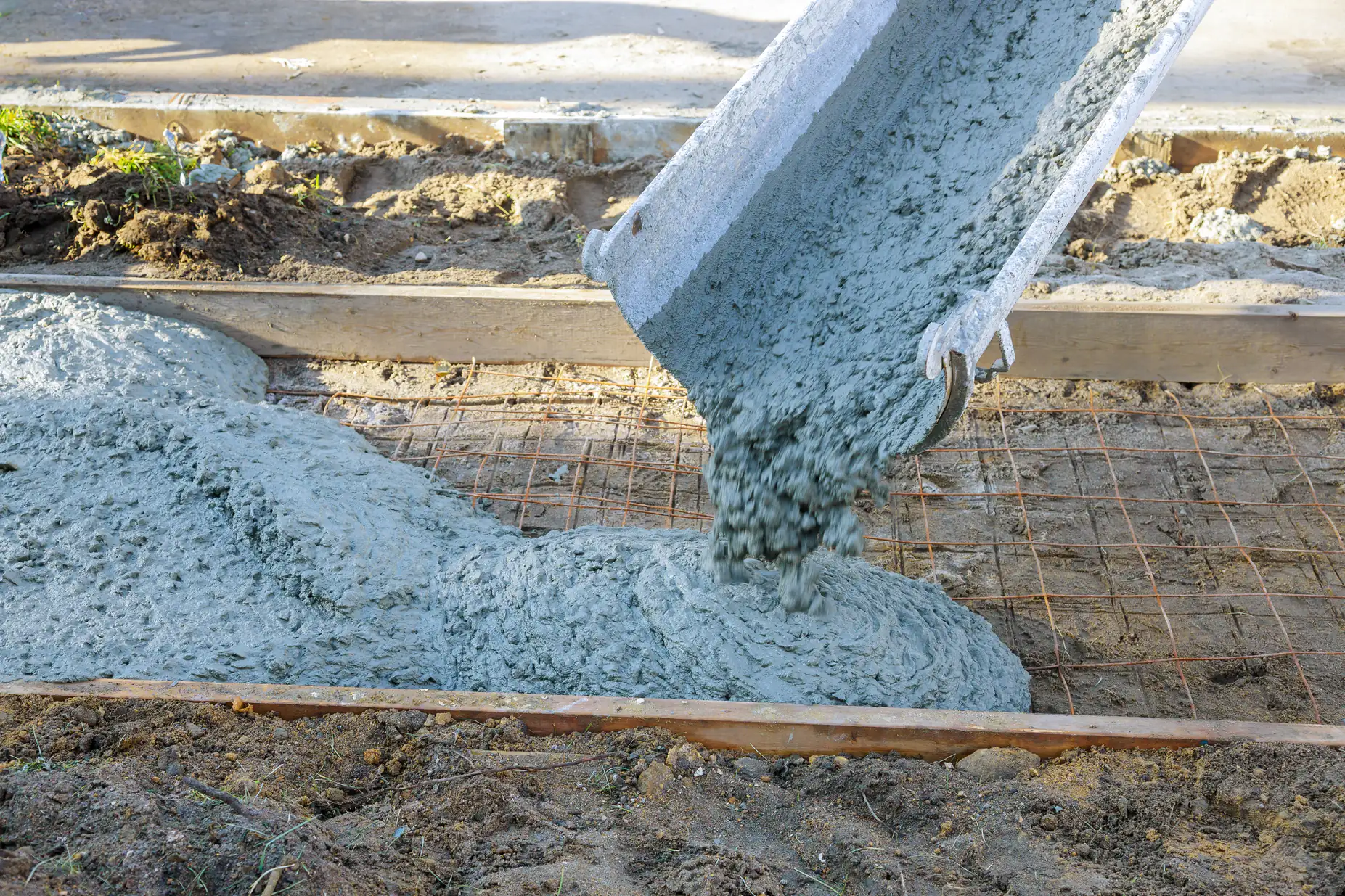
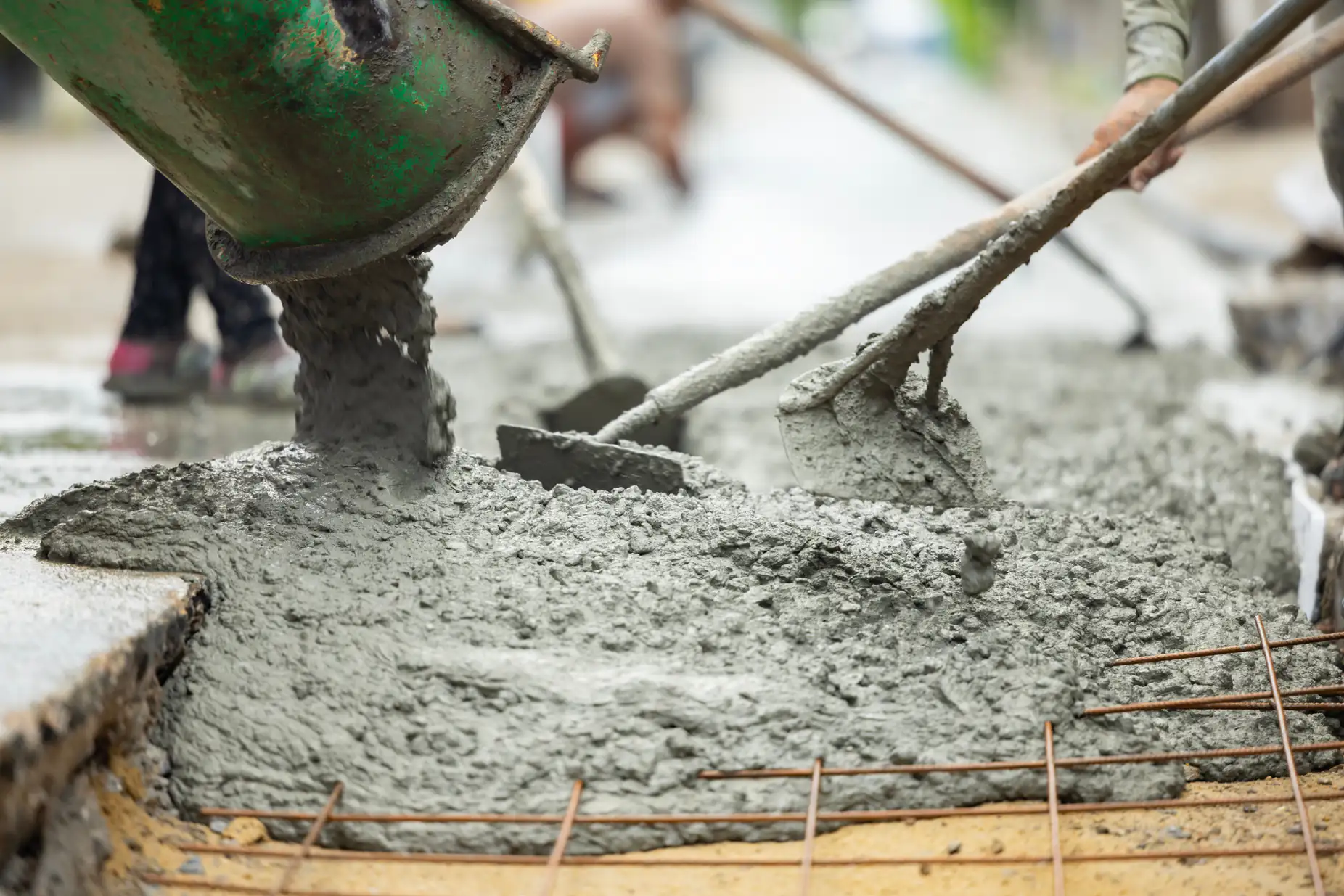
Then we pour, finish, and cure. Concrete needs time to reach full strength, which means you’re not parking on it the next day. We’ll give you a realistic timeline based on weather and project size. Most residential driveways in Franklin Park are completed within three to five days, but curing takes longer.
After that, you’re done. We clean up, haul away debris, and leave you with a driveway that actually works. You’ll get a five-year warranty on materials and workmanship, which we honor because we’re not going anywhere.

Ready to get started?
You get full-service concrete driveway installation, which means site prep, excavation, grading, base installation, reinforcement, pouring, finishing, and cleanup. We handle drainage corrections as part of the job—not as an upsell. If water’s pooling near your foundation or running toward your garage, we fix it.
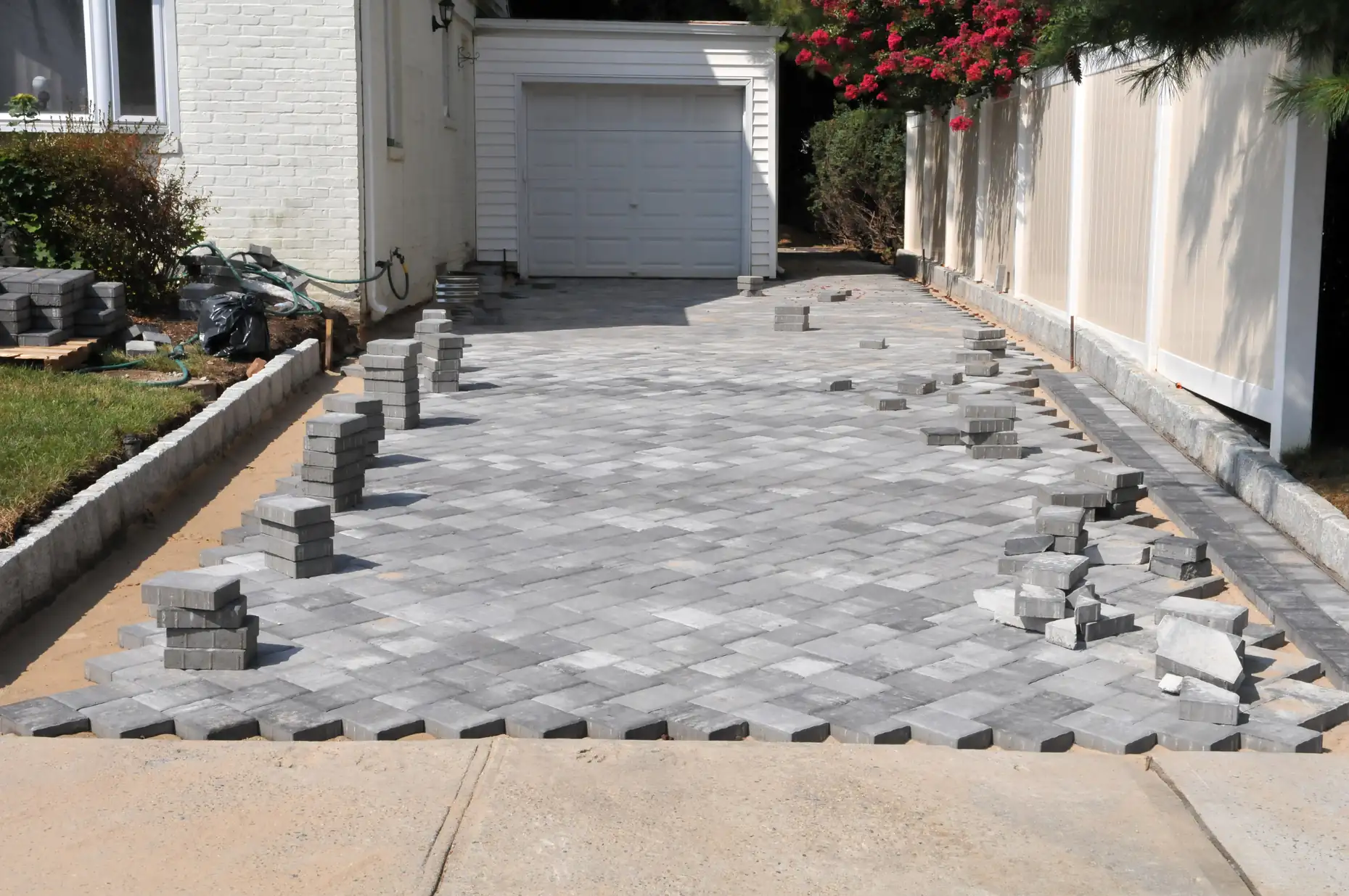
We also offer decorative options like stamped concrete if you want something beyond standard gray. Stamped patterns mimic brick, stone, or slate and hold up better than pavers in freeze-thaw conditions. It’s a popular choice in Franklin Park for homeowners who want curb appeal without the maintenance headaches of traditional pavers.
For properties with existing driveways, we’ll handle demolition and removal. That adds to the cost—usually $1.40 to $2.30 per square foot—but it’s necessary if your current surface is too damaged to overlay. We’ll tell you upfront whether removal is required or if resurfacing is an option.
Pricing is transparent. A standard 12×30 foot concrete driveway in Franklin Park runs between $2,500 and $4,500 depending on site conditions and whether decorative finishes are involved. We don’t play games with lowball quotes that balloon once work starts. What we quote is what you pay unless you change the scope.
A properly installed concrete driveway in Franklin Park should last 25 to 30 years, sometimes longer if maintained correctly. The key word is “properly installed.” That means adequate thickness, rebar reinforcement, proper base prep, and correct drainage grading.
New Jersey’s freeze-thaw cycles are brutal on concrete. Water seeps into small cracks, freezes, expands, and makes those cracks worse. If your driveway wasn’t poured thick enough or the base wasn’t compacted correctly, you’ll see damage within the first five years. That’s not a concrete problem—it’s an installation problem.
Maintenance helps too. Sealing your driveway every few years protects the surface from moisture and de-icing salts. Fixing small cracks early prevents them from spreading. But even with zero maintenance, a well-built concrete driveway in Somerset County will outlast most asphalt driveways by a decade or more.
Concrete costs more upfront but lasts longer and requires less maintenance. Asphalt is cheaper initially but needs resealing every few years and typically requires replacement after 15 to 20 years. For most Franklin Park homeowners, concrete makes more sense if you’re planning to stay in the house long-term.
Concrete handles New Jersey winters better. It doesn’t soften in summer heat like asphalt does, so you won’t get ruts from parked cars or tire marks on hot days. It also reflects more sunlight, which means less snow melt refreezing into ice patches.
Asphalt has its place—it’s faster to install and easier to repair if you’re on a tight budget. But if you’re already investing in a new driveway, the extra cost for concrete usually pays off in longevity and lower lifetime maintenance. We install both, so we’re not trying to upsell you. It just depends on your priorities and timeline.
Most residential driveway replacements in Franklin Park don’t require a permit if you’re staying within your existing footprint and not altering drainage patterns. But if you’re expanding the driveway, changing the grade, or adding new impervious surface area, you’ll likely need approval from Franklin Township.
We handle permit coordination as part of our service when it’s required. Somerset County has specific stormwater management rules, and Franklin Township enforces them. If your property has drainage issues or you’re near wetlands, there may be additional requirements.
The safest approach is to let us assess your property during the estimate. We’ll tell you whether permits are needed and what the process looks like. Skipping permits to save time or money is a bad idea—it can create problems when you sell the house or if a neighbor complains. We do it right the first time so you don’t have headaches later.
For a standard residential driveway in Franklin Park—around 12 feet by 30 feet—you’re looking at $2,500 to $4,500 for basic concrete without decorative finishes. If you want stamped or colored concrete, add another $3 to $8 per square foot depending on the pattern complexity.
That price includes demolition of your existing driveway if needed, which typically adds $1.40 to $2.30 per square foot. Site-specific factors like drainage corrections, difficult access, or poor soil conditions can increase costs. We’ll identify those issues during the estimate so there are no surprises.
Nationally, concrete driveways range from $7 to $13 per square foot in 2024, so Franklin Park pricing is consistent with regional averages. Be cautious of quotes significantly below that range—they usually mean thinner concrete, no reinforcement, or shortcuts on base prep. Those driveways crack within a few years, and you’ll end up paying twice to fix someone else’s bad work.
You should wait at least seven days before parking on a new concrete driveway, though 10 to 14 days is better. Concrete reaches about 70% of its full strength in seven days, but it continues curing for weeks. Parking too early can cause surface damage or cracking that shows up later.
We know that’s inconvenient, especially if you don’t have street parking options in Franklin Park. We’ll work with you to schedule the pour when it’s least disruptive, and we’ll give you a clear timeline upfront so you can plan accordingly.
Heavy vehicles like moving trucks should stay off the driveway for at least 28 days. That’s when concrete reaches full design strength. If you absolutely need to use the driveway earlier, talk to us first. We can recommend protective measures or adjust the schedule, but we won’t tell you it’s fine to park on fresh concrete just to close the job faster.
Some cracking is normal—concrete naturally develops small hairline cracks as it cures and settles. But large cracks, spiderweb patterns, or cracks wider than a quarter-inch usually indicate installation problems, not material defects.
The most common causes are inadequate base prep, insufficient thickness, missing reinforcement, or poor drainage. If the ground beneath your driveway shifts or stays saturated with water, the concrete will crack no matter what. That’s why we spend so much time on excavation and grading before we ever pour.
We use control joints to manage where cracks form. These are intentional grooves cut into the surface that guide cracking along predetermined lines, keeping it controlled and less visible. Rebar reinforcement helps too—it doesn’t prevent cracks, but it keeps them tight and prevents the slab from separating. A properly installed driveway in Franklin Park might develop a few minor cracks over 30 years, but it shouldn’t look like a jigsaw puzzle after five.