
Hear from Our Customers
Your driveway takes a beating. Forty-plus freeze-thaw cycles every winter. Clay-heavy soil that shifts. Two cars coming and going daily with a 35-minute commute each way. You need something that holds up without constant repairs.
Concrete done right means no sealing every few years. No soft spots forming after one bad winter. No wondering if you’ll need to replace the whole thing in a decade.
What you get is a surface that handles the weather, supports the weight, and looks clean for twenty years or more. That’s the difference between concrete installed by someone who knows Morris County conditions and a generic job that starts failing in year three.
Platinum Paving is a third-generation, family-owned paving company serving Morris, Sussex, and Somerset Counties. We’ve spent two decades learning what works in North Jersey and what doesn’t.
Franklin homeowners deal with specific challenges. Your soil moves. Your winters are harsh. Your property values depend on curb appeal that lasts.
We’re not the crew that disappears after the pour or shows up with the wrong mix design. We’re the ones who explain why we’re using 4,000 PSI concrete with air entrainment instead of cutting corners. We guarantee callbacks within 24 to 48 hours because your time matters, and we back our work with a five-year warranty because we know it’ll hold up.
First, we assess your existing driveway and soil conditions. Franklin’s clay-heavy soil requires proper base preparation, or you’ll see cracks within two years. We excavate to the right depth and install a compacted aggregate base that won’t shift when the ground freezes.
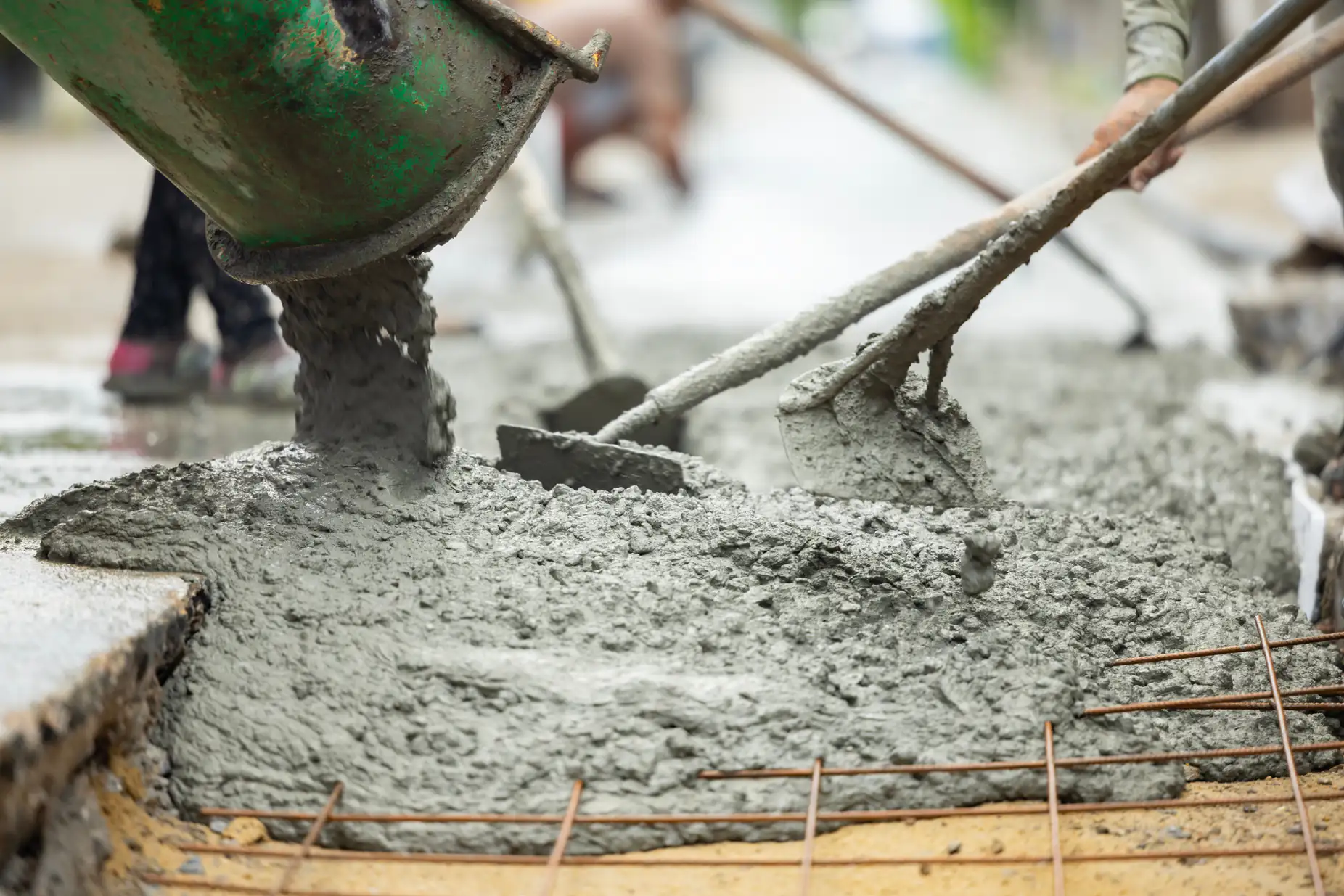
Next comes the formwork and reinforcement. We set forms to the correct slope for drainage and place rebar on 24-inch centers. This steel grid controls cracking by distributing stress across the entire slab instead of letting it concentrate in weak spots.
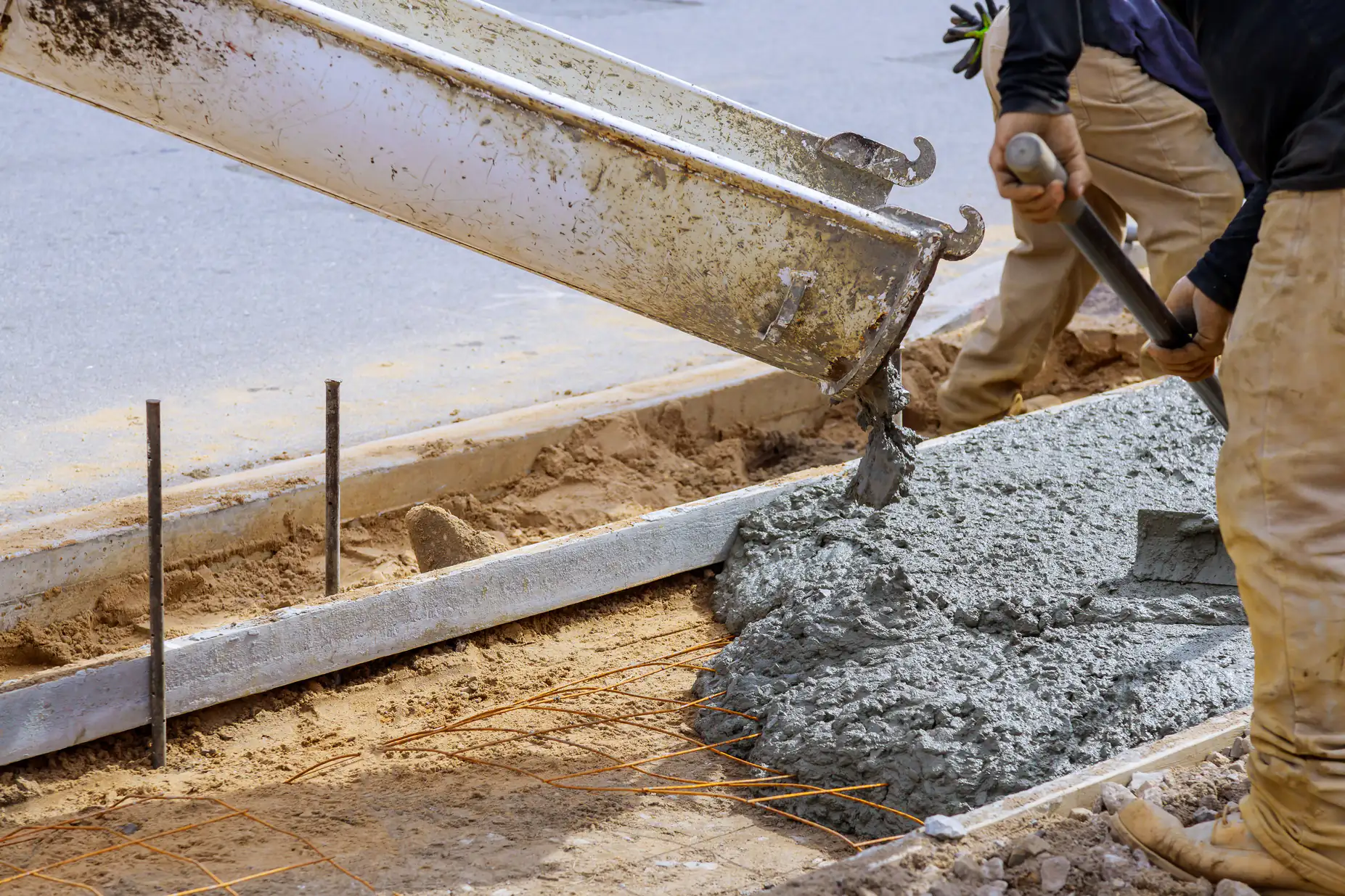
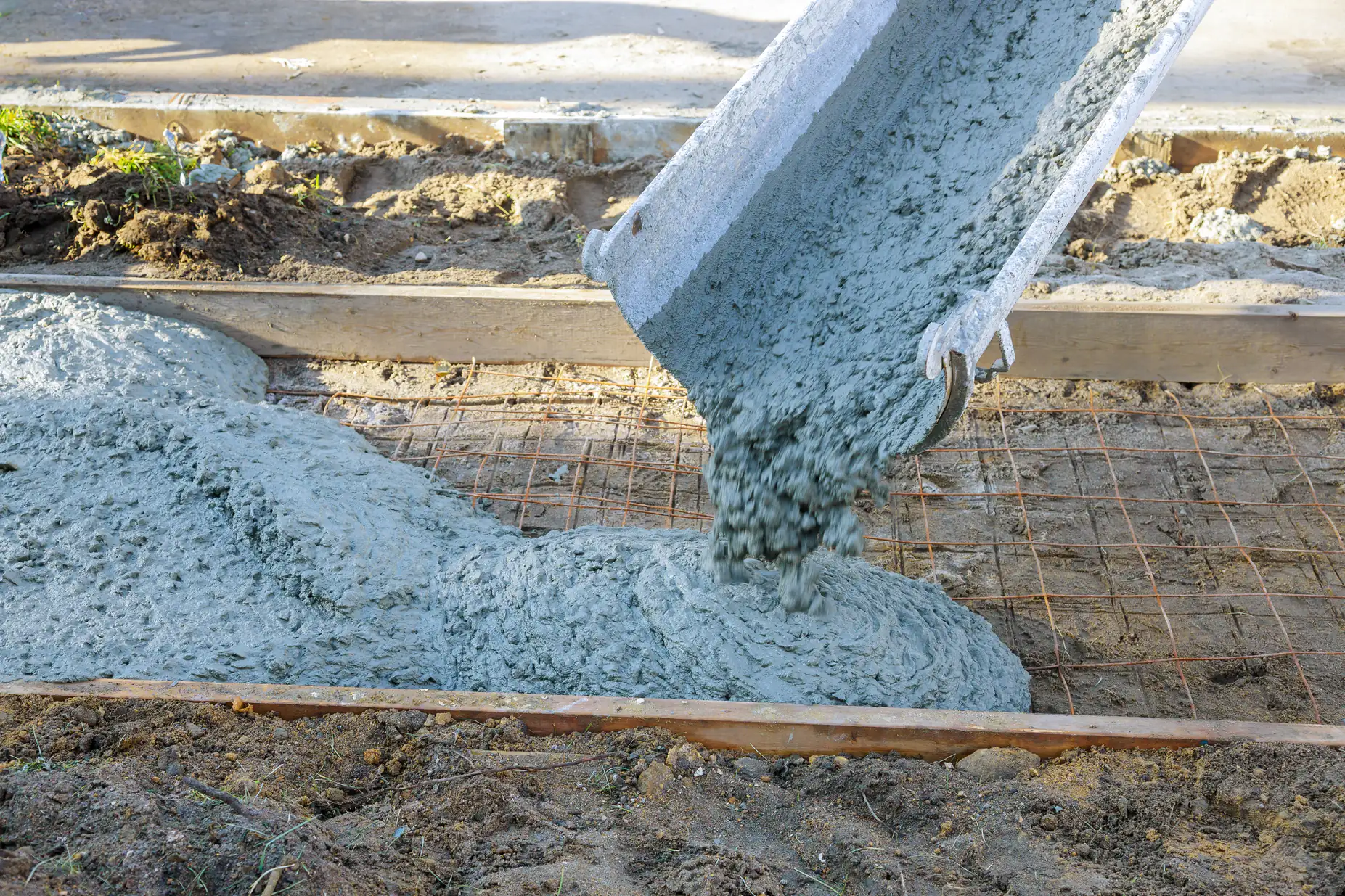
Then we pour the concrete. We use a minimum 4,000 PSI mix with 5 to 7 percent air entrainment, which creates tiny air pockets that give water somewhere to expand when it freezes. This is critical in Franklin, where freeze-thaw cycles destroy driveways that aren’t designed for it.
Finally, we finish the surface and cure it properly. Rushing this step causes surface defects. Most installations take one to three days depending on size, and you can typically drive on it within a week.

Ready to get started?
Your project includes proper site preparation, which means removing the old surface if needed and grading for drainage. Water sitting on your driveway is what causes the damage, so we make sure it flows away from your foundation and garage.
You get Portland cement concrete with rebar reinforcement, not the cheaper mesh alternative that doesn’t provide the same crack control. The mix is designed for North Jersey’s temperature swings, which range from below zero in January to above ninety in July.
We also handle permits if your Franklin township requires them. Many New Jersey towns have specific requirements for driveway work, and skipping this step can cause problems when you sell your home.
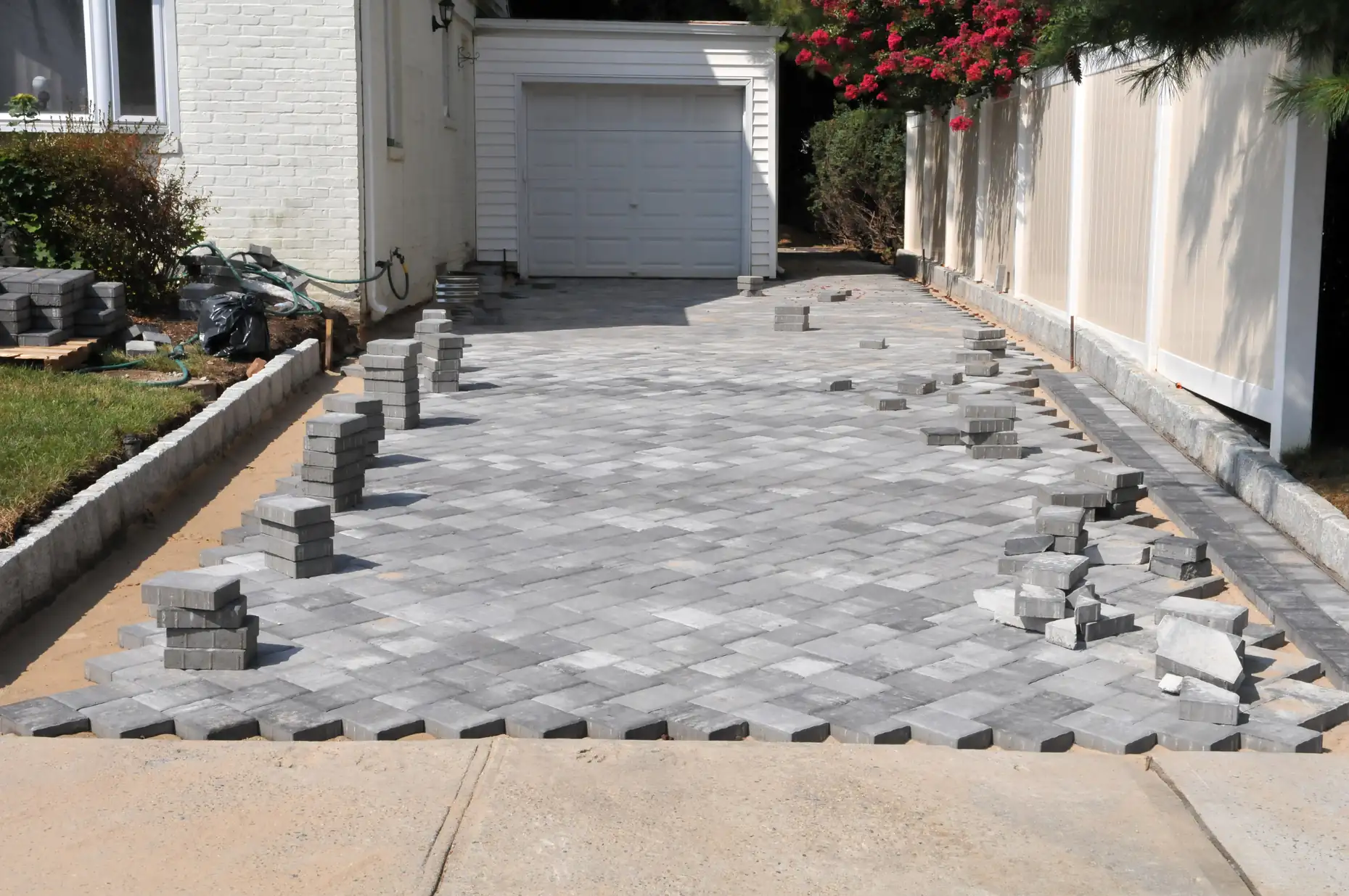
If you want decorative options, we offer stamped concrete that gives you the look of pavers without the maintenance headaches. Stamped patterns cost more upfront but eliminate the weed growth and shifting you get with individual pavers. For a standard 600-square-foot driveway in Franklin, you’re looking at $4,200 to $7,800 depending on thickness and finish options.
A properly installed concrete driveway in Franklin should last 25 to 30 years, sometimes longer. That’s assuming it’s built with the right mix design for North Jersey’s climate and installed over a stable base.
The key word is “properly.” If the contractor skips air entrainment or uses weak concrete, you’ll see spalling and cracking within five years. If they don’t prepare the base correctly for Franklin’s clay soil, you’ll get settlement cracks even sooner.
Asphalt driveways typically last 10 to 15 years in the same conditions, which is why concrete costs more upfront but less over time. You’re not repaving every decade or sealing every few years. The maintenance requirements are lower, and the replacement timeline is much further out.
Concrete runs $7 to $13 per square foot in Franklin, while asphalt costs $5 to $8 per square foot. For a typical 600-square-foot driveway, that’s $4,200 to $7,800 for concrete versus $3,000 to $4,800 for asphalt.
But that’s just the installation cost. Asphalt needs sealcoating every two to three years at $150 to $300 per application. Over 20 years, you’re spending another $1,500 to $3,000 on maintenance, plus you’ll likely need one full repaving at $3,000 to $4,800.
Concrete maintenance costs are lower. You might need to seal it once or twice over 20 years and repair a crack here and there, but the total 20-year cost for concrete is often comparable to or less than asphalt when you factor in all the maintenance and replacement expenses.
Concrete cracks because of ground movement, freeze-thaw cycles, and improper installation. Franklin’s clay soil expands when wet and contracts when dry, which creates stress on the slab. Water that seeps under the driveway freezes in winter, expands, and pushes the concrete up.
We prevent cracking by installing a proper aggregate base that drains water away and doesn’t shift with the soil. We use rebar reinforcement on 24-inch centers to distribute stress across the entire slab instead of letting it concentrate in one spot. And we include control joints that tell the concrete where to crack in straight lines instead of random patterns.
The mix design matters too. We use air-entrained concrete with 5 to 7 percent air content, which gives water somewhere to expand when it freezes. Without this, surface water penetrates the concrete, freezes, and pops off the top layer in a process called spalling. You’ll see this on older driveways that weren’t designed for North Jersey winters.
Sometimes, but usually it’s not the best approach. If your asphalt is in good structural condition with no major cracks or settling, it’s technically possible to pour concrete over it. But if the asphalt is failing, the concrete will fail too.
Most asphalt driveways in Franklin that need replacement are cracking because the base underneath has failed. Alligator cracking patterns and sunken areas mean the foundation is compromised. Pouring concrete over that doesn’t fix the problem—it just hides it temporarily.
The better approach is to remove the old asphalt, assess the base, and rebuild from the ground up if needed. This costs more initially but gives you a driveway that actually lasts. Cutting corners on the base to save a few hundred dollars now means you’ll be replacing the whole thing again in five years instead of 25.
You can typically drive on a new concrete driveway after seven days, though it continues gaining strength for 28 days. Light foot traffic is fine after 24 hours, but vehicles are too heavy before the concrete reaches sufficient strength.
The curing process is critical. Concrete doesn’t dry—it cures through a chemical reaction that requires moisture. If it dries too fast, especially in hot weather, you get surface cracks and reduced strength. We use curing compounds or keep the surface damp to ensure proper strength development.
Some contractors will tell you three days is fine, and technically the concrete has enough strength to support a car by then. But waiting the full week reduces the risk of surface damage and ensures you’re getting the full durability you paid for. After 28 days, the concrete has reached about 95 percent of its ultimate strength and can handle anything you throw at it.
It depends on the scope of work and your specific location in Franklin. Many New Jersey townships require permits for driveway replacement or expansion, especially if you’re changing the size or altering drainage patterns.
The permit process typically involves submitting plans that show the driveway dimensions, slope, and how stormwater will be managed. Franklin and surrounding Morris County towns have specific requirements about how much of your property can be covered with impervious surfaces like concrete.
We handle the permit research and application for you. Skipping this step might save a few hundred dollars now, but it can cause serious problems later. If you sell your home and the buyer’s inspector discovers unpermitted work, you may have to rip out the driveway and start over or face penalties from the township. It’s not worth the risk.