
Hear from Our Customers
You’re tired of watching hairline cracks turn into potholes every winter. Water seeps in, freezes, expands with up to 30,000 psi of pressure, and destroys whatever patch job you paid for last year.
A properly installed concrete driveway eliminates that cycle. Strategic expansion joints let the concrete move without cracking. Steel reinforcement holds everything together when the ground shifts. Proper thickness and base prep mean the surface stays level even when Essex County’s clay-heavy soil expands and contracts with moisture.
The result is a driveway that doesn’t need emergency repairs every spring. No more embarrassment when guests pull up to a cracked, uneven surface. No more worrying about water damage spreading underneath. Just a smooth, solid driveway that handles whatever North Jersey weather throws at it for the next 25 to 30 years.
Platinum Paving has been installing concrete driveways throughout Morris, Sussex, and Somerset County since before most of the competition existed. We’re not new to East Orange’s drainage quirks or the way older neighborhoods in Newark settle over time.
We’re licensed, bonded, and fully insured. Every project gets a written estimate that breaks down exactly what you’re paying for—no surprise charges when the job’s done. We handle the permit applications and coordinate inspections so your project meets all Essex County building codes without you having to chase down paperwork.
Our crews use high-grade Portland cement mixes with rebar reinforcement, not the thin pours that crack in three years. We’re grounded in Morris County, and we’ve built our reputation by showing up when we say we will and doing the work right the first time.
First, we excavate to the right depth for your soil conditions. East Orange sits on soil that needs proper base preparation or you’ll have settling issues within five years. We install the base material, compact it correctly, and grade everything for drainage so water flows away from your foundation.
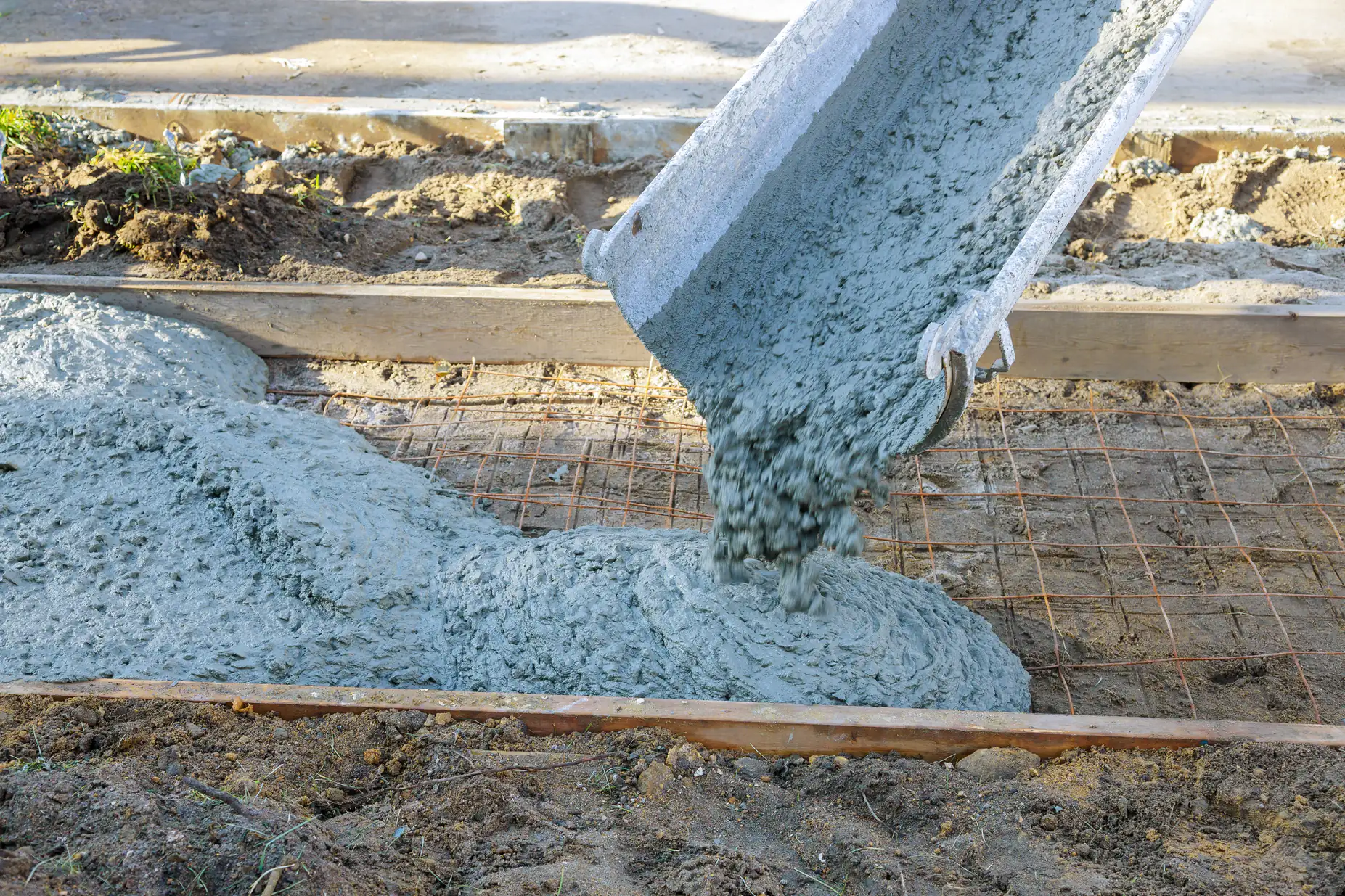
Next comes the formwork and reinforcement. We set forms to the exact dimensions and slope your property needs, then place steel rebar in a grid pattern. This isn’t optional—it’s what keeps your concrete from cracking when the ground moves.
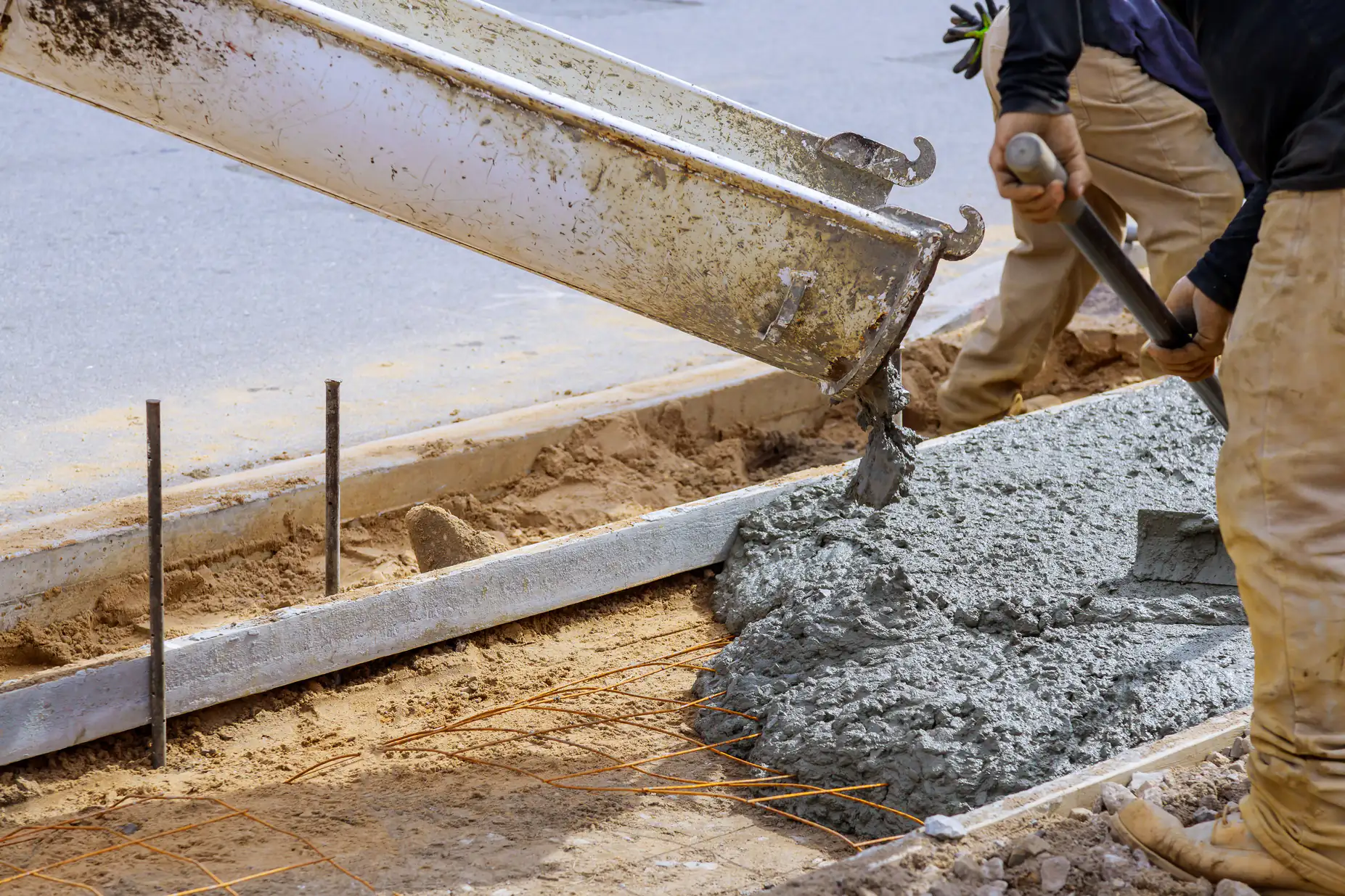
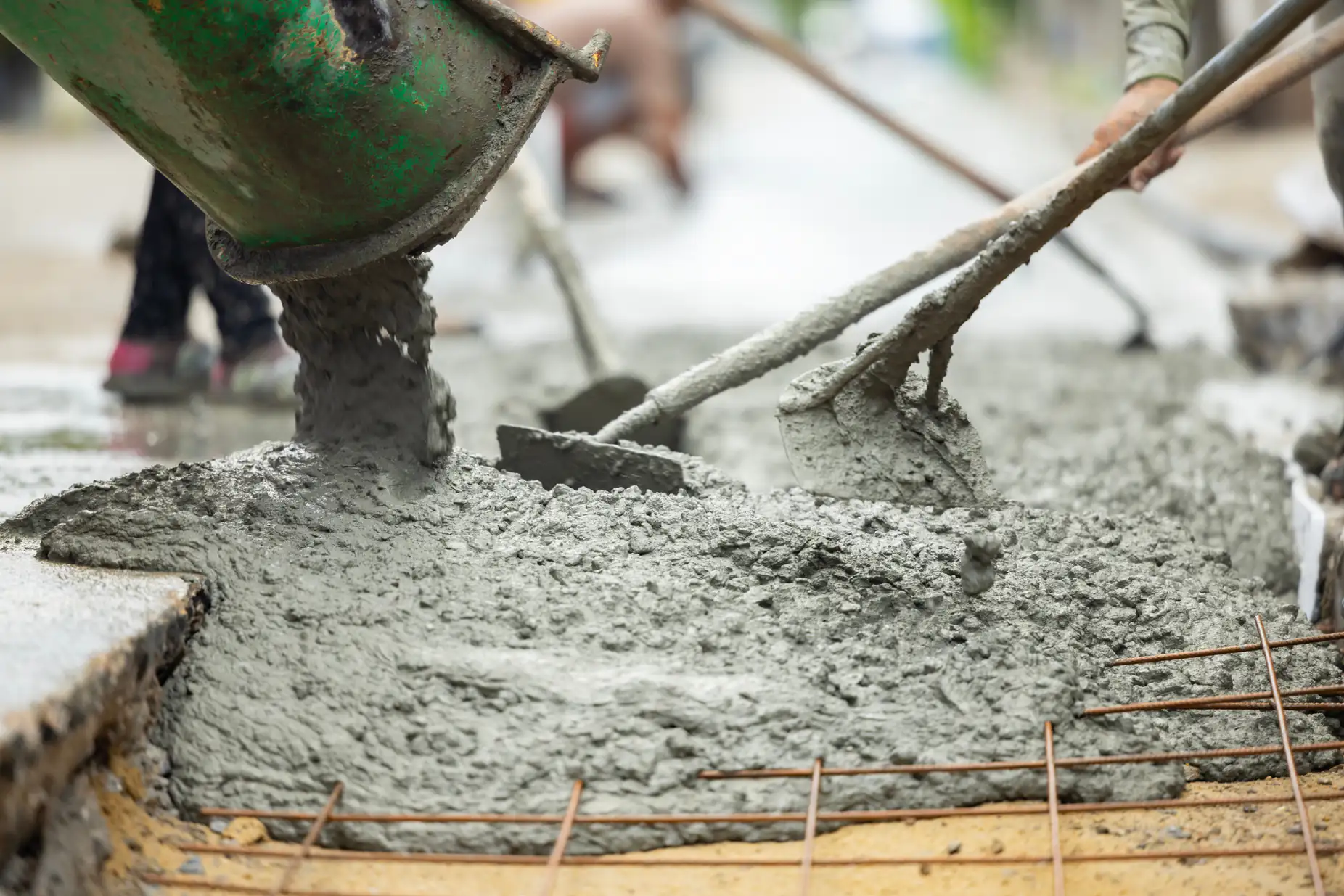
Then we pour and finish. We use professional-grade equipment to place the concrete at proper thickness, typically four to six inches depending on your specific site conditions. The finishing process includes proper troweling and the installation of expansion joints at strategic intervals. These joints are critical in North Jersey—they give the concrete room to expand and contract without cracking.
We don’t pour in temperatures below 50 degrees or during rain. Newark’s unpredictable spring and fall weather sometimes means adjusting the schedule, but that’s better than a failed installation.

Ready to get started?
Your project includes complete excavation and removal of the existing surface. We haul away the old material—you don’t deal with disposal. The base installation uses properly graded stone that’s compacted in layers, not dumped and smoothed over.
You get steel reinforcement throughout the entire pour. We’re not talking about wire mesh that sits on the ground—we’re talking about rebar that’s properly positioned to do its job. The concrete itself is a strong mix designed for North Jersey’s climate, poured at the thickness your driveway needs based on soil conditions and expected vehicle weight.
We install expansion joints every 10 to 15 feet and at any point where your driveway meets existing concrete like a garage floor or walkway. These joints prevent the random cracking that happens when concrete has nowhere to move. The finishing includes proper slope for drainage and whatever surface texture you want—broom finish for traction or a smoother troweled finish.
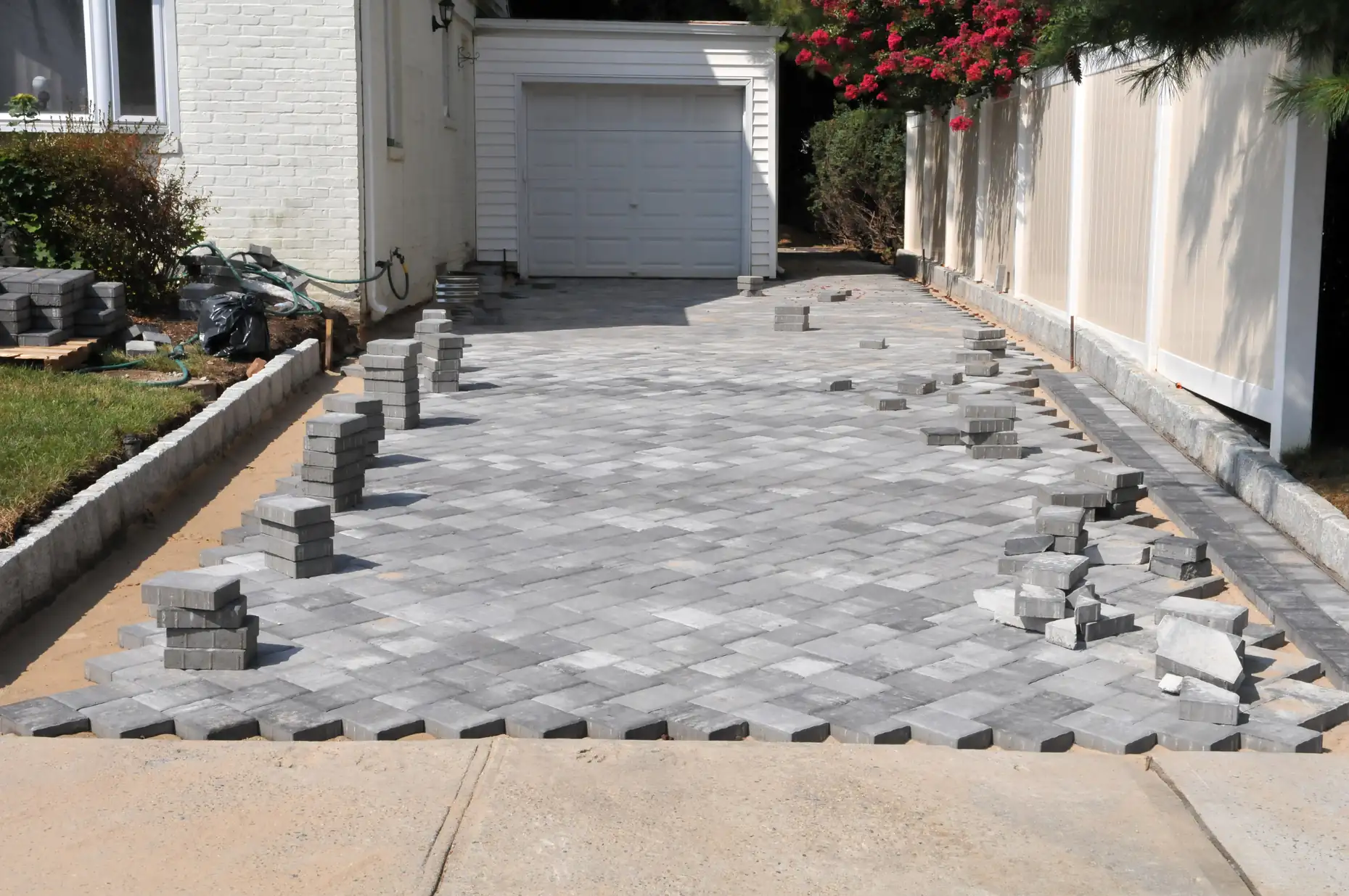
If you want decorative options, we offer stamped concrete patterns that give you the look of pavers or stone without the maintenance headaches. We also handle concrete patio installation and flagstone pavers if you’re looking to upgrade your outdoor space at the same time.
You’re looking at $7 to $13 per square foot for a basic concrete driveway installation in East Orange. A typical 600-square-foot driveway runs between $4,200 and $7,800 depending on site conditions, thickness requirements, and any prep work needed.
That price includes excavation, base material, steel reinforcement, the concrete pour, and finishing. If your property has drainage issues, needs significant grading work, or requires extra thickness due to soil conditions, that affects the final number. Decorative stamped concrete adds to the cost but gives you a higher-end look.
The cheapest quote isn’t always the best value. Contractors who cut corners on base prep or skip the rebar save money upfront but leave you with a driveway that cracks in a few years. You’re better off paying for proper installation once than dealing with replacement costs down the road.
A properly installed concrete driveway lasts 25 to 30 years in New Jersey. That assumes correct installation—proper base prep, adequate thickness, steel reinforcement, and expansion joints placed at the right intervals.
North Jersey’s freeze-thaw cycles are brutal. We experience some of the highest freeze-thaw cycles in the entire state according to the NJ Department of Transportation. Water that gets into concrete expands 10% when it freezes, creating pressure up to 30,000 psi. Without proper reinforcement and expansion joints, that pressure cracks your driveway.
Thin pours without rebar start showing problems in three to five years. You’ll see settling where the base wasn’t compacted correctly, cracking where expansion joints should have been placed, and spalling where water got in and froze. Once that damage starts, patching becomes a losing battle. At that point, replacement makes more financial sense than throwing money at repairs that won’t hold.
Concrete costs more upfront but lasts longer and needs less maintenance. Asphalt runs $5 to $8 per square foot compared to $7 to $13 for concrete, but asphalt needs resealing every few years and typically needs replacement after 15 to 20 years.
Concrete handles North Jersey winters better. It doesn’t soften in summer heat like asphalt does, and it doesn’t develop the same kind of surface deterioration from freeze-thaw cycles. You’re not dealing with seal coating or worrying about oil stains that are nearly impossible to remove from asphalt.
The trade-off is the initial investment and cure time. Concrete needs about seven days before you can drive on it, while asphalt is ready in a day or two. But over the 25 to 30 year lifespan of concrete, you’re avoiding the repeated maintenance costs that come with asphalt. For most homeowners in East Orange, concrete makes more sense if you’re planning to stay in the house long-term.
Yes, you need a permit from East Orange for driveway work. The permit ensures your driveway meets local building codes, has proper drainage, and doesn’t create runoff problems for neighboring properties.
We handle the entire permit application process. That includes submitting the site plans, coordinating with the building department, and scheduling required inspections. Essex County has specific requirements for driveway slope, width, and drainage that vary depending on your property’s location and existing conditions.
Skipping the permit creates problems if you ever sell your house. Unpermitted work shows up in title searches and home inspections, and you’ll end up paying to fix it anyway—usually at a higher cost because you’re doing it under pressure during a sale. Better to do it right from the start and avoid the headache later.
Late spring through early fall gives you the most reliable weather for concrete installation. We need temperatures above 50 degrees for proper curing, and we can’t pour during rain or when rain is forecast within 24 hours.
Newark’s unpredictable spring and fall weather sometimes means adjusting schedules. A warm stretch in April might work perfectly, or we might hit a cold snap that pushes things back. Summer is the most predictable window, but it’s also the busiest season for driveway paving contractors.
If you’re seeing cracks and damage now, don’t wait until spring to call. Early repairs prevent bigger problems and save you money compared to emergency replacement when a small crack has turned into a major failure. Get on the schedule during the off-season and you’ll have more flexibility with timing once weather permits the work.
If your driveway has widespread cracking, multiple settled sections, or significant surface deterioration, replacement makes more sense than patching. Small, isolated cracks can be repaired, but once damage covers more than 25% of the surface, you’re throwing money at a losing battle.
Look at the age of your driveway. If it’s over 20 years old and showing multiple problems, the base and subgrade are likely compromised. Patching the surface doesn’t fix underlying issues with base failure or poor drainage. You’ll patch one area and another section will fail within a year.
Water pooling is a red flag. If water sits on your driveway instead of draining away, that’s a grading problem that patching won’t solve. That standing water seeps into cracks, freezes in winter, and accelerates damage throughout the entire surface. At that point, proper excavation, base prep, and a new pour with correct grading is the only fix that lasts.