
Hear from Our Customers
Your current driveway is probably cracking because whoever poured it didn’t account for New Jersey’s freeze-thaw cycles. Water gets in, freezes, expands, and breaks the concrete from the inside out. It’s not just ugly—it’s a liability waiting to happen when someone trips on uneven sections.
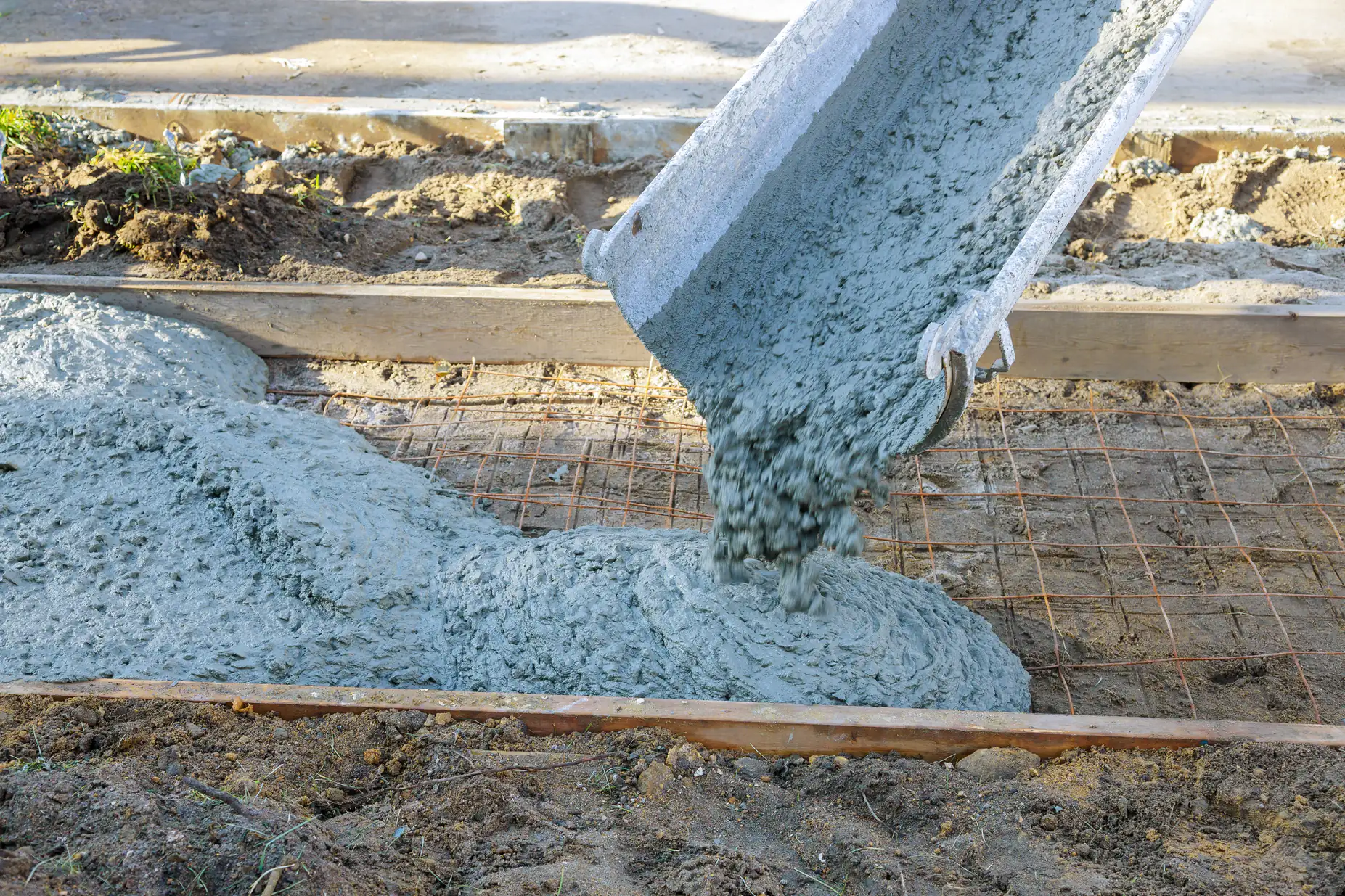
Here’s what changes when the job’s done right. You get a driveway poured with specialized concrete mixes that include additives designed to resist moisture penetration and temperature swings. The base gets properly compacted with aggregate material, graded correctly so water runs off instead of pooling. And the concrete itself gets reinforced with rebar, not just poured and hoped for.
That means you’re looking at 25 to 30 years of use instead of 10. No resealing every few years like asphalt. No constant patching. Just a surface that holds up to whatever Morris County winters throw at it, year after year.
We work exclusively in Morris, Sussex, and Somerset Counties. That matters because concrete work in North Jersey isn’t the same as concrete work anywhere else. The temperature swings here are brutal on pavement, and the soil conditions vary enough that what works in one township might fail in another.
We’re the ones showing up to measure your site, pull permits with your local municipality, and stay on the job from excavation through final cure. No subcontractors you’ve never met. No disappearing after the pour.
You’ll get a free estimate within 24 to 48 hours of reaching out, and the price we quote is the price you pay. No “we found more problems” calls halfway through asking for more money. We’ve built our reputation here by doing what we say we’re going to do, on the timeline we commit to.
First, we come out to measure your property and assess what’s there now. If you’ve got an old driveway, we’re looking at why it failed so we don’t repeat the same mistakes. We check drainage, soil stability, and any grade issues that might cause problems later.
Next comes excavation. We remove the old material and dig down far enough to build a proper base—usually several inches of compacted aggregate. This base is what prevents settling and cracking. It gets graded so water flows away from your house and garage, not toward it. Then we set forms to the exact dimensions and slope needed.
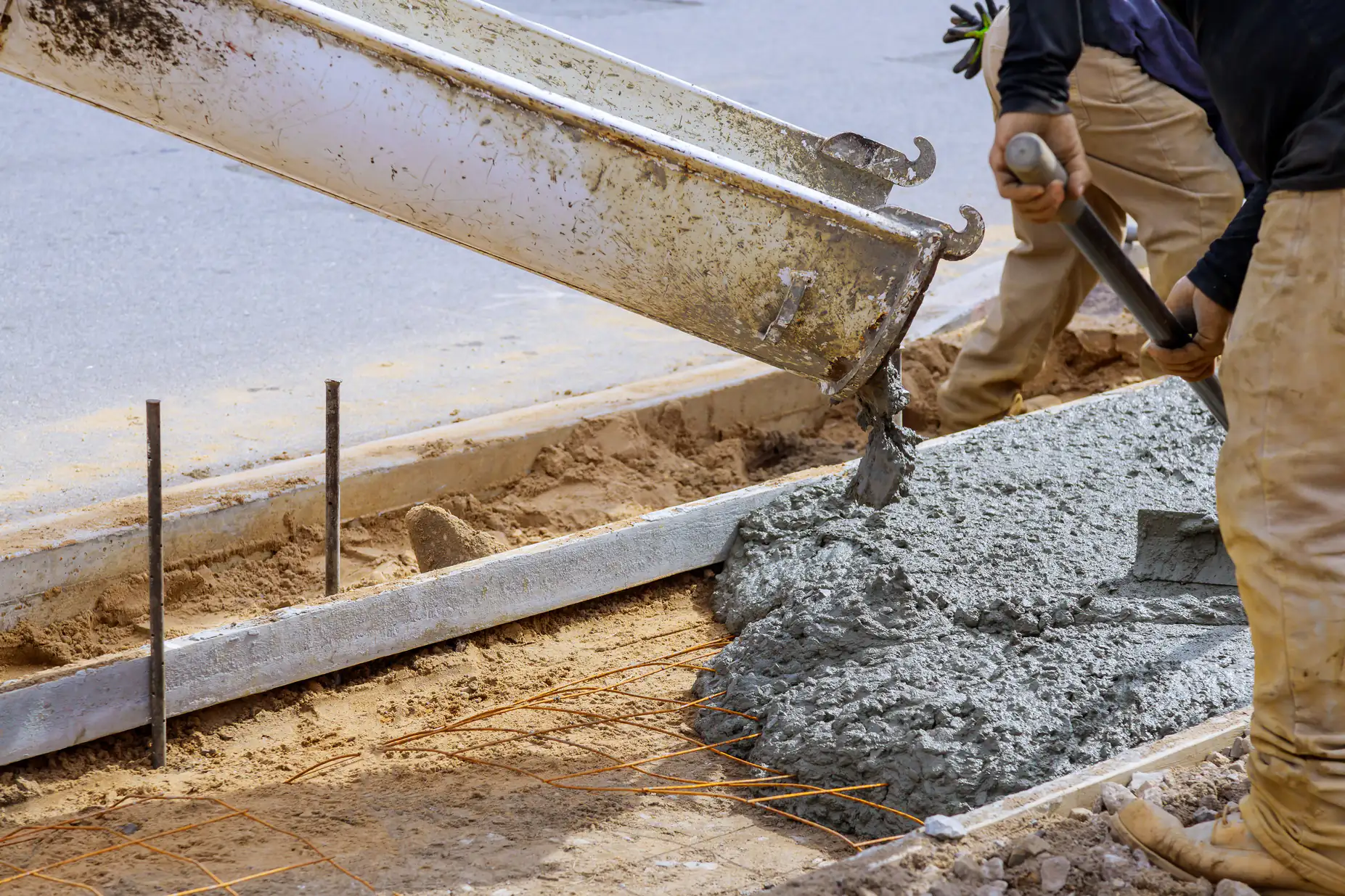
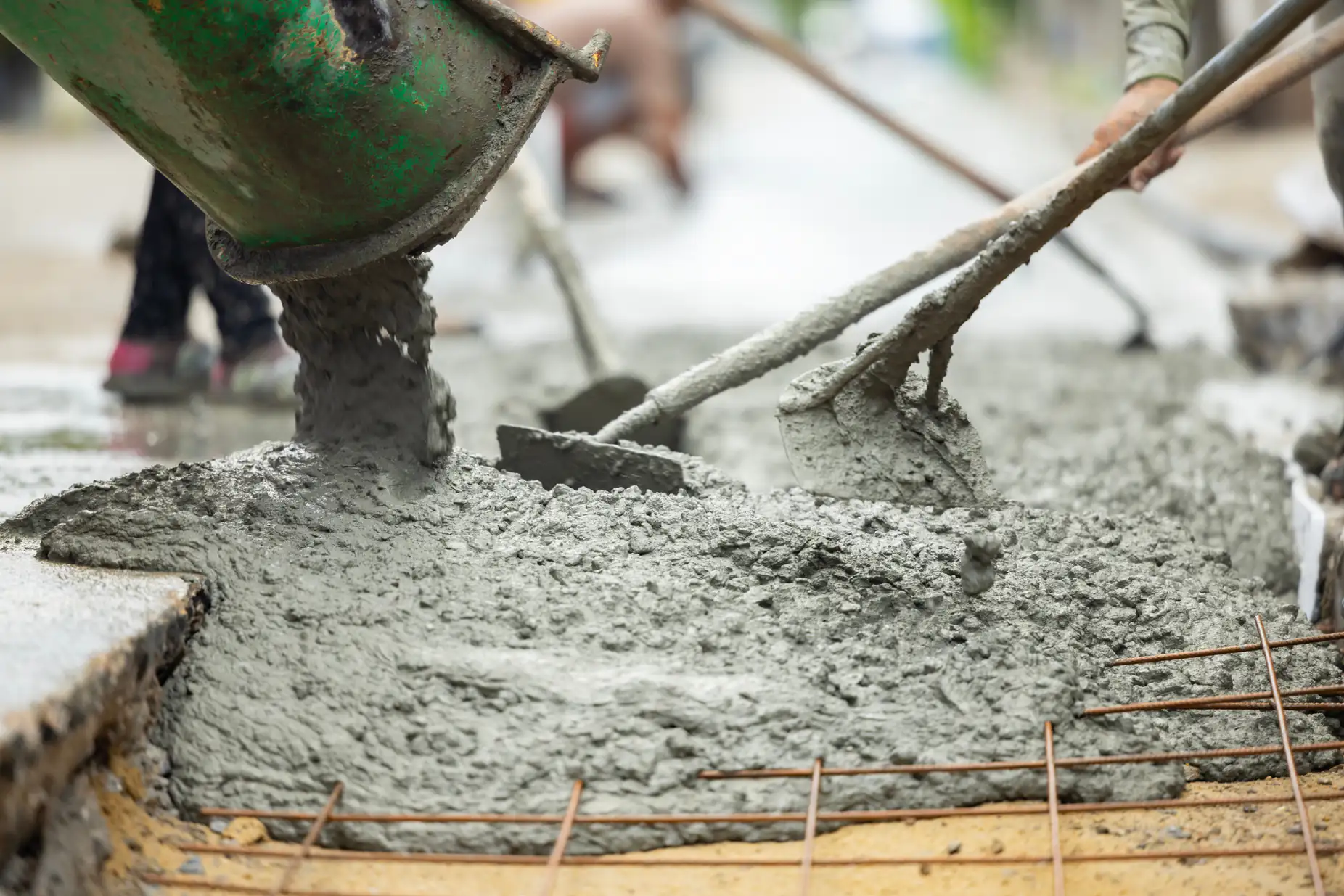
The concrete pour happens once everything’s prepped. We use Portland cement mixes with the right additives for freeze-thaw resistance, and we place rebar for reinforcement. The concrete gets spread uniformly, finished to your preferred texture, and then it needs time to cure. Most driveways are ready for light foot traffic in 24 hours, but you’ll want to wait about a week before parking on it.
If you want stamped concrete that looks like flagstone or brick, that happens during finishing before the concrete fully sets. We can also discuss sealing options to add another layer of protection against moisture and deicing salts.

Ready to get started?
Every concrete driveway installation includes site analysis, permit handling, excavation of failed material, and construction of a properly graded aggregate base. You’re not just getting concrete dumped on dirt. The base work is what separates driveways that last from ones that crack in two years.
We handle the permit process with Chatham and surrounding townships. In most Morris County municipalities, you’re looking at around $25 for a permit, and because we’re licensed and bonded, you avoid the escrow deposits that homeowners sometimes have to put up when pulling permits themselves.
For the concrete itself, we’re using mixes specifically designed for New Jersey’s climate. That means air-entraining additives that create tiny air pockets in the concrete, giving water somewhere to expand when it freezes instead of cracking the slab. We’re also placing rebar reinforcement and ensuring proper thickness—typically four to six inches depending on expected load.
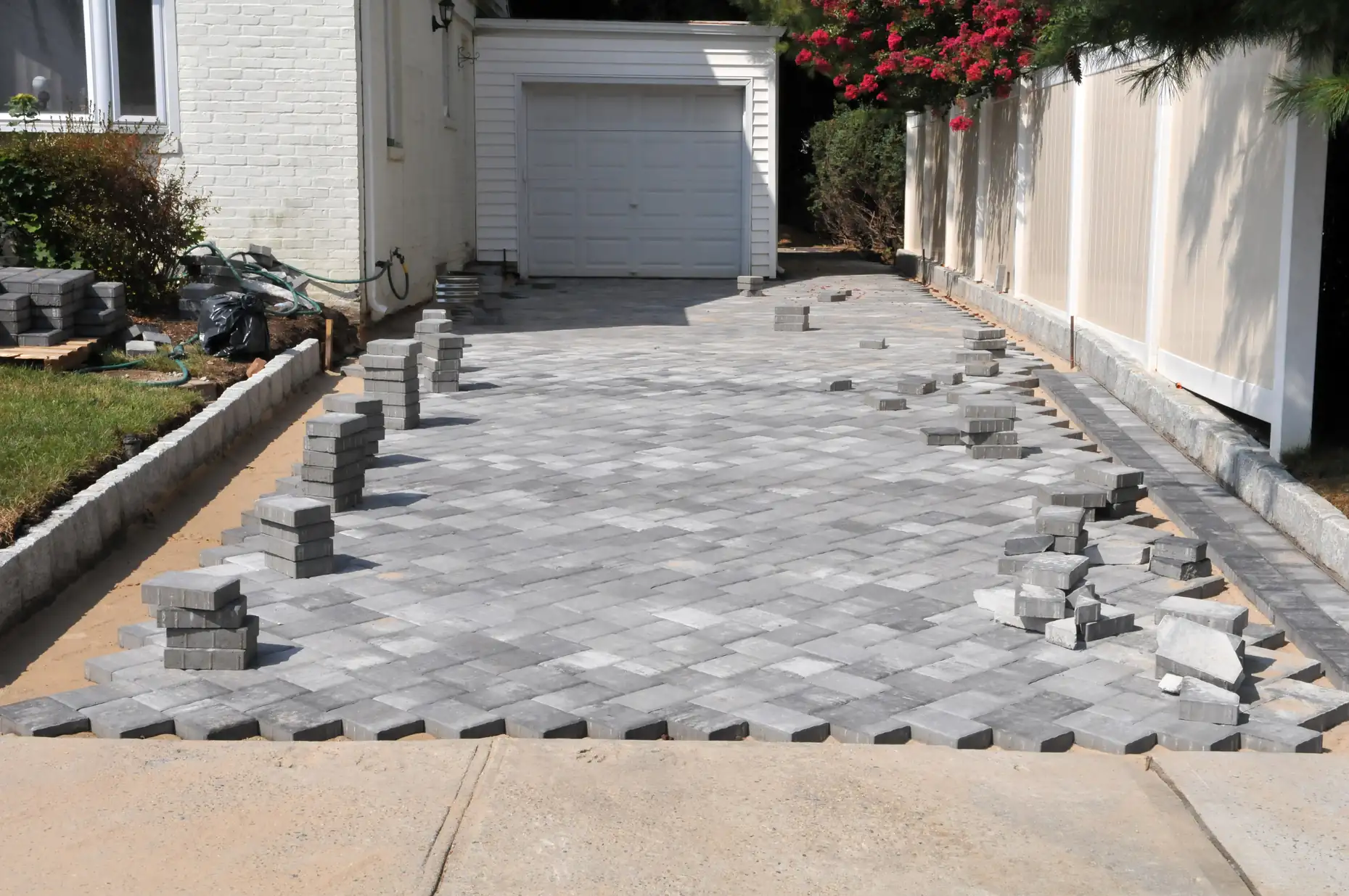
If you want decorative options, stamped concrete is available in patterns that replicate flagstone, slate, brick, or tile. It’s a way to get the durability of concrete with a more custom look, and it works well for driveways, patios, and walkways. We also install Belgard pavers if you prefer that route for patios or certain driveway sections.
You’re looking at $7 to $12 per square foot for concrete driveway installation in New Jersey, depending on site conditions and whether you want basic or stamped concrete. A standard two-car driveway around 600 square feet would run $4,200 to $7,200.
That price includes excavation, base preparation, the concrete pour, finishing, and cleanup. If your property has drainage issues or needs significant grading work, that can add to the cost. Stamped concrete with custom patterns typically sits at the higher end of the range.
What drives the price up is usually the prep work. If we’re tearing out an old driveway, dealing with poor soil that needs extra base material, or working around tight access that makes equipment use difficult, those factors add labor and time. But cutting corners on prep is exactly how you end up with a driveway that cracks in three years, so it’s not the place to save money.
A properly installed concrete driveway lasts 25 to 30 years in New Jersey when it’s maintained correctly. That’s significantly longer than asphalt, which typically gives you 10 to 15 years before it needs replacement.
The key phrase there is “properly installed.” Concrete that’s mixed wrong, poured without adequate base prep, or finished without accounting for drainage will fail much faster. Freeze-thaw cycles are the main enemy here. When water gets into concrete and freezes, it expands and creates internal pressure that leads to cracking. Using climate-engineered mixes with air-entraining additives helps prevent this.
Maintenance extends that lifespan. Sealing your concrete every few years protects against moisture penetration and damage from deicing salts. Keeping the surface clean and addressing small cracks before they spread also helps. But even with minimal maintenance, a well-installed concrete driveway in Morris County should give you decades of use.
Concrete costs more upfront but lasts longer and needs less maintenance than asphalt. Asphalt is cheaper to install but requires resealing every few years and typically needs replacement in 10 to 15 years. Concrete can go 25 to 30 years with basic maintenance.
Asphalt also softens in hot weather, which can lead to indentations from parked cars and tracking black marks into your house. It’s more vulnerable to oil and gas stains. Concrete stays solid in heat and handles stains better, especially if it’s sealed.
The climate here matters too. New Jersey’s temperature swings are hard on both materials, but concrete handles freeze-thaw cycles better when it’s mixed correctly with the right additives. Asphalt can develop cracks from frost heave and needs more frequent repairs. If you’re planning to stay in your home long-term and want something you won’t have to think about for decades, concrete makes more sense. If you need the lowest upfront cost and don’t mind ongoing maintenance, asphalt works.
Concrete can be poured in cold weather, but it requires special precautions and isn’t ideal when temperatures drop below 40 degrees consistently. Concrete needs to cure properly, and cold temperatures slow that process significantly. If it freezes before it’s had time to reach adequate strength, you’ll end up with surface damage and reduced durability.
When we do cold-weather pours, we use heated concrete mixes and insulating blankets to maintain proper curing temperatures. We also avoid pouring if there’s precipitation in the forecast or if overnight lows are going to dip into freezing territory within the first few days after installation.
The best time for concrete driveway installation in Chatham is late spring through early fall when temperatures are consistently above 50 degrees and you have several days of dry weather. That gives the concrete time to cure properly without weather-related complications. If you’re planning a project, reaching out in early spring to get on the schedule for a late spring or summer installation usually works best.
Yes, most municipalities in Morris County require permits for driveway installation or replacement. In Chatham and surrounding townships, permit costs are typically around $25, but requirements vary by location. Some towns also have specific regulations about driveway width, setbacks from property lines, and drainage.
We handle the permit process for you. Because we’re licensed and bonded contractors, we can pull permits without you having to post escrow deposits that homeowners sometimes face when doing their own permit applications. We’re also familiar with local zoning requirements in North Jersey, so we know what each municipality expects in terms of documentation and site plans.
Skipping the permit isn’t worth it. If you sell your home later and the buyer’s inspector finds unpermitted work, it can hold up the sale or reduce your home’s value. Plus, if there’s ever a drainage issue that affects neighboring properties, having permitted work with proper documentation protects you from liability claims.
Timeline depends on the season and our current schedule, but we typically provide free estimates within 24 to 48 hours of your request. Once you approve the estimate, we can usually start within one to three weeks during our busy season, sometimes sooner in slower months.
The actual installation takes one to three days depending on the size of your driveway and site conditions. A standard residential driveway is usually a two-day job—one day for excavation and base prep, another for the concrete pour and finishing. Larger driveways or projects with extensive site work can take longer.
After the pour, you’ll need to stay off the concrete for about 24 hours for initial curing. We recommend waiting seven days before parking vehicles on it to ensure it reaches adequate strength. If you’re in a rush, let us know when you reach out. We’ll tell you honestly what’s realistic based on our schedule and weather conditions.