
Hear from Our Customers
A concrete driveway that’s done right doesn’t crack after the first winter. It doesn’t pool water near your garage or settle unevenly after a year.
You get a surface that handles freeze-thaw cycles because the base was compacted correctly and the mix was engineered for North Jersey weather. The drainage slopes away from your foundation. The joints are cut at the right depth to control where cracks form, if they form at all.
That’s what proper installation looks like. Not the cheapest bid that cuts corners on base prep or uses a weak mix. You’re looking at 30 to 40 years of use when the work is done with the right materials and process. That matters when your property value sits above $700,000 and you’re not planning to redo your driveway every decade.
We operate out of Morris County and work throughout Somerset County, including Bernardsville. We’re not a franchise or a crew that shows up from three states away.
Our teams know what clay-heavy soil does when it gets wet. We know how frost heaves work and why your neighbor’s driveway cracked but yours doesn’t have to. That local knowledge shows up in how we prep your site, what base materials we use, and how we handle drainage before we ever pour concrete.
You’ll work with people who’ve installed hundreds of driveways in towns like yours. We’re here when you call, and we’ll be here if you need us after the job’s done.
We start with a site visit to look at your existing driveway, check the grade, and identify drainage issues. If your current surface is asphalt or old concrete, we’ll talk through removal and disposal.
Next comes excavation. We dig down to the right depth based on your soil type and what the driveway will support. Then we build the base using crushed stone that’s compacted in layers with heavy equipment. This step matters more than most people realize because a weak base leads to settling and cracks no matter how good the concrete is.
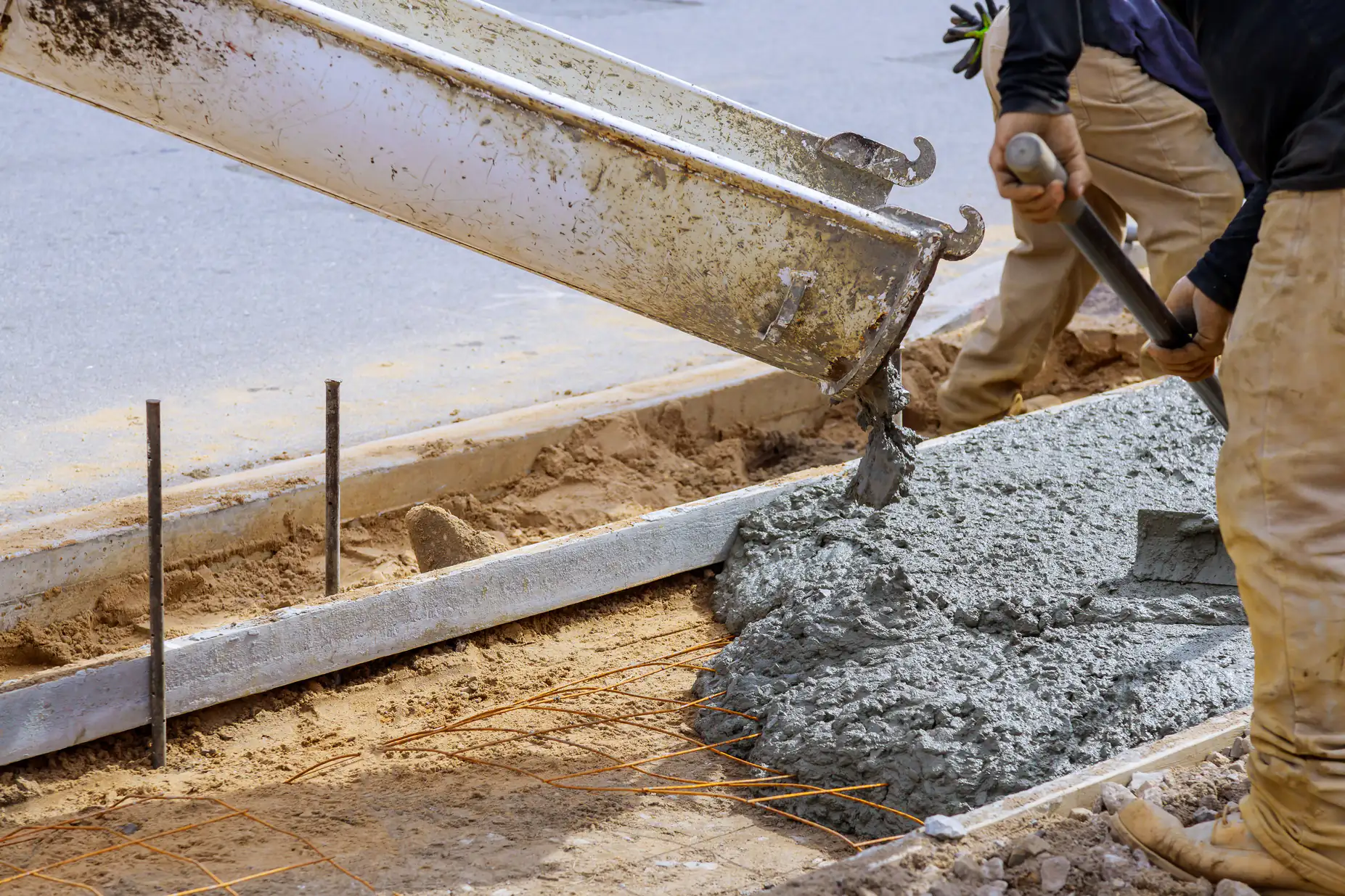
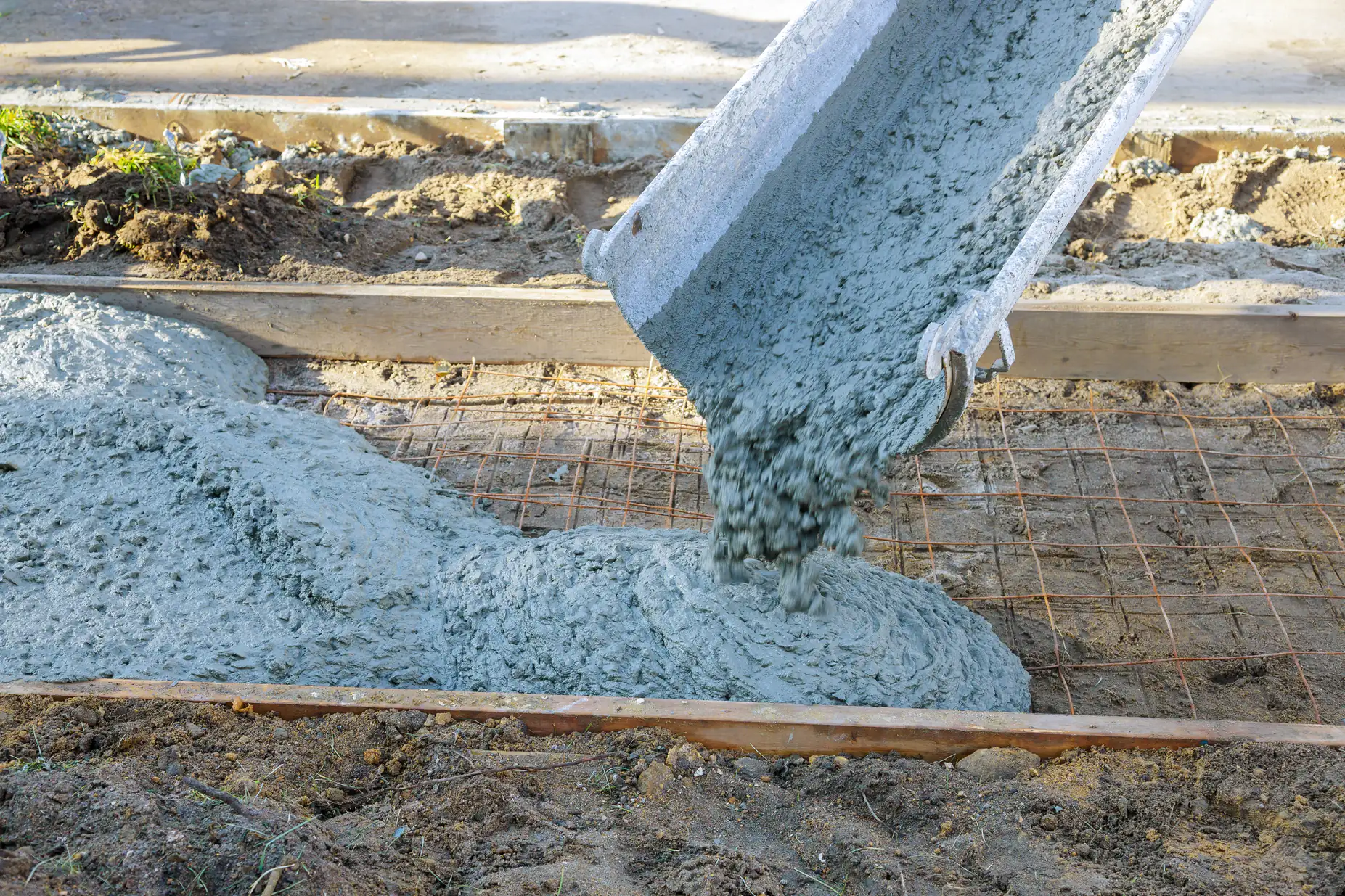
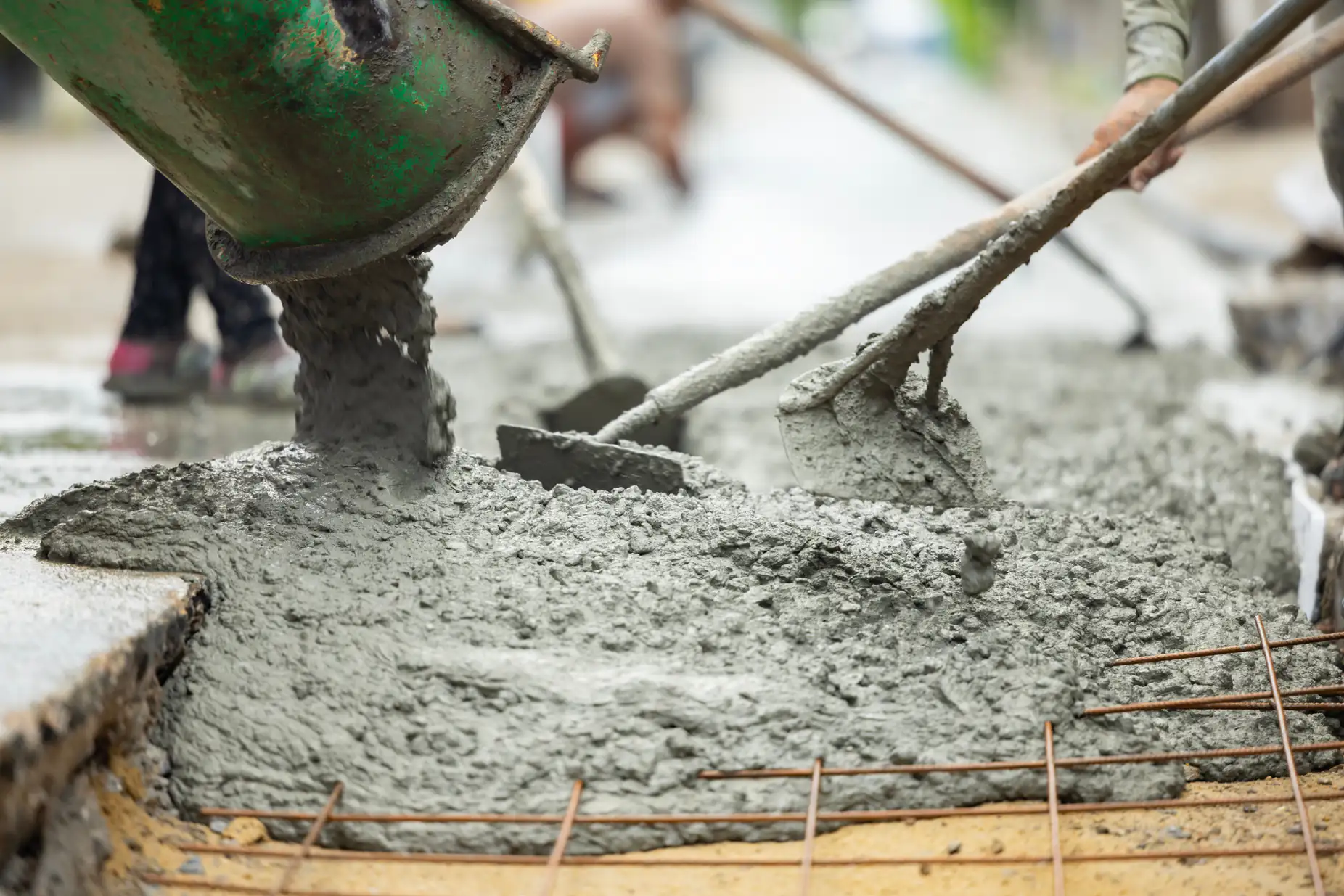
Once the base is set, we form the edges, install rebar or wire mesh for reinforcement, and pour the concrete. We use mixes rated between 4,000 and 6,500 psi depending on your needs. The surface gets finished, control joints are cut, and then it cures for several days before you can drive on it.
If you want stamped concrete that looks like stone or brick, that work happens right after the pour while the surface is still workable. We’ll walk you through pattern options during planning so you know exactly what you’re getting.

Ready to get started?
Your project includes full site analysis, excavation, base construction, concrete installation, and finishing. We handle permits if your driveway connects to a public road. You’ll get clear pricing upfront with no surprise charges when the work is done.
We also install concrete patios, walkways, and decorative stamped surfaces if you’re looking to match your driveway to other hardscaping. Bernardsville properties often have multiple outdoor spaces that benefit from a consistent look, and stamped concrete gives you that without the cost of natural stone or pavers.
Material-wise, we use Portland cement mixes with rebar reinforcement. The concrete is mixed and delivered the day of the pour to ensure proper strength. We don’t use weak mixes or skip reinforcement to save a few hundred dollars, because that’s how driveways fail early.
You’ll also get access to our online calculators and planning tools so you can estimate costs and timelines before we ever meet. And if you submit a quote request online, we’ll get back to you within 24 to 48 hours. Not next week. Not when we feel like it.
Most concrete driveways in Bernardsville run between $8 and $15 per square foot installed, depending on thickness, reinforcement, and site conditions. A standard two-car driveway around 600 square feet typically costs $5,000 to $9,000. Stamped or decorative finishes add $3 to $8 per square foot.
Price varies based on how much excavation is needed, whether we’re removing old pavement, and what kind of base prep your soil requires. Properties with drainage issues or unstable soil cost more because the base work is more involved. We’ll give you an exact number after we see your site, but those ranges give you a realistic starting point.
Concrete costs more upfront than asphalt, but it lasts longer and needs less maintenance. Over 30 years, the cost per year is often lower, especially if you’re not resealing or patching every few years.
Most concrete driveway installations take three to five days of active work, but the full timeline runs about two weeks when you include curing time. Day one is usually excavation and base prep. Day two involves compacting the base and setting forms. Day three is the concrete pour and finishing. Then the driveway needs at least seven days to cure before you can drive on it.
Weather affects the schedule. We don’t pour concrete if temperatures are going to drop below 40 degrees within 48 hours or if heavy rain is forecast. North Jersey weather can be unpredictable, so we build some buffer into the timeline.
If you’re adding stamped patterns or decorative finishes, that adds a few hours to the pour day but doesn’t extend the overall timeline. We’ll give you a specific schedule when we start so you know when to keep cars off the driveway and when you’re good to use it normally.
Concrete can crack, but proper installation dramatically reduces the risk. Most cracks happen because of poor base prep, inadequate reinforcement, or missing control joints. We prevent cracks by compacting the base to the right density, using rebar or wire mesh, and cutting control joints at the correct spacing.
Control joints are shallow cuts in the concrete that create weak points where cracks will form if the concrete does shift. This keeps cracks straight and contained rather than random and spidery. We also make sure the concrete mix is right for New Jersey’s freeze-thaw cycles, which means using air-entrained concrete that can handle water expansion when it freezes.
Your soil type matters too. Bernardsville sits on clay-heavy soil that expands when wet and contracts when dry. We account for that by building a thicker base and ensuring proper drainage so water doesn’t pool under the slab. If you see a new concrete driveway crack within the first year, it’s almost always an installation problem, not a concrete problem.
Concrete lasts longer and needs less maintenance, but asphalt costs less upfront and handles freeze-thaw cycles more forgivingly. Concrete driveways typically last 30 to 40 years with minimal upkeep. Asphalt lasts 15 to 20 years and requires resealing every few years to prevent cracking and deterioration.
Concrete makes sense if you’re planning to stay in your home long-term and want a surface that won’t need major work for decades. It also offers more design options if you want stamped patterns or decorative finishes. Asphalt makes sense if you’re working with a tighter budget or if you prefer the flexibility that asphalt provides on unstable soil.
North Jersey’s clay soil and temperature swings are tough on both materials, but proper installation matters more than which material you choose. A poorly installed concrete driveway will fail faster than a well-installed asphalt one. We install both, and we’ll tell you honestly which makes more sense for your property and budget after we see your site.
Stamped concrete uses the same base and installation process as regular concrete, but the surface is textured and colored to look like brick, stone, slate, or wood. The stamping happens right after the pour while the concrete is still workable. We press patterns into the surface and apply color using stains or integral pigments mixed into the concrete.
The result looks like natural stone or pavers but costs significantly less and requires less maintenance. You don’t have to worry about pavers shifting or weeds growing between stones. The surface is one solid piece that won’t settle unevenly.
Stamped concrete adds $3 to $8 per square foot to your project cost depending on the pattern complexity and color options. It’s popular in Bernardsville because it gives high-end curb appeal without the expense of natural materials. The patterns hold up well over time, though you’ll want to reseal the surface every few years to keep the color vibrant and protect against staining.
Late spring through early fall is the best window for concrete driveway installation in New Jersey. You need consistent temperatures above 50 degrees for at least a week after the pour so the concrete can cure properly. Cold temperatures slow curing and can weaken the final strength. Hot summer days above 90 degrees can cause the concrete to cure too fast, which also creates problems.
May through October is the ideal range. We can sometimes work in April or November if the forecast cooperates, but those months are riskier because temperatures can drop unexpectedly overnight. Winter installation isn’t recommended unless you’re willing to pay for heating equipment and insulated blankets to protect the concrete while it cures.
If you’re planning a driveway project, reach out in early spring to get on the schedule for late spring or summer. Our busiest months are June through August, so booking ahead helps ensure you get the timeline you want. We’ll monitor the weather closely before your pour date and reschedule if conditions aren’t right rather than risk a bad install.