Asphalt Paving in Pleasantdale, NJ

Driveways Built To Survive NJ Winters

Quality asphalt paving in Pleasantdale, NJ that handles freeze-thaw cycles, heavy traffic, and everything New Jersey weather throws at it.
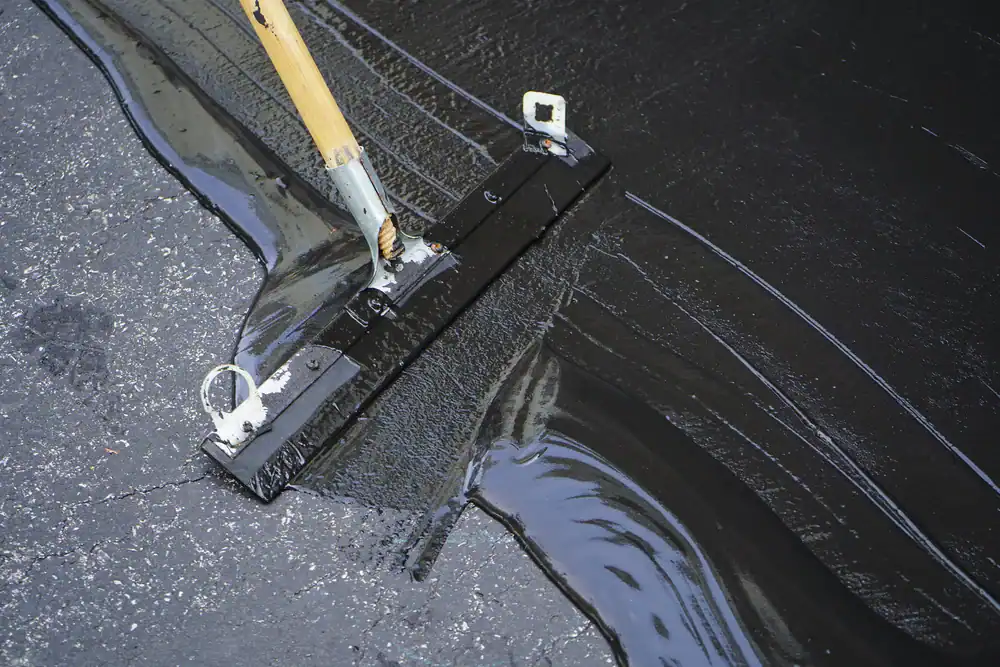
A close-up of a squeegee spreading black sealant over an asphalt driveway, expertly applied by paving contractors in Morris, Sussex & Somerset County, NJ—part of the surface is freshly coated while the rest remains exposed.

Hear from Our Customers

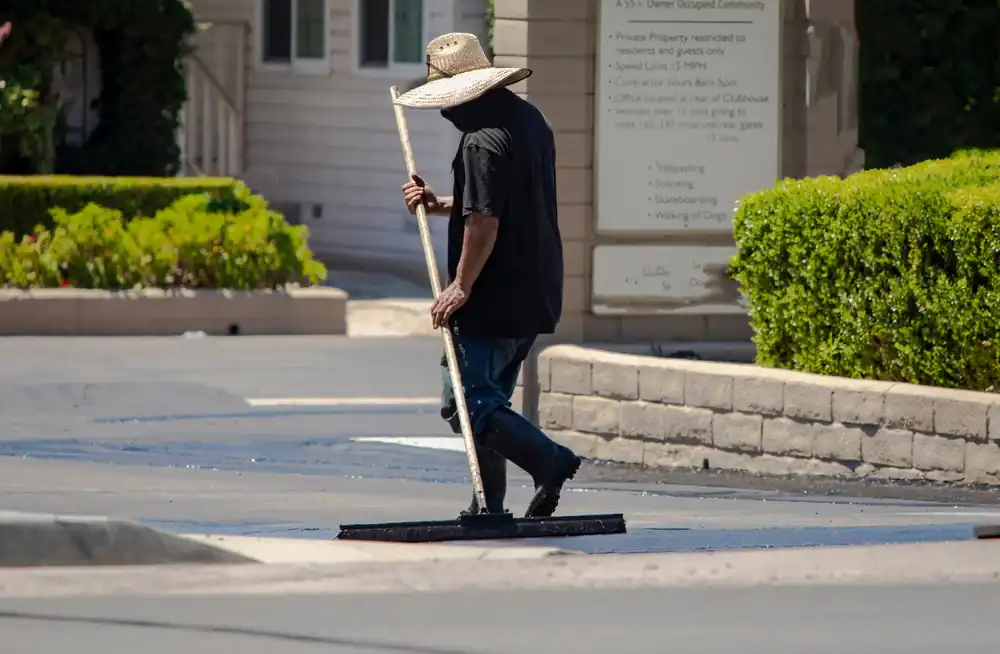
A person in a large straw hat and dark clothes uses a long-handled tool to spread material on a paved surface, likely working for Paving Contractors Morris in NJ. Green bushes and a sign are visible in this Sussex & Somerset County residential area.

Professional Asphalt Contractors Pleasantdale NJ

Your Property Investment Protected For Decades

You get asphalt that actually lasts in New Jersey’s demanding climate. No more watching your driveway crack apart after one tough winter or dealing with water pooling that damages your foundation.

Your new asphalt surface handles the freeze-thaw cycles that destroy poorly installed pavement. It drains properly, resists salt damage, and maintains its appearance year after year.

You’re investing in fewer repairs, fewer maintenance headaches, and a surface that enhances your property value instead of detracting from it.

Asphalt Paving Company Pleasantdale NJ

Local Expertise That Actually Shows Results

We understand what works in Pleasantdale, NJ and Essex County. We’ve seen how New Jersey’s weather patterns affect asphalt surfaces, and we plan accordingly.

Our team knows the difference between a quick fix and a lasting solution. We use materials selected specifically for this region’s climate challenges and follow installation methods that account for local conditions.

When you work with contractors who understand Pleasantdale’s unique environment – from the freeze-thaw cycles to the heavy spring rains – you get results that stand the test of time.
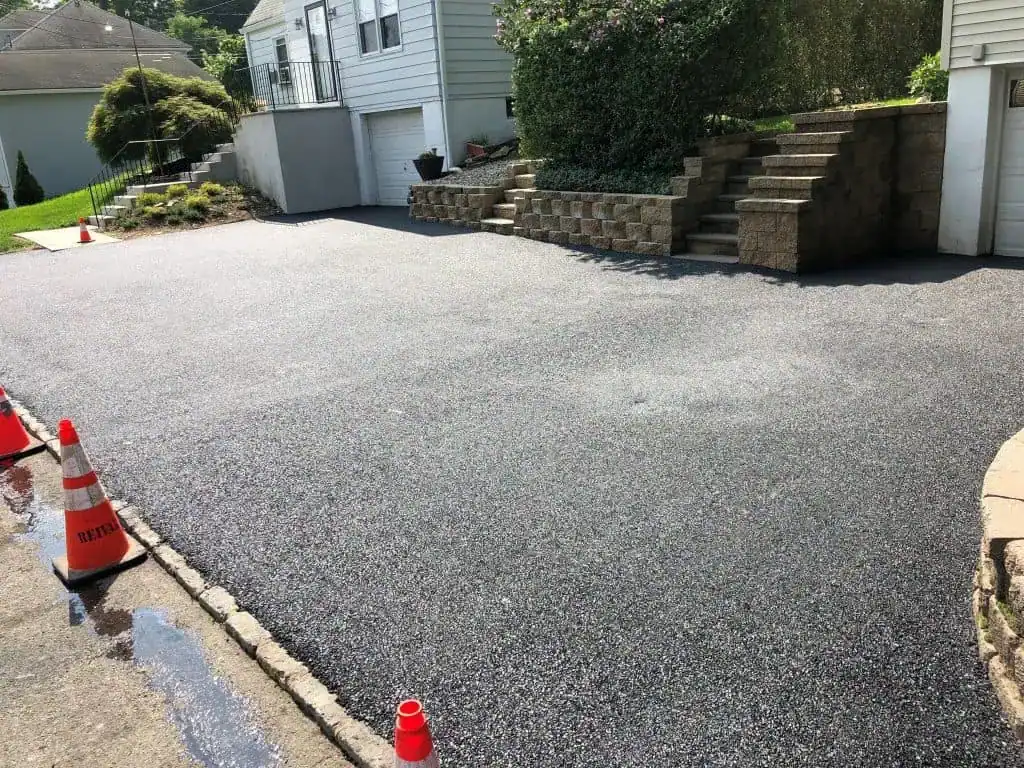
A freshly paved asphalt driveway in front of a house by NJ paving contractors Morris, Sussex & Somerset County is bordered by traffic cones. Stone steps lead to a retaining wall, with shrubs and grass in the background and a wet spot near the curb.

Asphalt Installation Process Pleasantdale NJ

The Right Process From Day One

First, we assess your property to determine proper grading and drainage needs. We clear the area completely and prepare the foundation by compacting the soil to create a stable base.

Next, we add crushed stone or gravel where needed to improve drainage and stability. This step prevents the water issues that destroy so many driveways in our area.

Finally, we apply the asphalt mix at the correct temperature, ensuring proper spreading, leveling, and compaction. The timing matters – we work efficiently to complete compaction before the material cools below the critical temperature threshold.
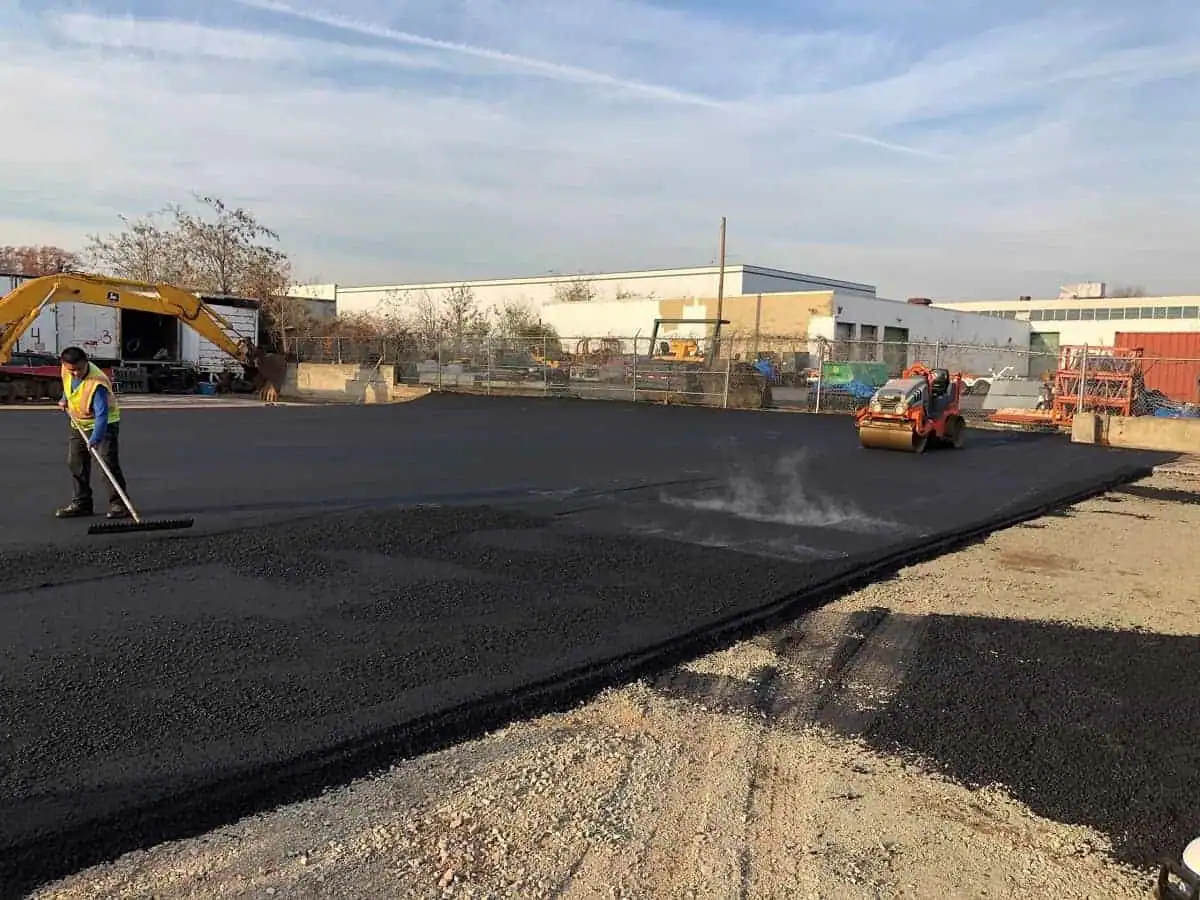
A construction worker spreads asphalt with a rake while another operates a steamroller on a large outdoor site, as Paving Contractors Morris, NJ lay new pavement near industrial buildings under a partly cloudy sky.

Ready to get started?

Explore More Services

About Platinum Paving

Get a Free Consultation

Asphalt Services Pleasantdale NJ

Complete Solutions For Pleasantdale Properties

Your asphalt paving project includes proper site preparation, quality material selection, and professional installation designed for New Jersey conditions. We handle everything from initial grading to final compaction.

In Pleasantdale, NJ’s climate, drainage is critical. Your project includes proper slope design and drainage solutions to prevent the water pooling that damages so many local driveways during heavy spring rains and winter thaw cycles.

You also receive guidance on maintenance timing – when to seal, when to address minor cracks, and how to protect your investment from road salt damage during winter months.

A worker in a striped shirt operates a yellow asphalt roller, flattening fresh black asphalt—a service expertly handled by paving contractors in Morris, NJ, Sussex & Somerset County—creating a clear contrast between the new and old pavement.
The ideal window for asphalt paving in Pleasantdale, NJ is late spring through early fall when temperatures consistently stay above 50°F, with 70°F being optimal. Cold weather makes it difficult for asphalt to properly bond and compact, leading to a weaker surface.However, emergency repairs can be completed year-round using specialized techniques and materials. If you need winter work done, we use methods designed for cold weather conditions, though permanent repairs are best scheduled for warmer months.Planning ahead is key – scheduling your project during optimal weather conditions directly impacts the longevity of your pavement and reduces future maintenance costs.
Properly installed asphalt paving typically lasts 15-20 years in New Jersey, depending on traffic volume, weather exposure, and maintenance. Our region’s freeze-thaw cycles and heavy precipitation can accelerate wear if the installation isn’t done correctly.The key factors for longevity include proper base preparation, quality materials suited for local conditions, and regular maintenance like crack sealing and sealcoating every 2-3 years. Neglecting maintenance can cut the lifespan significantly.With proper installation and care, your asphalt surface will handle New Jersey winters, summer heat, and heavy spring rains while maintaining its appearance and structural integrity for decades.
Pleasantdale, NJ’s location in Essex County presents specific challenges including freeze-thaw cycles, heavy spring precipitation, and road salt exposure during winter months. These conditions require careful material selection and installation techniques.We use asphalt mixes specifically graded for performance in this climate and focus heavily on proper drainage design. Water that pools and freezes can destroy even well-installed asphalt, so slope and drainage planning are critical here.The established neighborhoods in Pleasantdale also mean working around mature landscaping, existing utilities, and access considerations that require local knowledge and experience to handle properly.
Prevention starts with proper installation – correct base preparation, appropriate material selection, and ensuring proper drainage to prevent water from pooling and freezing. We also recommend sealcoating 1-2 years after installation, then every 2-3 years.During winter, avoid using rock salt directly on asphalt surfaces when possible. Use plastic shovels instead of metal ones to prevent scratching, and clear snow promptly to prevent ice buildup that can cause surface damage.Regular inspection for small cracks allows for quick repairs before they become major problems. Small cracks sealed promptly won’t allow water penetration that leads to freeze-thaw damage and eventual pothole formation.
The process typically takes 1-2 days depending on project size. Day one involves site preparation – clearing, grading, and base work. We’ll compact the subgrade and add stone base material where needed for proper drainage and stability.Day two focuses on asphalt application. We coordinate delivery timing carefully since the material must stay within specific temperature ranges for proper compaction. The actual paving and compaction usually takes just a few hours.After completion, avoid driving on the surface for at least 24-48 hours to allow proper curing. We’ll provide specific timeline guidance based on weather conditions and your project’s requirements.
Asphalt paving costs vary based on area size, thickness requirements, site conditions, and current material prices. Factors like drainage needs, base preparation requirements, and access challenges all impact the final price.For accurate pricing, we provide detailed estimates after evaluating your specific site conditions. This includes assessing existing drainage, determining base preparation needs, and measuring the exact area to be paved.We focus on providing value through quality installation that lasts, rather than competing solely on price. Proper installation costs more upfront but saves significantly on repairs and premature replacement over time.