Asphalt Paving in Newark, NJ

Newark Driveways That Survive Every Season

Professional asphalt paving in Newark, NJ engineered to handle brutal winters, humid summers, and everything between.
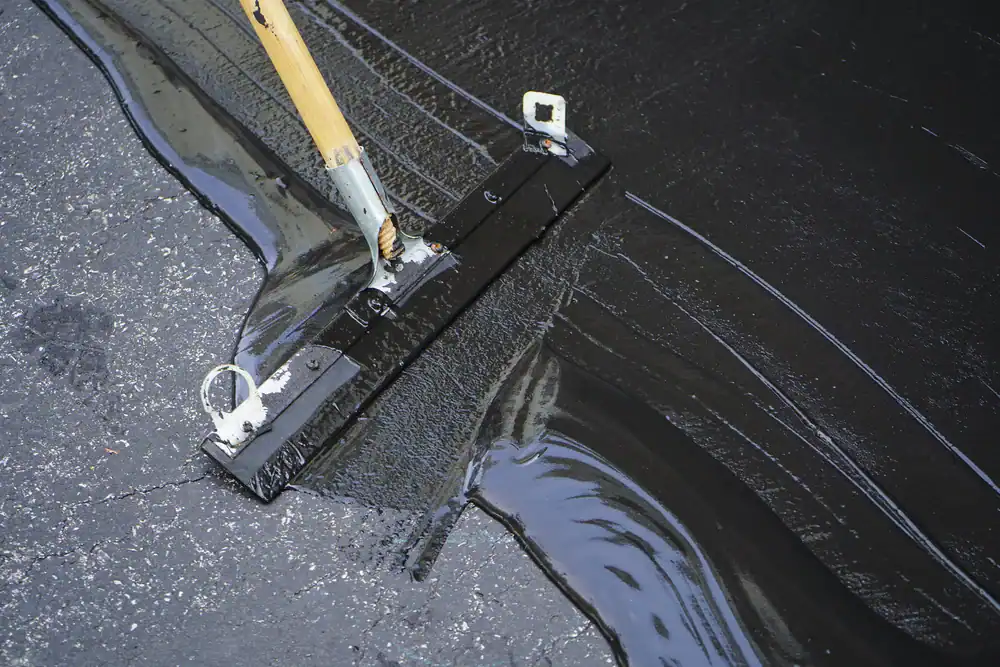
A close-up of a squeegee spreading black sealant over an asphalt driveway, expertly applied by paving contractors in Morris, Sussex & Somerset County, NJ—part of the surface is freshly coated while the rest remains exposed.

Hear from Our Customers

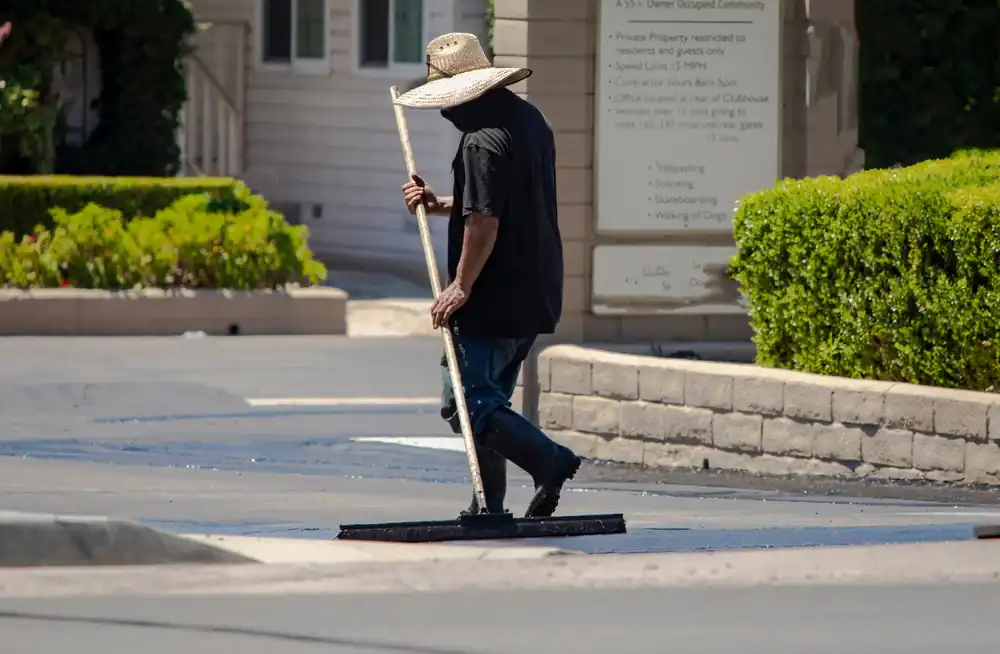
A person in a large straw hat and dark clothes uses a long-handled tool to spread material on a paved surface, likely working for Paving Contractors Morris in NJ. Green bushes and a sign are visible in this Sussex & Somerset County residential area.

Professional Asphalt Contractors Newark

Built for Newark's Toughest Weather

Newark throws everything at your driveway. Temperatures swing from 26°F winters to 86°F summers. Over 30 inches of annual rainfall. Freeze-thaw cycles that crack weak pavement like eggshells.

You need asphalt paving in Newark, NJ that fights back. Flexible surfaces that bend instead of breaking. Smart drainage that handles our heavy rains. Professional installation that accounts for our clay soils and temperature extremes.

When we do it right, you get 20-30 years of smooth, safe surfaces that actually boost your property value instead of draining your wallet.

Trusted Newark Paving Company

We Know Newark's Paving Challenges

We’ve seen what Newark’s climate does to poorly installed pavement. Cracked driveways in the Ironbound. Drainage nightmares in Forest Hill. Parking lots that crumble after just a few winters.

That’s why we focus on getting the fundamentals right. Proper excavation for clay-heavy soils. Base materials that won’t shift. Drainage solutions designed for our wet climate.

We provide detailed estimates with no hidden costs and complete projects on schedule because your time and investment deserve that respect.
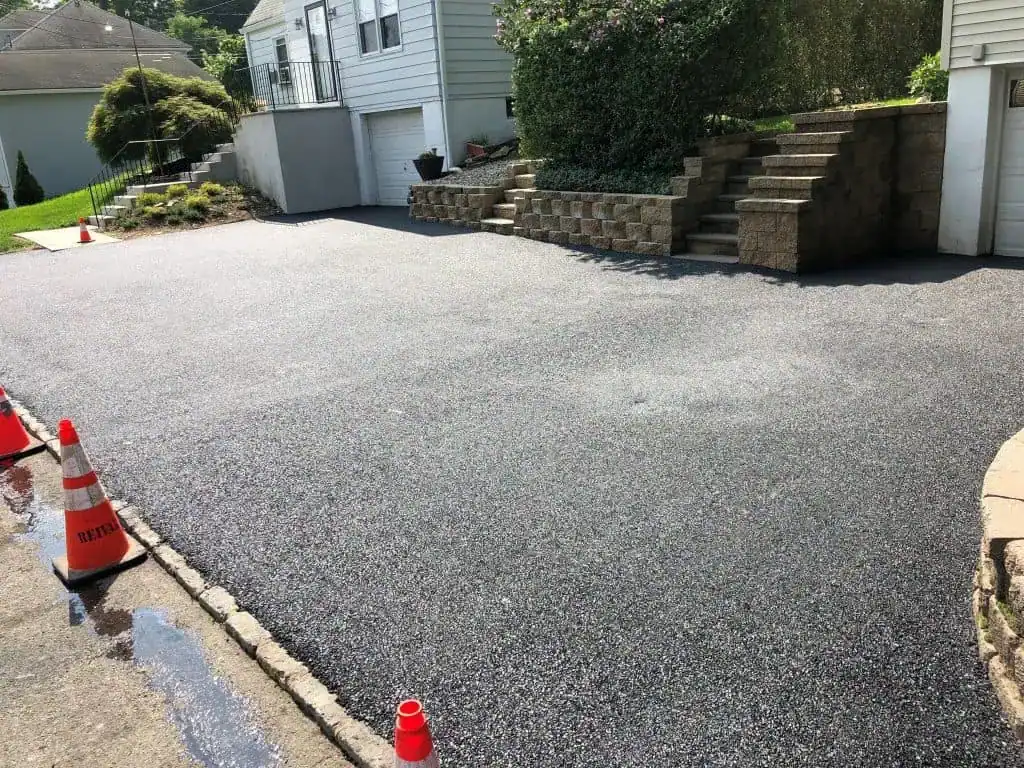
A freshly paved asphalt driveway in front of a house by NJ paving contractors Morris, Sussex & Somerset County is bordered by traffic cones. Stone steps lead to a retaining wall, with shrubs and grass in the background and a wet spot near the curb.

Newark Asphalt Installation Process

The Right Way to Pave in Newark

Every successful asphalt installation in Newark starts with understanding your specific site. We assess soil conditions, existing drainage patterns, and how weather has affected your current surface.

Excavation and base preparation come next—the foundation that determines whether your driveway lasts 5 years or 25 years. Newark’s clay soils and wet climate demand specific approaches that many contractors skip to save time.

Then we install your asphalt in proper layers using techniques proven for our climate. Base coat for strength, surface coat for smoothness, and finishing work that creates proper drainage and clean edges that enhance your property.
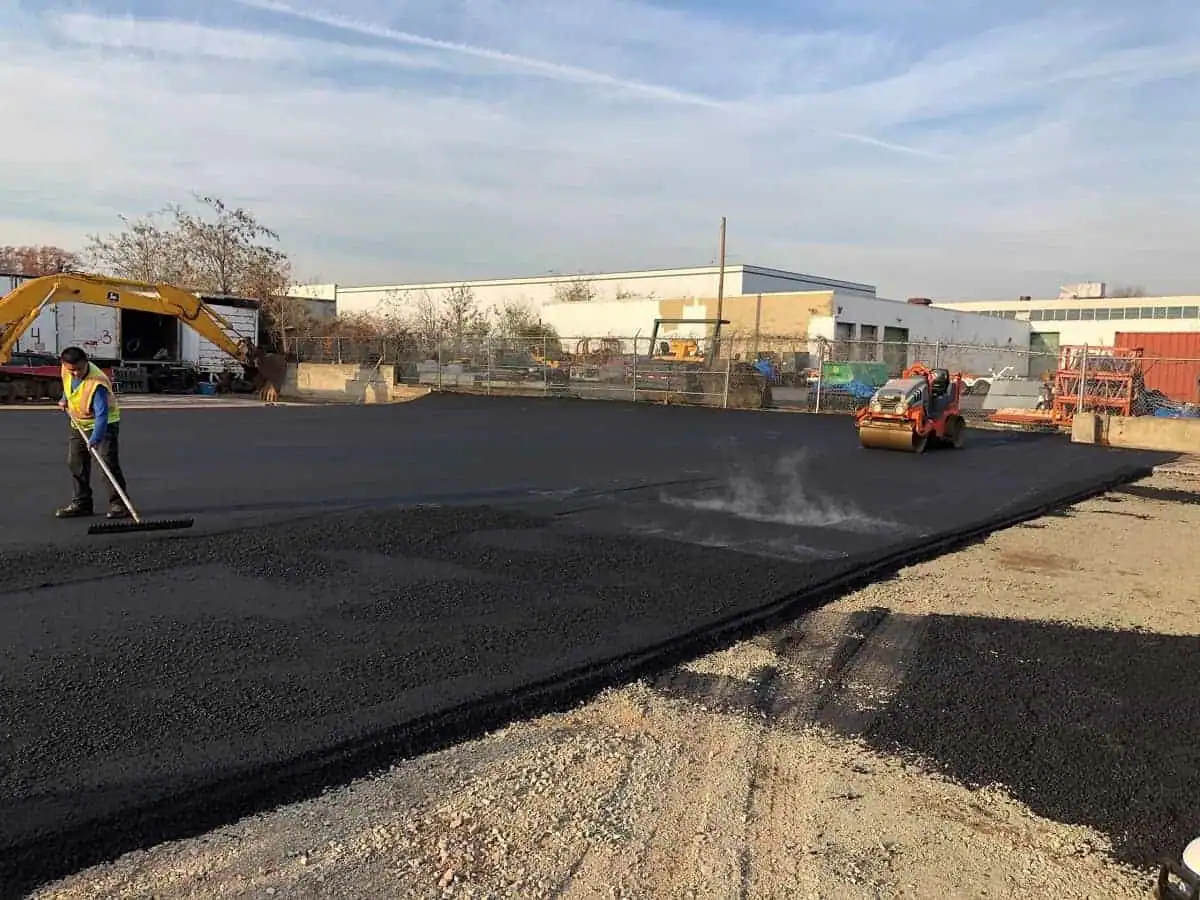
A construction worker spreads asphalt with a rake while another operates a steamroller on a large outdoor site, as Paving Contractors Morris, NJ lay new pavement near industrial buildings under a partly cloudy sky.

Ready to get started?

Explore More Services

About Platinum Paving

Get a Free Consultation

Complete Newark Asphalt Services

Everything Your Property Needs

Our asphalt paving services in Newark, NJ include residential driveways, commercial parking lots, and blacktop repairs. We handle everything from small residential projects in the North Ward to large commercial installations downtown.

Newark’s heavy rainfall and clay soils create drainage challenges that generic contractors often miss. We design proper grading and water management systems that prevent the pooling and erosion that destroys pavement prematurely.

Regular maintenance keeps your investment performing. We provide asphalt repair services and recommend sealcoating every 2-3 years to protect against Newark’s harsh weather and extend your pavement’s lifespan significantly.

A worker in a striped shirt operates a yellow asphalt roller, flattening fresh black asphalt—a service expertly handled by paving contractors in Morris, NJ, Sussex & Somerset County—creating a clear contrast between the new and old pavement.
Professional asphalt paving in Newark typically runs $8-12 per square foot for complete installation, including excavation, base work, and proper drainage. This covers both the base layer and surface layer—both essential for surviving our climate.Your final cost depends on project size, current site conditions, and any drainage improvements needed. Properties with poor drainage or unstable clay soils may need additional base work, but this prevents expensive failures down the road.We provide detailed, upfront estimates that break down every cost so you know exactly what you’re paying for. No surprises, no hidden fees—just honest pricing for quality work that lasts decades, not years.
Most residential driveways in Newark can be completed in 1-2 days, depending on size and site conditions. Commercial projects take longer based on scope and any special requirements like ADA compliance or heavy-duty specifications.Weather affects our scheduling—we can’t install quality asphalt during heavy rain or when temperatures drop below 50°F. Newark’s humid climate also means we monitor conditions that could affect proper curing and surface quality.We coordinate every aspect of your project to minimize disruption. You’ll know the timeline upfront, and we’ll communicate immediately if weather or unexpected site conditions require any schedule adjustments.
Asphalt handles Newark’s brutal freeze-thaw cycles far better than concrete. When water freezes in small cracks and expands, asphalt’s flexibility lets it move without catastrophic cracking. Concrete is rigid and tends to fail dramatically under the same stress.Cost matters too—asphalt installation typically costs 30-40% less than concrete while delivering excellent durability for our climate. When repairs are eventually needed, they’re simpler and much less expensive than concrete restoration.Performance in Newark’s hot summers gives asphalt another edge. While concrete becomes uncomfortably hot and can crack from thermal stress, asphalt maintains reasonable surface temperatures and provides superior wet-weather traction.
Sealcoating every 2-3 years is your most important maintenance step. This protects against moisture intrusion, UV damage, and the road salt that Newark uses heavily during winter months.Keep your driveway clean by sweeping debris and removing snow promptly. Use plastic shovels instead of metal ones to avoid surface gouging, and rinse away road salt each spring to prevent long-term chemical damage.Address small cracks immediately—Newark’s freeze-thaw cycles can turn hairline cracks into major damage in just one winter. Early crack sealing costs pennies compared to major repairs or premature replacement.
Quality asphalt installation requires air and ground temperatures above 50°F for proper curing and compaction. Newark’s winters regularly drop well below this threshold, making professional installation impossible during the coldest months.We schedule most paving projects from late spring through early fall when conditions are optimal. This ensures proper material bonding, adequate compaction, and complete curing that creates the durable surface Newark’s climate demands.For winter emergencies, we can provide temporary repairs to prevent further damage until proper installation conditions return. Planning your project for spring installation always delivers the best long-term results.
Most residential driveway replacements within existing footprints don’t require Newark permits. However, new driveways, expansions, or modifications that affect stormwater drainage typically need city approval and inspections.Commercial asphalt paving projects almost always require permits and must meet Newark’s building codes, ADA requirements, and stormwater management regulations. The permit process can take several weeks, so early planning is essential.We’re familiar with Newark’s permitting requirements and help coordinate the paperwork and inspections needed to keep your project moving smoothly. It’s always better to check requirements upfront than deal with code violations later.