
Hear from Our Customers
Sussex County winters don’t mess around. When water gets into cracks and freezes, it expands by nearly 10% and pushes your asphalt apart with about 30,000 psi of pressure. That’s not a small problem—it’s the reason driveways around here crack, crumble, and need replacing years earlier than they should.
Sealcoating creates a waterproof barrier that keeps moisture out before it becomes a structural issue. You’re looking at extending your driveway’s lifespan from 15 years to 25+ years with regular maintenance. That’s the difference between replacing your driveway once or twice in the time you own your home.
The math is simple. A typical driveway sealing costs between $150 and $500 depending on size. A full replacement? You’re looking at $2,400 to $4,800 for a standard 600-square-foot driveway. Sealcoating every two to three years isn’t an expense—it’s the cheapest insurance you’ll ever buy for your property.
We’ve been handling asphalt and concrete work across Morris, Sussex, and Somerset counties long enough to see what happens when homeowners skip maintenance. North Jersey gets hit with 40% more freeze-thaw cycles than Central or South Jersey. That means your driveway takes more punishment than most.
We’re not the cheapest option, and that’s intentional. Proper sealcoating requires the right materials applied at the right temperature during the right season. Corners get cut when price is the only factor, and you end up resealing sooner or dealing with failures that cost more to fix.
Our crew preps every surface the same way: power washing to remove debris, hot rubberized crack filler for existing damage, oil spot primers where needed, and clean edge work around walkways and garage doors. When we say we’ll be there, we show up. When we quote a price, that’s what you pay.
First, we assess your driveway’s current condition. If there are cracks wider than a quarter-inch or potholes, those get addressed before any sealer goes down. Sealcoating doesn’t fix structural damage—it prevents it.
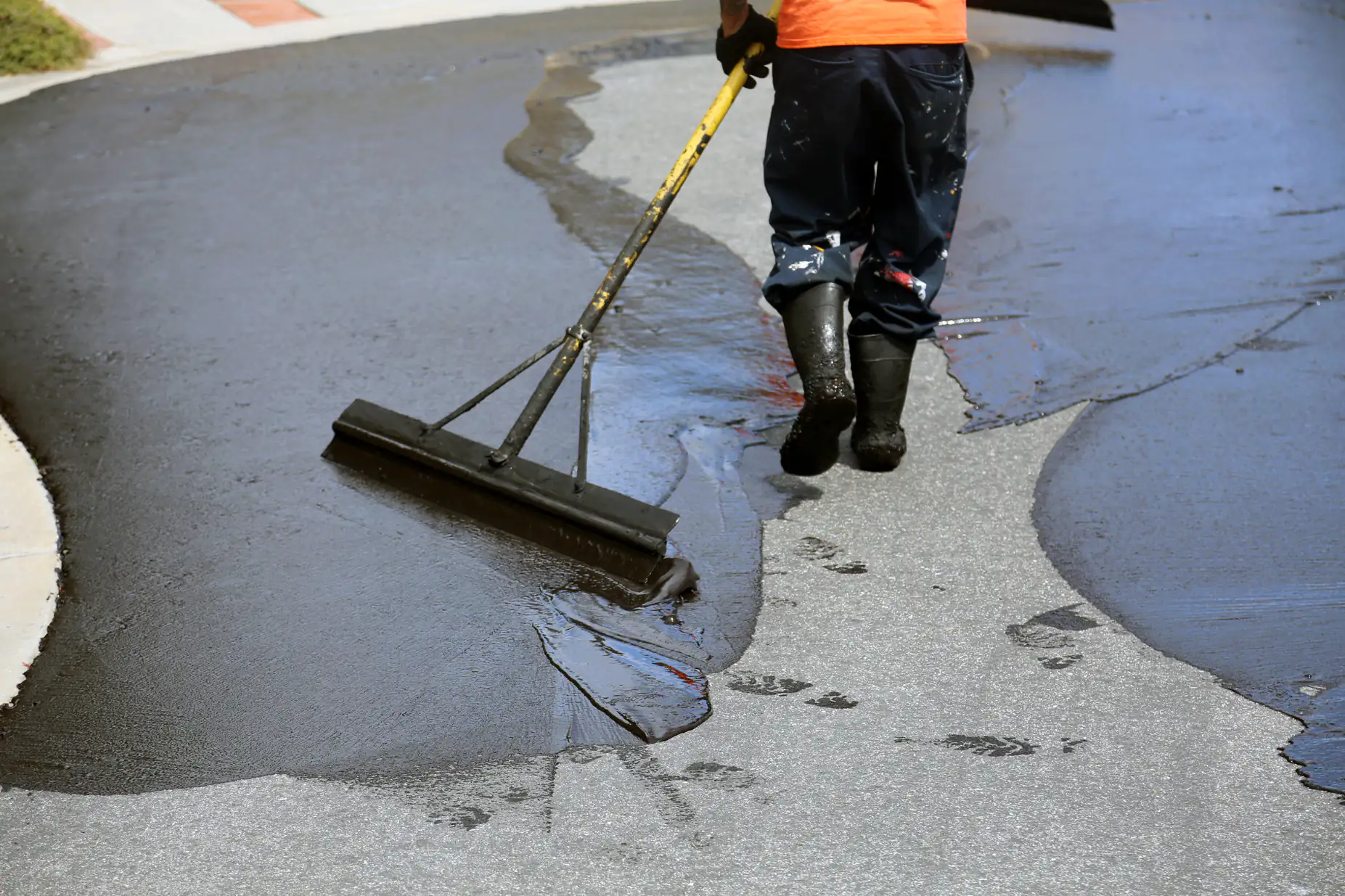
Next comes surface prep. We power wash the entire area to remove dirt, oil, vegetation, and anything else that would prevent proper adhesion. Any cracks get filled with hot rubberized filler that flexes with temperature changes instead of cracking again in six months. Oil spots get treated with a special primer because sealer won’t bond to petroleum residue.
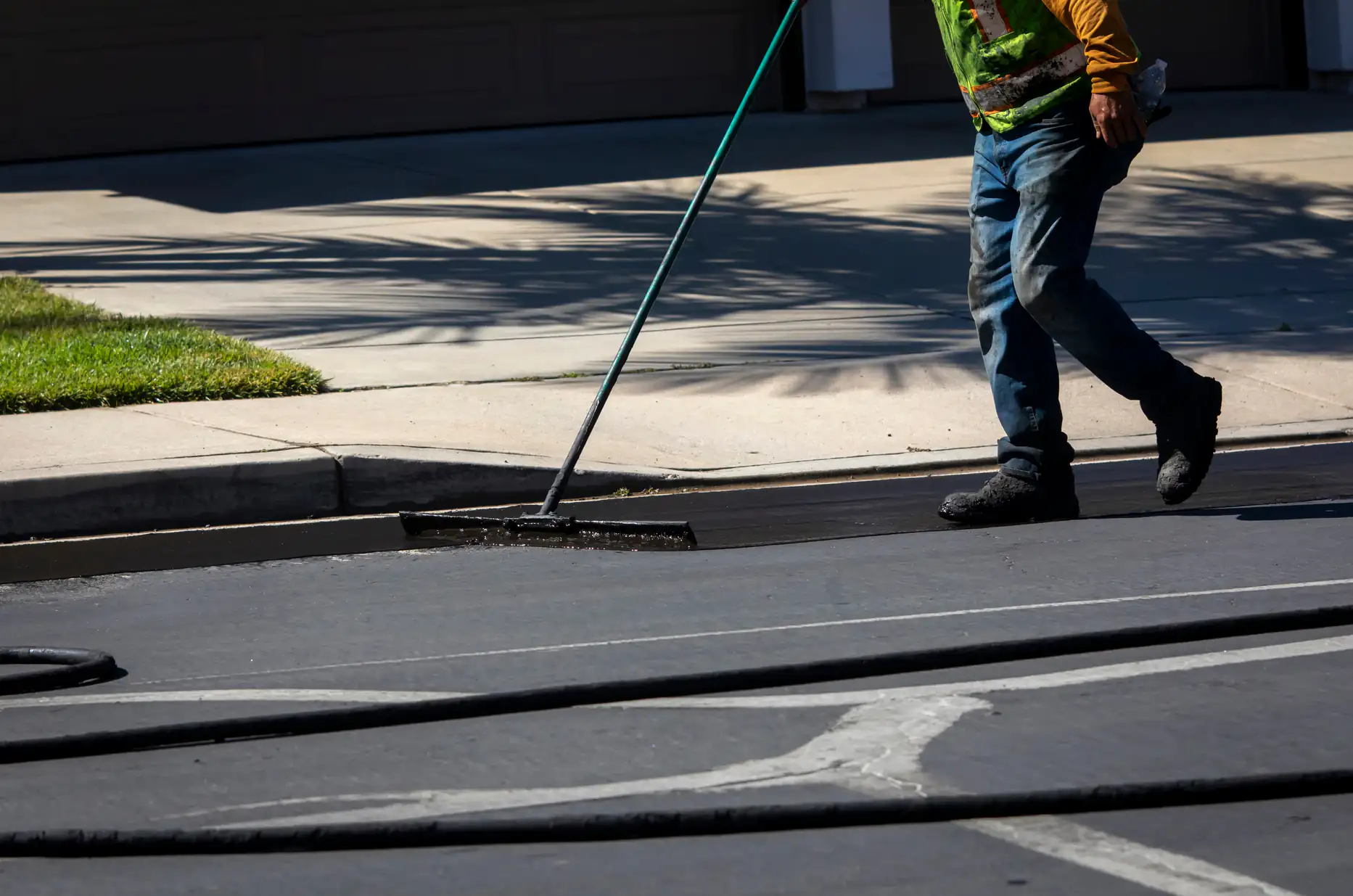
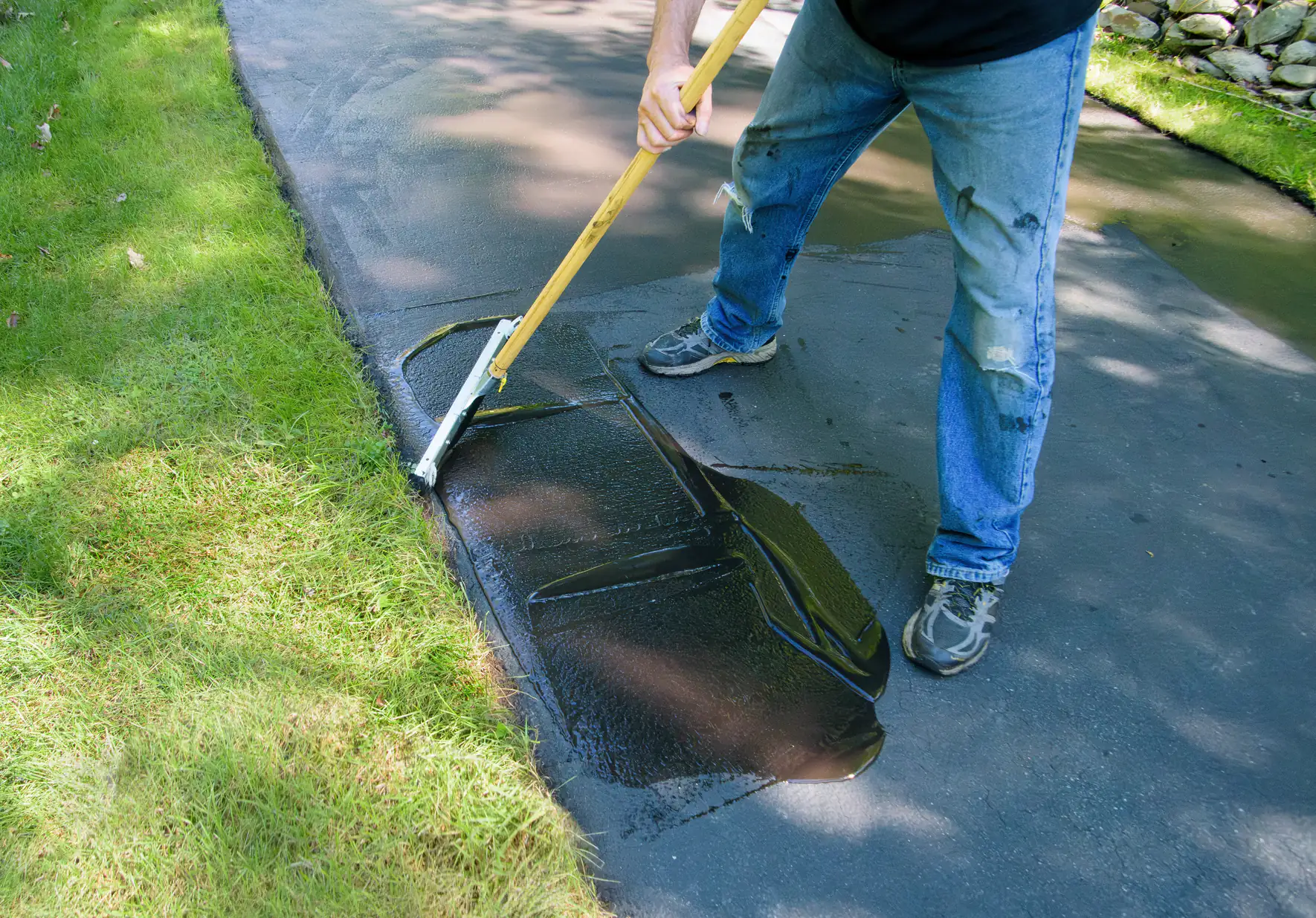
The actual application happens on a dry day when temperatures are above 55 degrees and expected to stay that way for at least 24 hours. We apply two coats of commercial-grade sealer, allowing proper cure time between layers. You’ll need to stay off the driveway for 24 to 48 hours depending on weather conditions.
Timing matters. In New Jersey, the sealcoating season runs from mid-April through mid-October. Outside that window, temperatures drop too low for proper curing, and you’re wasting money on a product that won’t perform.
Ready to get started?
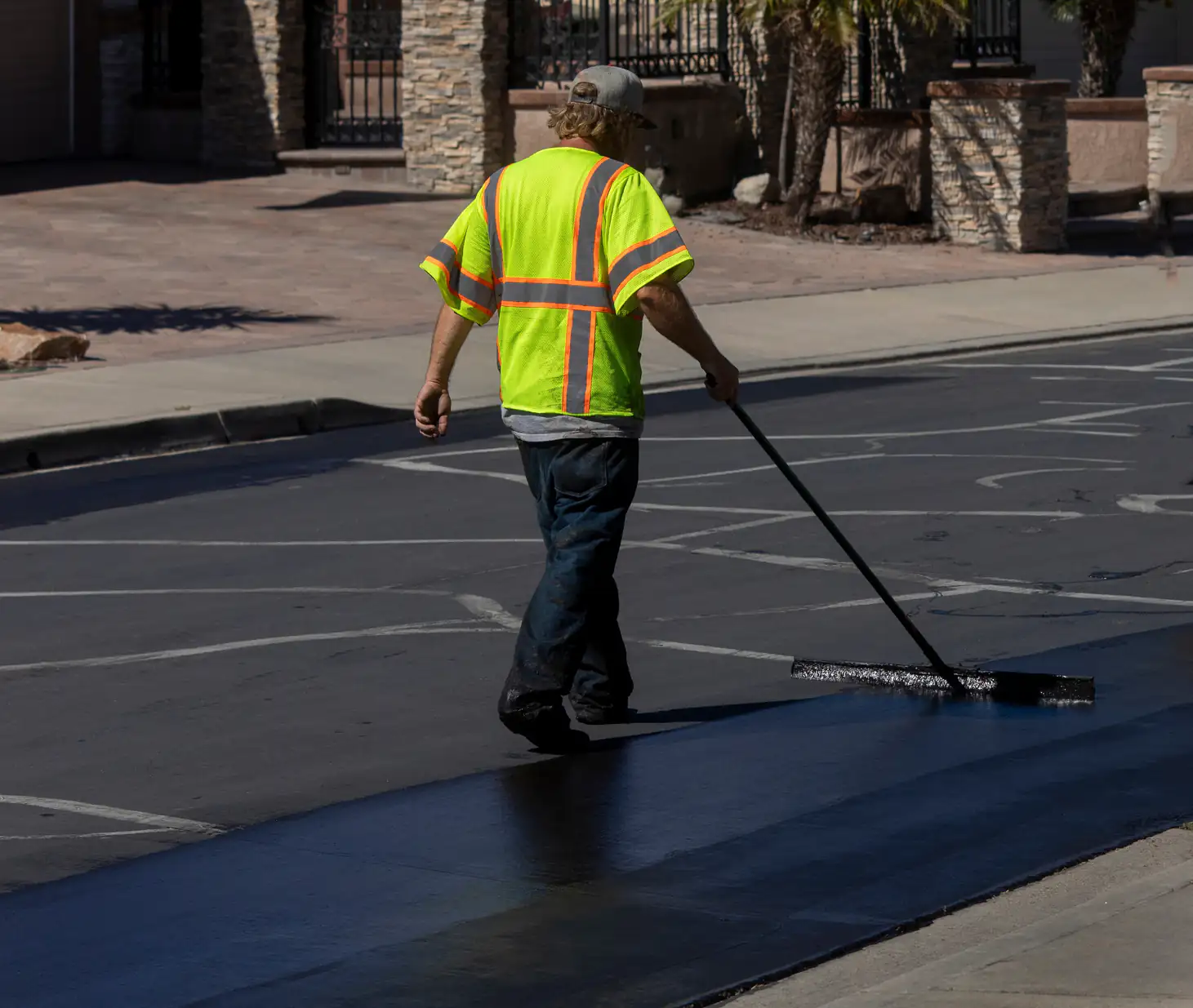
You’re not just getting a black coating. Professional sealcoating restores the rich black finish that makes your property look maintained, fills in minor surface imperfections, and creates a smooth surface that’s easier to clean and plow in winter.
The sealer we use is designed for New Jersey’s climate. It remains flexible enough to handle temperature swings without cracking but tough enough to resist gas, oil, and salt damage. That flexibility is critical in Sussex County, where a 40-degree temperature swing in a single day isn’t unusual during spring and fall.
Protection lasts two to three years with proper care. That means avoiding heavy vehicles during the first week, keeping sharp objects off the surface, and not using harsh chemicals for snow removal. Simple maintenance like sweeping debris and rinsing oil spills extends the life of your sealcoating and your driveway.
Most homeowners in Sussex County should plan on resealing every two to three years. If you’re seeing faded color, water soaking in instead of beading up, or small cracks starting to appear, it’s time. Waiting too long means you’re back to repairing damage instead of preventing it.
Most residential driveways in Sussex County run between $150 and $500 for professional sealcoating, depending on square footage and current condition. The industry average is about $0.15 to $0.40 per square foot. A standard two-car driveway is roughly 600 square feet, so you’re looking at $90 to $240 just for materials and labor on a straightforward job.
That price goes up if your driveway needs crack filling, oil spot treatment, or edge work. Those aren’t upsells—they’re necessary prep steps that determine whether your sealcoating actually lasts. Skipping crack repair means water still gets underneath, and you’ve just wasted money on a cosmetic fix.
Compare that to replacement costs. A new asphalt driveway runs $4 to $8 per square foot installed. That same 600-square-foot driveway costs $2,400 to $4,800 to replace. Sealcoating every three years for 20 years costs roughly $1,000 to $1,500 total. The math isn’t complicated.
Mid-April through mid-October is your window in New Jersey. Sealcoating requires temperatures above 55 degrees at application and during the 24 to 48-hour curing period. Drop below that, and the sealer doesn’t cure properly. You end up with a surface that wears off faster or never fully hardens.
Late spring and early fall are ideal because you get consistent temperatures without the extreme heat of summer. When it’s 90+ degrees, sealer can dry too fast and not bond correctly. You want moderate temps, low humidity, and no rain in the forecast for at least 24 hours after application.
Plan ahead. Most reputable contractors in Sussex County book up by late summer for fall work. If you’re trying to schedule in September or early October, you might be waiting weeks for an opening. Spring is less crowded, but you’re competing with everyone who wants work done before summer parties and gatherings.
Two to three years with proper application and normal use. That timeline assumes you’re not parking heavy commercial vehicles, you’re keeping the surface clean, and you’re not using metal shovels or harsh chemicals during snow removal.
Sussex County’s freeze-thaw cycles are harder on sealcoating than areas with milder winters. Every time temperatures swing from below freezing to above, your driveway expands and contracts. Quality sealer flexes with those changes, but it still degrades faster here than it would in, say, South Jersey.
You’ll know it’s time to reseal when water stops beading on the surface and starts soaking in. Faded color is another sign. If you’re seeing the aggregate (stone) through the sealer, you’ve waited too long. At that point, you’re not maintaining anymore—you’re repairing damage that’s already started.
You can buy sealer at any home improvement store, but application quality determines whether it actually works. Most DIY jobs fail because of poor surface prep, wrong weather conditions, or cheap materials that don’t hold up to New Jersey winters.
We power wash at pressures high enough to remove embedded dirt and oil. We use hot rubberized crack filler that stays flexible instead of the cold pour stuff that cracks again in months. We apply sealer at the right thickness—thick enough to protect, thin enough to cure properly.
The bigger issue is knowing when not to seal. If your driveway has serious structural problems, alligatoring, or base failure, sealcoating won’t fix it. You’re just putting a band-aid on something that needs surgery. A professional assessment tells you whether you’re looking at a $300 maintenance job or a $3,000 repair before you waste money on the wrong solution.
Sealcoating is preventive maintenance. It protects the asphalt you already have from water, UV damage, and chemical breakdown. Repaving is replacement—either a complete tear-out and reinstall or an overlay where new asphalt goes on top of old.
You sealcoat when your driveway’s structure is still sound but the surface is starting to show wear. You repave when there’s structural damage, widespread cracking, potholes, or base failure. One costs a few hundred dollars and takes a day. The other costs thousands and takes several days.
Here’s the decision point: if you have a few cracks and faded color, sealcoating extends your driveway’s life significantly. If you have alligator cracking (interconnected cracks that look like reptile skin), sunken areas, or potholes that keep coming back, the base is failing. Sealcoating won’t fix that. You need repaving or full replacement, and the longer you wait, the more expensive it gets.
Yes, but only if water can’t get into the asphalt in the first place. Sealcoating creates a waterproof barrier over the surface. When water can’t penetrate, it can’t freeze inside cracks and expand. That expansion—about 10% volume increase with 30,000 psi of pressure—is what destroys driveways in North Jersey.
The freeze-thaw cycle happens constantly here from November through March. Temperatures drop below freezing at night, rise during the day, and repeat. Every cycle pushes cracks wider and breaks down the binder holding your asphalt together. An unsealed driveway in Sussex County can go from small cracks to serious structural damage in just a few winters.
Sealcoating doesn’t make your driveway indestructible, but it dramatically slows deterioration. Combined with proper drainage and crack maintenance, you’re looking at 20 to 25 years of life instead of 12 to 15. That’s not marketing talk—that’s what happens when water stays on top of your driveway instead of working its way underneath.