
Hear from Our Customers
You’re not paying for black driveway paint. You’re buying 10 to 15 extra years before you need to repave.
North Jersey gets hit with 40% more freeze-thaw cycles than the rest of the state. Water seeps into tiny cracks, freezes, expands, and rips your asphalt apart from the inside. By spring, those hairline cracks become potholes. By next winter, you’re looking at a full replacement.
Sealcoating creates a waterproof barrier. It blocks UV rays that dry out your asphalt and make it brittle. It fills surface voids before they become cracks. And it gives you a smooth, clean surface that actually sheds water instead of absorbing it.
The difference between a 15-year driveway and a 25-year driveway in Six Mile Run isn’t luck. It’s maintenance. And sealing is the single most cost-effective thing you can do.
We’ve been sealing driveways across Morris, Sussex, and Somerset County for years. We’re based in Dover, and we’ve seen what happens when homeowners skip maintenance or hire someone who doesn’t understand how to prep for New Jersey winters.
Six Mile Run sits in Franklin Township, where properties are well-maintained and homeowners understand the value of prevention. Your neighbors aren’t sealing their driveways because it looks nice. They’re doing it because a $400 sealcoat job today beats a $6,000 repaving bill in three years.
We use high-grade asphalt emulsion sealers designed for Northern New Jersey’s climate. We don’t rush the prep work, and we don’t apply sealer when it’s too cold or too wet. That’s how you get peeling and failure within a year.
First, we power wash the entire surface. Oil stains, dirt, vegetation, loose asphalt—it all has to go. Sealer won’t bond to a dirty surface, and any shortcut here shows up in six months.
Next, we fill cracks. Anything wider than a quarter-inch gets hot rubberized crack filler. This is a separate material from the sealer itself, and it’s critical. If you seal over open cracks, water still gets in. You’ve just made it harder to see the problem.
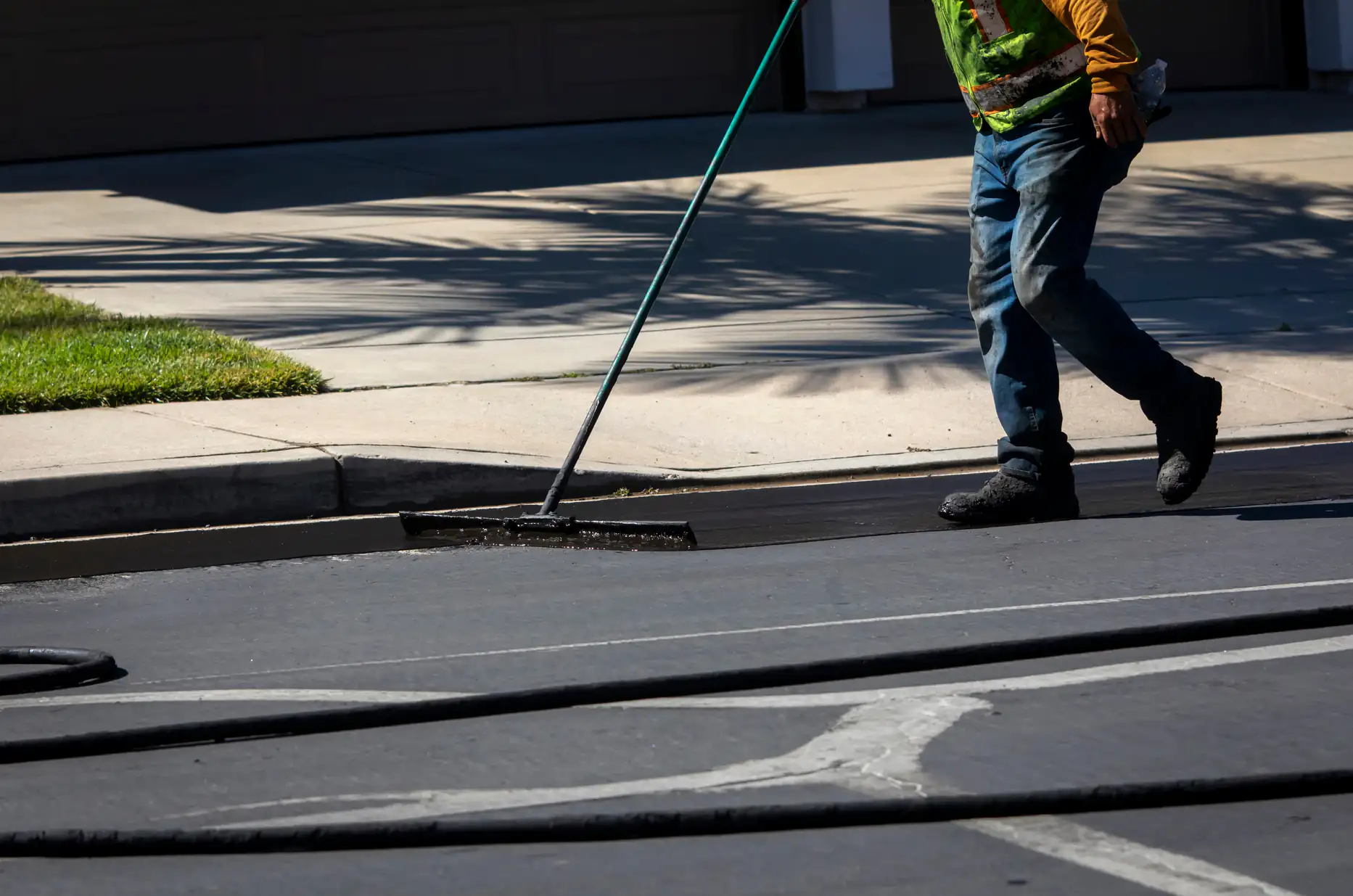
Then we apply two coats of commercial-grade sealer with a spray system or squeegee, depending on the surface. We add sand for traction so your driveway isn’t slick when wet. And we give it 24 to 48 hours to cure before you drive on it.
The process isn’t complicated, but it’s detail-heavy. Miss a step, and the sealer fails early. Do it right, and you won’t need to think about your driveway again for three years.
Ready to get started?
Most residential driveways in Six Mile Run run between $300 and $600 for a full sealcoating job, depending on size and condition. That includes power washing, crack filling up to 50 linear feet, two coats of sealer, sand additive, and a two-year warranty.
If your driveway hasn’t been sealed in five-plus years, expect some additional crack repair. If there are oil stains or surface damage, we’ll walk you through what needs to happen before we seal. Sealer doesn’t fix structural problems—it prevents them.
You should reseal every two to three years in this area. That’s not a sales pitch. That’s the lifespan of quality sealer under Northern New Jersey conditions. High traffic, freeze-thaw cycles, and UV exposure all break down the protective layer over time.
Compare that to the cost of letting your driveway go. Milling and repaving runs $2.50 to $3.50 per square foot in Somerset County. For a standard two-car driveway, that’s $5,000 to $8,000. Sealing twice over six years costs under $1,200. The math isn’t close.
Two to three years on average, sometimes closer to four if your driveway doesn’t get heavy use and you’re diligent about snow removal. Northern New Jersey winters are tough on sealcoating because of the freeze-thaw cycle and the salt and chemicals used for de-icing.
Sealer is a sacrificial layer. It’s designed to take the beating so your asphalt doesn’t. Over time, UV rays, water, traffic, and temperature swings break it down. You’ll notice it starting to fade or wear thin in high-traffic areas first—usually near the apron or along the edges.
If you wait too long between applications, water starts getting back into the asphalt. That’s when cracks reappear and you lose the protection you paid for. Staying on a regular schedule is cheaper and way less stressful than trying to catch up after years of neglect.
Late spring through early fall—specifically May through September. You need consistent temperatures above 50 degrees for at least 24 hours after application, and the surface has to be completely dry before we start.
Sealing in the heat of summer works, but the sealer can dry too fast, which makes application tricky. Early fall is ideal because temperatures are moderate, humidity is lower, and you’re getting ahead of winter. A lot of homeowners wait until spring to deal with winter damage, but by then you’re competing for scheduling and you’ve already let water sit in those cracks for months.
We don’t seal when rain is in the forecast or if overnight temps are dropping below 50. Sealer needs time to cure properly. Rushing it or applying it in bad conditions leads to poor adhesion, streaking, and early failure.
Yes, but we fill the cracks first. Sealer isn’t thick enough to fill anything wider than a hairline fracture. If we just seal over open cracks, water will still penetrate and you’ll be back to square one by next spring.
We use hot rubberized crack filler for anything that’s a quarter-inch or wider. It’s flexible, so it moves with the asphalt as temperatures change, and it creates a watertight seal. Once the crack filler cures, we apply the sealcoat over the entire surface.
If your driveway has major structural damage—like alligatoring, large potholes, or base failure—sealing won’t fix that. You’d need patching or potentially a full overlay before sealing makes sense. We’ll let you know during the estimate if that’s the case. There’s no point in sealing a driveway that’s too far gone.
If your asphalt is in decent shape, absolutely. Sealing a driveway costs a few hundred dollars every few years. Replacing it costs thousands, and you’re still going to need to seal the new asphalt to protect it.
An unsealed driveway in Six Mile Run will last 12 to 15 years if you’re lucky. A properly maintained driveway with regular sealcoating can last 25 years or more. You’re talking about potentially doubling the lifespan of your asphalt for a fraction of the replacement cost.
The ROI is clear. Spend $400 now, or spend $6,000 later. And if you’re planning to sell in the next few years, a freshly sealed driveway adds curb appeal and signals to buyers that the property has been maintained. It’s one of those small things that makes a big difference in perception.
Concrete benefits from sealing too, but it’s a different product and a different process. Concrete sealers protect against moisture penetration, staining, and surface wear, but they don’t prevent cracking the way asphalt sealcoating does.
If you have a concrete driveway, you’re looking at a penetrating sealer or a topical acrylic sealer depending on the finish and your goals. Concrete is more durable than asphalt in some ways, but it’s also more prone to cracking from freeze-thaw if it wasn’t poured with proper reinforcement or if the base wasn’t prepped correctly.
We handle both asphalt sealcoating and concrete sealing, but the recommendation depends on what you have and what condition it’s in. If you’re not sure what your driveway is made of or what it needs, we can take a look and give you a straight answer.
24 to 48 hours minimum before you drive on it. You can walk on it after about 8 to 12 hours in good conditions, but vehicles are heavier and the weight can leave tire marks or scuff the surface if the sealer hasn’t fully cured.
Cure time depends on temperature, humidity, and airflow. Hot, dry, breezy days cure faster. Cool or humid conditions take longer. We’ll give you a specific timeline based on the forecast when we finish the job.
Don’t park on it too soon just because it looks dry. Sealer cures from the outside in, and the surface can feel firm while the underlayer is still soft. If you drive on it early, you’ll see imprints, tracking, or even peeling. It’s not permanent damage, but it looks bad and it compromises the protective layer you just paid for. Just wait the full 48 hours and you’re good.