
Hear from Our Customers
Your driveway takes a beating in Silver Lake CDP, NJ. Between 55 and 75 freeze-thaw cycles hit Essex County every winter. Water gets into small cracks, freezes, expands by 9%, then thaws and lets more water in deeper.
That cycle repeats all season. By spring, hairline cracks from November turn into potholes that cost real money to fix.
Professional asphalt driveway sealing stops water before it penetrates the surface. A proper sealcoat creates a waterproof barrier that flexes with temperature changes instead of cracking under pressure. You’re not just making your driveway look darker—you’re preventing the kind of damage that turns a $300 maintenance job into a $5,000 replacement.
The difference shows up in how long your asphalt lasts. Unsealed driveways in North New Jersey lose 20-30% of their lifespan to freeze-thaw damage alone. Sealed driveways hold up because moisture never gets the chance to work its way underneath and cause the buckling, shifting, and surface damage that comes with frost heave.
We’ve been working in Essex County long enough to know exactly what holds up in Silver Lake CDP, NJ and what fails by the second winter. We’re based in Morris County and serve the surrounding areas with the same approach: show up when we say we will, use materials that actually work in this climate, and do the job right the first time.
Our crew uses SealMaster pavement products—the most trusted name in sealcoating for over 40 years—and applies them with commercial-grade equipment. Not the hardware store stuff that peels off in six months. We’re talking hot-pour crack filler that stays flexible in temperature swings and coal tar or asphalt emulsion sealers that bond to your driveway and hold.
You’ll work directly with owner Dominick, who’s on-site from start to finish. No subcontractors. No surprise charges. Just clear pricing, a 5-year warranty on the work, and a crew that doesn’t leave cigarette butts in your yard.
First, we clean the surface. Oil stains, dirt, and debris prevent sealcoat from bonding properly, so we power wash or sweep your driveway until it’s completely clean. Any vegetation growing in cracks gets removed.
Next, we fill the cracks. This is where most DIY jobs and cheap contractors fail. We use hot-pour rubberized crack filler that stays flexible through New Jersey’s temperature extremes—from summer heat to winter freezing. It creates a waterproof seal that moves with your asphalt instead of cracking apart when the temperature drops.
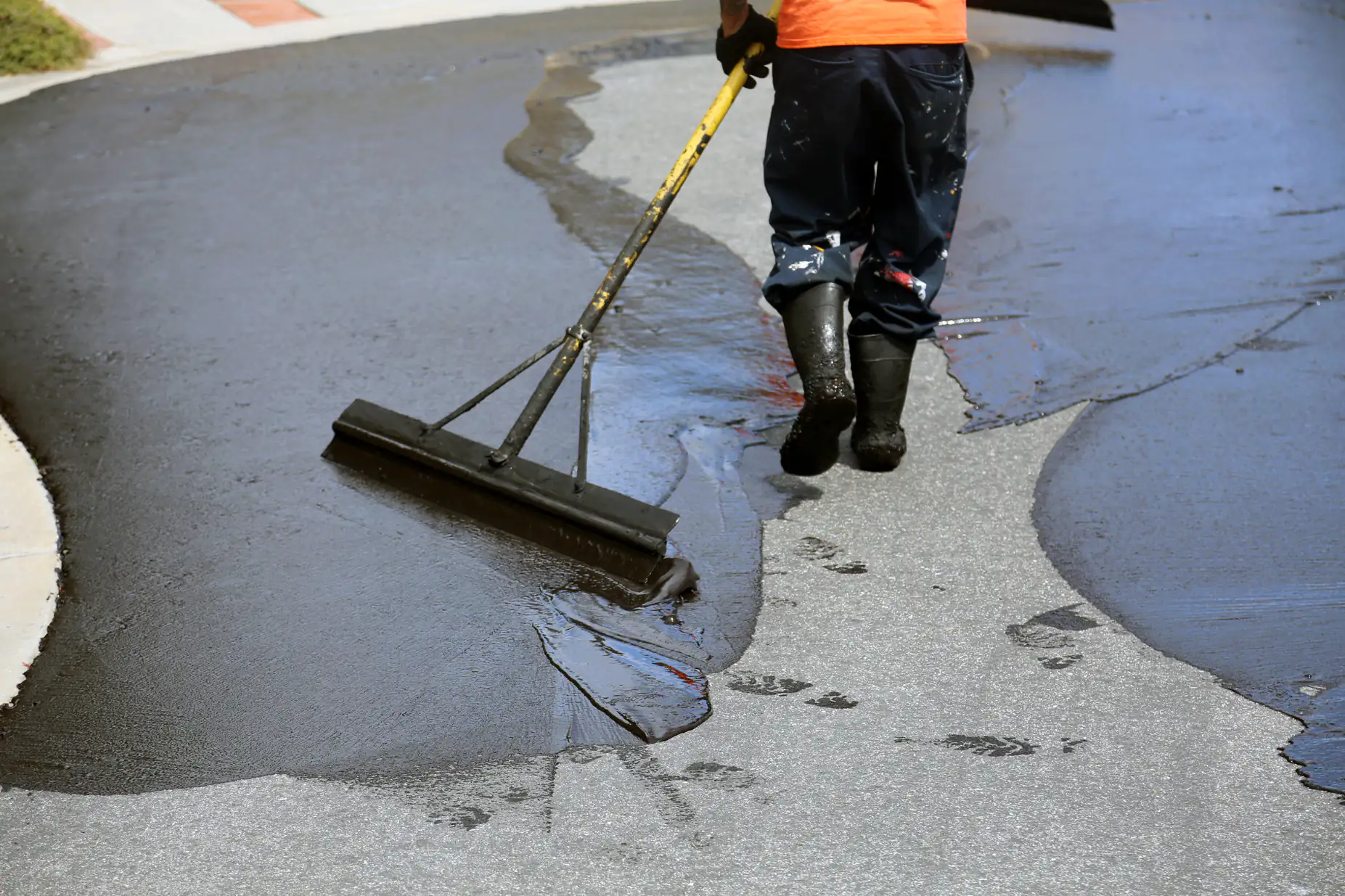
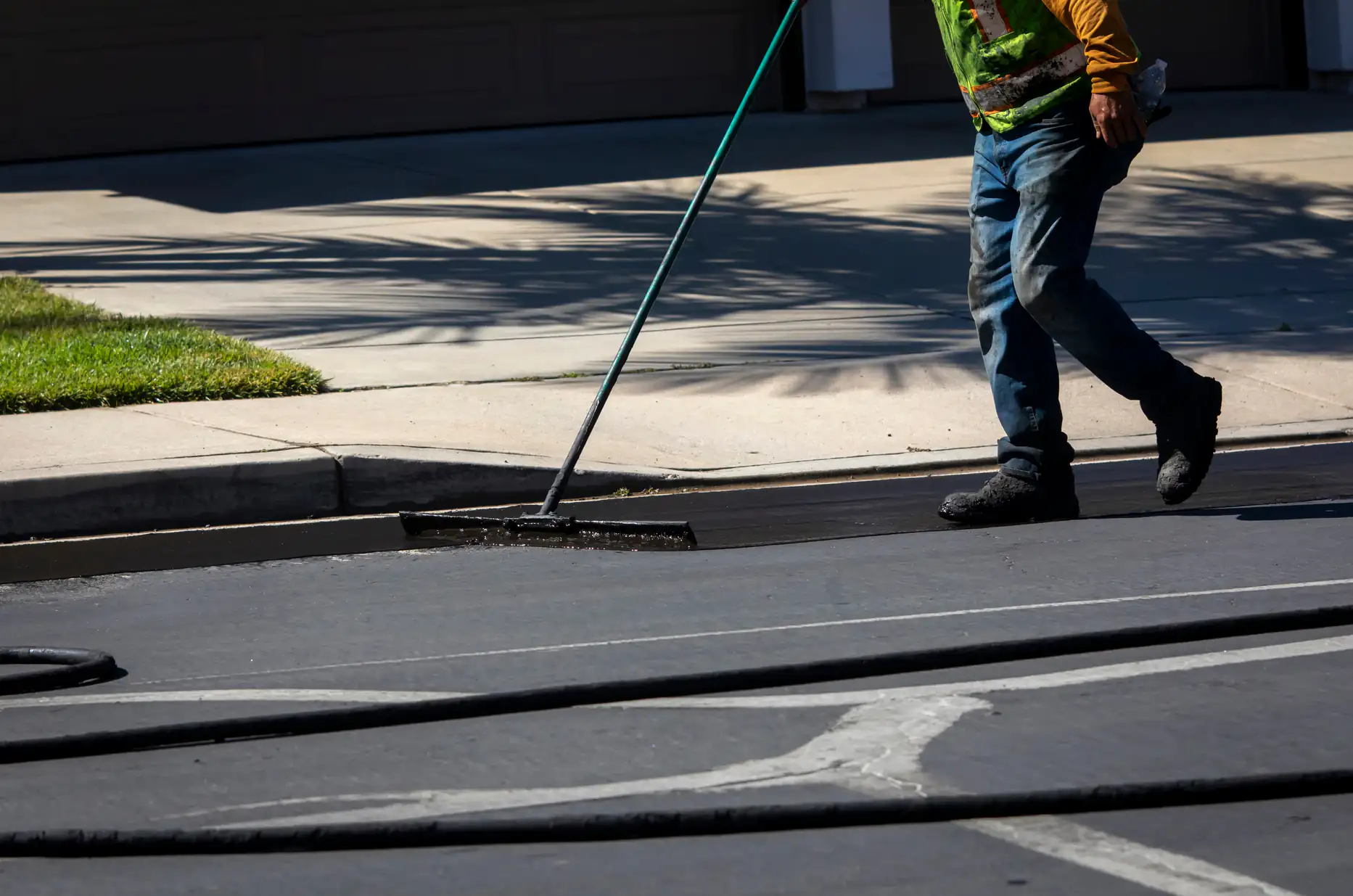
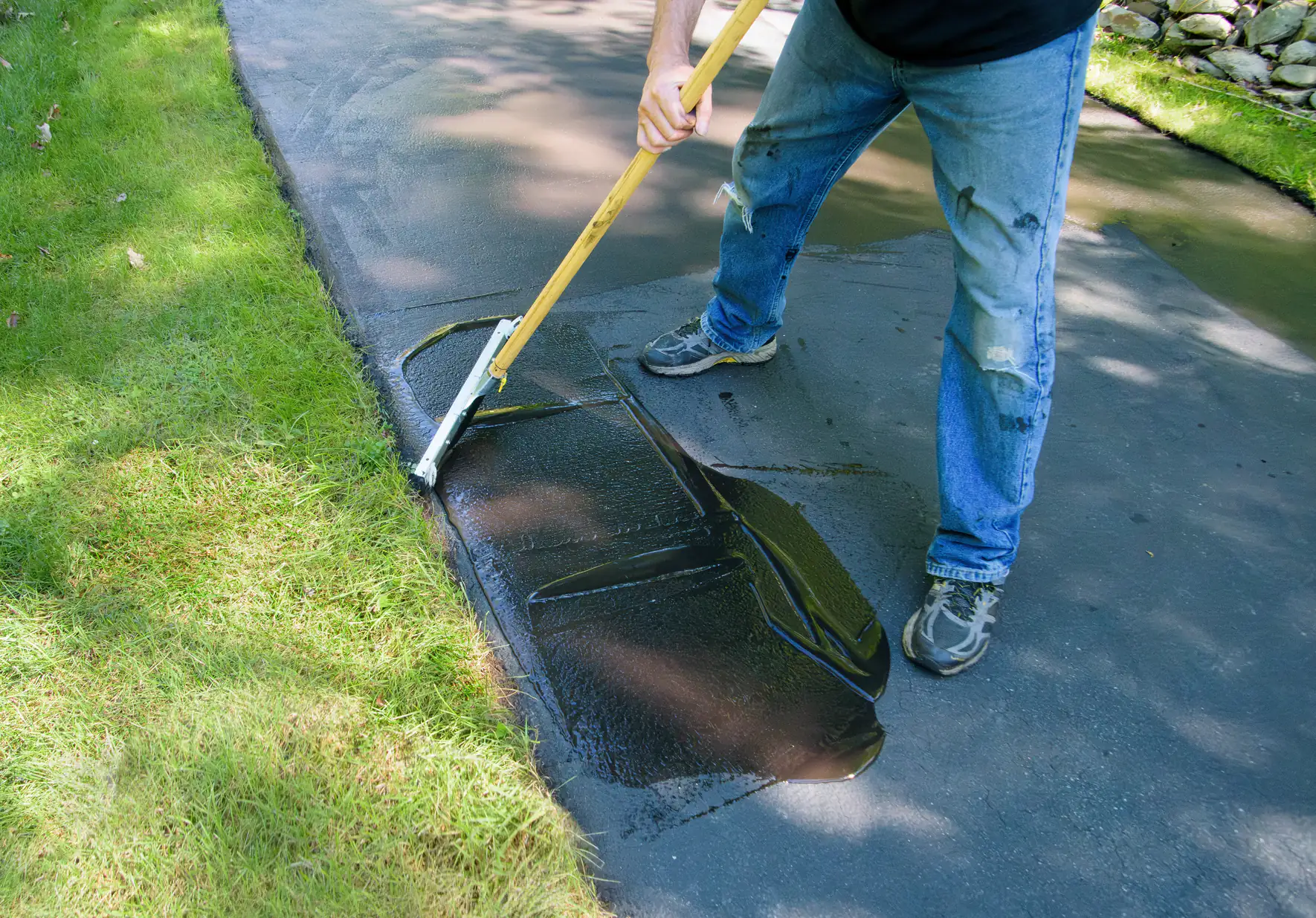
Then we apply the sealcoat. Two thin coats work better than one thick coat because they cure more evenly and last longer. We use commercial squeegees and spray equipment to get an even application across the entire surface. The sealant penetrates the asphalt, revitalizes the binder, and creates a protective layer against UV rays, water, oil, and chemicals.
Finally, we let it cure. You’ll need to stay off the driveway for 24-48 hours depending on temperature and humidity. Cooler weather or high humidity means longer cure times. We only seal when temperatures are above 55°F and no rain is forecast, which is why the season runs April through October in this area.
Ready to get started?
Every sealcoating job includes surface cleaning, crack filling with hot-pour material, and two coats of commercial-grade sealer. We edge around garage doors, walkways, and landscaping to keep lines clean. If your driveway has drainage issues—common in Essex County where heavy rain and snowmelt need somewhere to go—we’ll point them out and explain what’s causing water to pool.
The cost of asphalt sealing in Silver Lake CDP, NJ typically runs between $0.30 and $0.50 per square foot. Most residential driveways fall in the $150-$500 range depending on size and condition. That’s a fraction of what you’d pay to repave, and it buys you 2-3 years of protection before you need to reseal.
Timing matters. New asphalt needs 3-6 months to cure before it’s ready for sealcoating. If you seal too early, you trap oils that need to evaporate. After that first seal, you should reseal every 2-3 years to maintain protection. Skip it, and you’re back to fighting freeze-thaw damage.
We also handle decorative options if you want stamped concrete or colored sealers, but most homeowners in this area prioritize function over appearance. A freshly sealed driveway looks sharp regardless—jet black instead of faded grey—and that alone improves curb appeal if you’re thinking about selling.
With proper application and regular maintenance, sealcoating lasts 2-3 years in Essex County. That timeline assumes normal wear from vehicles, weather exposure, and the 55-75 freeze-thaw cycles we get every winter.
The lifespan depends on a few factors. Traffic volume matters—a driveway with two cars driving on it daily wears faster than one that sees occasional use. Weather exposure plays a role too. Driveways in full sun fade faster from UV damage, while shaded driveways stay darker longer but may hold moisture.
Application quality makes the biggest difference. Thin, uneven coats or sealcoating over dirty surfaces won’t bond properly and fail early. Two properly applied coats over clean, crack-filled asphalt give you the full 2-3 years. After that, you’ll notice the surface starting to fade from black to grey, and that’s your signal to reseal before water penetration starts causing damage again.
April 15 through October 15 is the window for driveway sealing in New Jersey. You need consistent temperatures above 55°F during application and for 24-48 hours afterward while the sealer cures. You also need dry conditions—no rain in the forecast for at least 24 hours.
Late spring and early fall are ideal. Summer works, but extreme heat can make the sealer dry too fast and create application issues. Mid-summer also means you’re competing with vacation schedules and peak demand for contractors.
If you’re planning to seal this year, schedule it early. Most driveway sealcoating contractors in Essex County book up by mid-spring, and weather delays can push jobs back. Waiting until September or October leaves little room for error if we get an early cold snap. The sealer won’t cure properly below 55°F, and rushing the job in marginal weather means it won’t last as long as it should.
Driveway sealing costs in Essex County typically range from $0.30 to $0.50 per square foot. A standard two-car driveway (around 600-800 square feet) usually runs $180-$400. Larger driveways or those needing extensive crack repair cost more.
The price includes surface cleaning, crack filling, and two coats of sealer. If your driveway has significant damage—deep cracks, potholes, or areas where the base has failed—you’ll need repairs before sealing, and that adds to the cost. Sealcoating doesn’t fix structural problems; it prevents them.
Compare that to replacement costs. Repaving a driveway in Silver Lake CDP, NJ runs $3-$7 per square foot depending on thickness and site prep. That same 600-square-foot driveway costs $1,800-$4,200 to replace. Spending $300 every 2-3 years on sealcoating is cheaper than ignoring maintenance and replacing the whole thing in five years because freeze-thaw damage destroyed it.
You can seal your own driveway, but the results usually don’t match what professional sealcoating contractors deliver. The biggest difference is in crack filling. Hardware store crack fillers lack the flexibility and adhesion needed for New Jersey’s temperature extremes. They crack out within a season, and once water gets underneath, you’re dealing with bigger problems.
Application quality matters too. Sealcoating needs to go on in thin, even coats over a completely clean surface. Too thick and it doesn’t cure properly. Too thin and you don’t get adequate protection. Uneven application leaves streaks and weak spots. Most homeowners also don’t have commercial squeegees or spray equipment, so they’re working with brushes or consumer-grade tools that make it harder to get consistent coverage.
The other issue is materials. Professional-grade sealers bond better and last longer than the buckets you’ll find at home improvement stores. We use SealMaster products applied with equipment designed for this work. If you’re sealing a small area and understand the limitations, DIY can work. For a full driveway in an area with harsh winters like Essex County, hiring experienced contractors makes more sense.
Sealcoating is specifically for asphalt driveways. Concrete driveways need different products—concrete sealers that penetrate the surface and protect against moisture, staining, and freeze-thaw damage. The chemistry is completely different, and using asphalt sealer on concrete won’t work.
If you have a concrete driveway in Silver Lake CDP, NJ, you still need to seal it, just with the right product. Concrete is porous and absorbs water. When that water freezes, it expands and causes the surface to flake and spall. A penetrating concrete sealer fills those pores and prevents water infiltration.
Some driveways combine both materials—asphalt with concrete aprons near the garage or decorative concrete borders. In those cases, each material gets treated separately with its appropriate sealer. The goal is the same: keep water out and extend the life of your driveway. But the products and application methods differ based on whether you’re working with asphalt or concrete.
Wait 3-6 months after installation before sealing a new asphalt driveway. Fresh asphalt contains oils that need time to evaporate and cure. If you seal too early, you trap those oils underneath the sealcoat, and the asphalt stays soft and never fully hardens.
Most paving contractors will tell you the same timeline. Some say six months minimum, others say you can go as early as three months if conditions are right. The safe approach is to wait until the following spring or summer if your driveway was paved in fall, or until fall if it was paved in spring.
You’ll know the asphalt is ready when it’s fully cured—hard to the touch, not soft or sticky in hot weather, and a lighter grey color instead of the deep black it had when first installed. Once it hits that point, sealcoating adds a protective layer that extends the life of your driveway by 10-15 years. Rushing it doesn’t help. Let the asphalt cure properly, then seal it right.