
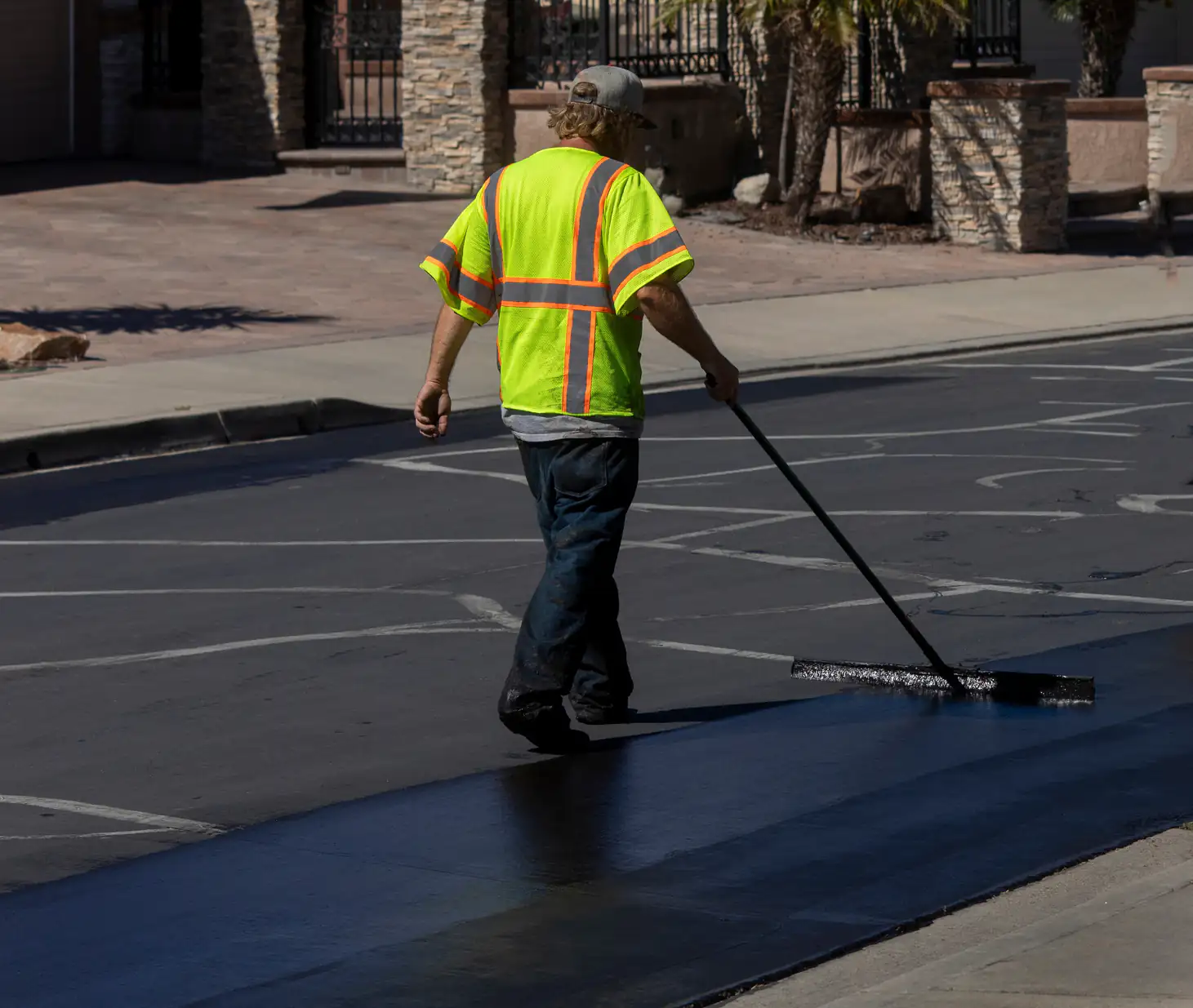
Hear from Our Customers
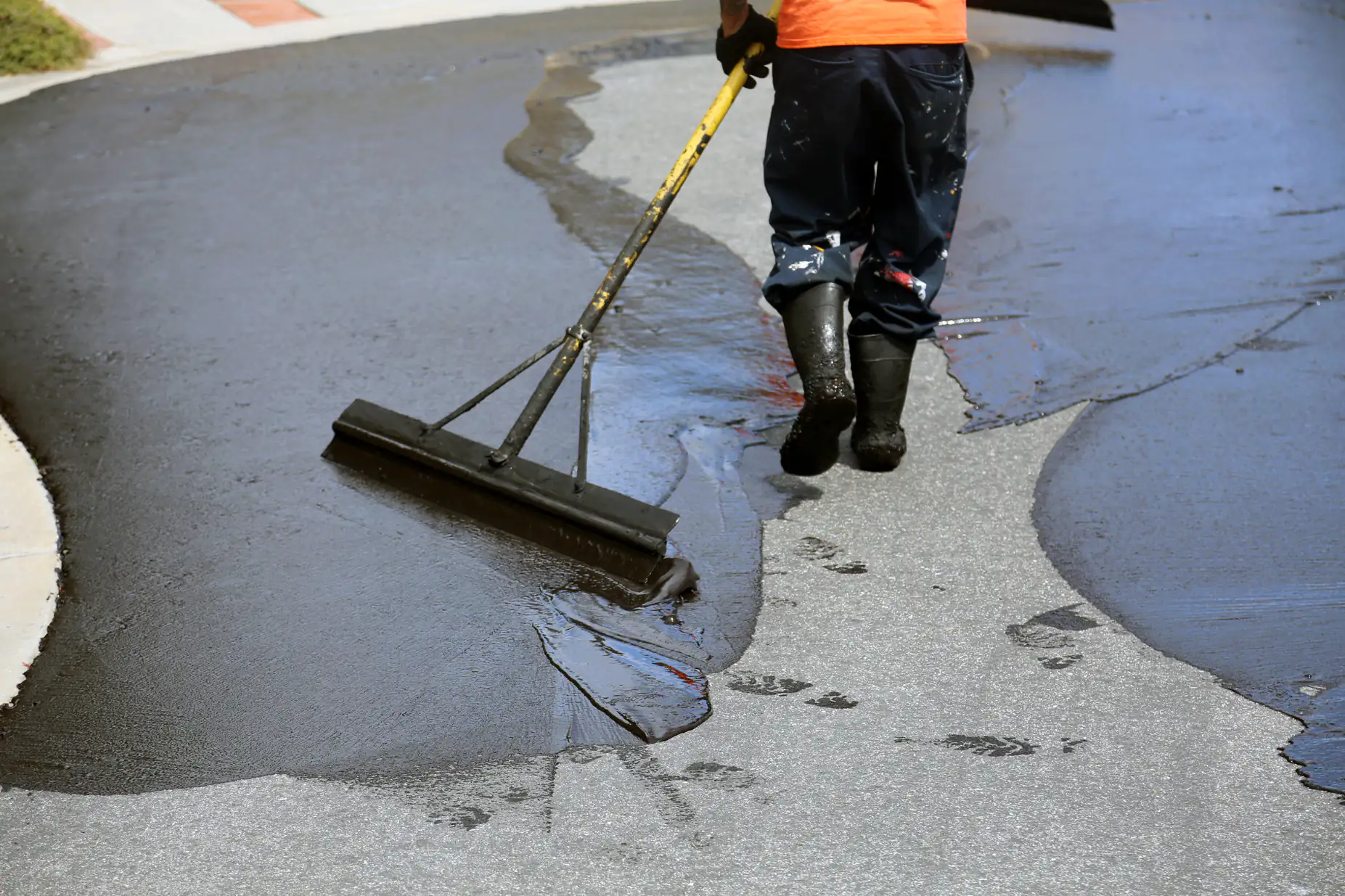
Water doesn’t care about your budget. It finds cracks, seeps in, freezes, and splits your driveway from the inside out. That’s how a $400 repair turns into a $5,000 replacement in three years.
Sealcoating stops that cycle. It fills surface voids, blocks water penetration, and gives your asphalt a fighting chance against Morris County‘s freeze-thaw punishment. The difference isn’t cosmetic—it’s structural.
You’re looking at 15 to 25 years of driveway life instead of 10 to 15. That’s not marketing talk. That’s what happens when asphalt gets the protection it was designed to work with. Your driveway stays intact through winter, looks sharp through summer, and doesn’t become an emergency expense when you’re planning something else.
We work throughout Morris, Somerset, and Sussex Counties. We’re based here, which means we know what winter does to driveways in Parsippany and we know what it takes to prep asphalt correctly before the first freeze hits.
We’ve been doing this long enough to skip the sales pitch. When you request a quote online, we call back within 24 to 48 hours with clear pricing and no surprise fees later. We use commercial-grade equipment and high-performance asphalt emulsion sealers that actually bond to your driveway instead of sitting on top of it.
You’ll get a two-year warranty on the work. Not because we have to, but because we know how we install it.
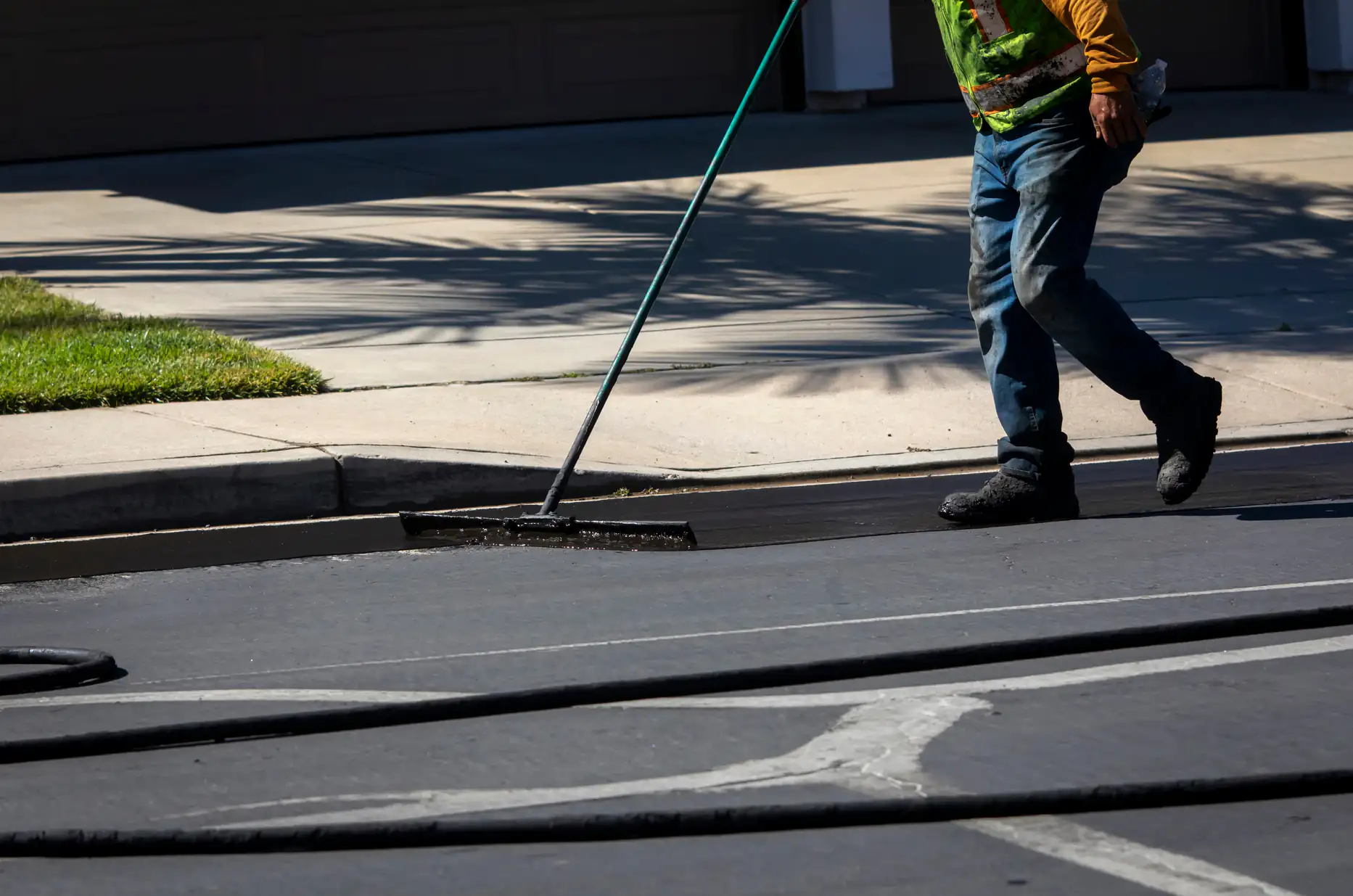
We start with surface prep. That means cleaning off dirt, debris, oil stains—anything that would prevent the sealer from bonding. If there are cracks wider than a quarter-inch, we fill them first. Sealcoating over damaged asphalt doesn’t fix the damage. It just hides it until it gets worse.
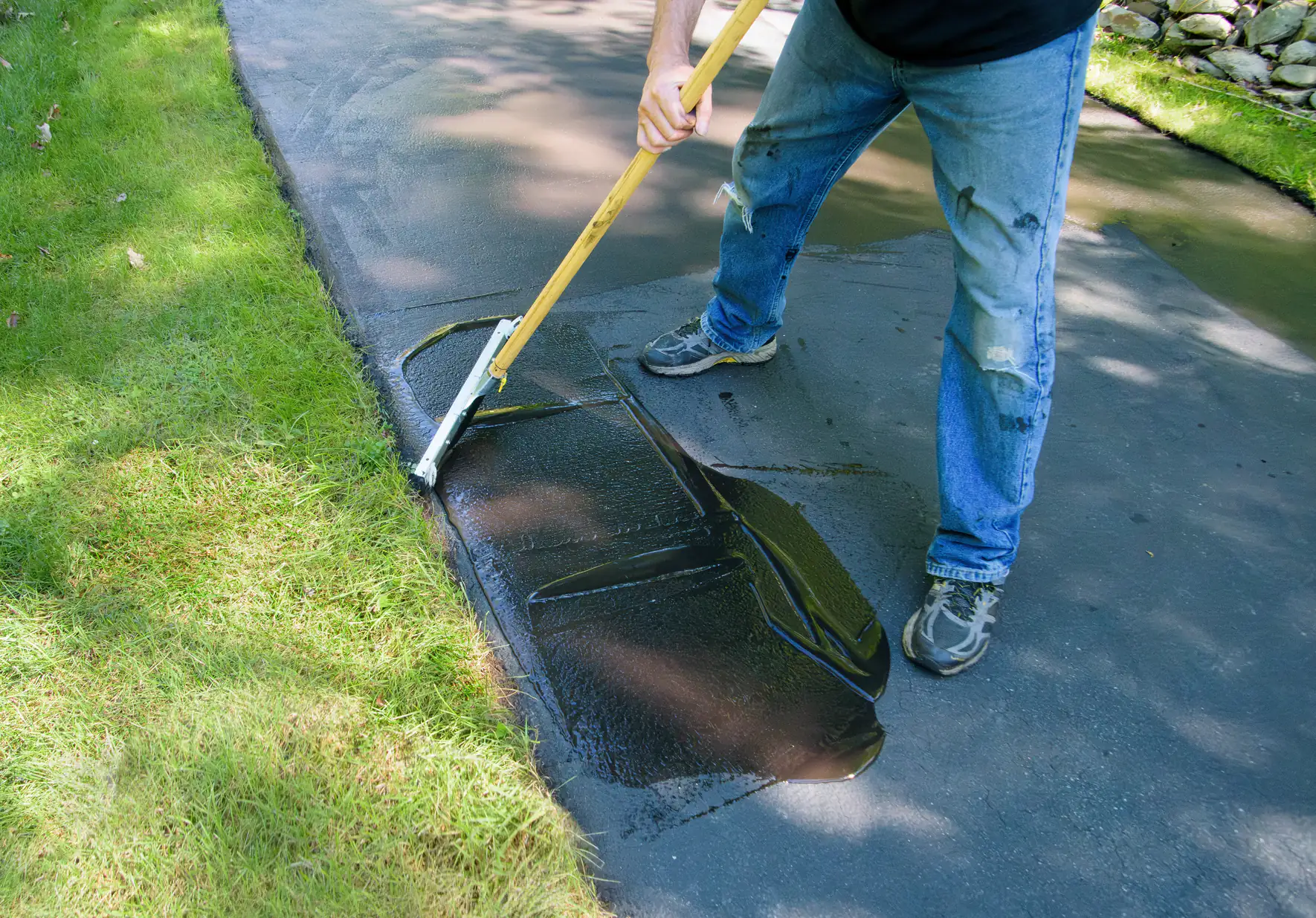
Once the surface is prepped and dry, we apply a high-grade asphalt emulsion sealer using commercial equipment. This isn’t the bucket-and-brush method. We’re talking about even coverage, proper thickness, and clean edges. The sealer needs to cure for 24 to 48 hours depending on temperature and humidity.
After it cures, your driveway is protected. The sealer blocks UV rays, repels water, and resists oil and gas spills. It also restores that deep black finish, which is a nice bonus but not the reason you’re doing this. The reason is to avoid replacing your driveway in five years.
Ready to get started?
Driveway sealcoating in Parsippany typically runs between $0.15 and $0.40 per square foot, depending on the condition of your asphalt and how much prep work is needed. A standard two-car driveway usually falls in the $300 to $600 range if the surface is in decent shape. If you’ve got significant cracking or surface damage, expect to add another $100 to $300 for crack filling and repairs.
That’s the upfront cost. The back-end cost—the one most people don’t think about—is what you avoid. A full driveway replacement in Morris County runs anywhere from $4,000 to $8,000. Sealcoating every two to three years costs you around $1,500 over a decade. Skipping it costs you a new driveway.
We give you a written estimate before we start. No hidden charges, no upsells once we’re halfway through the job. The price we quote is the price you pay, and it includes surface cleaning, crack repair if needed, sealer application, and cleanup. You’ll also get a two-year warranty on the sealcoating work, which covers bonding and performance issues if they come up.
Every two to three years is the standard recommendation for driveways in North Jersey. That timeline keeps your asphalt protected without over-sealing, which can cause its own problems.
If your driveway gets heavy use—multiple vehicles, frequent turning, or commercial traffic—you might need to seal it closer to every two years. If it’s a lighter-use residential driveway in good condition, you can stretch it to three years. The key indicator is the surface color. When your driveway starts looking gray instead of black, the sealer is wearing off and it’s time to reapply.
Don’t wait until you see cracks. By that point, you’re reacting to damage instead of preventing it. Sealcoating works best as a maintenance step, not a repair step.
Late spring through early fall—basically May through October in Parsippany. The sealer needs warm, dry conditions to cure properly. We’re looking for temperatures between 50 and 85 degrees with no rain in the forecast for at least 24 hours.
Fall is actually ideal if you can schedule it. September and October give you those consistent 60- to 70-degree days, lower humidity, and enough cure time before winter hits. Spring works too, but you’re gambling a bit more with unpredictable weather.
Avoid sealing in summer heat above 90 degrees. The sealer can dry too fast and not bond correctly. And obviously, don’t seal in winter. The sealer won’t cure, and you’ll end up with a mess that needs to be stripped and redone.
You can do it yourself if you’ve got the time, the right equipment, and a tolerance for mediocre results. Most DIY sealcoating jobs fail because of improper surface prep, wrong sealer thickness, or bad weather timing.
The bigger issue is equipment. Brush or squeegee application doesn’t give you even coverage, and that leads to premature wear in high-traffic areas. Commercial spray equipment costs more than hiring a contractor for a one-time job, and if you don’t know how to use it, you’ll waste material and time.
If your driveway is small, in great shape, and you’re comfortable with the process, DIY might save you a few hundred dollars. If your driveway has any cracking, drainage issues, or surface damage, hire someone who knows how to prep it correctly. A bad sealcoat job can actually trap moisture and accelerate asphalt failure, which costs you more in the long run.
Plan on 24 to 48 hours before you drive on it. The sealer might look dry after a few hours, but it’s not fully cured. Driving on it too early leaves tire marks, breaks the seal, and ruins the finish.
Temperature and humidity affect cure time. On a warm, dry day in the 70s, you’re closer to 24 hours. If it’s cooler or more humid, give it the full 48 hours. We’ll tell you exactly when it’s safe to use your driveway based on the conditions the day we seal it.
Foot traffic is usually fine after 4 to 6 hours, but keep pets off it until it’s fully cured. And don’t park anything heavy on it—cars, trailers, dumpsters—until we give you the all-clear. Rushing it doesn’t save time. It just means you’ll be calling us back to fix it.
No. Sealcoating protects the surface—it doesn’t repair structural damage. If your driveway has cracks, they need to be filled separately before we apply the sealer.
We use a rubberized crack filler for anything wider than a quarter-inch. It’s flexible, so it moves with the asphalt as temperatures change, and it prevents water from getting into the base layer. Once the cracks are filled and cured, we sealcoat over the entire surface, which locks everything in and gives you a uniform appearance.
Skipping crack repair and just sealcoating over damage is a waste of money. The cracks will keep spreading underneath the sealer, and you’ll end up with bigger problems next season. If a contractor tells you sealcoating alone will fix your cracked driveway, find a different contractor.
Coal tar is more durable and resists gas and oil better, but it’s been banned or restricted in several New Jersey municipalities because of environmental and health concerns. Asphalt emulsion is the safer, more widely accepted option now, and the performance gap has closed significantly with newer formulations.
Asphalt emulsion sealers bond better to asphalt driveways because they’re chemically similar. They’re also easier to apply, cure faster, and don’t have the strong odor that coal tar does. The trade-off used to be durability, but high-performance asphalt emulsions now last just as long if they’re applied correctly.
We use asphalt emulsion sealers for residential and commercial work in Parsippany. They meet local regulations, perform well in North Jersey’s climate, and give you the protection your driveway needs without the environmental concerns. If a contractor is still pushing coal tar, ask why—and make sure it’s even legal in your area before you agree to it.