
Hear from Our Customers
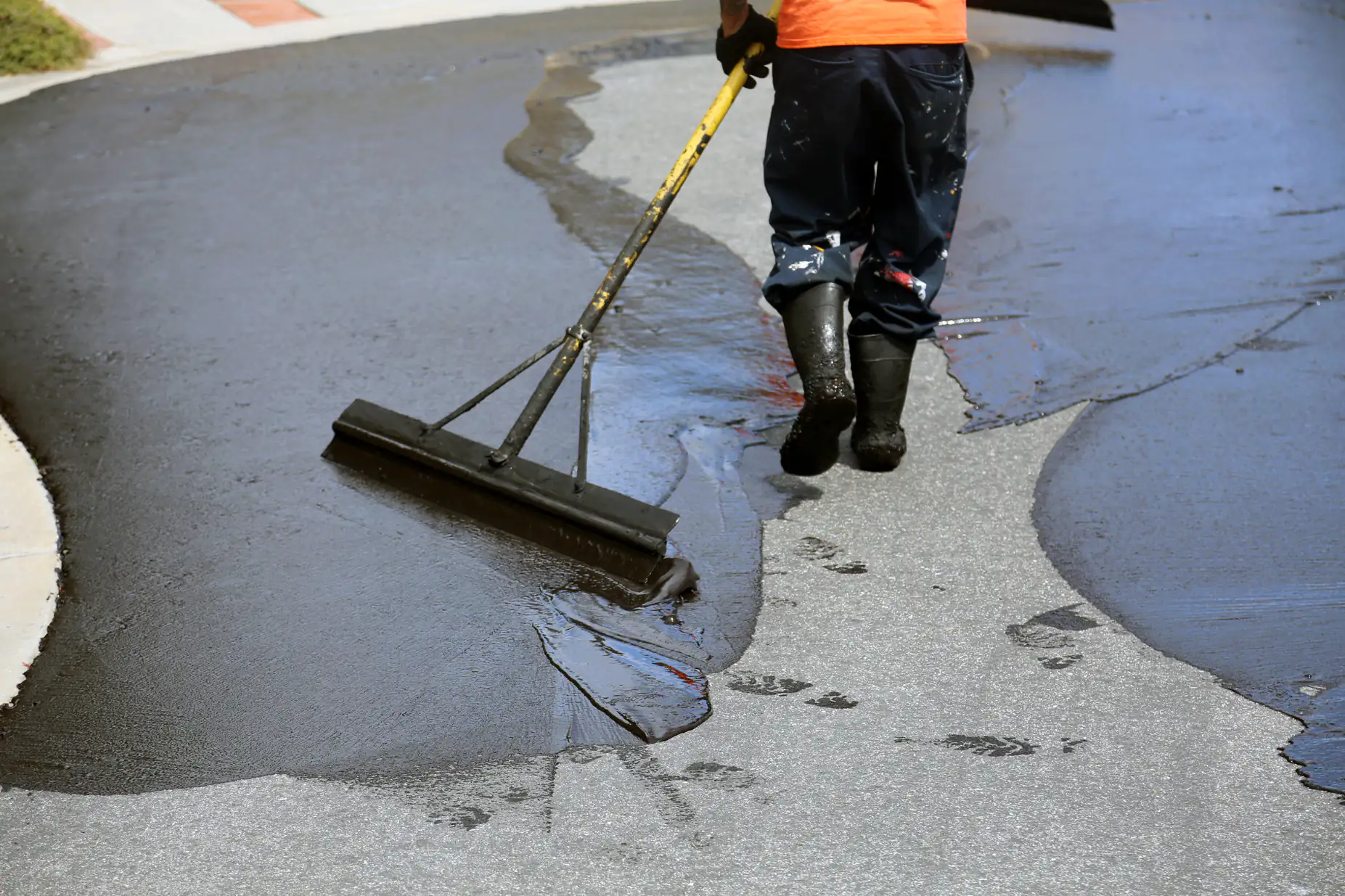
Newton gets hit with 55 to 75 freeze-thaw cycles every winter. Each one forces water trapped in your asphalt to expand by 9%, cracking and crumbling the surface from the inside out.
Professional sealcoating creates a waterproof barrier that keeps moisture out before it freezes. You’re not just making your driveway look darker—you’re stopping the cycle that destroys asphalt in New Jersey’s climate.
The difference shows up in year three. Sealed driveways stay smooth and intact. Unsealed ones start breaking apart, collecting water in potholes, and requiring patches that never quite match. By year five, you’re looking at resurfacing or full replacement because you skipped a few hundred dollars of maintenance.
Sealcoating also protects against UV rays that dry out asphalt, plus oil and chemical spills that eat through the binder. It’s a thin defensive layer that handles almost everything your driveway comes into contact with—and it keeps that rich black color that makes the whole property look maintained.
We’re a third-generation, family-owned contractor serving Morris, Sussex, and Somerset Counties for over 20 years. We’re based in Morris County, so we know exactly what Newton driveways go through—the temperature swings, the road salt, the heavy freeze-thaw wear that makes New Jersey one of the hardest states on asphalt.
Our owner, Daniel Thomas, is on every job site. You’re not getting a crew with no oversight—you’re getting someone who’s been doing this for decades and checks the work himself. That’s why we can offer a 2-year warranty on sealcoating and actually stand behind it.
We also carry full New Jersey insurance, and you’ll get a copy with your proposal. No surprises, no runarounds. Just clear pricing, professional work, and a callback within 24 to 48 hours when you request a quote.
We start with a full inspection of your driveway’s condition. If there are cracks wider than a quarter-inch, we fill them first with hot rubberized crack filler—not the cheap stuff from a caulk gun. This step matters because sealcoating won’t fill cracks, it just seals the surface.
Next, we power wash the entire driveway to remove dirt, oil, debris, and any loose asphalt. Sealer won’t bond to a dirty surface, and most early failures happen because this step gets rushed or skipped. We let the surface dry completely before moving forward.
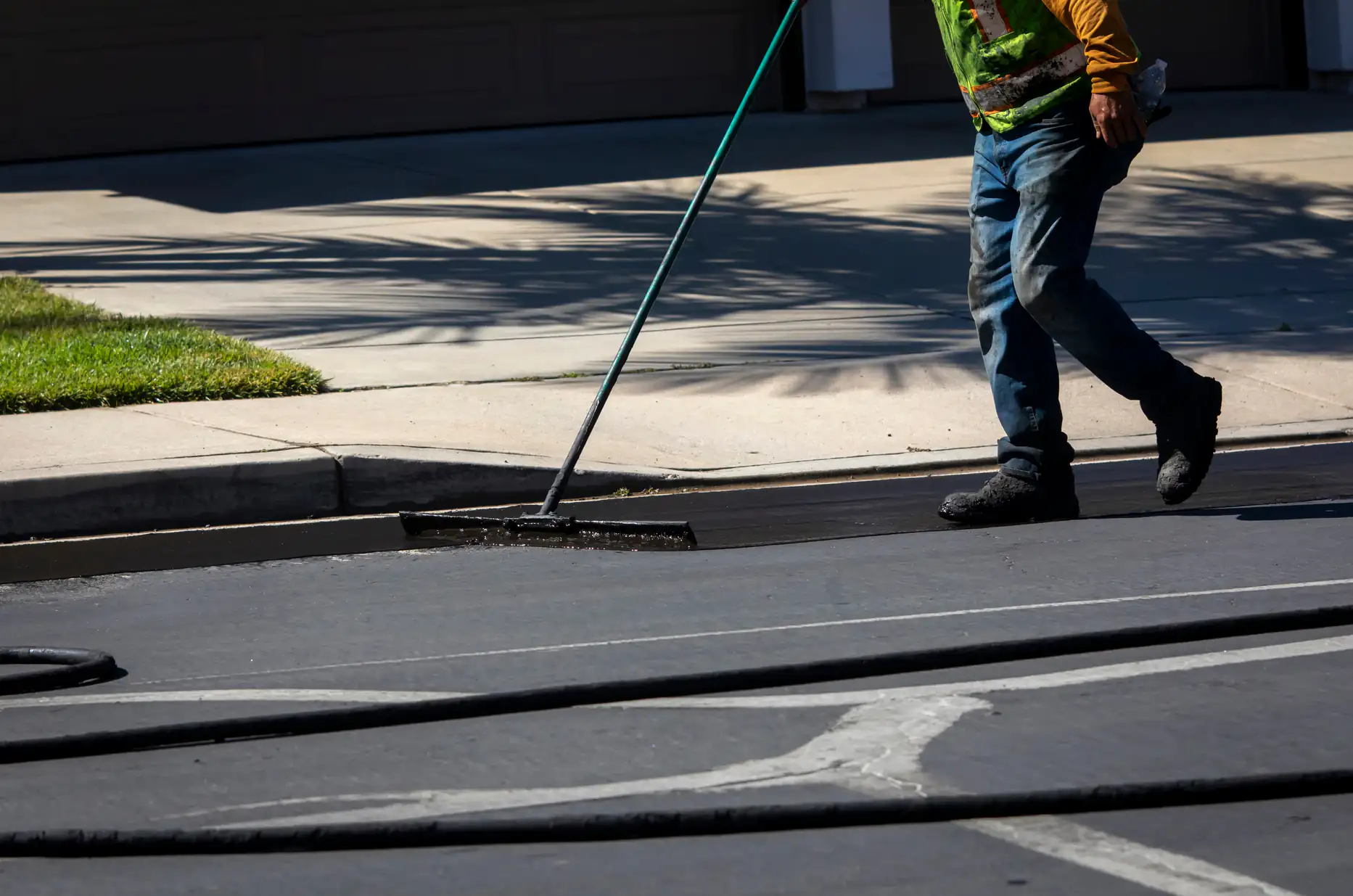
Then we apply two coats of commercial-grade asphalt emulsion sealer. We’re not using coal tar (it’s banned in New York and Maryland for a reason), and we’re not using the watered-down homeowner stuff from the hardware store. This is professional-grade material mixed to the right consistency for New Jersey’s climate.
The first coat seals and protects. The second coat adds durability and that deep black finish. We add sand for traction so the surface isn’t slick when wet. The driveway needs 24 to 48 hours to cure depending on temperature and humidity, and we’ll tell you exactly when it’s safe to drive on.
Ready to get started?
Most residential driveways in Newton run between $200 and $500 for professional sealcoating, depending on size and condition. That includes power washing, crack filling, two coats of premium sealer, sand additive for traction, and a 2-year warranty on the work.
Compare that to the $3,800 to $5,000 you’ll spend on resurfacing or replacement when an unsealed driveway fails. New Jersey prices run 15 to 20% above national averages because of higher labor costs and the beating our climate puts on asphalt. You’re not overpaying—you’re dealing with a tougher environment.
Sealcoating should be done every 2 to 3 years to maintain protection. The best window in New Jersey is late May through mid-September when temperatures stay above 50°F at night and rain isn’t forecast for 24 hours. We won’t schedule outside that window because it compromises the cure and wastes your money.
You’ll also see an immediate boost in curb appeal. A freshly sealed driveway looks new again, and it’s the first thing anyone sees when they pull up to your home. That matters whether you’re selling soon or just want the place to look like you take care of it.
Professional sealcoating lasts 2 to 3 years in New Jersey if it’s applied correctly and the driveway gets normal use. That’s shorter than warmer states because our freeze-thaw cycles and road salt are harder on the sealer.
You’ll know it’s time to reseal when the surface starts looking gray instead of black, or when water stops beading up and starts soaking in. If you wait too long, you’ll see small cracks forming—that’s the asphalt breaking down because it lost its protection.
DIY sealcoating usually fails in under a year because the materials are thinner and the application isn’t as thorough. You save maybe $80 upfront, but you’re resealing twice as often or dealing with damage that costs thousands to fix. Commercial-grade sealer applied by someone who knows how to mix and spread it properly gives you the full 2 to 3 years.
Sealcoating is preventive maintenance that protects the asphalt you already have. Repaving is replacement—you’re tearing out the old surface and putting down new asphalt because the original pavement failed.
Sealcoating costs $200 to $500 and adds years to your driveway’s life by keeping water, UV rays, and chemicals from breaking down the asphalt binder. It’s a thin protective coating, not a structural repair. If your driveway is in decent shape with only minor cracks, sealcoating is the right move.
Repaving costs $3,800 to $5,000 or more and is necessary when the asphalt has deep cracks, potholes, or widespread crumbling. At that point, sealing won’t help—the damage is too far gone. The whole point of regular sealcoating is to avoid ever needing repaving. Spend a few hundred every few years, or spend a few thousand all at once when the driveway fails.
You can seal it yourself, but the results usually don’t last and you risk making mistakes that cost more to fix than you saved. Most DIY sealcoating jobs fail within a year because the materials are lower quality and the process gets rushed.
We use commercial-grade asphalt emulsion that’s 2 to 3 times thicker than store-bought sealer. We also have the equipment to power wash properly, fill cracks with hot rubberized filler, and apply two even coats that cure correctly. You’re not just paying for labor—you’re paying for materials and methods that actually work in New Jersey’s climate.
The bigger risk with DIY is improper surface prep. If the driveway isn’t completely clean and dry, the sealer won’t bond and it’ll peel off in sheets. If you apply it too thick, it stays tacky and picks up tire marks. Too thin, and it doesn’t protect anything. We know how to mix and spread it to the right thickness, and we guarantee the work with a warranty. If something goes wrong with a DIY job, you’re eating the cost and doing it over.
Late May through mid-September is the best window for sealcoating in Newton. You need consistent temperatures above 50°F at night, low humidity, and no rain in the forecast for at least 24 hours after application.
Sealer cures through evaporation, so cool or damp conditions slow the process and lead to soft spots or incomplete bonding. If it rains before the sealer cures, you’ll get streaks, thin spots, or complete wash-off. April and early May are risky because of temperature swings and spring rain. October through April is a bad idea—sealer won’t cure properly in cold weather, and you’ll have a mess that needs to be stripped and redone.
We also won’t seal a brand-new driveway until it’s at least 90 days old. Fresh asphalt needs time to cure and release oils before sealcoating, or the sealer won’t stick. If you just had your driveway paved in June, we’re scheduling sealcoating for the following spring at the earliest.
A standard two-car driveway in Newton costs between $200 and $500 to seal professionally, depending on size and condition. That’s for a complete job—power washing, crack filling, two coats of commercial-grade sealer, sand additive, and a 2-year warranty.
Larger driveways or those with significant cracking cost more because of extra prep work. If your driveway has deep cracks or potholes, we’ll need to fill those with hot asphalt before sealcoating, which adds to the price. But that’s still a fraction of what you’d pay for resurfacing ($2,000+) or full replacement ($4,000 to $6,000).
New Jersey prices run higher than the national average because labor costs more here and our climate demands better materials. You’re not being overcharged—you’re paying for sealer that can handle 55 to 75 freeze-thaw cycles every winter. Cheap sealer fails fast in this climate, and then you’re paying twice. We price the job to last the full 2 to 3 years so you’re not calling us back in six months.
No. Sealcoating protects the surface—it doesn’t fill cracks or repair structural damage. If your driveway has cracks, they need to be filled separately before we apply sealer, or they’ll keep spreading underneath the coating.
We use hot rubberized crack filler for anything wider than a quarter-inch. It’s flexible, so it moves with the asphalt during temperature changes instead of cracking apart. The filler goes in first, then we seal over the entire surface. That gives you a smooth, protected finish and stops water from getting into the crack and making it worse.
If the cracks are really deep or widespread, sealcoating might not be the right solution yet. You could need patching or even resurfacing depending on how far the damage has gone. We’ll tell you honestly during the inspection whether sealing makes sense or if you’re better off fixing the underlying problem first. There’s no point sealing over a driveway that’s already failing—it’s just going to crack through the sealer in a few months.