
Hear from Our Customers
Your driveway stops breaking down every winter. That’s the whole point.
North Jersey gets hit with 40% more freeze-thaw cycles than the rest of the state. Water seeps into cracks, freezes, expands with up to 30,000 psi of pressure, and tears your asphalt apart from the inside. By spring, those hairline cracks you ignored in October are now potholes that need real money to fix.
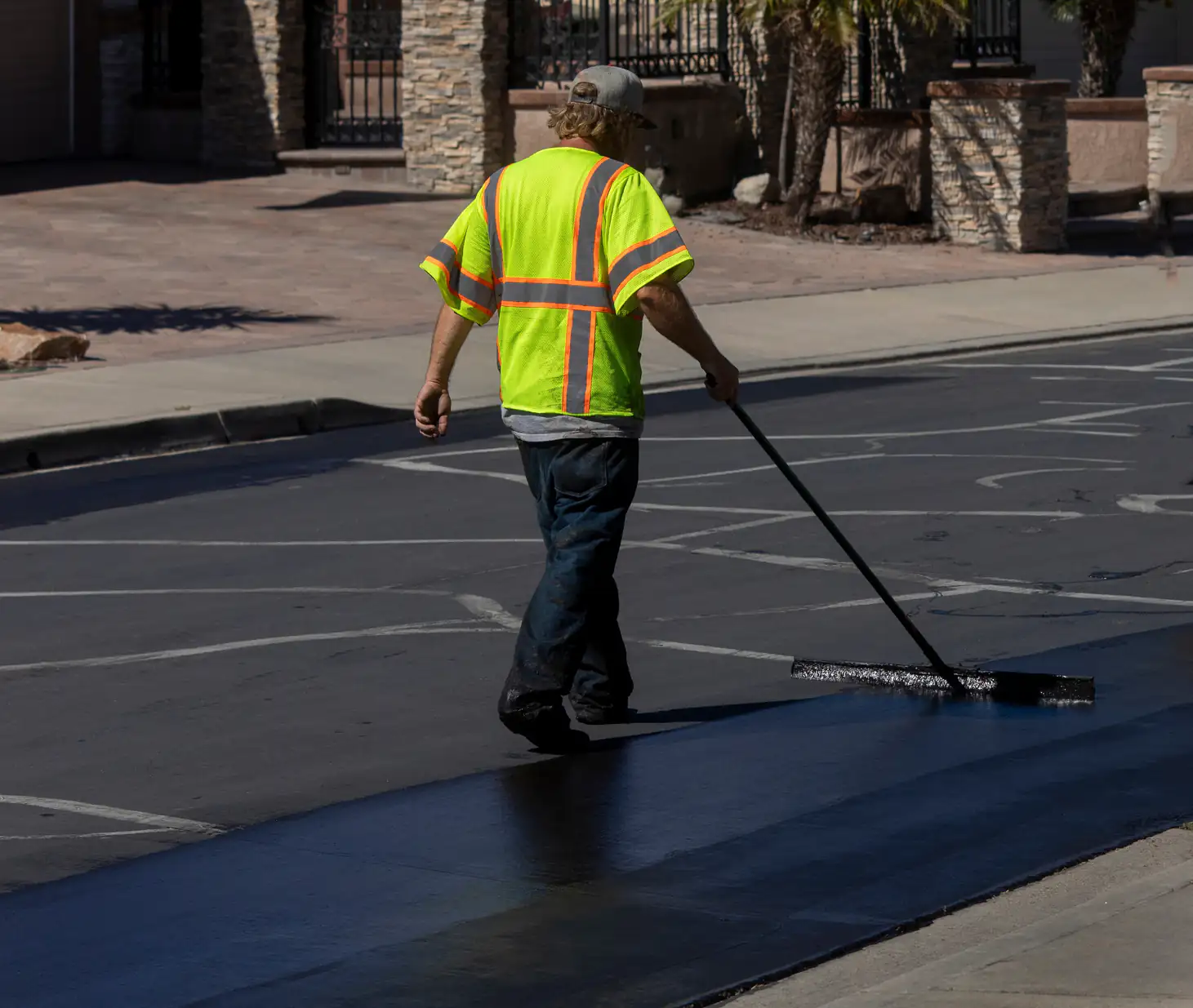
Sealcoating creates a waterproof barrier. It keeps moisture out, protects against UV damage and oil stains, and restores that clean black finish that makes your property look maintained instead of neglected. Two coats give you three to four years of protection instead of one to two. That’s the difference between a $300 maintenance job today and a $5,000 repaving bill three years from now.
The math is simple. Seal it now or replace it later.
We’ve spent two decades working on driveways and parking lots across Morris, Sussex, and Somerset Counties. We’re not new to North Jersey winters, and we’re not learning on your property.
We know what happens to asphalt around Montclair State University when it’s not maintained properly. We’ve seen driveways that were fine in November completely fall apart by March because the contractor skipped proper crack filling or used cheap sealer that didn’t hold up. We’ve also seen driveways last 15+ years because someone took maintenance seriously and hired people who knew what they were doing.
You’ll get an upfront quote with no surprise charges later. We show up when we say we will. And if you request a quote online, we’ll call you back within 24 to 48 hours. That’s how we’ve stayed in business this long.
First, we inspect the surface. We’re looking for cracks, drainage issues, oil stains, and any damage that needs attention before we seal. If there are cracks, we fill them. If there’s poor drainage, we talk about it. Sealcoating doesn’t fix structural problems—it protects against them.
Next, we clean the surface completely. Dirt, debris, and vegetation get removed. The asphalt needs to be dry and clean for the sealer to bond properly. If the weather isn’t right, we reschedule. Rushing a sealcoat job in bad conditions is how you end up with peeling sealer six months later.
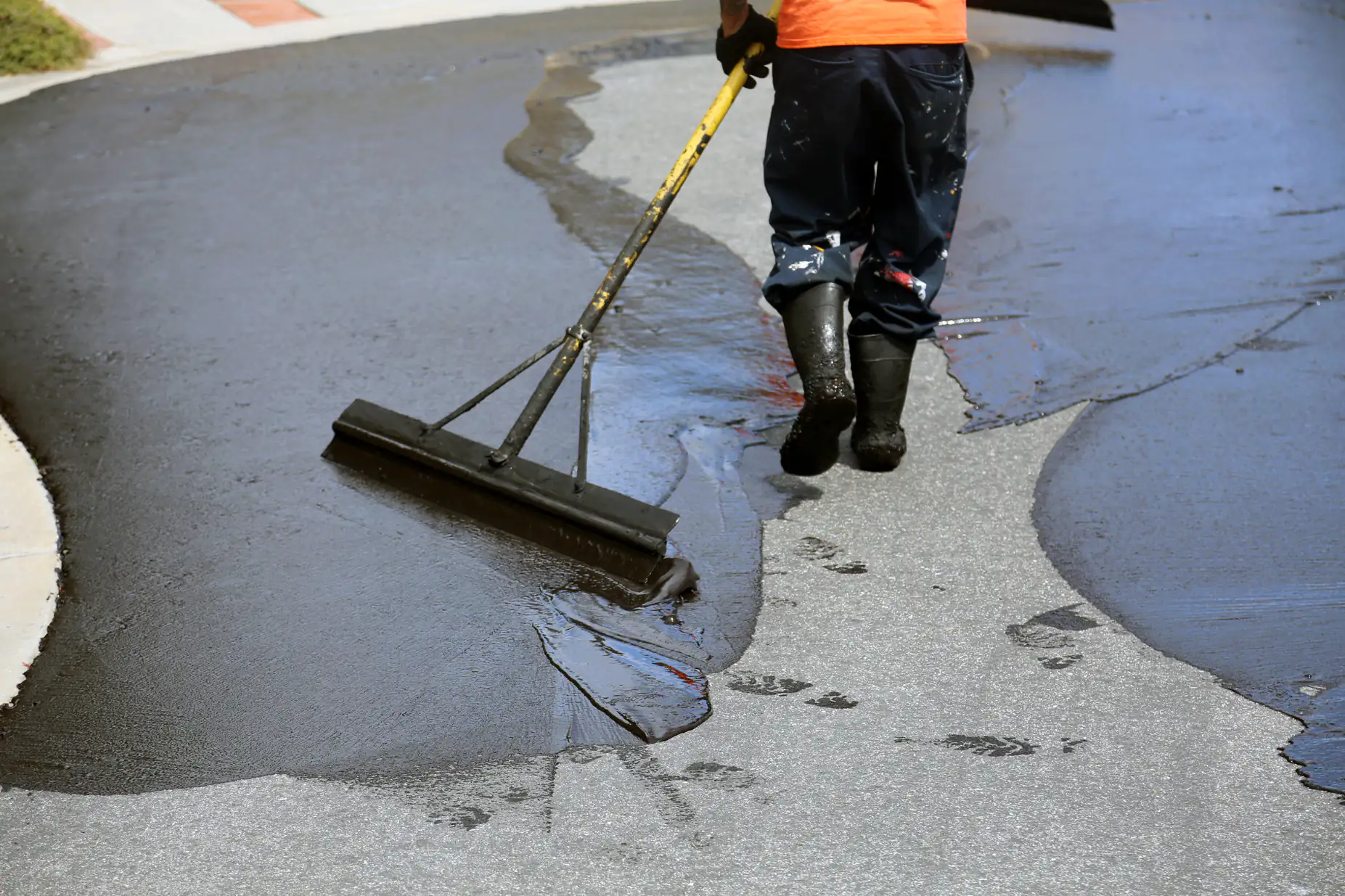
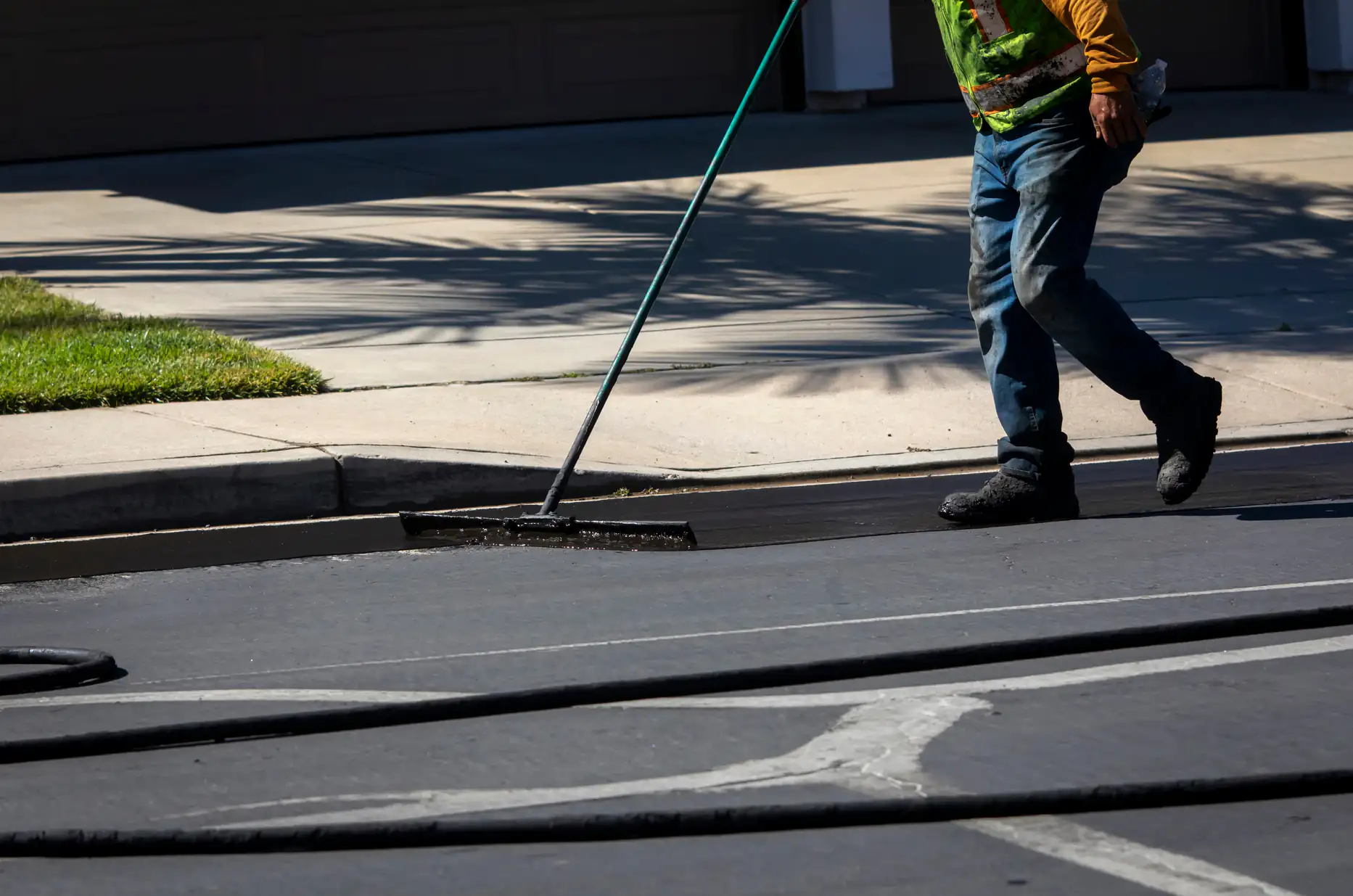
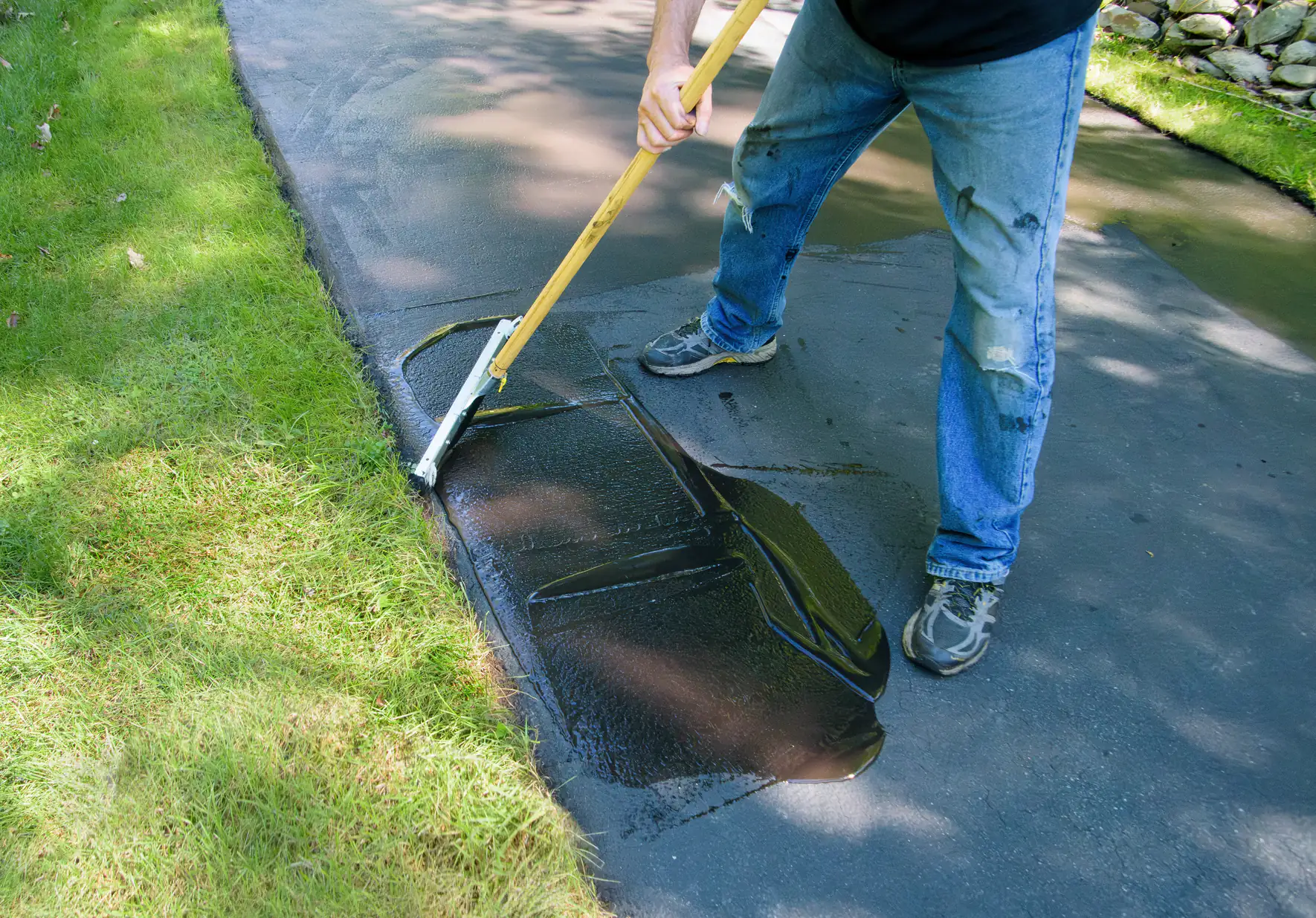
Then we apply two coats of high-quality sealer designed for New Jersey’s climate. The first coat seals the surface. The second coat adds thickness and extends the lifespan to three or four years instead of one or two. We let each coat cure properly before reopening the driveway to traffic.
The whole process takes one to two days depending on size and conditions. After that, your driveway is protected and you’re done worrying about it until the next cycle.
Ready to get started?
Every sealcoating job starts with crack filling. We’re not just covering up damage—we’re stopping it from getting worse. Cracks get cleaned out and filled with rubberized crack filler that flexes with temperature changes instead of cracking again in three months.
Surface preparation comes next. We clear debris, treat oil stains, and make sure the asphalt is ready for sealer. If your driveway has drainage problems, we’ll point them out. Around Montclair State University, poor drainage is one of the biggest causes of premature driveway failure. Water that doesn’t flow off properly will find its way into cracks and destroy your asphalt from below.
You get two coats of professional-grade sealer. Not the cheap stuff from the hardware store. We use coal tar or asphalt emulsion sealers formulated to handle freeze-thaw cycles, UV exposure, and the oil drips that come with daily use. Two coats create a thicker protective layer that lasts significantly longer.
The cost of asphalt sealing typically runs $0.15 to $0.40 per square foot in New Jersey. Most residential driveways cost between $150 and $500 depending on size and condition. That’s a fraction of what you’d pay to repair or replace a driveway that wasn’t maintained.
Every three to four years if you get two coats. Every one to two years if you only get one coat.
The freeze-thaw cycles in North Jersey are brutal. Between November and March, your driveway goes through constant expansion and contraction as temperatures swing above and below freezing. That’s why single-coat applications don’t last as long here as they might in milder climates.
Two coats give you a thicker protective barrier. The first coat penetrates and seals the surface. The second coat adds durability and weather resistance. Together, they buy you three to four years of protection before you need to reseal. If your driveway gets heavy use or you park commercial vehicles on it, you might need to reseal sooner.
Late spring through early fall. Specifically, when temperatures stay above 50°F during the day and night for at least 48 hours after application.
Sealer needs warm, dry conditions to cure properly. If it’s too cold, it won’t bond to the asphalt. If it rains before it cures, you’ll get streaking, thin spots, or complete failure. We’re booked solid from April through October because that’s the only window that works.
By the time spring arrives, we’re already in high demand. If you wait until you see damage, you’re competing with everyone else who also waited. Schedule early if you want to get on the calendar before summer. And don’t try to seal in late fall—even if you get a warm week in November, overnight temperatures can drop fast and ruin the job.
No. Sealcoating protects asphalt—it doesn’t repair structural damage.
If you already have cracks, they need to be filled before sealing. If you have potholes, they need to be patched. Sealcoating goes over the top as a protective layer, but it won’t fill voids or stop existing damage from spreading. Think of it like painting a wall—you still need to patch the holes first.
That’s why inspection matters. We walk your property, identify damage, and tell you what needs to be fixed before sealing. If someone shows up and just starts spraying sealer over cracks and potholes, they’re not protecting anything. They’re just covering up problems that will get worse under the surface.
The difference between a $200 crack sealing job and a $2,000 pothole repair often comes down to a few months. Catch it early, fix it right, then seal it to prevent future damage.
Usually 24 to 48 hours depending on weather, sealer type, and how many coats were applied.
You need to stay off the driveway completely during that time. No foot traffic, no cars, no exceptions. Sealer cures through evaporation, and if it gets disturbed before it’s fully set, you’ll end up with tire marks, scuff marks, or thin spots that don’t protect properly.
Temperature and humidity affect dry time. Hot, dry weather speeds up curing. Cool or humid conditions slow it down. If we apply two coats, each coat needs time to dry before the next one goes on. That’s why most residential driveway sealcoating jobs take one to two days from start to finish.
Some contractors use fast-dry sealers that cure in 12 hours, but those tend to be thinner and don’t last as long. The better approach is to use quality sealer, apply it right, and give it time to cure. Plan ahead so you’re not stuck without access to your driveway during the week.
Most residential driveways cost between $150 and $500 depending on size, condition, and how much prep work is needed.
Sealcoating runs about $0.15 to $0.40 per square foot in New Jersey. Prices here run 15 to 20% higher than the national average because of labor costs and the extra wear our climate puts on asphalt. If your driveway needs crack filling, pothole patching, or oil stain treatment before sealing, that adds to the cost.
A typical two-car driveway is around 600 to 800 square feet. At $0.20 per square foot, that’s $120 to $160 for sealer alone. Add crack filling and surface prep, and you’re looking at $200 to $400 for most jobs. Larger driveways or driveways in rough shape will cost more.
Compare that to repaving, which runs $3 to $7 per square foot. A full driveway replacement can easily hit $5,000 or more. Spending a few hundred dollars every three to four years to avoid a five-figure repaving bill is about as straightforward as maintenance gets.
Coal tar is more durable and resists gas and oil better. Asphalt-based sealers are more environmentally friendly and still provide solid protection.
Coal tar sealer has been the industry standard for decades because it holds up to chemicals, UV rays, and freeze-thaw cycles better than anything else. It creates a tougher surface and lasts longer. The downside is that some areas have started restricting or banning it due to environmental concerns about runoff.
Asphalt emulsion sealers are the alternative. They’re made from asphalt instead of coal tar, so they’re lower in VOCs and generally considered safer for the environment. They still protect against water, UV damage, and normal wear. They just don’t resist oil and gas spills quite as well, and they may need to be reapplied slightly more often.
We use one or the other depending on local regulations and customer preference. Both work. Both protect your driveway. The key is using a quality product and applying it correctly—not skimping on coats or rushing the job to save time.