
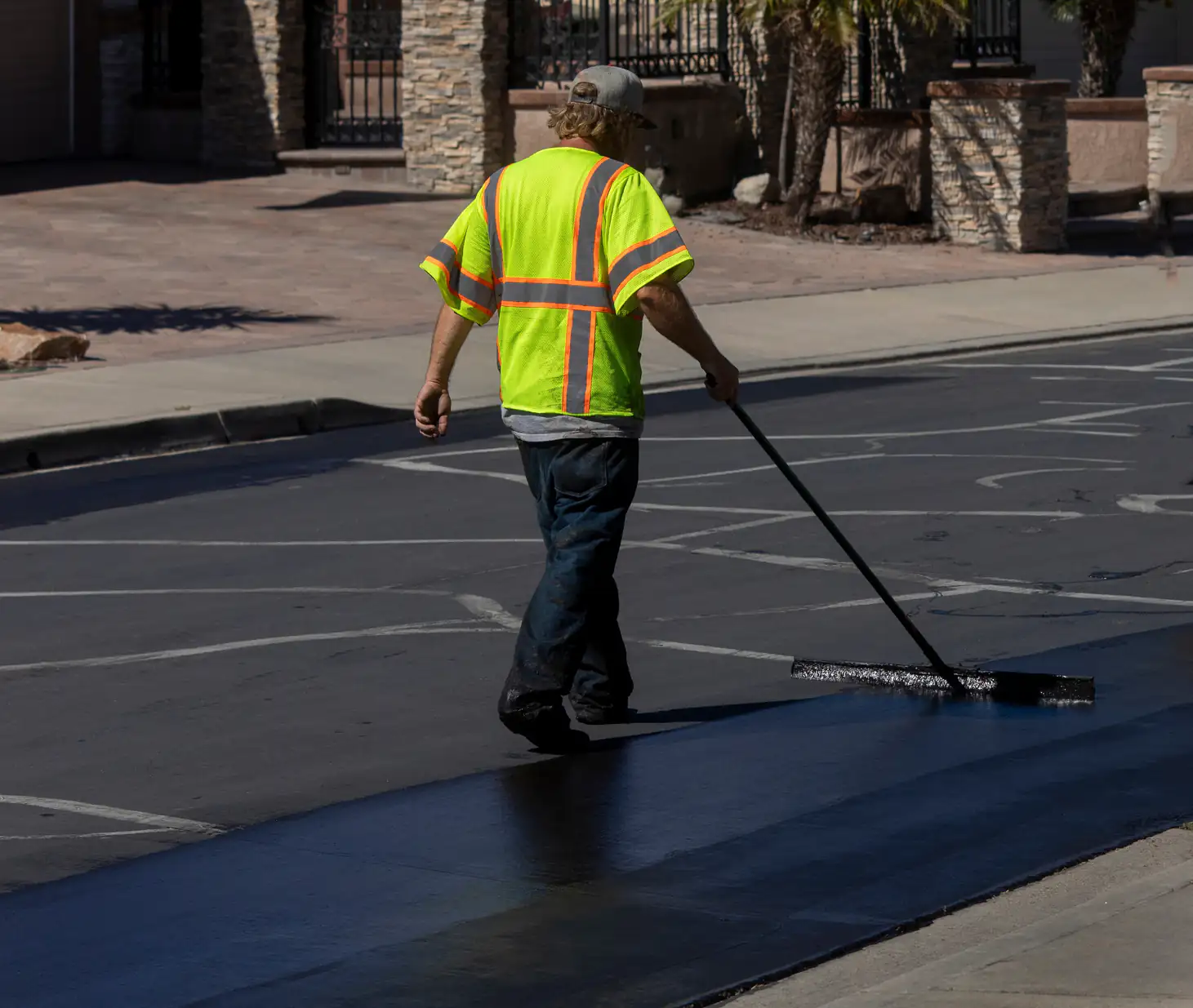
Hear from Our Customers
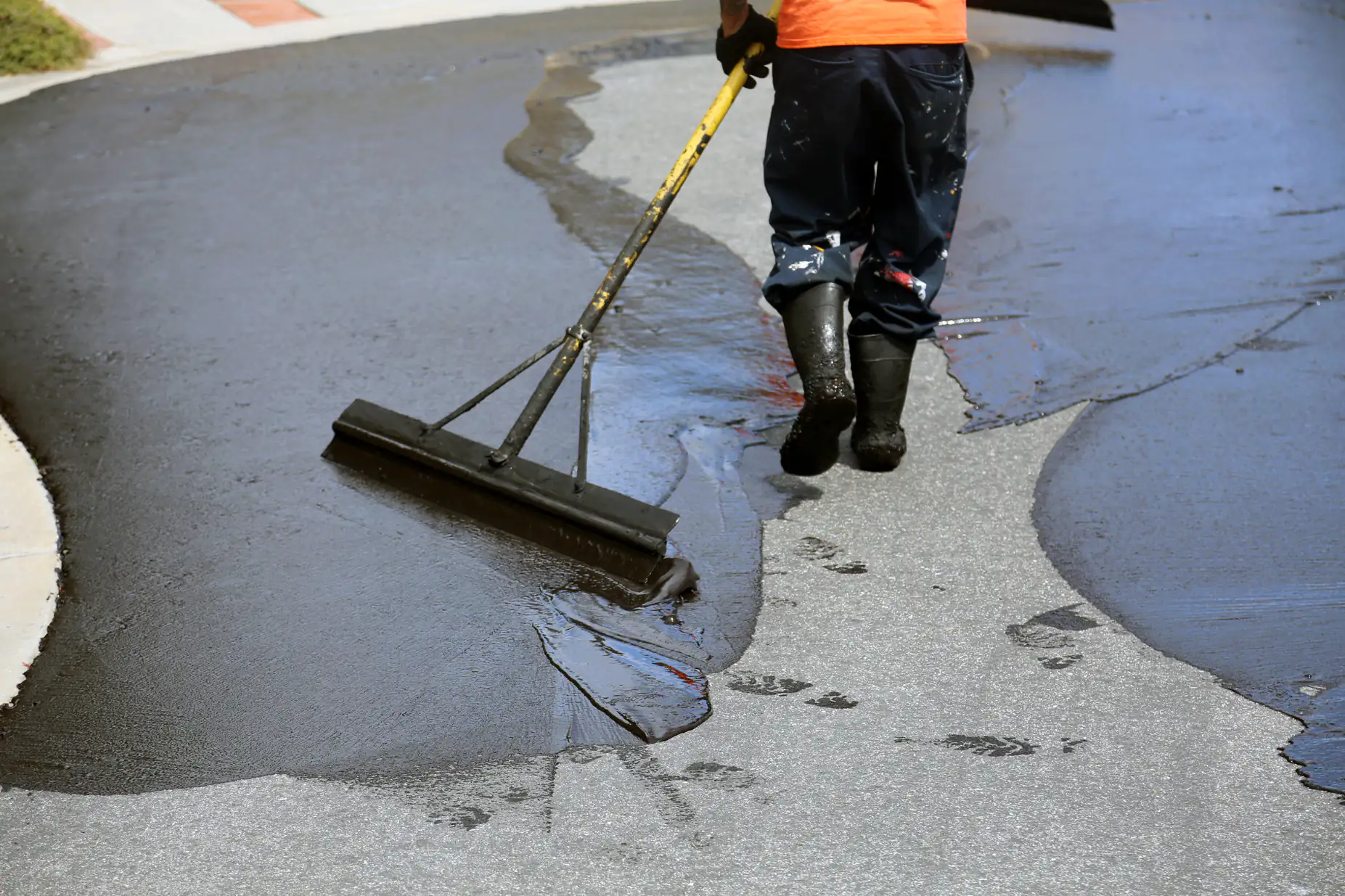
No more dodging potholes when you pull in from work. No more worrying about what winter will do this year. No more wondering if you should’ve sealed it last spring.
When your driveway is properly sealed, water can’t seep into cracks and expand when temperatures drop. That freeze-thaw cycle destroys more driveways in Somerset County than anything else. Each winter, water freezes, expands, and pushes your asphalt apart from the inside out.
Sealcoating creates a waterproof barrier that keeps moisture on the surface where it belongs. You’re not just making your driveway look darker and cleaner. You’re preventing the structural damage that leads to a $5,000+ replacement bill down the road. Most Martinsville homeowners spend under $400 every three years on preventive sealing versus thousands on emergency repairs or full replacement.
We work exclusively in Morris, Sussex, and Somerset County. We’re not a franchise operation trying to use the same approach in Florida and New Jersey. We know your driveway faces different challenges than driveways in warmer climates.
Martinsville sits right in the zone where winter temperatures swing wildly. One day it’s 38 degrees and raining, the next it’s 18 and frozen solid. That’s the exact condition that accelerates asphalt deterioration. We use coal tar and asphalt emulsion sealers rated specifically for northern climates, applied when temperatures support proper curing.
You’ll get a callback within 24 to 48 hours when you request a quote online. No runaround, no disappearing after you reach out. We’re grounded in Morris County, and we’ve built our reputation on showing up when we say we will.
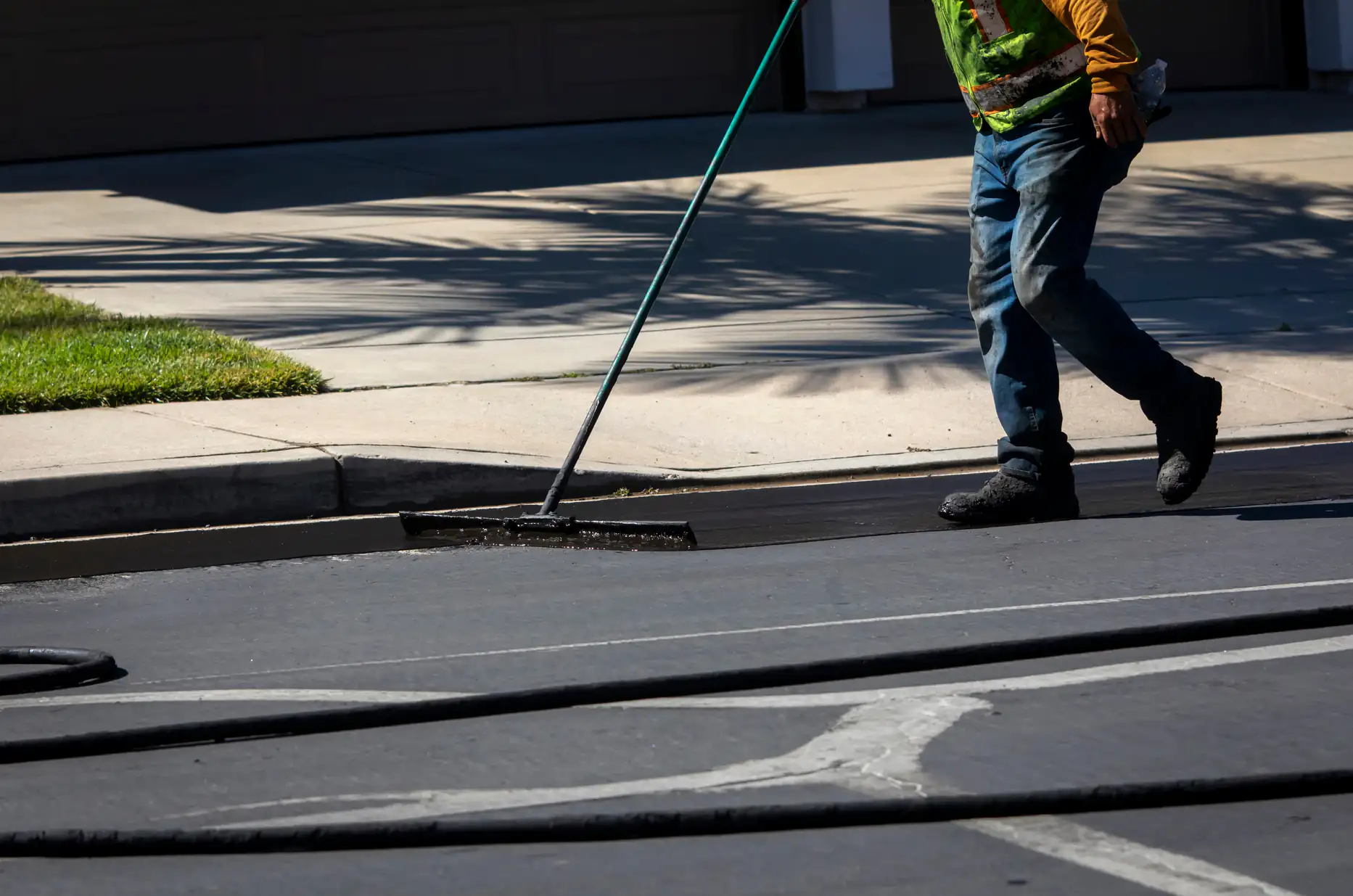
First, we power wash your entire driveway to remove dirt, oil, and loose debris. Sealer won’t bond properly to a dirty surface, so this step matters more than most homeowners realize.
Next, we fill cracks up to 50 linear feet using hot rubberized crack filler. This isn’t the squeeze-bottle stuff from the hardware store. It’s heated material that flows deep into cracks and flexes with temperature changes instead of popping out after one winter.
Then we apply two coats of commercial-grade sealer with a sand additive for traction. The first coat seals the surface. The second coat ensures even coverage and extends the life of the application. We’re not trying to get away with one thin coat that looks good for six months.
Your driveway needs 24 to 48 hours to cure before you can drive on it. We’ll tell you exactly when it’s safe to use based on weather conditions. Temperature and humidity affect dry time, so we don’t guess.
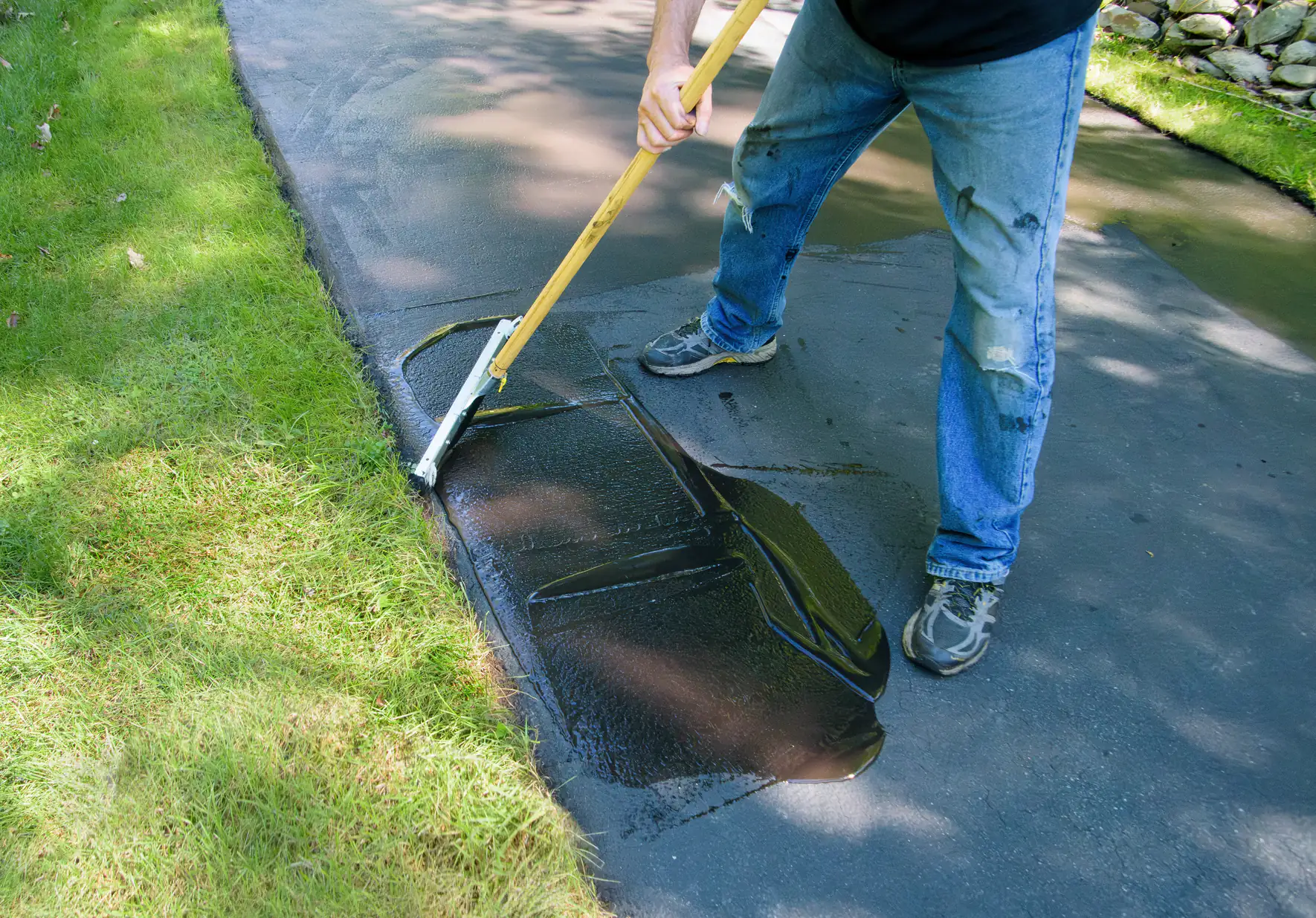
Ready to get started?
Every driveway sealing job includes power washing, crack filling up to 50 linear feet, two coats of commercial sealer, sand additive for traction, and a two-year warranty. That’s the standard package, not an upsell.
In Martinsville and throughout Somerset County, driveways average 400 to 600 square feet. At current rates, you’re looking at $200 to $500 for a complete sealcoating job that lasts three to four years. Compare that to the $2,400 to $4,800 you’d spend replacing the same driveway when it fails prematurely.
We’re also seeing more homeowners ask about asphalt emulsion sealer instead of coal tar. Several New Jersey municipalities have restricted coal tar due to environmental concerns raised by the NJ DEP. It’s not banned statewide yet, but the trend is moving that direction. We primarily use high-performance asphalt emulsion sealers that meet environmental standards without sacrificing protection.
Timing matters in New Jersey. You need temperatures above 50 degrees for at least 24 hours after application. That usually means late spring through early fall. By the time March and April arrive, asphalt contractors are already booked solid. If you’re thinking about sealing your driveway, get on the schedule early.
Every three to four years if you’re using two coats of quality sealer. That’s the realistic timeframe for residential driveways in Somerset County.
Some contractors will tell you every two years, but that’s overkill for most homeowners. You’re wasting money resealing a driveway that’s still protected. Other contractors stretch it to five or six years, which leaves your asphalt exposed to weather damage for too long.
Here’s how to tell if you’re due: if water soaks into your driveway instead of beading on the surface, your sealer is wearing thin. If you’re seeing more small cracks than you did a year ago, you’ve waited too long. The goal is to reseal before damage starts, not after.
Most residential driveways in Martinsville run $200 to $500 for professional sealcoating with two coats. That’s based on the typical 400 to 600 square foot driveway you’ll find in Somerset County neighborhoods.
Sealcoating costs $0.15 to $0.40 per square foot in New Jersey. Prices here run about 15% to 20% higher than national averages because of higher labor costs and the heavy freeze-thaw wear our climate puts on asphalt. You’re not overpaying – you’re paying for materials and methods that actually work in northern climates.
If someone quotes you significantly less, ask what you’re getting. One thin coat applied in October won’t protect your driveway through winter. If someone quotes you significantly more, ask why. The work doesn’t justify double the going rate unless your driveway has serious damage that needs repair first.
Concrete driveways need a different type of sealer than asphalt, but yes, sealing concrete is just as important for protection. Concrete sealer prevents water absorption, resists salt damage, and protects against staining.
The process is different. Concrete doesn’t use the same coal tar or asphalt emulsion products. Instead, you’re applying a penetrating sealer or a topical acrylic sealer depending on the finish and exposure. Concrete sealing typically costs slightly less per square foot than asphalt sealcoating.
In Martinsville, we see a lot of stamped concrete driveways that need regular sealing to maintain the color and pattern. Without it, the surface fades and the sealant that protects the stamp wears off. If you’ve got a concrete driveway and you’re not sure when it was last sealed, it’s worth getting it looked at.
Sealing fills small cracks, but it won’t fix structural damage like potholes or wide cracks. If your driveway has potholes or cracks wider than a quarter-inch, those need to be repaired before sealing.
We include crack filling up to 50 linear feet in our standard sealcoating service. That handles the hairline and small cracks that naturally develop in asphalt. For bigger damage, you’re looking at patching or more extensive asphalt repair before we can seal the surface.
Think of sealcoating as preventive maintenance, not damage repair. It stops small problems from becoming big ones. Once you’ve got potholes, you’re past the prevention stage. The good news is that patching those areas and then sealcoating the entire driveway will still cost you a fraction of what replacement runs.
Plan on 24 to 48 hours before you can drive on your driveway after sealcoating. Dry time depends on temperature, humidity, and how much sun exposure your driveway gets.
In ideal conditions – 70 degrees, low humidity, full sun – sealer can be ready in 24 hours. In cooler or more humid conditions, you’re looking at 48 hours or more. We don’t apply sealer if rain is forecast within 24 hours or if overnight temperatures will drop below 50 degrees.
This is why spring and fall can be tricky in Martinsville. You might have a perfect 65-degree day, but if it’s going to drop to 45 overnight, the sealer won’t cure properly. Summer is the most reliable window. You get consistent temperatures and lower chance of surprise rain that ruins a fresh application.
Wait at least six months to a year before sealing new asphalt. Fresh asphalt needs time to cure and release oils before you seal the surface.
If you seal too early, you’re trapping those oils and preventing the asphalt from hardening properly. Your driveway will stay softer than it should, which leads to scuffing, tire marks, and premature wear. Most paving contractors will tell you this when they install your driveway, but not all of them do.
After that first year, you should seal it. New asphalt benefits from sealcoating just like older asphalt. You’re establishing a protective layer early, which is exactly how you get 25 years out of a driveway instead of 15. The homeowners who skip sealing for the first five years are the ones calling about replacement at year twelve.