
Hear from Our Customers
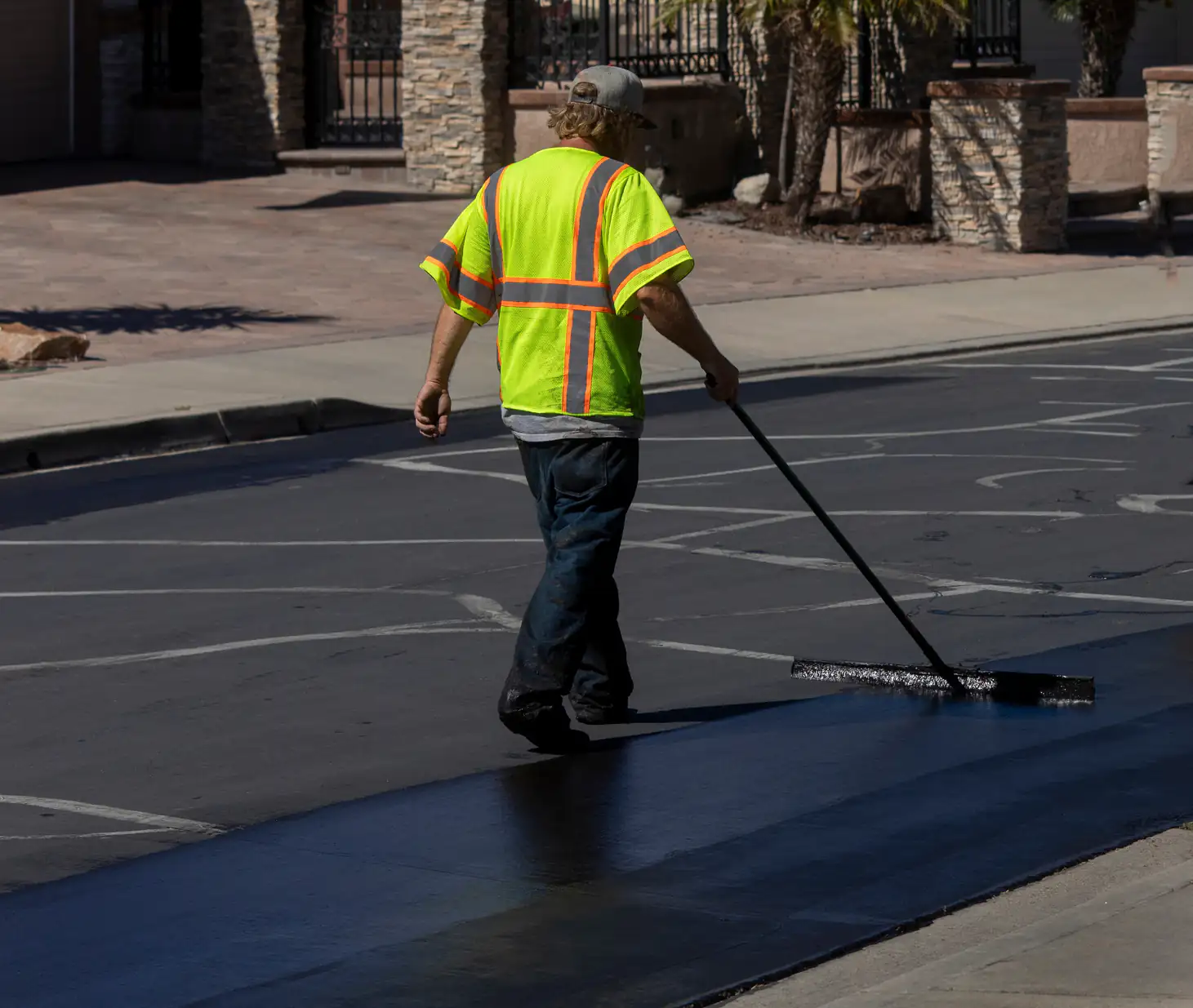
Here’s what happens when you stay ahead of the damage. Water stops seeping into cracks before winter hits. Ice can’t expand and tear your asphalt apart from the inside. UV rays don’t bleach and weaken the surface every summer.
You’re not scrambling to patch potholes or explain to your family why the driveway needs to be torn up and replaced. You’ve got a clean, dark surface that holds up year after year because it was sealed at the right time with the right materials.
That’s the difference between reacting to problems and preventing them. Sealcoating every two to three years adds 10 to 15 years to your driveway’s lifespan. It blocks out oil stains, weather damage, and the kind of wear that sneaks up on properties across Somerset County. Most homeowners in Manville don’t realize how much stress the freeze-thaw cycle puts on asphalt until it’s too late.
We’ve spent two decades working in Morris, Somerset, and Sussex counties. We know what Manville winters do to asphalt. We understand the soil composition, drainage patterns, and temperature swings that affect how long your driveway lasts.
We’re not showing up with bargain-bin sealer and a spray wand. We use commercial-grade materials designed for New Jersey’s climate, applied during the right temperature window so it cures properly. Every job gets a detailed written estimate with no surprise charges.
You’re working with a licensed and insured contractor who’s seen what happens when sealcoating gets skipped or done wrong. We don’t cut corners because we know you’ll be the one dealing with the consequences if we do.
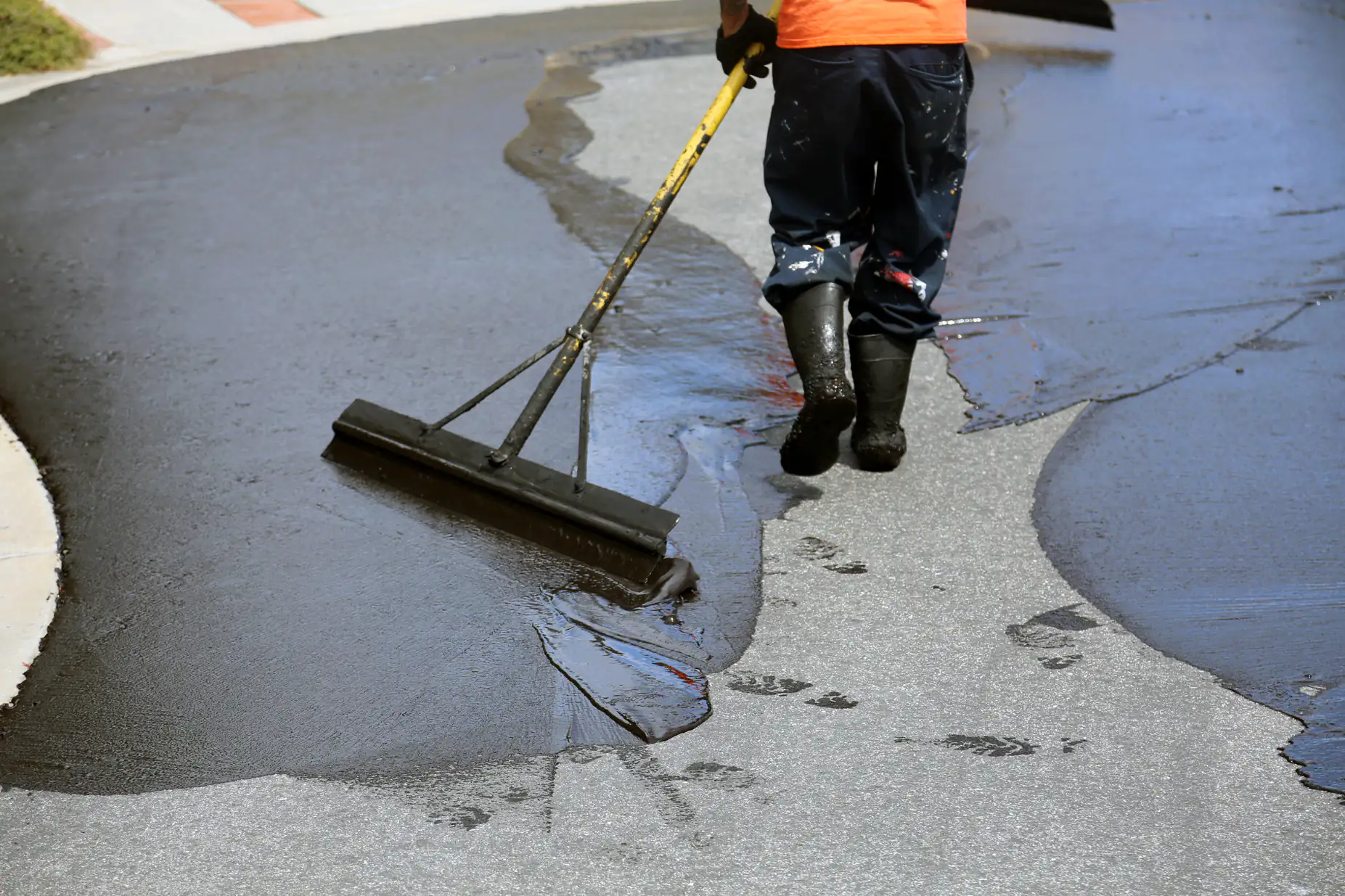
First, we clean your driveway completely. Dirt, oil, debris—it all has to come off or the sealer won’t bond right. We’re not just sweeping it. We’re making sure the surface is ready to accept the coating.
Next, we fill any cracks. If water’s already getting in through damaged areas, sealing over them won’t help. We address those spots first so the protection actually works.
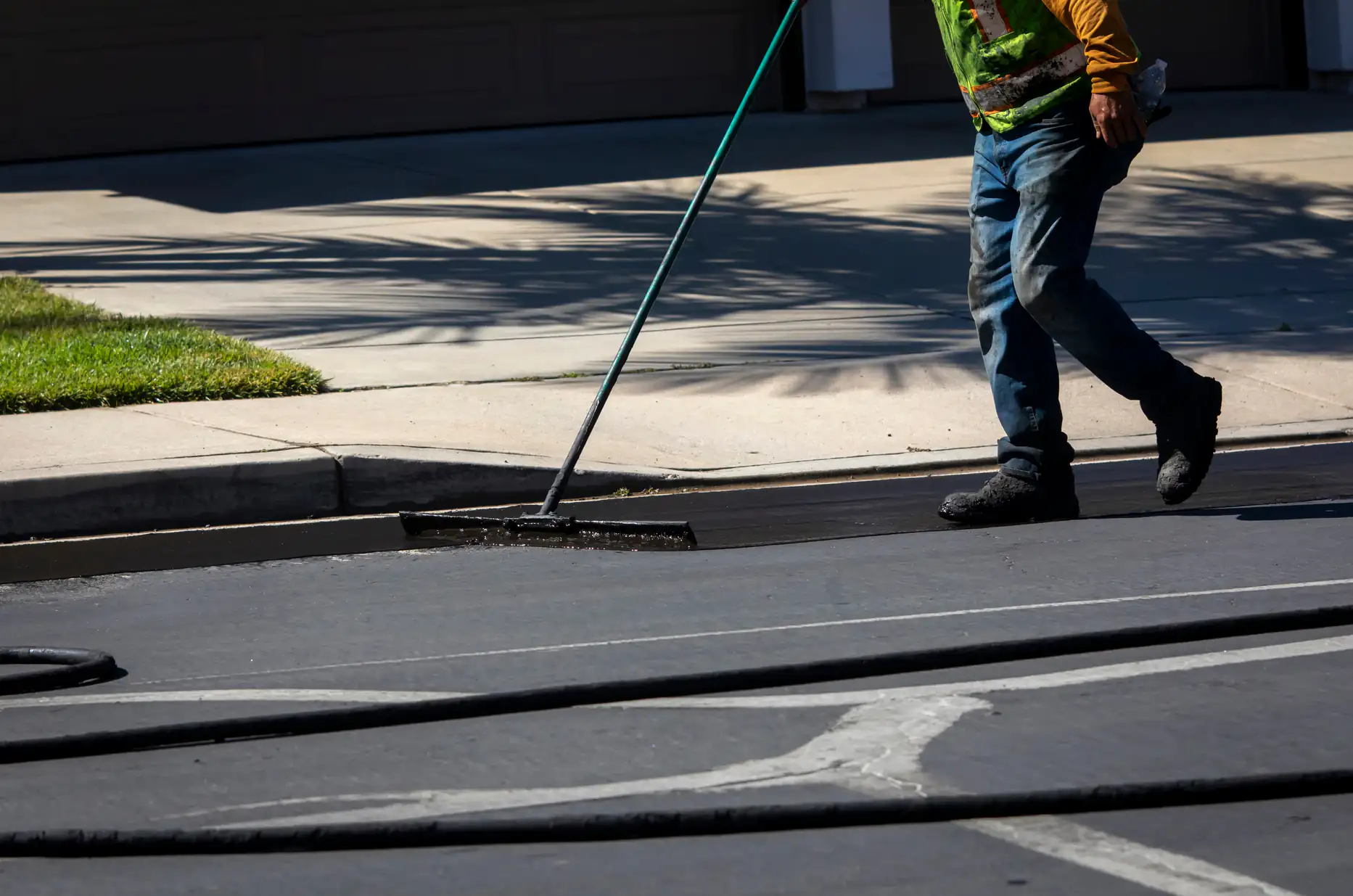
Then we apply the sealcoat when conditions are right—between 50 and 85 degrees, with at least 48 hours of dry weather ahead. Temperature matters. If it’s too cold, the sealer won’t cure. If rain hits too soon, you’ve wasted your money. We time it correctly.
After application, your driveway needs 24 to 48 hours to dry depending on humidity and temperature. We’ll tell you exactly when it’s safe to park on it again. No guessing.
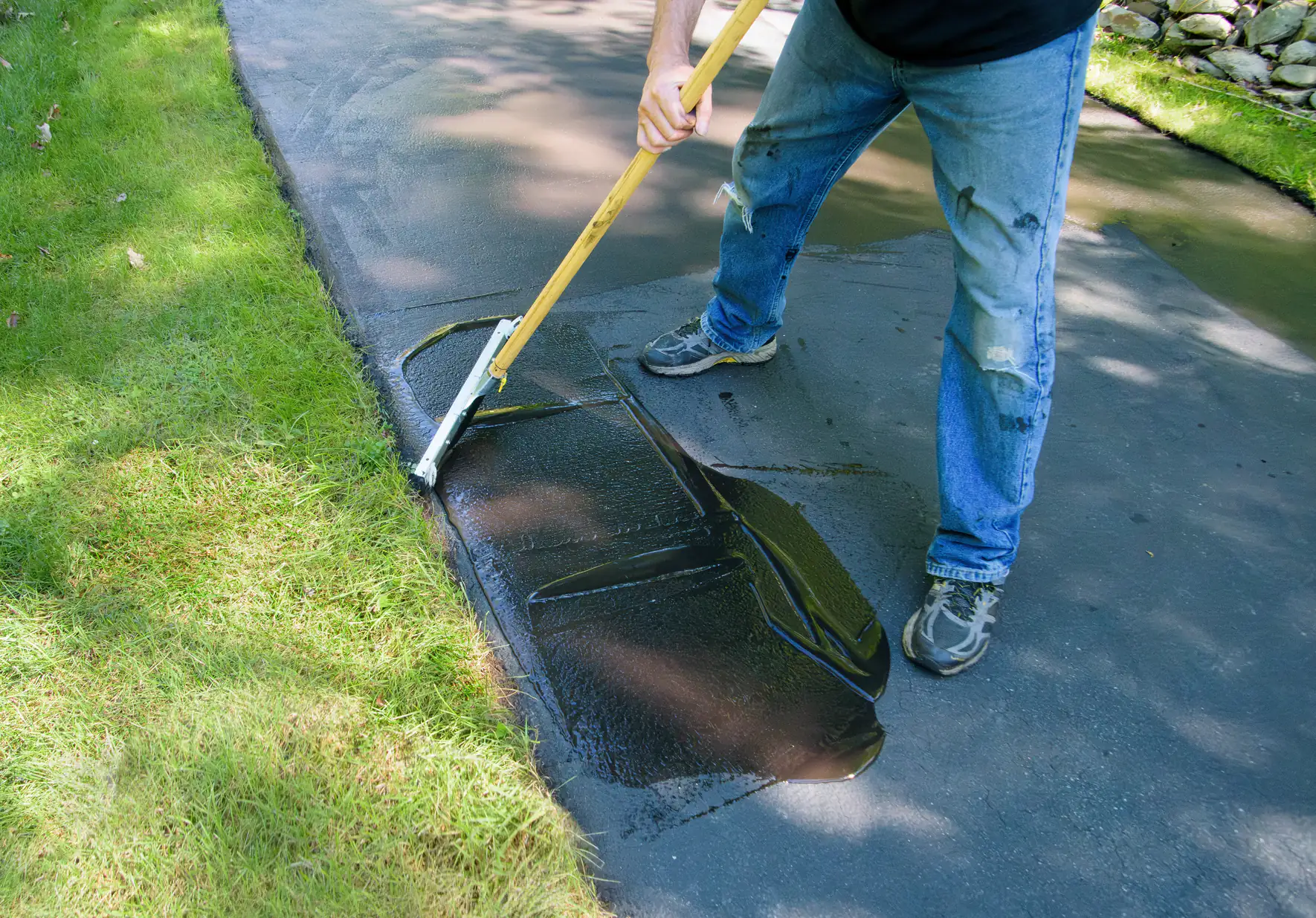
The result is a fresh black finish that protects against UV damage, water infiltration, and chemical spills. It’s not just cosmetic. It’s a barrier that keeps the elements out and extends the life of your asphalt.
Ready to get started?
Sealcoating typically runs between 15 and 40 cents per square foot depending on your driveway’s condition and size. A standard residential driveway in Manville usually costs between $300 and $500. That’s not expensive when you consider it’s preventing thousands in future repaving costs.
You’re paying for professional-grade sealer that can handle temperature extremes without cracking in winter or getting soft in summer. You’re paying for proper surface prep, crack filling, and application during optimal weather conditions. You’re paying for a crew that knows the difference between doing it fast and doing it right.
In Somerset County, properties face specific challenges. Heavy clay soils retain moisture. Freeze-thaw cycles are brutal. Driveways that aren’t maintained show damage faster here than in milder climates. Sealcoating every two to three years isn’t overkill—it’s what’s required to keep your asphalt intact.
The alternative is waiting until cracks turn into potholes, potholes turn into structural failure, and you’re looking at complete driveway replacement. That’s when you’re spending $5,000 to $15,000 instead of a few hundred.
Every two to three years is the standard recommendation for driveways in this area. New asphalt should wait at least six months before the first sealcoat—it needs time to cure fully.
After that, you’re looking at regular maintenance intervals. If your driveway gets heavy use or sits in direct sun most of the day, lean toward every two years. If it’s shaded and sees lighter traffic, you can stretch it to three.
The key indicator is color. When your driveway starts looking gray instead of black, the surface is oxidizing and losing its protective oils. That’s your window to reseal before damage accelerates. Don’t wait until you see cracks.
Late spring through early fall—specifically May through October. You need temperatures between 50 and 85 degrees, and the forecast has to show at least 48 hours without rain.
Fall is actually ideal for most homeowners in Manville. You’re sealing right before winter, which is when most damage happens. The sealer has time to cure before freezing temperatures hit, and you’re protecting your driveway during the harshest months.
Avoid sealing in early spring if your driveway sustained winter damage. Get those cracks and potholes repaired first, let repairs settle for a few weeks, then sealcoat. Rushing it means you’re sealing over problems that will just get worse underneath.
It’s functional protection, not just appearance. Sealcoating creates a waterproof barrier that keeps moisture from penetrating your asphalt. When water seeps in and freezes, it expands by 9%, which creates pressure that cracks and destroys pavement from the inside.
The sealer also blocks UV rays that break down the binding agents in asphalt. Without protection, sun exposure makes your driveway brittle and prone to crumbling. Oil and gas spills eat away at unsealed asphalt too—sealcoating gives you a protective layer that prevents chemical damage.
You’ll still get cracks eventually if your base is failing or if tree roots are pushing up from below. Sealcoating can’t fix structural problems. But for normal wear and weather exposure, it’s the most cost-effective way to extend your driveway’s life by 10 to 15 years.
Plan on 24 to 48 hours before you park on it. The actual dry time depends on temperature, humidity, and how thick the sealer was applied.
Hot, dry weather means faster curing—sometimes you’re good in 24 hours. Cool or humid conditions slow things down, and you might need the full 48 hours. We’ll give you a specific timeline based on the forecast when we do your job.
Don’t rush it. Driving on sealer that hasn’t fully cured will leave tire marks, create indentations, and compromise the protective layer you just paid for. If you need to use your driveway during the curing period, we can work out a schedule where we seal in sections. It takes longer, but it keeps your driveway accessible.
You can buy sealer at a hardware store and do it yourself. Whether you should depends on how much you value your time and whether you’re okay with the results being hit or miss.
DIY sealcoating usually means lower-grade materials, inconsistent coverage, and a higher chance of application mistakes. If the surface isn’t cleaned properly, the sealer won’t bond. If you apply it too thick, it takes forever to dry and might crack. Too thin, and you’re not getting real protection.
We use commercial-grade sealer that’s more durable than retail products. We’ve got equipment that applies it evenly and efficiently. We know how to prep the surface, fill cracks correctly, and time the job so weather doesn’t ruin it. For a few hundred dollars, you’re getting results that last years longer than a DIY job—and you’re not spending your weekend doing manual labor.
It deteriorates faster. A lot faster. Unsealed asphalt starts breaking down from sun exposure, water infiltration, and chemical spills within the first few years.
You’ll see the surface fade to gray as UV rays strip away the binding oils. Small cracks appear and widen as water seeps in and freezes. Oil stains from cars eat into the pavement. Within five to seven years, you’re looking at significant damage that requires patching or resurfacing.
By year ten, many unsealed driveways need complete replacement. That’s a $5,000 to $15,000 expense that could’ve been avoided with $300 sealcoating jobs every few years. The math is pretty straightforward—regular maintenance costs a fraction of emergency repairs or full replacement.