
Hear from Our Customers
Here’s what most Lake Hiawatha homeowners don’t realize until it’s too late. That hairline crack you’re ignoring right now? It fills with water when it rains. Then winter hits, temperatures drop below freezing, and that water expands. By March, you’re staring at a pothole that wasn’t there in November.
Morris County driveways face 40 to 50 freeze-thaw cycles every winter. Add in road salt, summer heat pushing 90 degrees, and over 45 inches of rain per year. Your asphalt takes a beating.
Without sealcoating, your driveway lasts about 12 to 15 years before you’re writing a check for $2,400 to $4,800 to replace it. With proper sealing every three years, that same driveway stretches to 20 or 25 years. The math is simple. A few hundred dollars now prevents thousands in emergency repairs down the road.
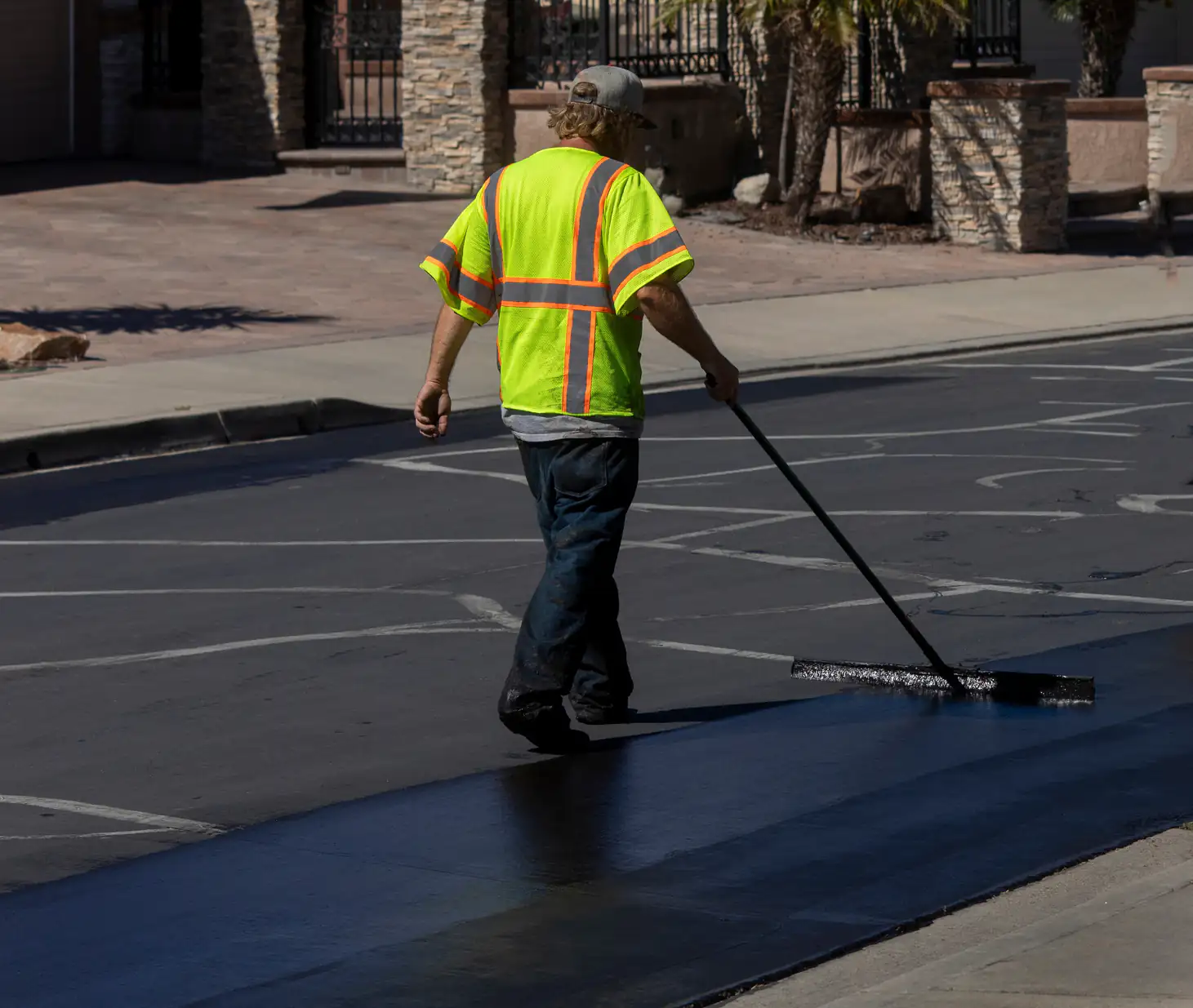
You also get a driveway that actually looks good. That rich, dark black finish doesn’t just protect the surface—it makes your home look maintained. Snow removal gets easier because the surface stays smooth. And because sealed asphalt stays darker, it absorbs more heat and helps melt snow and ice faster than untreated pavement.
We operate throughout Morris, Sussex, and Somerset Counties. We’re not a national franchise following a script. We’re the crew that shows up in Lake Hiawatha knowing exactly what your driveway is up against.
We’ve sealed hundreds of driveways in this area. We know how winter hits ZIP 07034. We know the soil composition, the drainage issues, and the specific weather patterns that crack asphalt faster here than in other parts of the state.
When you call us, you get an upfront quote with no surprise charges. We show up when we say we will. And we use high-grade materials applied at the right temperature because shortcuts cost you more later. That’s not a sales pitch—it’s how we’ve built our reputation in North Jersey.
First, we inspect your driveway for cracks, potholes, and drainage problems. If there’s damage to the base structure, sealcoating won’t fix it. We’ll tell you that upfront. Honest assessment saves you money.
Next, we clean the surface completely. Oil stains, dirt, debris—it all has to go. Sealant doesn’t bond to a dirty surface. We’re not spraying over problems and hoping they disappear.
Then we fill any cracks. This step matters more than most homeowners realize. Sealing over unfilled cracks is like painting over rot. It looks fine for a month, then fails.
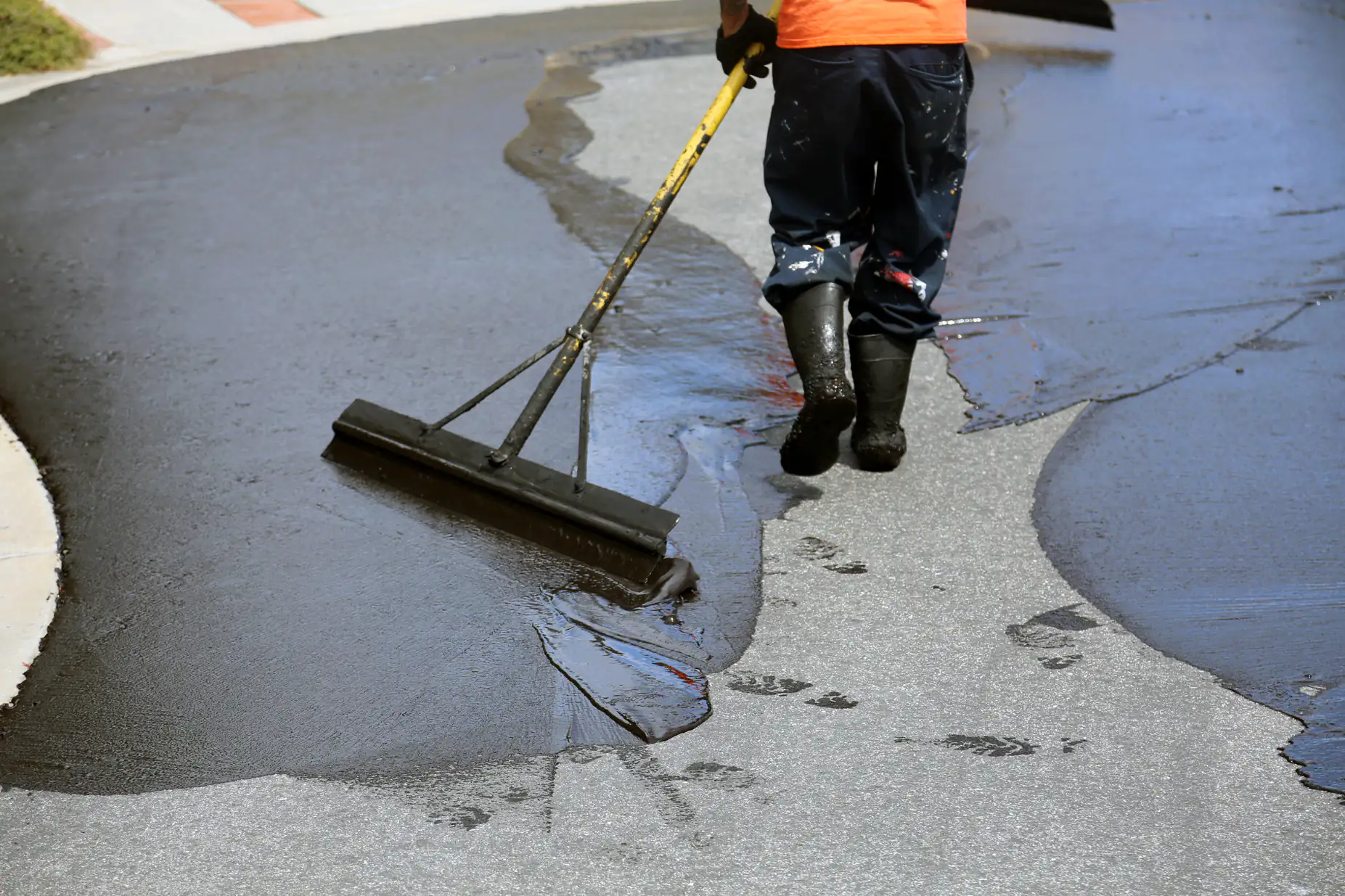
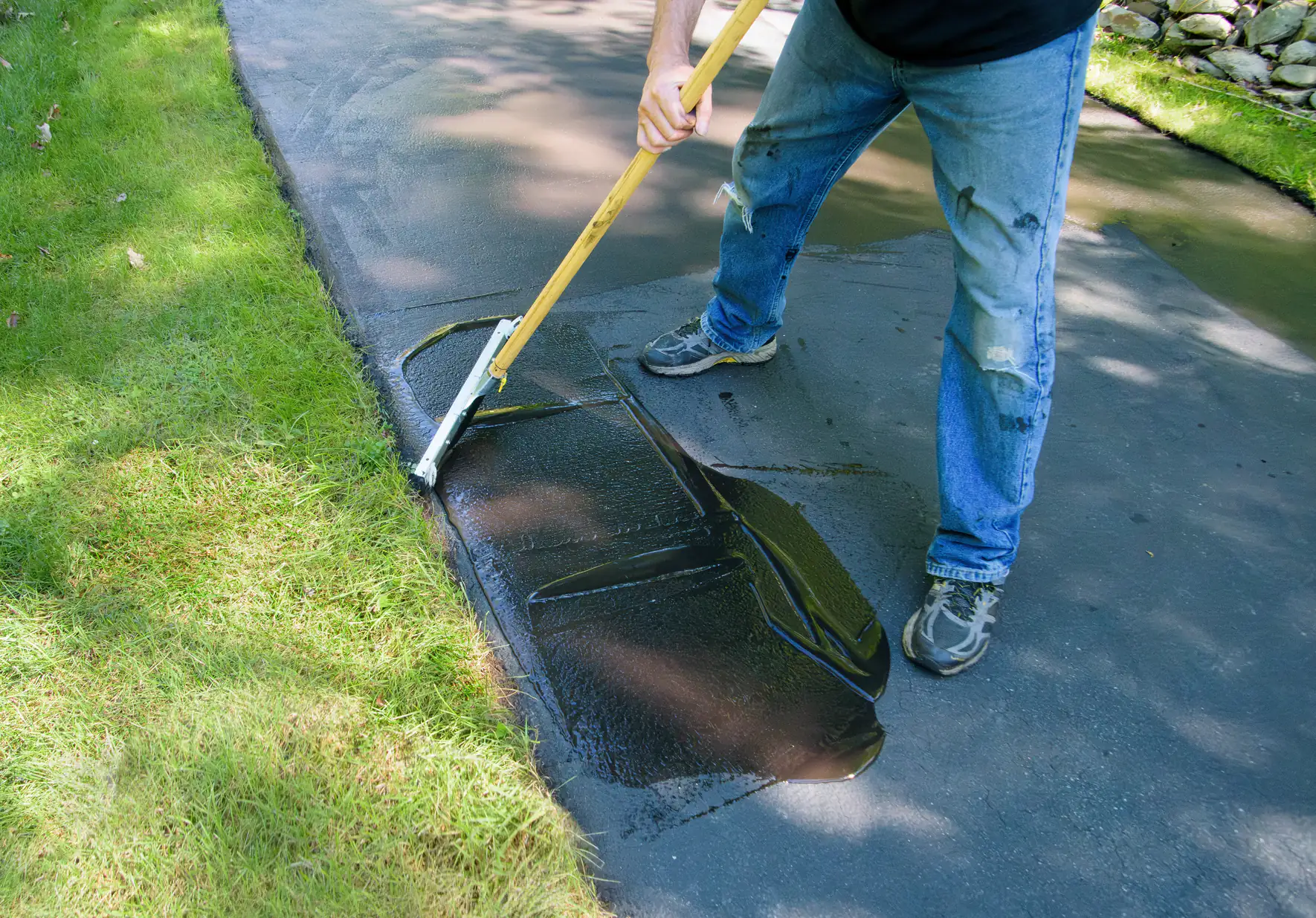
After prep work, we apply a high-grade coal tar or asphalt emulsion sealer. We don’t water it down. We apply it at the manufacturer’s recommended thickness, usually two coats for driveways that haven’t been sealed in years.
The sealer needs 24 to 48 hours to cure, depending on temperature and humidity. We’ll tell you exactly when you can park on it again. Most jobs in Lake Hiawatha wrap up in a day, and you’re back to normal use within two days.
Ready to get started?
Every sealcoating job includes a full driveway inspection. We’re looking for signs of base failure, improper drainage, or damage that needs repair before we seal. If your driveway needs crack filling, we handle that first. Hairline cracks get routed and filled with rubberized crack filler that flexes with temperature changes.
We clean the entire surface using commercial-grade equipment. That means removing oil stains, tire marks, dirt, and loose debris. The cleaner the surface, the better the bond.
Then comes the sealer application. We use professional-grade materials designed for New Jersey’s climate. Lake Hiawatha driveways need sealers that can handle freeze-thaw cycles and heavy moisture. We’re not using the stuff you buy in buckets at the hardware store.
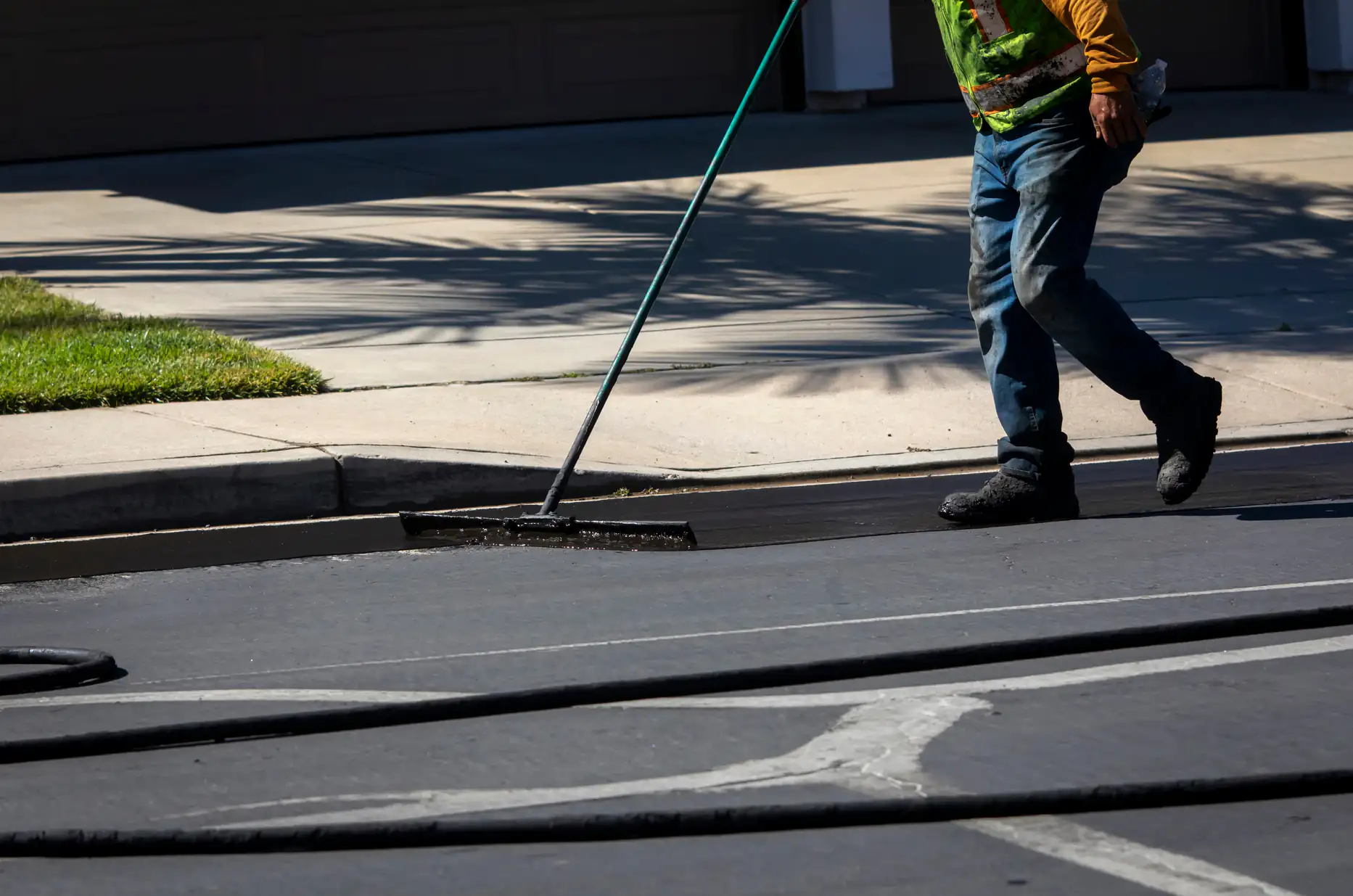
Most residential driveways in Morris County get two coats. The first coat penetrates and bonds to the asphalt. The second coat provides the protective layer and that dark, finished look. We edge carefully around garage doors, walkways, and landscaping so you don’t end up with sealer where it doesn’t belong.
After application, we mark off the area and give you a clear timeline for when you can walk on it and when you can drive on and park on it. Proper curing time isn’t optional. Rush it, and you’ll have tire marks and a ruined finish.
Most residential driveways in Lake Hiawatha run between $150 and $500 for professional sealcoating. The price depends on square footage, current condition, and how much prep work is needed. If your driveway has significant cracking or damage, expect to pay more for crack filling and repairs before sealing.
New Jersey prices typically run 15 to 20 percent higher than national averages. That’s due to higher labor costs and the fact that our driveways take more abuse from freeze-thaw cycles. You’re not overpaying—you’re paying for materials and methods that actually hold up in this climate.
The cost breaks down to about $0.15 to $0.40 per square foot for most properties. A standard two-car driveway averages 400 to 600 square feet. Do the math, and you’re looking at $200 to $300 for a straightforward job. Add crack filling, and it might push closer to $400 or $500.
Compare that to the $3,000 to $8,000 you’ll spend on driveway replacement if you skip maintenance. Sealcoating every three years is the cheapest insurance policy you’ll ever buy for your home.
Spring and fall are your best windows. You need temperatures above 50 degrees during the day and overnight for the sealer to cure properly. Late April through June works well in Lake Hiawatha. September and October are also ideal before temperatures drop.
Avoid sealing in summer heat above 90 degrees. The sealer dries too fast and doesn’t bond correctly. You also don’t want to seal right before rain. The sealer needs at least 24 hours of dry weather to cure.
Most Morris County contractors book up fast in May and early June. Homeowners realize winter did a number on their driveways, and everyone calls at once. If you’re planning to seal this year, call in April. By July, you’re looking at wait times that push you into fall.
New driveways should be sealed within the first year, but not immediately. Let the asphalt cure for six to twelve months first. After that, seal every two to three years depending on traffic and weather exposure. If your driveway sees heavy use or sits in full sun, lean toward every two years.
A quality sealcoat job lasts about two to three years in Morris County. That timeline assumes proper application, good weather during curing, and normal wear. If your driveway gets heavy traffic or you park commercial vehicles on it, expect closer to two years.
New Jersey’s freeze-thaw cycles are brutal on sealcoating. Every winter breaks down the protective layer a little more. By year three, you’ll notice the surface looks faded and worn. That’s your signal to reseal before water starts penetrating the asphalt again.
Some contractors claim their sealer lasts five years. That’s marketing, not reality. No sealcoat holds up that long in this climate. If someone promises you five years, they’re either using the wrong materials or they don’t understand how weather affects asphalt in North Jersey.
The good news is that regular sealing compounds over time. Each application adds another layer of protection. Driveways that get sealed consistently every two to three years can last 25 years or more. Driveways that never get sealed start failing around year 12 to 15. The difference is dramatic, and the cost to maintain it is minimal compared to replacement.
Sealcoating is preventive maintenance. It protects the surface of your existing asphalt from water, UV damage, and chemicals. Think of it like painting your house—it doesn’t fix structural problems, but it keeps small problems from becoming big ones.
Repaving means tearing out the old asphalt and installing new pavement. You’re looking at $2,400 to $4,800 for a typical Lake Hiawatha driveway, sometimes more if there are base issues. Repaving is what happens when you ignore maintenance too long and the damage goes too deep to repair.
Here’s how to know which one you need. If your driveway has surface cracks, fading, and minor wear, sealcoating fixes it. If you have large potholes, alligator cracking (that spiderweb pattern), or sections that are sinking, you’re past the point where sealing helps. You need repairs or full replacement.
Most homeowners can avoid repaving for 20-plus years if they seal regularly and address cracks early. The ones who end up repaving are usually the ones who waited until small cracks became big problems. A $300 sealcoat job every three years beats a $5,000 repaving bill every time.
You can buy sealcoating products at any hardware store and do it yourself. Whether you should is a different question. DIY sealing works if you have a small driveway, you’re comfortable with the prep work, and you understand that the results won’t match a professional job.
The sealer you buy in buckets is thinner and lower quality than what we use. It goes on easier, but it doesn’t last as long. You’ll also need to rent or buy equipment for cleaning and application. By the time you factor in materials, tools, and your time, you’re not saving as much as you think.
We have commercial-grade equipment that cleans better and applies sealer more evenly. We also know how to handle problem areas like oil stains, drainage issues, and edges. A bad DIY job looks worse than no sealing at all—streaky finish, thin coverage, sealer on your garage door.
If your driveway is in good shape and you just want to extend its life, hiring us makes sense. If you’re trying to fix significant damage or you’ve never sealed before, definitely hire someone who knows what they’re doing. The cost difference between DIY and professional in Lake Hiawatha is a few hundred dollars. That’s worth it for a job that actually lasts.
Yes, but only if the asphalt underneath is still in good condition. Sealcoating creates a waterproof barrier that keeps moisture from seeping into the pavement. When water can’t get in, it can’t freeze and expand. That’s how you prevent those spring potholes that seem to appear overnight.
Morris County sees 40 to 50 freeze-thaw cycles every winter. Each cycle is an opportunity for water to get into cracks, freeze, expand, and break apart your driveway. Sealed asphalt resists that process. Unsealed asphalt absorbs water like a sponge.
Sealcoating also protects against road salt and de-icing chemicals. Those chemicals break down asphalt binders and accelerate deterioration. A good sealer acts as a shield, so the salt runs off instead of soaking in.
But here’s the catch. If your driveway already has deep cracks or base damage, sealcoating won’t fix it. You have to repair the damage first, then seal. Think of it this way: sealing a cracked driveway is like putting a bandaid on a broken bone. It might look better, but it doesn’t solve the underlying problem. Get the repairs done first, then seal to protect your investment.