
Hear from Our Customers
Your driveway takes a beating every winter. Water seeps into small cracks, freezes, expands, and turns hairline fractures into potholes by March. That cycle repeats dozens of times each season in Kinnelon, and it’s why driveways that skip sealcoating fail years earlier than they should.
Asphalt driveway sealing creates a protective barrier against water infiltration, UV damage, oil stains, and the chemical assault from ice melt products. It’s not cosmetic. The rich black finish you get is nice, but what matters is the layer of protection that keeps moisture out and extends your pavement’s lifespan from 15 years to 25+ years.
The math is simple. A $300-500 sealcoating job every 2-3 years prevents $5,000+ repaving costs. Small cracks you ignore this fall become $1,500 repair projects next spring. And if water reaches your base layer, you’re looking at foundation work that costs ten times what sealing would have cost.
We’ve been sealing driveways across Morris County since before most homeowners realized fall maintenance beats spring repairs. That’s over two decades of understanding exactly what works in Kinnelon’s climate and what fails by the second winter.
You’re not getting a crew from out of state claiming they have “leftover materials.” You’re working with contractors who know local conditions, understand municipal requirements, and have relationships with officials across Morris, Sussex, and Somerset Counties. We know which products hold up through New Jersey winters and which ones crack under pressure.
Our 5-year warranty on paving work isn’t marketing language. It’s confidence that comes from doing this correctly the first time. You get clear upfront pricing, no surprise charges, and a 24-48 hour callback guarantee when you request a quote. We show up when we say we will, finish on schedule, and stand behind every job.
First, we clean your driveway thoroughly. Oil stains, dirt, vegetation, and debris all prevent proper adhesion, so we remove everything down to bare asphalt. This step matters more than most homeowners realize—sealant applied over contaminated surfaces fails within months.
Next comes crack filling. We identify every crack and fill them with rubberized crack filler that flexes with temperature changes. Skipping this step means water still gets underneath your sealcoat, which defeats the entire purpose. We’re sealing the pavement and the vulnerabilities.
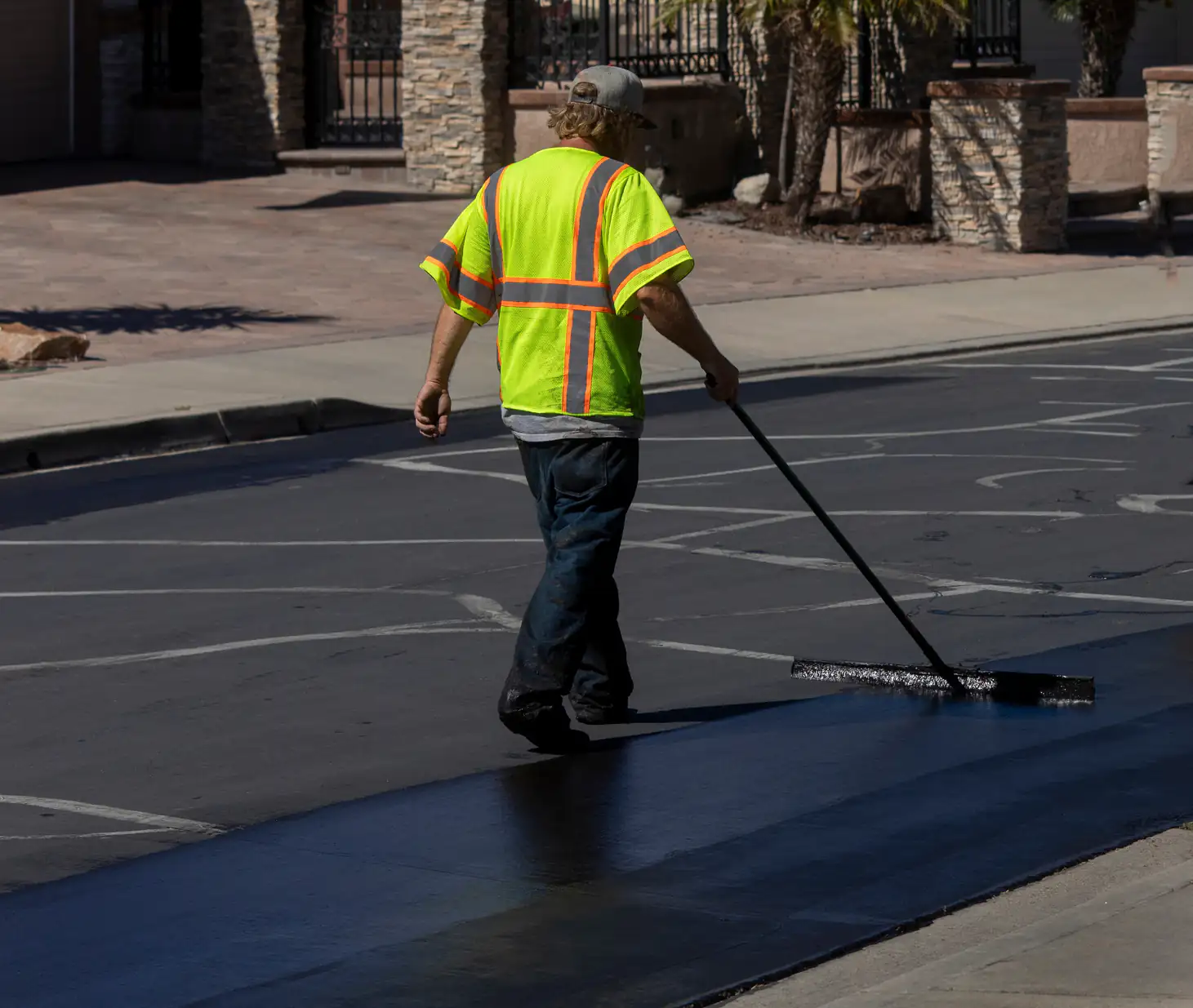
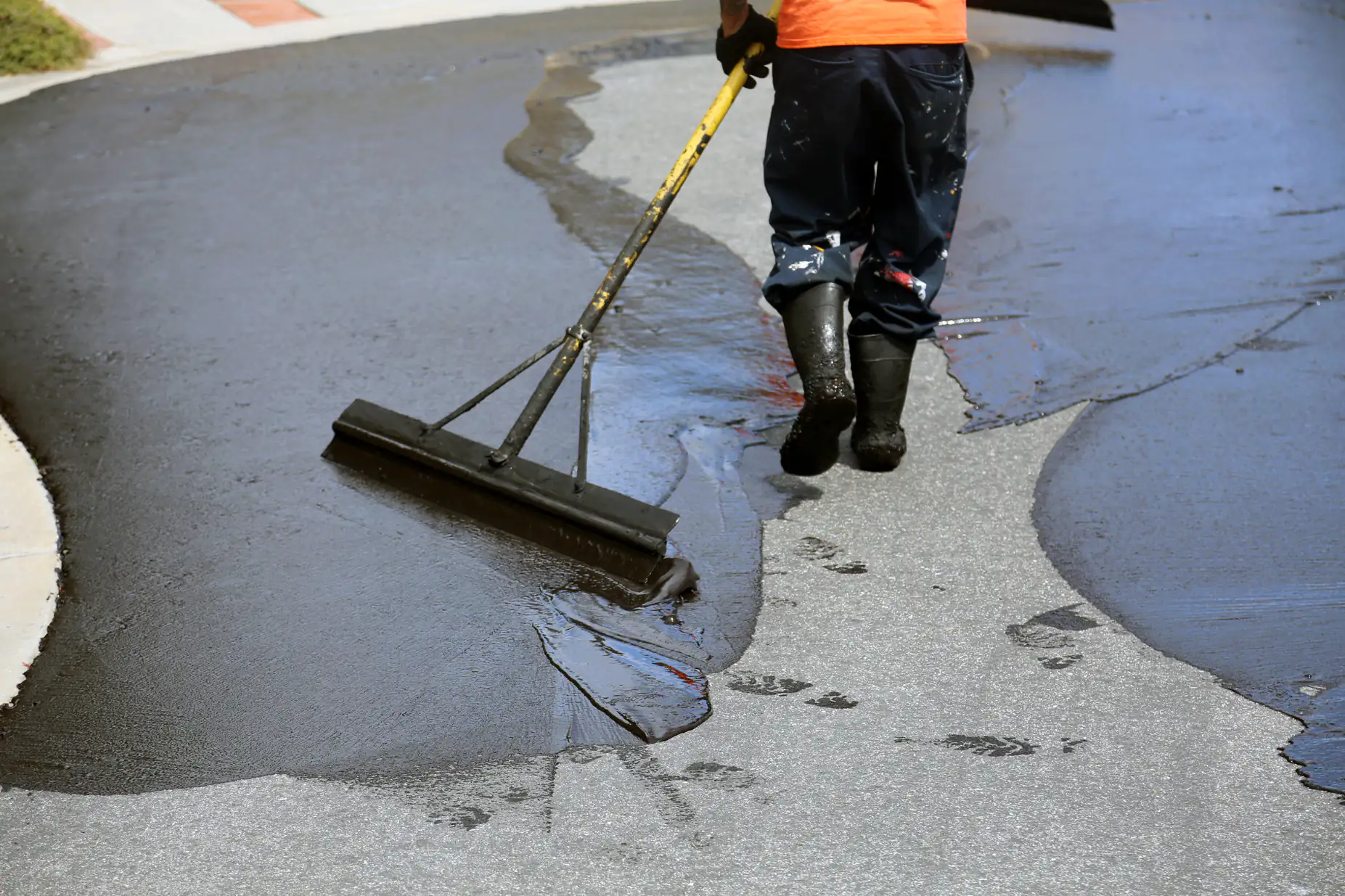
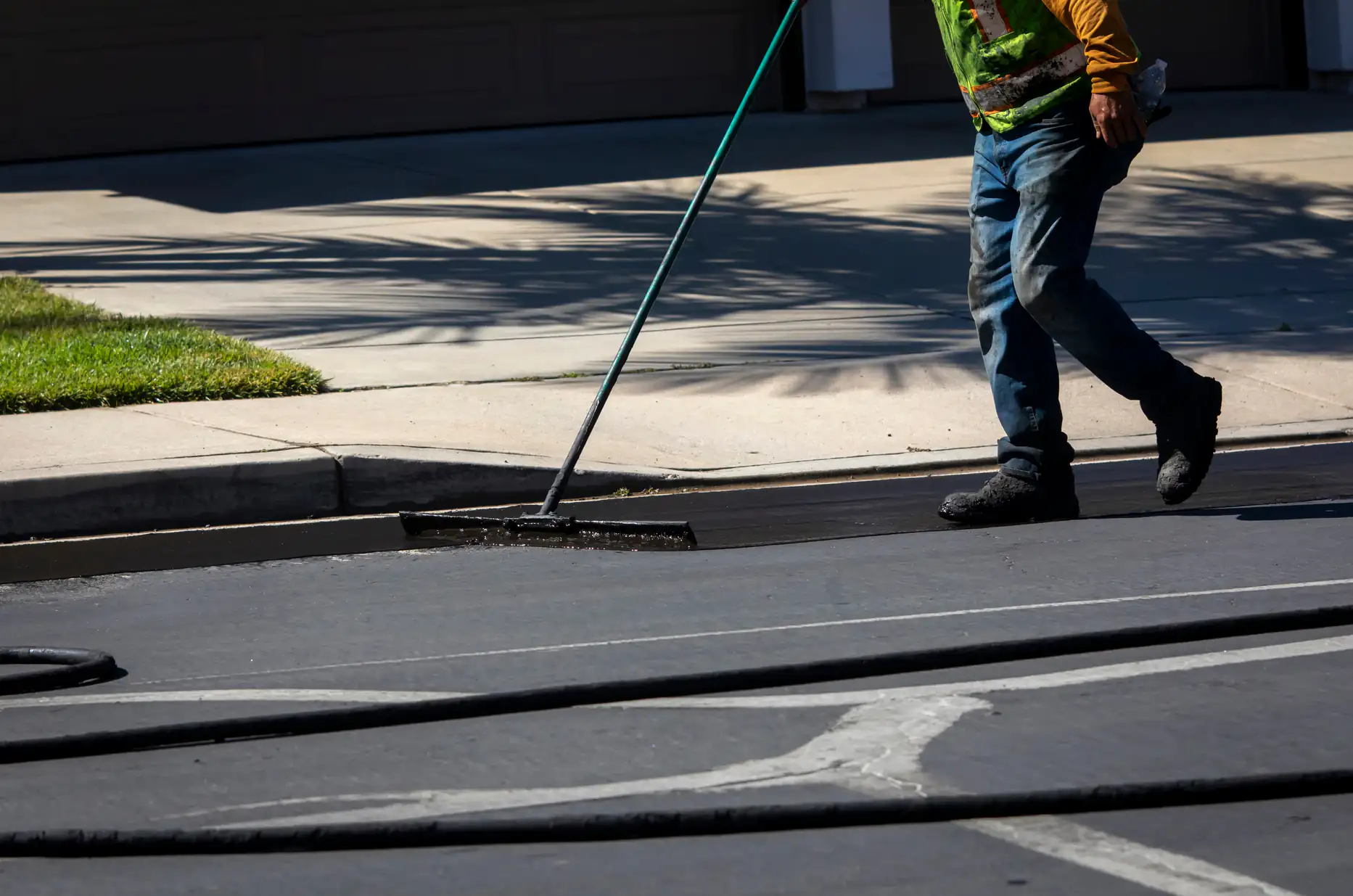
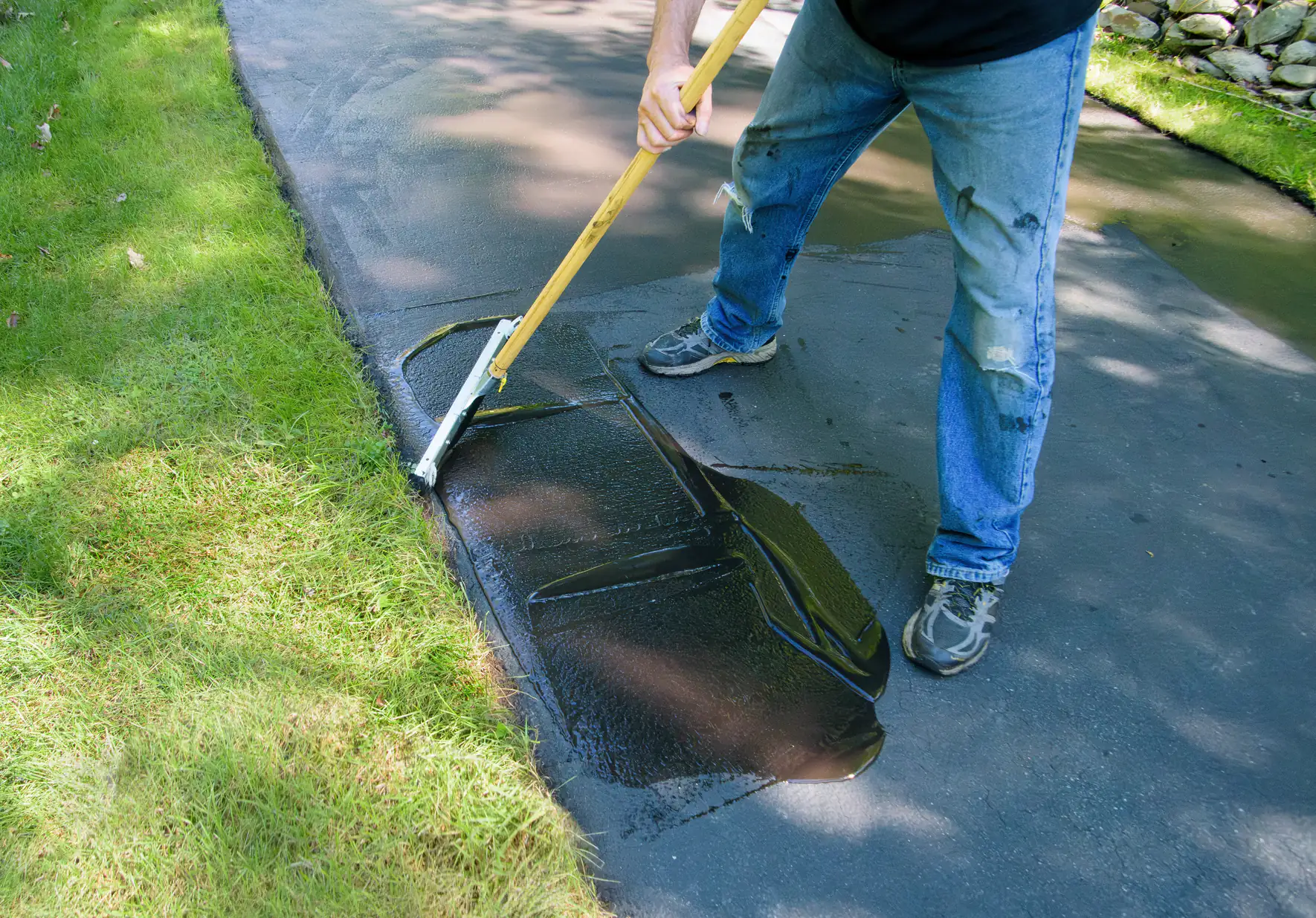
Then we apply high-quality sealant using professional equipment. Two thin coats work better than one thick coat—better penetration, better protection, better cure. We work in temperatures between 50°F and 85°F with dry conditions forecasted for at least 24 hours. Timing matters. Rushing the cure or applying sealant in poor conditions means you’re paying for work that won’t last.
You’ll need to stay off the driveway for 24-48 hours depending on weather. After that, you’ve got a restored surface with a rich black appearance and a protective barrier that’ll handle whatever winter throws at it.
Ready to get started?
Driveway sealcoating in Kinnelon typically runs $200-500 depending on your driveway’s size and condition. That includes thorough cleaning, crack filling, two coats of commercial-grade sealant, and proper curing time. You’re not just paying for materials—you’re paying for application expertise that determines whether this lasts three years or fails in one.
Morris County’s freeze-thaw cycles are particularly destructive. Temperatures swing above and below freezing repeatedly throughout winter, and each cycle expands existing cracks with tremendous force. Properties in Kinnelon, Mountain Lakes, and surrounding areas see this damage accelerate faster than communities with more stable winter temperatures. That’s why local expertise matters. Contractors who don’t understand these conditions use products and techniques that work elsewhere but fail here.
Fall is your optimal window. September through early November gives you moderate temperatures, lower humidity, and stable weather patterns. Spring brings everyone wanting repairs after damage has already occurred, but fall prevention means you avoid the damage entirely. You also avoid the contractor rush and the premium pricing that comes with emergency repairs.
The return on investment is straightforward. Sealcoating every 2-3 years extends your driveway’s life significantly and prevents the kind of deterioration that requires complete replacement. Median home values in Morris County sit around $557,000. Even a 1% reduction in property value from a deteriorated driveway represents a $5,570 loss—far more than proactive maintenance costs.
Every 2-3 years is the standard recommendation for New Jersey driveways, but your specific timeline depends on traffic, sun exposure, and how well the previous sealcoating job was done. If your driveway sees heavy use or sits in direct sunlight most of the day, you might need sealing closer to every two years.
Here’s an easy test: if water soaks into your asphalt instead of beading on the surface, your sealcoat is worn and it’s time to reseal. You can also look at the color—faded gray asphalt means UV damage has broken down the binder, and you’ve lost protection.
Waiting too long between applications costs you. Once cracks form and water penetrates to the base layer, you’re dealing with structural repairs instead of preventative maintenance. The difference between a $400 sealcoating job and a $2,000 repair project often comes down to waiting one year too long.
Fall is ideal for asphalt sealing in Kinnelon and throughout Morris County. You want temperatures consistently between 50°F and 85°F with no rain forecasted for at least 24-48 hours. September through early November typically provides these conditions, and you’re getting your driveway protected right before winter hits.
Spring is your second option, but you’re competing with everyone who’s dealing with winter damage and needs repairs. That means longer wait times and potentially higher prices. Spring weather is also less predictable—late frosts and unexpected rain can interfere with proper curing.
Summer can work, but extreme heat causes problems. Sealant cures too quickly in 90°F+ temperatures, which prevents proper penetration and adhesion. You also can’t use your driveway during the hottest part of the year, which is inconvenient. Fall gives you optimal conditions and timing that makes sense for your property.
Most residential driveways in the Kinnelon area run between $200 and $500 for professional sealcoating, depending on square footage and current condition. A standard two-car driveway typically falls around $300-400. Larger driveways or those needing extensive crack repair will cost more.
That price should include surface cleaning, crack filling, edging, and two coats of quality sealant. If someone quotes you significantly less, ask what they’re skipping. Cheap sealcoating jobs often skip proper cleaning or crack prep, use diluted materials, or apply only one thin coat. You’ll pay twice when that work fails in a year.
Compare that cost to alternatives. Asphalt repairs for deteriorated sections run $1,500-3,000. Complete driveway replacement costs $5,000-10,000 depending on size. Sealcoating every few years for a few hundred dollars prevents those expenses entirely. The return on investment is immediate—you’re protecting an asset worth far more than the maintenance costs.
You can buy sealant at home improvement stores and do it yourself, but professional application makes a significant difference in how long the protection lasts. The equipment matters—commercial-grade spray systems achieve better coverage and penetration than squeegee application. The preparation matters even more.
Most DIY jobs fail because homeowners skip proper cleaning or don’t fill cracks correctly. They also tend to apply sealant too thick, which leads to premature cracking and peeling. Or they apply it too thin trying to stretch materials, which provides inadequate protection. Getting the application rate right requires experience.
Professional driveway sealing contractors also know how to read weather conditions and adjust timing accordingly. We know when to delay a job because humidity is too high or temperatures are dropping too fast. Those decisions determine whether your sealcoat lasts three years or fails after one winter. For a few hundred dollars, you’re buying expertise that protects a multi-thousand-dollar asset. That’s not an expense—it’s insurance.
Your driveway deteriorates faster—significantly faster in New Jersey’s climate. Unsealed asphalt absorbs water, and when that water freezes, it expands with enough force to crack pavement and destroy the base layer underneath. Each freeze-thaw cycle makes existing damage worse. Small cracks become large cracks. Large cracks become potholes. Potholes become structural failures.
UV rays break down the binder that holds asphalt together, turning your driveway brittle and prone to crumbling. Oil stains from vehicles penetrate deeper without a protective barrier, weakening the pavement structure. Ice melt chemicals accelerate surface deterioration. All of this happens faster without sealcoating protection.
The financial impact is straightforward. Driveways that receive regular sealcoating last 25+ years. Driveways that don’t typically need replacement around 15 years. That’s a decade of additional life for an investment that costs a few hundred dollars every few years. Skip the maintenance and you’re choosing expensive repairs over affordable prevention.
The actual application takes 2-4 hours for most residential driveways, depending on size and how much crack repair is needed. Cleaning and prep work happens first, then crack filling, then two coats of sealant with drying time between coats. We’re usually finished in half a day.
The curing time is what requires patience. You’ll need to stay off your driveway for 24-48 hours minimum. Cooler temperatures and higher humidity extend that timeline. We’ll give you a specific timeframe based on weather conditions, but plan for at least a full day before you drive on it and two days before it’s fully cured.
Rushing this part ruins the job. Driving on sealant before it’s cured leaves tire marks, damages the surface, and compromises protection. If you need your driveway accessible for specific dates, let us know when you schedule. We’ll plan the work so curing time doesn’t interfere with your schedule. Most homeowners find a weekend works perfectly—we seal Friday or Saturday, and everything’s ready by Monday morning.