
Hear from Our Customers
You know what happens every spring in Byram Center. The snow melts and you walk outside to find new cracks that weren’t there in November. Small ones become bigger ones. Bigger ones turn into potholes that scrape your car’s undercarriage and make your property look neglected.
Asphalt sealcoating stops that cycle before it starts. The sealant creates a waterproof barrier that prevents moisture from seeping into small cracks and expanding when temperatures drop. No water penetration means no freeze-thaw damage, which means your driveway looks the same in April as it did in October.
You also get protection from UV rays that dry out and oxidize asphalt, turning it gray and brittle. Plus oil, gas, and other automotive fluids can’t penetrate the surface and break down the asphalt binder. Your driveway stays flexible, black, and structurally sound for years longer than unsealed asphalt.
The cost difference tells the whole story. Professional driveway sealcoating runs between $0.06 and $0.38 per square foot. Full driveway replacement costs $8 to $15 per square foot. A typical 600-square-foot driveway costs around $150 to seal versus $6,000 to replace.
We’ve been sealing driveways in Morris, Sussex, and Somerset Counties for over 20 years. We’re not a crew that shows up in spring, does quick work, and disappears. We’re based in Morris County, and our reputation depends on every job we complete in towns like Byram Center, Dover, Morristown, and Newton.
You’ll work with licensed and insured crews who use commercial-grade equipment and high-quality sealant materials designed specifically for New Jersey’s climate. We know which products hold up through 55 to 75 freeze-thaw cycles every winter because we’ve tested them on our own properties and watched them perform for decades.
Our pricing is transparent. You get a detailed written estimate that breaks down material costs, labor, and timeline before any work begins. No surprises, no pressure tactics, just straightforward information so you can make the right decision for your property.
First, we clean your driveway completely. Any dirt, debris, vegetation, or oil stains get removed because sealant won’t bond properly to a contaminated surface. We use commercial blowers and power washing when needed to get down to clean asphalt.
Next comes crack filling. We use hot-pour rubberized material heated to 400 degrees, not the cold-pour stuff from hardware stores that shrinks and pulls away within months. Hot-pour crack filler stays flexible through temperature swings and creates a waterproof seal that moves with your asphalt instead of cracking apart.
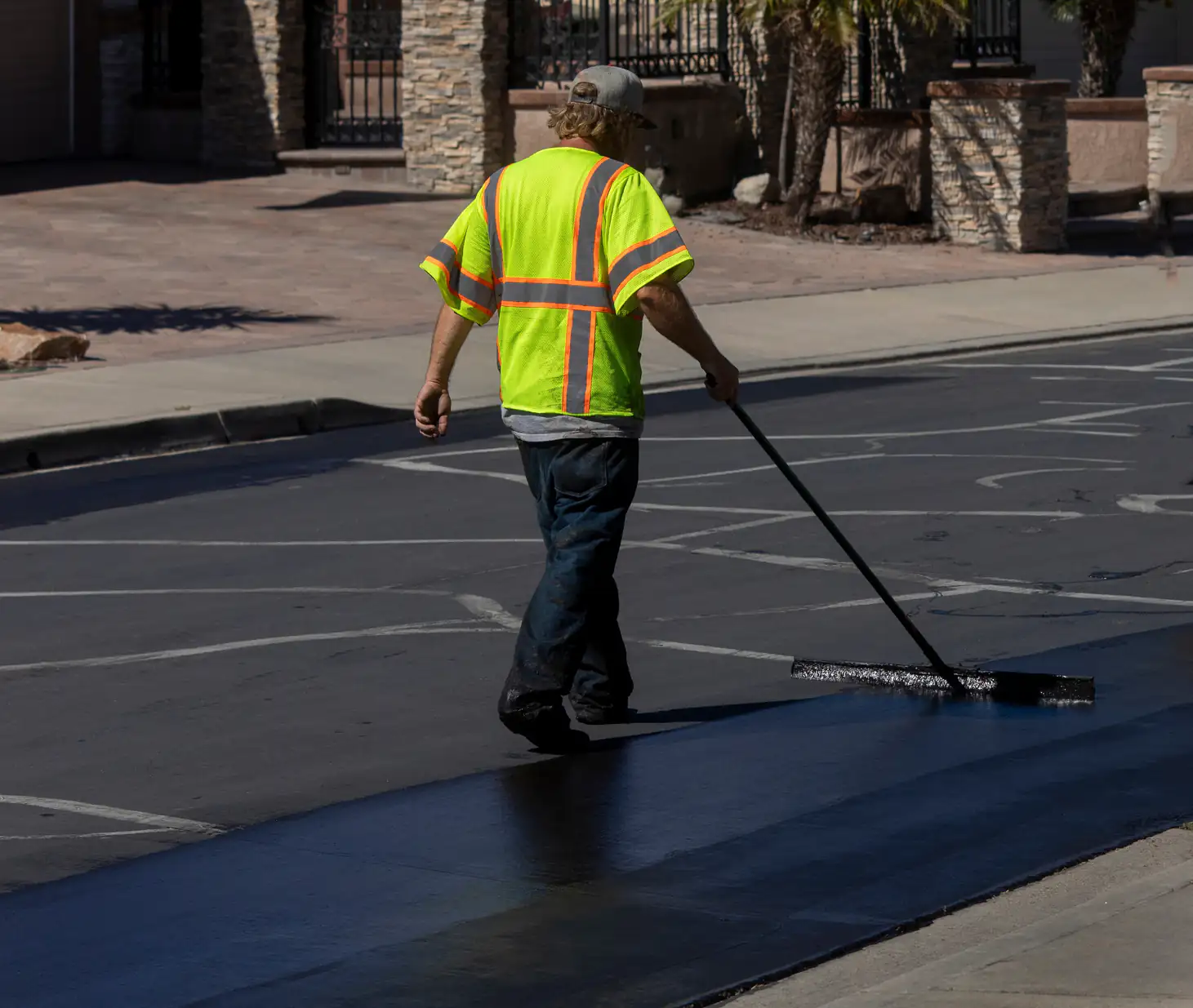
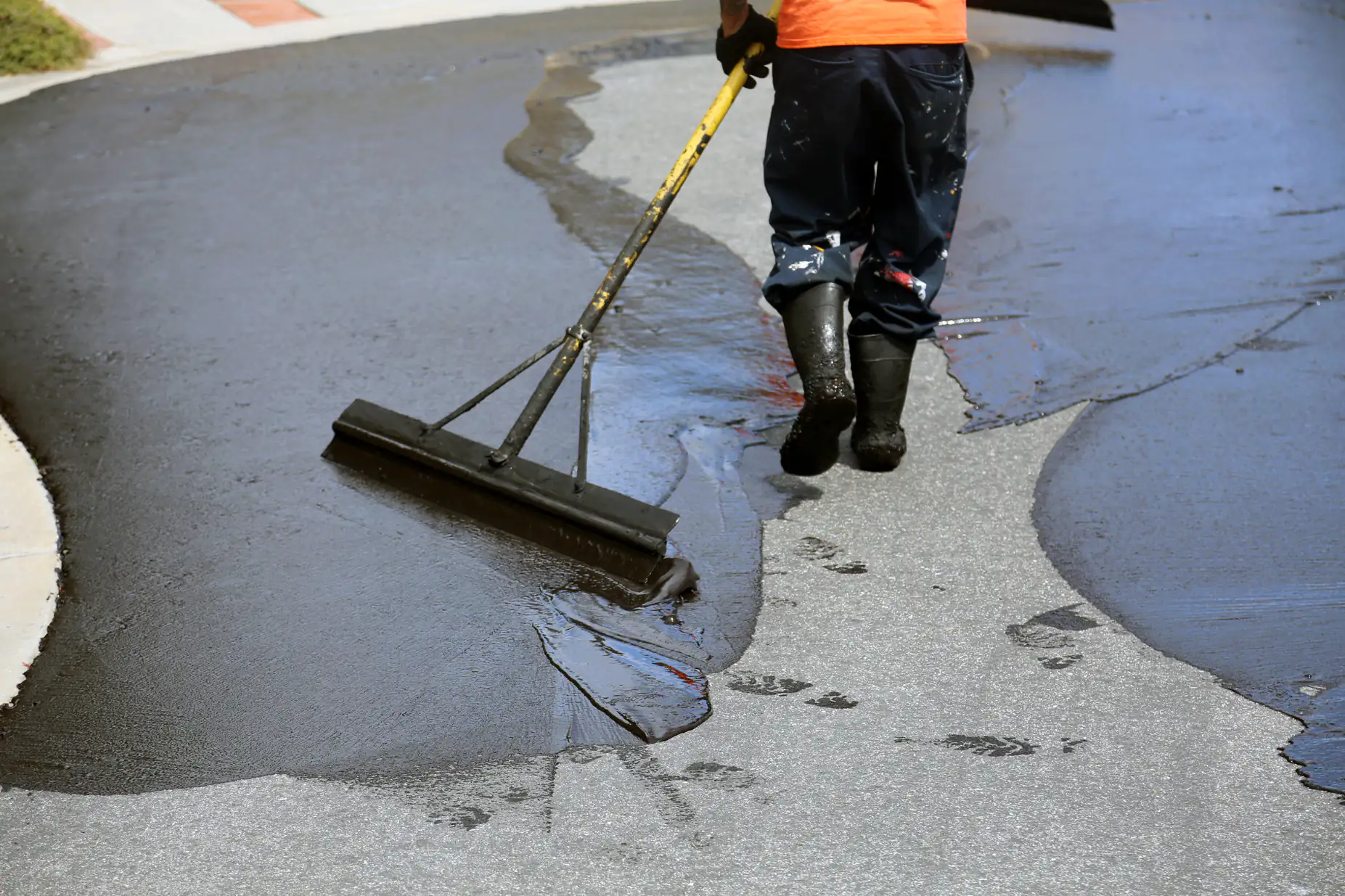
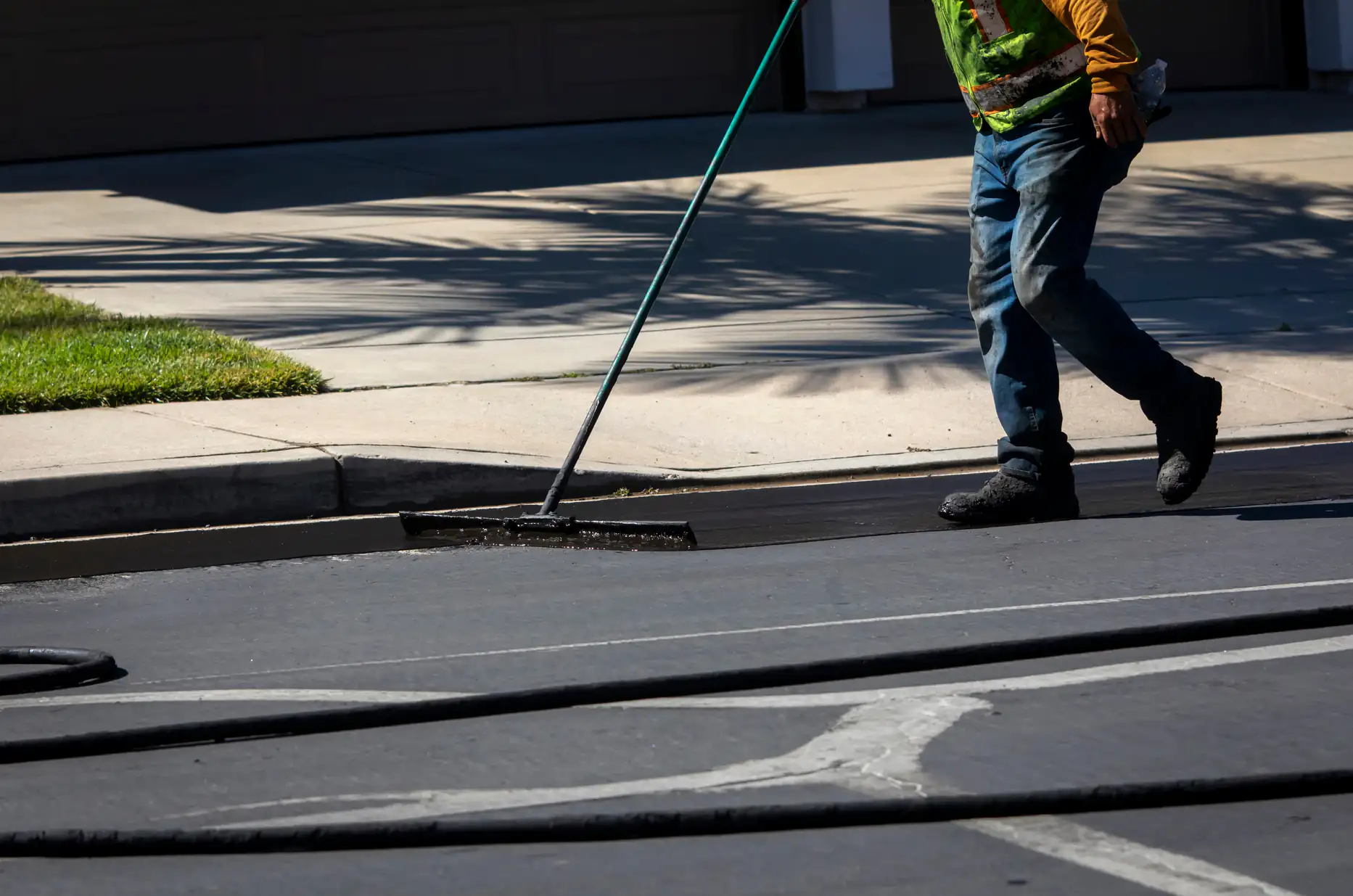
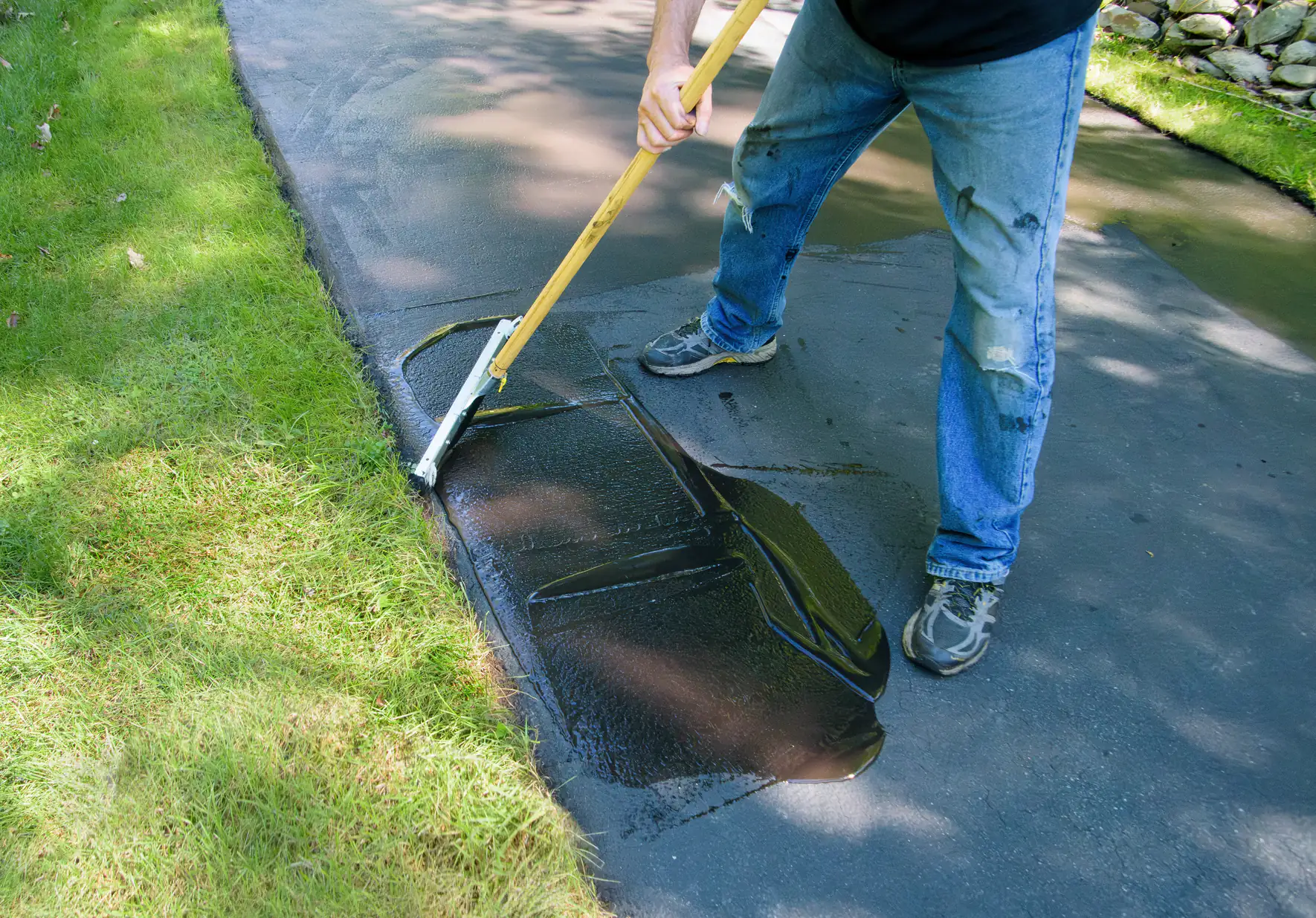
Then we apply two coats of commercial-grade asphalt sealer. The first coat penetrates and bonds to the asphalt surface. The second coat builds thickness and creates that protective barrier against water, UV rays, and chemicals. We use squeegees and spray equipment depending on your driveway’s condition and layout.
The sealant needs 24 to 48 hours to cure before you can drive on it. Weather matters here—we only seal when temperatures will stay above 50 degrees for at least 24 hours after application. That’s why fall is ideal in Byram Center. Stable temperatures, low humidity, and no threat of sudden cold snaps.
You’ll see the difference immediately. Your driveway looks freshly paved with a rich black finish. More importantly, it’s protected from the elements for the next two to three years before it needs resealing.
Ready to get started?
Professional asphalt driveway sealing includes complete surface preparation, crack filling with hot-pour rubberized material, and two coats of commercial-grade sealant. You’re not just paying for the sealant itself—you’re paying for proper surface prep, which determines whether the sealant actually bonds and lasts.
The typical cost in Morris County runs between $0.15 and $0.38 per square foot depending on your driveway’s current condition. A 600-square-foot driveway usually costs $150 to $250. That includes labor, materials, and proper curing time. Prices in New Jersey run about 15 to 25 percent higher than the national average because of our climate demands and material costs, but you’re also getting protection against weather conditions that are significantly harsher than most of the country deals with.
Byram Center properties face specific challenges. You’re in Sussex County where winter temperatures regularly drop below freezing for extended periods. Your driveway experiences more freeze-thaw cycles than properties just 30 miles south. That means you need sealant formulations that stay flexible in extreme cold and crack filler that won’t fail when temperatures swing 40 degrees in a single day.
We also factor in your property’s drainage patterns and sun exposure. Driveways that hold water need extra attention to crack filling before sealing. Driveways in full sun all day need UV-resistant sealant formulations. These aren’t upsells—they’re adjustments based on how your specific driveway will perform over the next few years.
Every two to three years for residential driveways in Morris and Sussex Counties. That timeline assumes your driveway was properly sealed the last time and hasn’t developed major structural issues.
You can check whether your driveway needs resealing by pouring a small amount of water on the surface. If the water beads up, your sealant is still working. If it soaks in immediately, you’ve lost your protective barrier and water is penetrating the asphalt.
New asphalt should cure for at least 90 days before the first sealcoating application. That gives the oils in fresh asphalt time to evaporate and the surface time to harden. Sealing too early can trap those oils and prevent proper curing, which actually shortens your driveway’s lifespan instead of extending it.
Late summer through early fall, typically August through October in Byram Center. You need consistent temperatures above 50 degrees for at least 24 hours after application, low humidity, and no rain in the forecast for 24 to 48 hours.
Spring seems logical after winter damage, but temperatures fluctuate too much. A warm day can turn into a cold night, and sealant won’t cure properly if temperatures drop below 50 degrees before it’s fully set. You end up with a weak bond that fails within months.
Fall gives you stable temperatures and lower humidity, which means better curing conditions. Your sealant has time to bond and harden before winter arrives. That’s critical because improperly cured sealant will peel and flake off during the first freeze-thaw cycle, leaving you worse off than if you’d done nothing at all.
You can buy sealant at hardware stores and apply it yourself, but you probably won’t get the same results as professional application. The difference comes down to surface preparation, material quality, and application technique.
DIY sealants are usually thinner formulations designed for easy application by homeowners. They don’t build the same thickness or provide the same protection as commercial-grade products. We use sealants with higher solids content and better binders that create a more durable protective layer.
Surface prep matters even more than the sealant itself. If you don’t remove all dirt, vegetation, and oil stains, the sealant won’t bond properly. If you use cold-pour crack filler from a tube instead of hot-pour rubberized material, your cracks will reopen within months. Most DIY sealcoating jobs fail because of inadequate prep work, not because the homeowner applied the sealant incorrectly.
Two to three years with proper application and normal wear. That timeline assumes your driveway doesn’t have underlying structural problems and you’re not parking heavy commercial vehicles on it daily.
Morris County’s freeze-thaw cycles are the main factor that determines longevity. Every winter, your driveway goes through 55 to 75 freeze-thaw cycles. Each cycle tests the sealant’s flexibility and adhesion. High-quality commercial sealant withstands those cycles. Cheap sealant cracks and peels.
You’ll know it’s time to reseal when the asphalt starts looking gray instead of black, or when you can see small cracks forming on the surface. Don’t wait until you have major cracks or potholes—by then you’re looking at repair costs on top of sealing costs. Resealing every two to three years prevents those bigger problems from developing.
No. Sealcoating protects the surface but doesn’t repair structural damage. Cracks and potholes need to be filled before sealant gets applied, and that’s a separate process with different materials.
Small cracks up to a quarter-inch wide get filled with hot-pour rubberized crack filler. Larger cracks and potholes need cold patch asphalt or hot mix asphalt depending on their size and depth. Once those repairs cure, then we can apply sealant over the entire surface to protect both the original asphalt and the repair material.
Some contractors will try to seal over cracks without filling them first. That doesn’t work. Sealant is too thin to fill gaps—it just bridges over the top temporarily and then cracks right along the same lines within weeks. Proper crack filling before sealing is what determines whether your driveway actually stays protected or whether you’re just covering up problems that will resurface immediately.
If rain hits before the sealant cures, you’ll likely see washout, streaking, or complete failure of the sealant bond. That’s why weather forecasting is critical before starting any sealcoating job in Byram Center.
Sealant needs 24 to 48 hours of dry weather to cure properly depending on temperature and humidity. Light rain after 24 hours might cause some minor streaking but won’t ruin the job. Heavy rain before 24 hours can wash away uncured sealant and leave you with an uneven, blotchy surface that needs to be stripped and reapplied.
We check extended forecasts and won’t start a job if there’s significant rain predicted within the curing window. We’d rather reschedule than apply sealant in questionable conditions and deliver subpar results. Your driveway only gets the protection you’re paying for if the sealant cures completely, and that requires cooperation from the weather.