
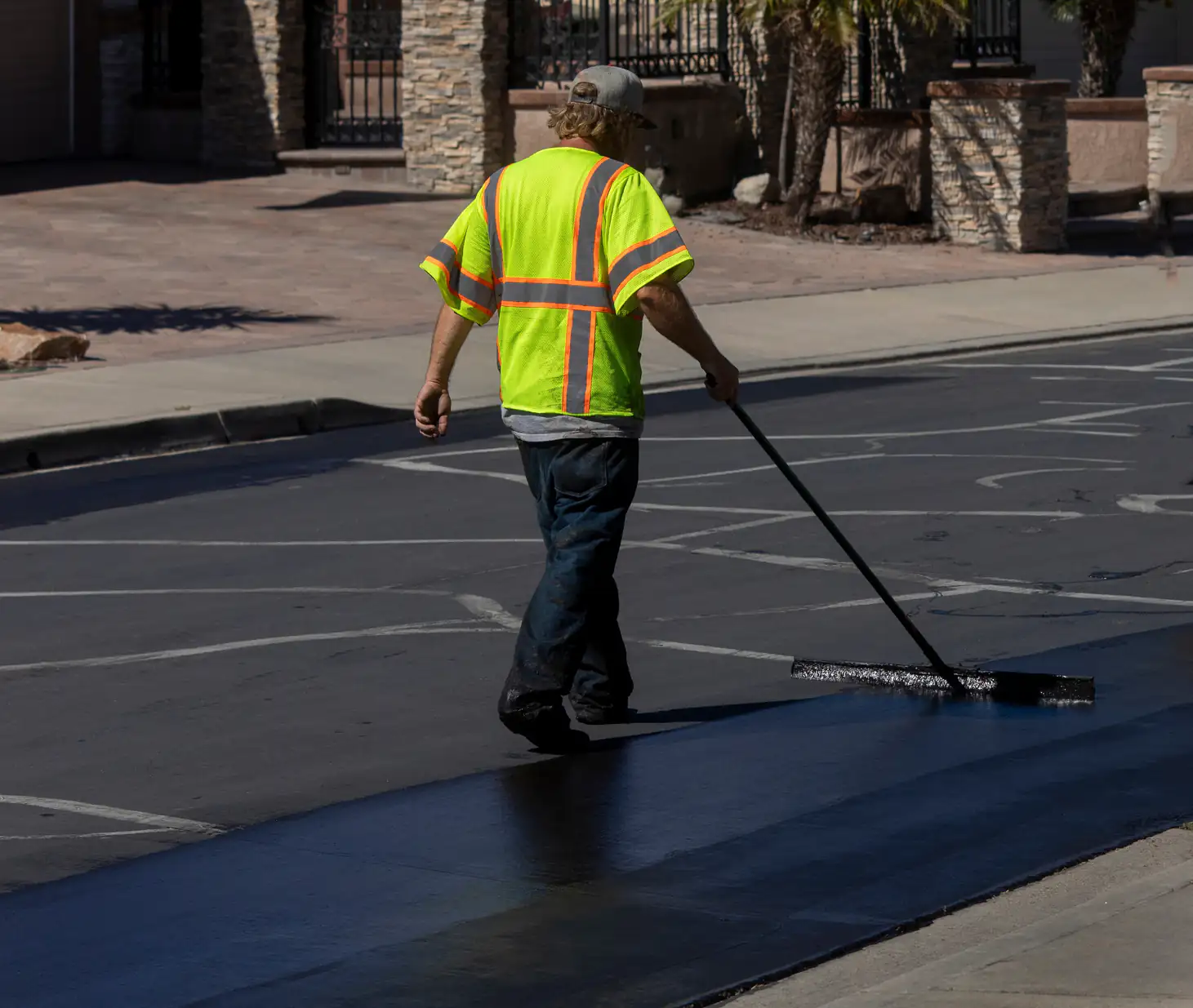
Hear from Our Customers
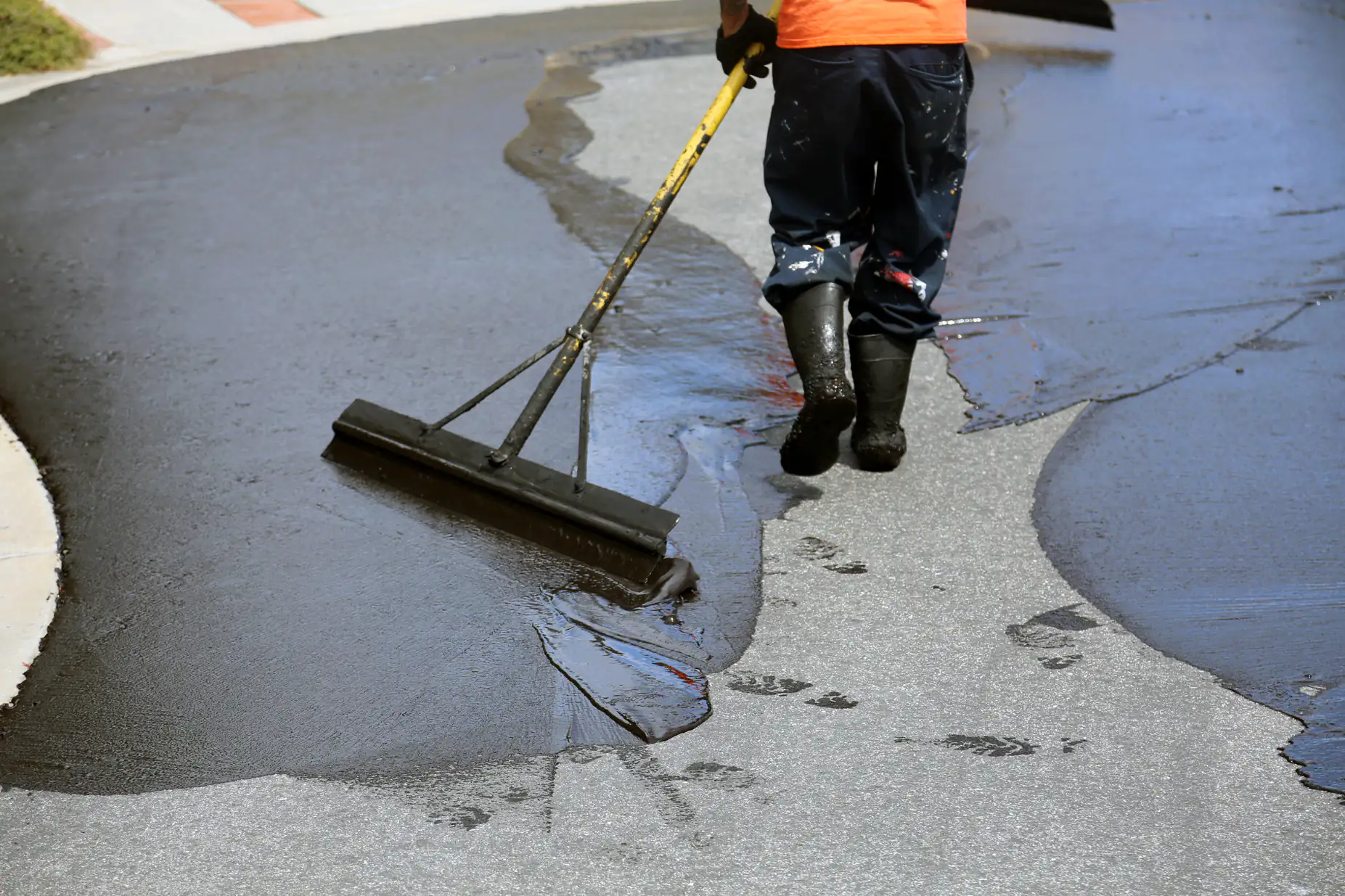
Your driveway isn’t just sitting there looking pretty. It’s taking a beating from every freeze-thaw cycle, every snowstorm, every oil drip from your car. In Basking Ridge, NJ, we see 55 to 75 freeze-thaw cycles every winter—that’s water getting into small cracks, freezing, expanding by 9%, and breaking your asphalt apart from the inside out.
Sealcoating stops that cycle before it starts. It fills surface voids, blocks water penetration, and creates a protective barrier against UV rays, vehicle fluids, and weather damage. You’re looking at extending your driveway’s lifespan from 15 years to 25+ years with regular maintenance.
The math is simple. Spend $200 to $500 every few years on sealcoating, or spend $2,000 to $5,000 on repairs when cracks turn into potholes. Most homeowners in Somerset County who skip maintenance end up paying for emergency fixes that cost three to five times more than planned upkeep. That’s not a scare tactic—that’s what happens when water gets underneath your asphalt and stays there.
We’ve spent over two decades working in North New Jersey, and we know exactly what Basking Ridge driveways go through. The soil shifts. The temperatures swing. The winters are brutal. We’re not guessing at what works here—we’ve seen it play out on thousands of driveways across Morris, Somerset, and Sussex Counties.
We use high-grade sealants formulated for New Jersey’s temperature swings, not the cheap stuff you’ll find at a hardware store that cracks by spring. Our process includes power washing, crack filling up to 50 linear feet, two coats of sealer with sand additive for traction, and a two-year warranty. We’re BBB accredited, fully licensed and insured, and we don’t disappear after the job is done.
You’re not hiring a crew that showed up yesterday. You’re hiring people who understand how local weather patterns affect asphalt and what it takes to make sealcoating last in this climate.
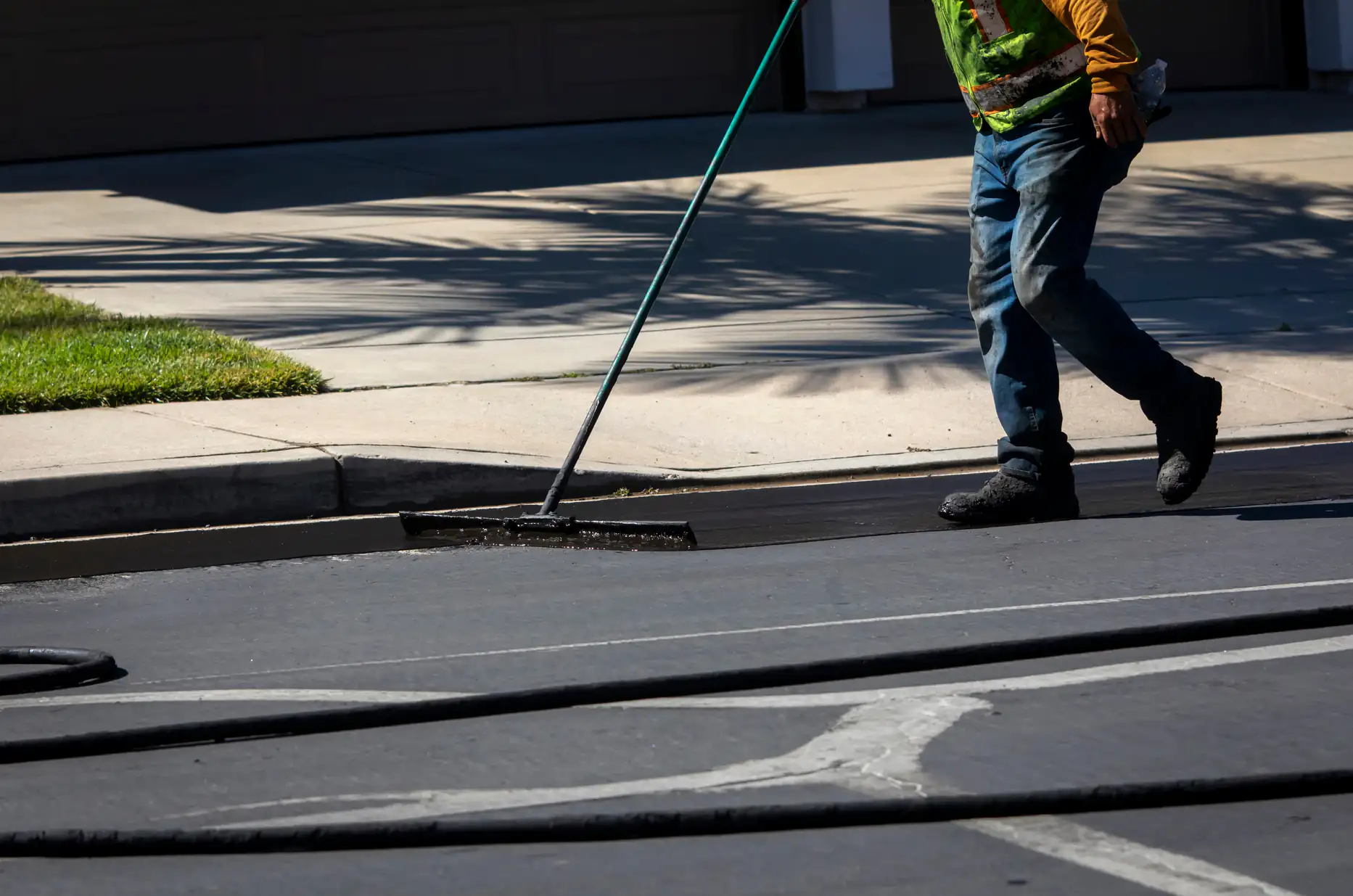
First, we assess your driveway’s current condition. We’re looking at drainage, existing cracks, surface wear, and how the asphalt has held up. If there are cracks wider than a quarter-inch, we fill those first—sealcoating won’t fix structural issues, but it will prevent new ones from forming.
Next, we power wash the entire surface to remove dirt, oil, debris, and anything else that would prevent the sealer from bonding properly. This step matters more than most people realize. If the surface isn’t clean, the sealer won’t stick, and you’ll be calling someone else in six months to redo it.
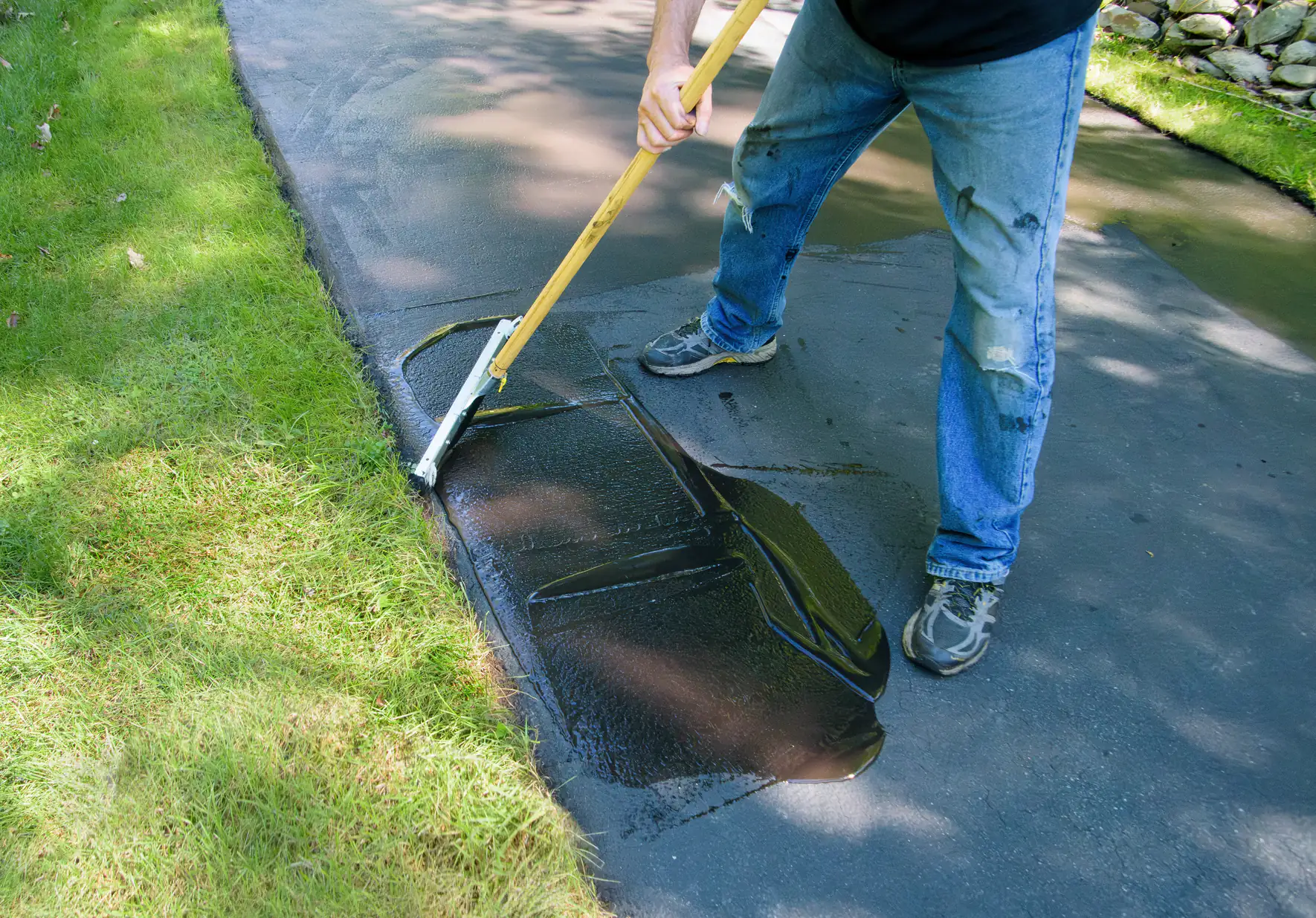
Then we apply two coats of commercial-grade sealer with a sand additive mixed in for traction and durability. We use professional equipment that applies a thick, even coating—not the squeegee-and-bucket method that leaves streaks and thin spots. The sealer needs 24 to 48 hours to cure, depending on temperature and humidity. After that, your driveway is ready to handle whatever Basking Ridge weather throws at it.
Ready to get started?
Sealcoating in New Jersey runs between $0.15 and $0.40 per square foot, depending on your driveway’s size and condition. Most residential driveways in Basking Ridge fall between $200 and $500 for a complete job. That includes power washing, crack sealing up to 50 linear feet, two coats of sealer, sand additive, and our two-year warranty.
Prices here run about 15% to 20% higher than the national average because labor costs more and the freeze-thaw cycle is harder on asphalt. But the ROI is massive. Regular sealcoating during the first three to five years of your driveway’s life can extend its overall lifespan by 10 to 15 years. Compare that to $8 to $12 per square foot for full reconstruction, and the choice is obvious.
We don’t charge extra for site assessment or drainage evaluation. We don’t tack on surprise fees after we show up. You get a clear quote upfront, and that’s what you pay. If your driveway has significant damage that needs repair before sealing, we’ll tell you that during the assessment—not after we’ve already started the job. Transparency isn’t a selling point for us; it’s just how we operate in Somerset County.
Every two to three years is the standard recommendation for driveways in New Jersey, but it depends on your driveway’s exposure and traffic. If your driveway gets full sun all day, you’ll want to seal closer to every two years because UV damage breaks down asphalt faster. If it’s shaded and sees less wear, you can stretch it to three years.
The key indicator is the color. When your driveway starts looking gray instead of black, the protective layer is wearing off and it’s time to reseal. Don’t wait until you see cracks forming—by then, water has already started getting underneath the surface.
In Basking Ridge, most homeowners seal in late spring or early fall when temperatures are between 50°F and 85°F and there’s no rain in the forecast for at least 48 hours. Timing matters because the sealer needs proper curing conditions to bond correctly.
You can buy sealer at any hardware store, but the results usually don’t last. DIY sealers are thinner, they don’t include the additives that professional-grade products have, and they’re applied with basic tools that leave an uneven coat. Most homeowners who try it themselves end up resealing the next year because the product failed.
Professional equipment makes a difference. We use commercial sprayers that apply a thick, consistent layer with sand mixed in for durability and traction. The sealer we use is formulated for New Jersey’s temperature extremes—it stays flexible in winter and doesn’t soften in summer heat.
The other issue is prep work. If you don’t power wash correctly or fill cracks before sealing, the sealer won’t bond and you’ve wasted your time and money. We do this regularly and know what to look for and how to prep the surface so the sealer actually lasts. It’s not complicated work, but it’s easy to get wrong if you don’t know what you’re doing.
Sealcoating is preventive maintenance. It protects the surface of your existing asphalt and extends its life. Repaving is what you do when the asphalt has deteriorated beyond repair—when there are deep cracks, potholes, or the base has failed. One costs a few hundred dollars; the other costs thousands.
If your driveway is relatively new or in decent shape with only minor surface wear, sealcoating is the right move. It fills small cracks, seals the surface, and prevents water from getting underneath. If your driveway has major structural damage, sealcoating won’t fix that—you’ll need repairs or a full replacement.
The goal is to sealcoat before you need to repave. Homeowners who maintain their driveways with regular sealcoating can get 25+ years out of their asphalt. Homeowners who skip it usually need to repave after 10 to 15 years. The difference in cost over the life of the driveway is significant.
The actual application takes a few hours for most residential driveways in Basking Ridge, depending on size. We power wash first, let that dry, fill any cracks, then apply two coats of sealer. The sealer needs 24 to 48 hours to cure before you can drive on it.
Temperature and humidity affect curing time. If it’s warm and dry, you’re looking at closer to 24 hours. If it’s cooler or more humid, give it the full 48 hours. We’ll tell you exactly when it’s safe to use based on the conditions the day we seal.
You can walk on it sooner—usually after 8 to 12 hours—but don’t drive on it or drag anything heavy across the surface until it’s fully cured. Rushing it will leave tire marks and damage the fresh seal. Plan to park on the street for a day or two, and you’ll be fine.
Sealcoating won’t fix cracks, but we fill them before we seal. Cracks up to half an inch wide can be filled with rubberized crack filler that stays flexible and moves with the asphalt as temperatures change. Once the cracks are filled and the filler has cured, we sealcoat over the entire surface.
If your driveway has cracks wider than half an inch or deep potholes, those need to be repaired before sealcoating makes sense. Sealcoating is a surface treatment—it protects the top layer but doesn’t address structural damage underneath. We’ll assess your driveway before we start and let you know if repairs are needed.
The best time to sealcoat is before cracks form. Once water gets underneath your asphalt and goes through a few freeze-thaw cycles, the damage spreads fast. Catching it early with regular sealcoating prevents small cracks from turning into expensive repairs.
Labor costs are higher here, and the climate is harder on asphalt. New Jersey gets more freeze-thaw cycles than most states, which means driveways take more abuse and need higher-quality materials to hold up. The sealer we use is formulated specifically for this climate—it has to stay flexible through temperature swings from below freezing to 90°F in the same week.
Material costs are also higher because we’re not using the cheapest product available. Professional-grade sealer with rubberized additives and sand costs more than the basic stuff, but it lasts two to three times longer. You’re paying for durability, not just a fresh coat of black.
The price difference between New Jersey and the national average is about 15% to 20%, but the ROI is the same. Spend a few hundred now to avoid spending thousands later. That math works no matter where you live, but it’s especially true in Basking Ridge where winter weather accelerates asphalt deterioration.