
Hear from Our Customers
You’ve probably noticed the cracks starting to show. Maybe a few small ones near the edges, or that spot where water pools after it rains. Right now, they’re manageable. Give it another winter or two, and you’re looking at a full repaving job that costs ten times more than fixing it today.
New Jersey weather doesn’t mess around. Water gets into those cracks, freezes overnight, expands, and turns a hairline crack into a pothole by spring. Once that cycle starts, it accelerates fast. The asphalt breaks down, the base gets compromised, and suddenly you’re not just sealing a driveway anymore—you’re replacing it.
Professional asphalt driveway sealing creates a waterproof barrier that keeps moisture out and protects against UV damage, oil stains, and the freeze-thaw cycles that destroy driveways across Morris and Essex County. You’re not just making it look better. You’re adding 10+ years to its lifespan and avoiding a $5,000+ repaving bill down the road.
We’re a third-generation, family-owned paving contractor serving Morris, Sussex, and Somerset County. We’ve been doing this for over 20 years, which means we’ve seen what works and what doesn’t when it comes to protecting asphalt in this climate.
We’re not the cheapest option, and we’re upfront about that. You’re paying for high-grade materials, proper surface prep, and a process that actually extends your driveway’s life. That includes power washing, crack filling, two coats of premium sealer, and a sand additive for traction. We also give you clear pricing before we start and show up when we say we will.
Most of our work comes from homeowners in Ampere North, Newark, East Orange, Parsippany, and Morristown who want it done right the first time. We get callbacks within 24-48 hours and back our work with a warranty that actually means something.
First, we inspect the surface. We’re looking for cracks, oil stains, drainage issues, and any areas where the base might be compromised. If there’s damage that needs repair before sealing, we’ll tell you upfront.
Next, we power wash the entire driveway to remove dirt, debris, and anything that would prevent the sealer from bonding properly. Then we fill cracks—up to 50 linear feet is included in most jobs. This step matters more than people think. Sealer won’t fill cracks; it just coats the surface. If you skip crack filling, water still gets in.
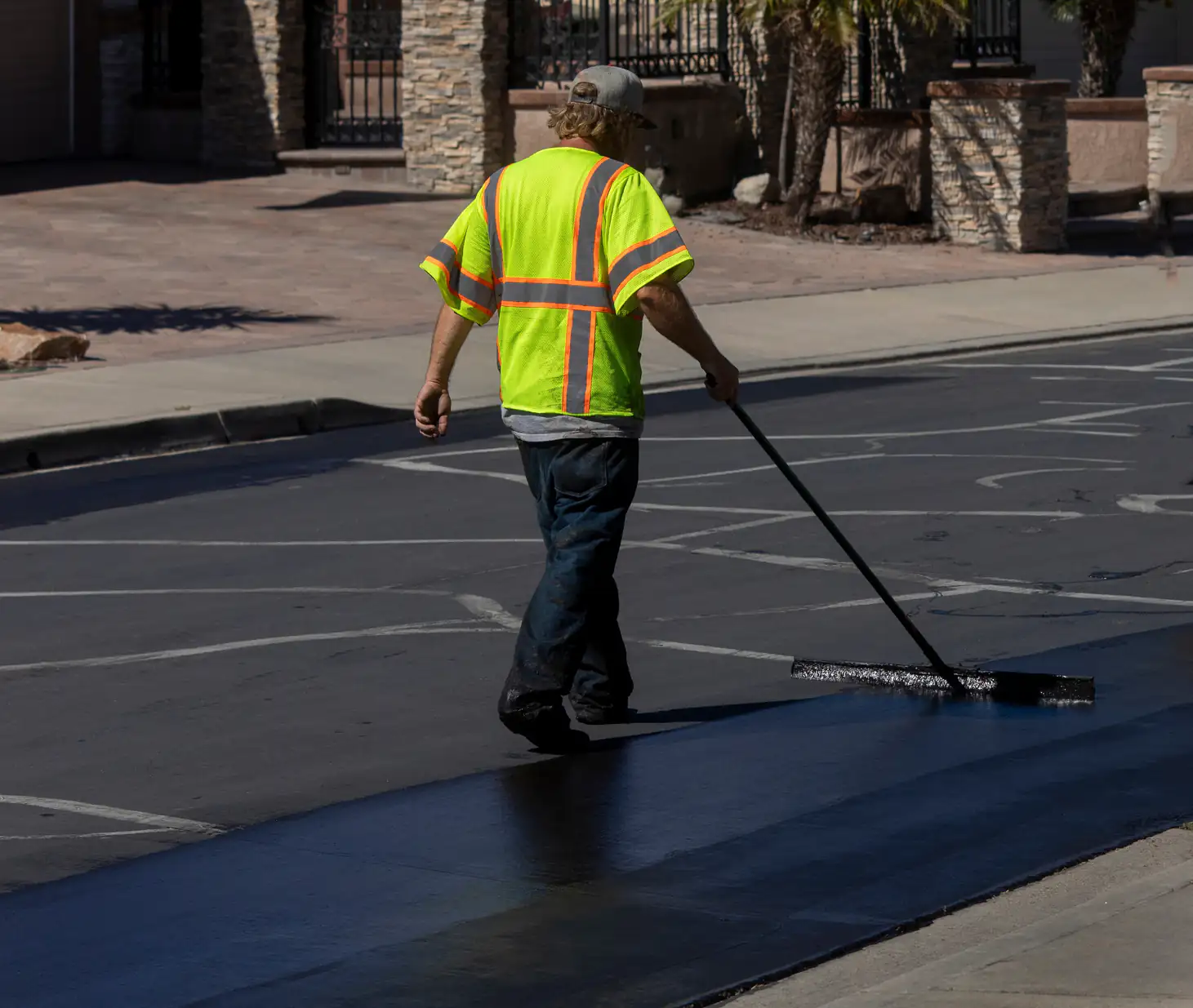
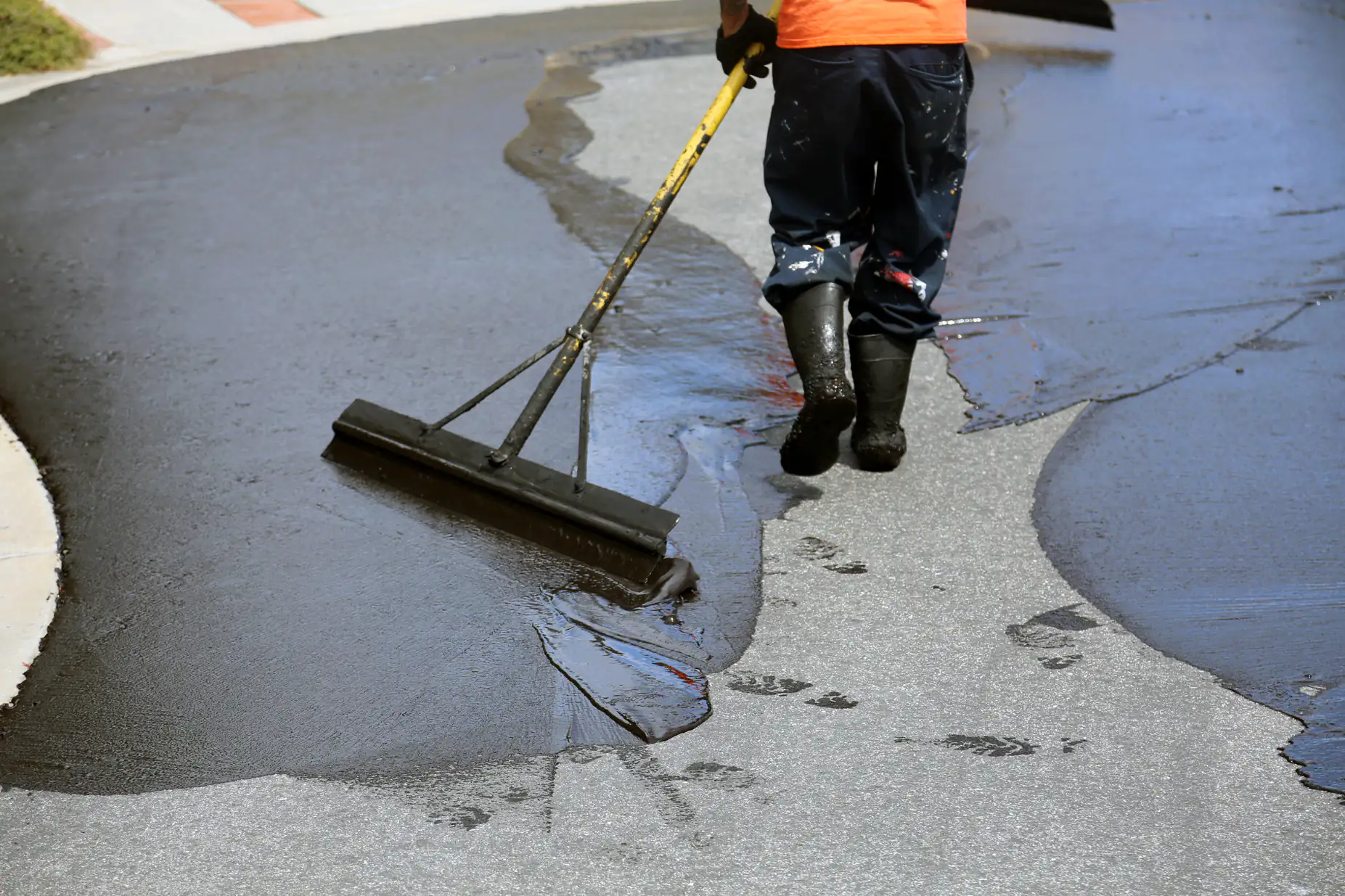
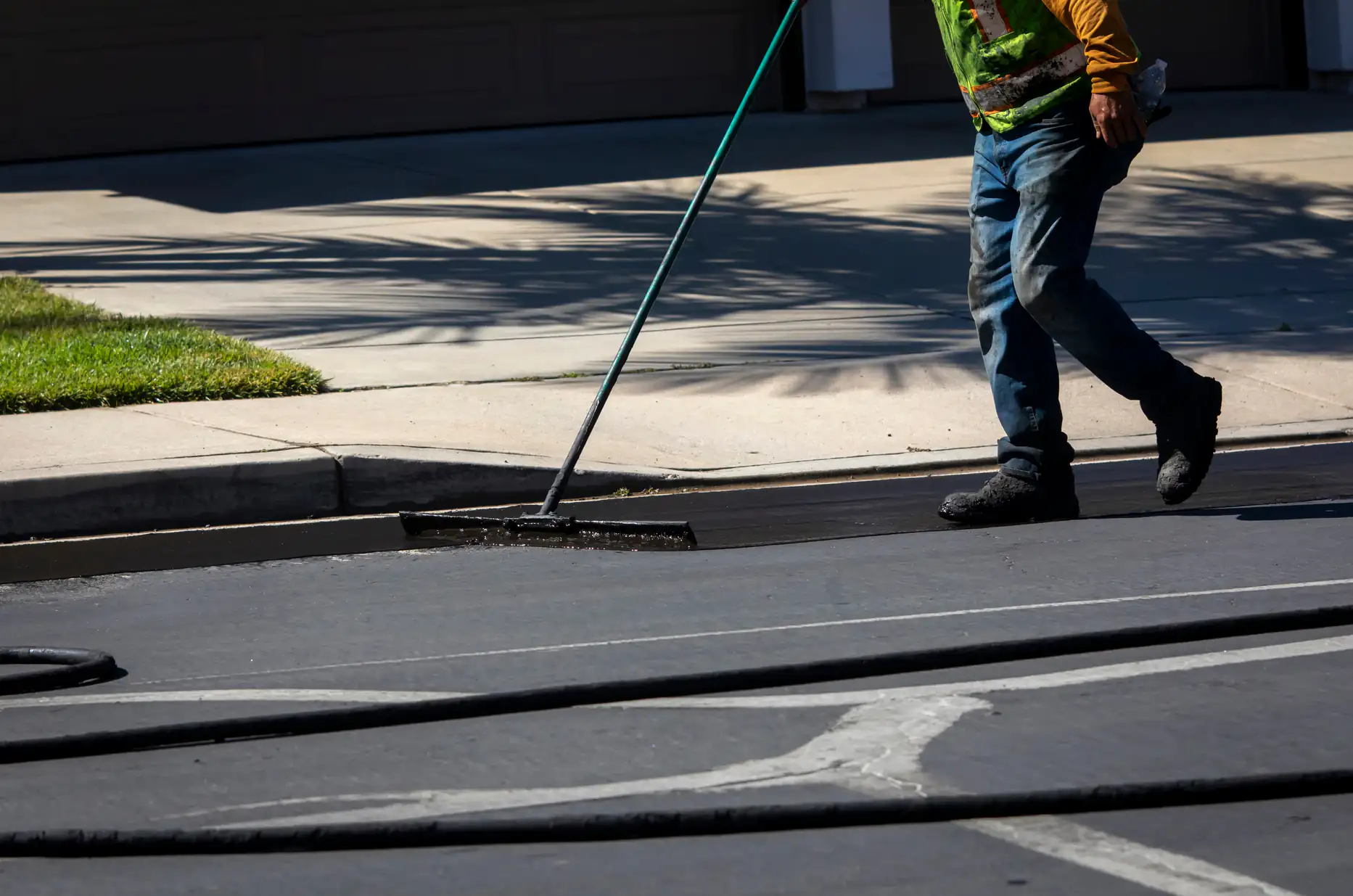
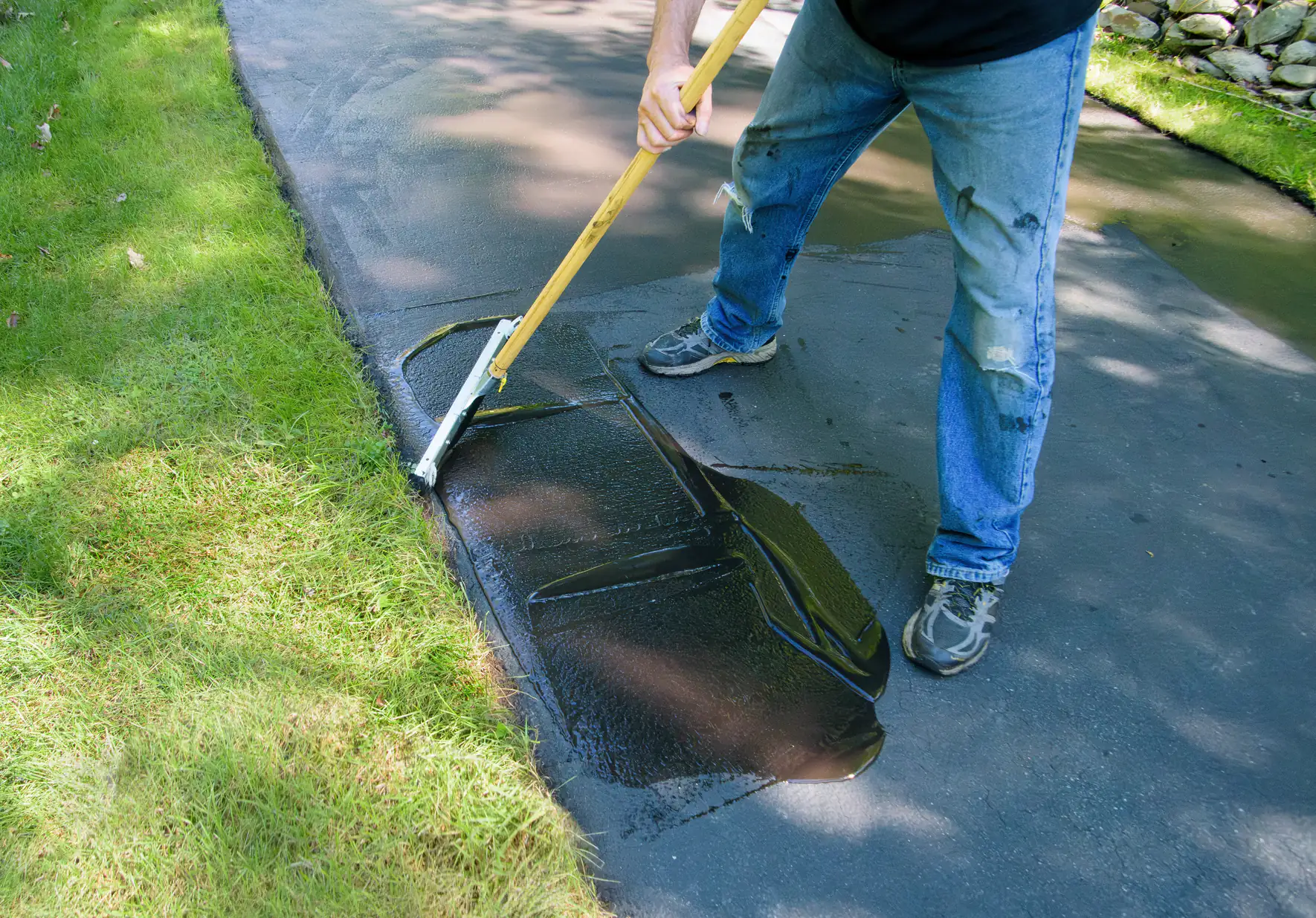
Once the surface is prepped and dry, we apply two coats of coal tar or asphalt emulsion sealer. Two coats last 3-4 years instead of 1-2, and they provide better protection against New Jersey’s temperature swings. We add a sand additive for traction so the surface isn’t slippery when wet. Then we let it cure for 24-48 hours depending on weather conditions.
After that, you’ve got a driveway that looks brand new and can handle another few years of whatever winter throws at it.
Ready to get started?
Most residential driveways in Ampere North and the surrounding Morris County area cost between $300 and $600 to seal, depending on size and condition. That includes everything: power washing, crack repair, two coats of premium sealer, and sand additive. If your driveway has significant damage or needs extra prep work, the price goes up—but we’ll tell you that before we start.
New Jersey prices run about 15-20% higher than the national average because labor costs more here and our freeze-thaw cycles are brutal on asphalt. You’re also paying for materials that can handle those conditions. Cheap sealer might save you $100 today, but it’ll fail in a year and you’ll be doing this again.
The ROI is straightforward. A $400 sealcoat job every three years costs you $3,200 over 24 years. Skipping it and replacing your driveway twice in that same period costs $10,000+. The math isn’t complicated. Sealcoating isn’t an expense—it’s damage prevention that pays for itself several times over.
Timing matters too. Fall is the best window in New Jersey. Temperatures are moderate, conditions are dry, and the sealer cures properly. Spring works too, but you’re competing with everyone else who just realized their driveway looks terrible after winter.
Every 2-3 years if you want it to last. Some contractors will tell you every year, but that’s overkill unless your driveway sees heavy commercial traffic. Some homeowners wait 5+ years, and by then the damage is done.
New Jersey’s freeze-thaw cycles are aggressive. Water penetration is the number one cause of asphalt failure here, and sealcoating is what keeps water out. Once the sealer starts to wear thin—usually around the 3-year mark—moisture gets back in and the deterioration process starts again.
If your driveway is newer (less than 2 years old), wait before sealing it. Fresh asphalt needs time to cure fully. Sealing it too early traps oils in the asphalt that need to evaporate, which can cause premature cracking. After that, stick to a 2-3 year schedule and you’ll get 25+ years out of the surface instead of 15.
Two coats last twice as long and provide better protection. One coat might save you $75-100 upfront, but you’ll be resealing in 1-2 years instead of 3-4. It’s a false economy.
The first coat penetrates the surface and fills small voids. The second coat creates a thicker, more durable barrier against water, UV rays, and chemicals. That extra layer is what gives you the longevity and the rich black finish that makes the driveway look new again.
Most professional driveway sealcoating companies in Morris County apply two coats as standard because they know one coat won’t hold up. If someone quotes you significantly less than competitors, ask how many coats they’re applying. That’s usually where they’re cutting corners.
You can do it yourself, but the results won’t be the same. DIY sealer from the hardware store is lower quality than what we use, and application matters more than most people realize. If the surface isn’t prepped correctly or the sealer isn’t applied evenly, you’ll get streaking, poor adhesion, and early failure.
Professional equipment makes a difference too. We use commercial-grade sprayers that apply sealer uniformly at the right thickness. Brush or squeegee application—what most homeowners use—leaves thin spots and thick spots. Thin spots fail early. Thick spots take forever to dry and can remain tacky.
The bigger issue is surface prep. If you don’t power wash properly or skip crack filling, the sealer won’t bond and water will still get in. You’ll spend a weekend doing the work, and a year later you’re wondering why it’s already failing. For most homeowners in Ampere North and East Orange, hiring us makes more sense. You get better materials, proper prep, and a warranty.
Fall is ideal—September through early November. Temperatures are moderate (ideally 50-85°F), humidity is lower, and you’ve got consistent dry weather for curing. Spring works too, but you’re dealing with more rain and temperature swings that can interfere with the curing process.
You need at least 24-48 hours of dry weather after application. If it rains before the sealer cures, you’re starting over. Summer can work, but if it’s too hot (above 90°F), the sealer dries too fast and doesn’t bond properly. Winter is out of the question—sealer won’t cure below 50°F.
Most driveway sealcoating searches spike in spring because that’s when people see the winter damage. But smart homeowners in Parsippany, Morristown, and Hillsborough schedule in fall. You get better availability, sometimes better pricing, and the driveway is protected before winter hits instead of after.
Sealcoating doesn’t fix cracks—it just coats over them. If you’ve got cracks wider than a quarter-inch, they need to be filled first with rubberized crack filler. Otherwise, water still gets in, freezes, and makes the crack worse. The sealer will make it less visible temporarily, but it won’t stop the damage.
Crack filling is a separate step that happens before sealcoating. We clean out the crack, fill it with hot rubberized material, and let it set. Then we seal the entire surface. Most residential jobs in Morris and Essex County include up to 50 linear feet of crack filling in the base price. If you’ve got more than that, there’s an additional charge—but it’s worth it.
If your driveway has large sections of alligator cracking (that interconnected web pattern), sealcoating won’t help. That’s a sign the base is failing, and you’re looking at patching or replacement. We’ll tell you that upfront instead of taking your money for a sealcoat job that won’t solve the problem.
Application takes 2-4 hours depending on the size of your driveway. Curing takes 24-48 hours. You can walk on it after 24 hours in good weather, but don’t drive on it for at least 48 hours. If it’s humid or cooler, wait 72 hours.
The sealer needs time to fully harden. If you drive on it too early, you’ll leave tire marks and damage the finish. It’s frustrating to wait, but rushing it ruins the work. We’ll give you a specific timeline based on weather conditions when we finish the job.
Plan accordingly if you’ve only got one driveway. Most homeowners in Ampere North, Newark, and Somerset schedule sealcoating on a Thursday or Friday so they’ve got the weekend for curing. Some park on the street for a couple days. It’s a minor inconvenience that protects a major investment.