
Hear from Our Customers
When water gets into your asphalt and freezes, it expands with 30,000 psi of force. That’s what creates those cracks and potholes you’re dealing with every spring. North Jersey sees 55 to 75 freeze-thaw cycles every winter, which means your driveway is constantly under attack.
Proper installation stops that cycle before it starts. The base has to drain correctly. The asphalt needs to be applied at the right temperature. The grading has to push water away from your foundation, not toward it.
When those things are done right, you’re not patching cracks every year or dealing with standing water that turns into ice. You’re looking at a surface that holds up season after season without the constant maintenance headaches that come from cutting corners during installation.
We’ve been working in Weston, NJ and the surrounding Morris County area for over 20 years. That means we know exactly what the soil does here when it freezes, what drainage issues pop up in this region, and how to prep a base that won’t shift or settle after the first hard winter.
You’re not getting a crew that learned paving in another state and hopes it works here. You’re working with people who’ve seen what fails in North Jersey and what holds up. We use hot mix asphalt applied at proper temperature, and we don’t rush the process to squeeze in another job.
Every project gets handled with the same attention whether it’s a residential driveway or a commercial parking lot. And if you request a quote online, you’ll hear back within 24 to 48 hours with clear pricing and no surprise charges later.
First, we assess your existing surface and drainage. If there’s an old driveway, we remove it properly instead of paving over problems. Then we grade and compact the base using the right materials for Morris County soil conditions. This step determines whether your asphalt lasts five years or twenty.
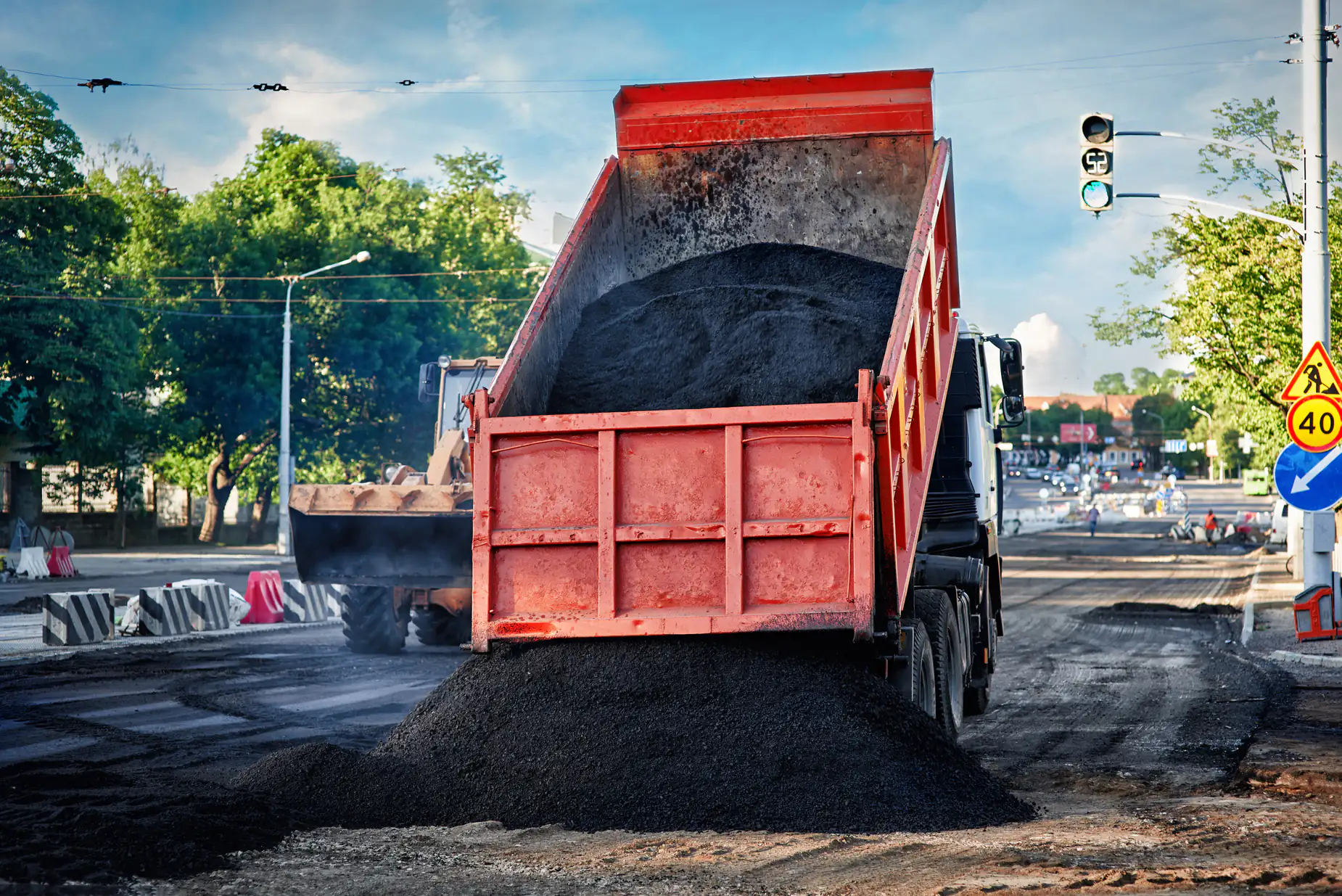
Next comes the asphalt itself. We use high-grade hot mix asphalt applied at the correct temperature so it compacts properly and bonds without weak spots. The edges get sealed, the slope gets checked, and everything is graded to move water away from your property.
After installation, the surface needs time to cure before you can drive on it. We’ll tell you exactly how long to wait based on the weather and the scope of your project. No guessing. You’ll also get a five-year warranty on the work, so if something does go wrong, you’re covered without a fight.
Ready to get started?
You’re getting more than just a crew with a paver. Every job starts with proper site prep, which includes excavation if needed, grading for drainage, and a compacted base that won’t shift under weight or freeze. If your property has unique drainage challenges, we address those before any asphalt goes down.
For commercial projects in Weston, NJ and throughout Somerset County, that also means coordinating with your schedule to minimize disruption. Parking lots get done in phases if needed so your business stays accessible. Line striping, ADA compliance, and proper drainage for larger surfaces all get handled as part of the scope.
Residential work gets the same level of care. Whether it’s a driveway replacement, asphalt repair, or a new installation, the process doesn’t change. You’ll get clear communication from start to finish, a realistic timeline that we actually stick to, and a finished surface that doesn’t need a repair crew back out in six months.
A properly installed asphalt driveway in Weston, NJ should last 20 to 30 years with basic maintenance like sealcoating every few years. The key word there is “properly installed.” If the base wasn’t compacted correctly or the drainage wasn’t addressed, you’ll start seeing cracks and settling within two to five years.
North Jersey’s freeze-thaw cycles are brutal on asphalt. Water seeps into small cracks, freezes, expands, and pushes the pavement apart. That’s why the base prep and grading matter so much. If water can’t drain away from the surface, it’s going to sit there, freeze, and cause damage no matter how good the asphalt itself is.
Sealcoating every two to three years adds a protective layer that keeps water and UV damage from breaking down the surface. It’s not optional if you want to hit that 20-year mark. But even with sealcoating, a bad installation will fail early. The foundation is everything.
There isn’t one. Asphalt and blacktop are the same material—a mix of aggregate and liquid asphalt binder. The terms get used interchangeably depending on where you are and who you’re talking to. Some people call it blacktop, others call it asphalt, but you’re getting the same thing either way.
What does matter is the quality of the mix and how it’s applied. Hot mix asphalt needs to be laid at a specific temperature so it compacts properly and creates a dense, durable surface. If it cools too much before it’s compacted, you end up with a weaker pavement that’s more prone to cracking and water damage.
The other thing that matters is the thickness. A residential driveway should be at least two to three inches of compacted asphalt over a solid base. Anything thinner won’t hold up to regular use and North Jersey winters. If a paving contractor is quoting you a price that seems too good to be true, check what thickness they’re planning to install.
In Morris County, you’re looking at $4 to $7 per square foot for asphalt paving, though that can vary based on the condition of your existing surface, access to the site, and how much prep work is needed. If there’s significant excavation or drainage work involved, the cost goes up. If it’s a straightforward overlay on a solid base, it stays on the lower end.
That price includes removal of old material if needed, base preparation, grading, and installation of new asphalt. It doesn’t usually include sealcoating, which is a separate service you’ll want to budget for every few years. Concrete costs significantly more—usually $18 to $25 per square foot—which is why most homeowners in Weston, NJ go with asphalt for driveways.
Be cautious of quotes that come in way below that range. Cheap paving jobs almost always mean shortcuts—thinner asphalt, poor base prep, or a crew that’s rushing through to get to the next job. You’ll pay less upfront, but you’ll be calling someone back out for repairs within a couple of years. Get a written estimate that breaks down exactly what’s included and what thickness of asphalt you’re getting.
Late spring through early fall is the best window for asphalt paving in New Jersey. You need temperatures consistently above 50°F for the asphalt to cure properly. If it’s too cold, the material won’t compact correctly and you’ll end up with a weaker surface that’s more prone to cracking.
Summer is the busiest season for paving companies, which means longer wait times and higher demand. Early fall can be a good option if the weather cooperates—you’ll often get faster scheduling and the same quality work. Just don’t wait too long. Once temperatures start dropping in late October and November, it’s too risky.
Spring is ideal for repairs. That’s when you’ll see what damage winter caused, and you want to address cracks and potholes before the heavy rains in July and August make things worse. If you’re planning a full driveway replacement, get on our schedule early in the season so you’re not waiting until August when everyone else is trying to get their paving done before school starts.
It depends on the scope of the work and local regulations in Weston, NJ and Morris County. If you’re repaving an existing driveway in the same footprint, you usually don’t need a permit. But if you’re expanding the driveway, changing the drainage, or altering the grading near the street, you’ll likely need approval from the local municipality.
Some towns also have stormwater management requirements, especially if your project increases the amount of impervious surface on your property. That means you might need to install drainage solutions to handle runoff. We’ve worked in Morris and Somerset County for over 20 years, so we know what’s required and can help you navigate the permit process if needed.
Don’t skip this step. If you pave without the right permits and the town finds out, you could be forced to rip it up and start over. It’s not common, but it happens. We’ll ask about permits upfront and let you know if anything needs to be filed before work starts.
You can usually drive on a new asphalt driveway within 24 to 48 hours, but that depends on the temperature and weather conditions. Hotter weather means faster curing. Cooler weather means you need to wait longer. We’ll give you a specific timeline based on the forecast and the thickness of the asphalt.
Even after you start driving on it, the asphalt is still curing for several months. That means you should avoid parking heavy vehicles in the same spot for extended periods, and be careful with sharp turns that can scuff the surface. Kickstands, trailer jacks, and heavy equipment can leave impressions if the asphalt hasn’t fully hardened.
For the first few days, don’t park in the same spot repeatedly. Spread out the weight. And if it’s a hot day, be extra cautious—fresh asphalt softens in high heat, which makes it more vulnerable to tire marks and indentations. After a few weeks, the surface will be hard enough for normal use without any special precautions.