
Hear from Our Customers
You’re not just getting blacktop laid down. You’re getting a surface that drains water away from your foundation, holds up under snow plows, and doesn’t turn into a pothole farm after two winters.
Most driveways fail because of what you can’t see. The base wasn’t deep enough. The grading sends water toward your house instead of away. The asphalt was too thin or laid when it wasn’t hot enough.
When it’s done right, you’re looking at 20 years before you need to think about replacement. That’s with basic maintenance like sealcoating every few years. Compare that to the cheap job that needs patching by year three and full replacement by year eight. The math isn’t complicated.
We’ve been laying asphalt in Sussex County since before “near me” searches existed. That means we’ve seen what fails here and what lasts.
Sussex County isn’t flat. Your property has grades, drainage patterns, and soil conditions that matter. We’re not showing up with a one-size-fits-all approach because that’s how you end up with water pooling against your garage.
Owner Dominick is on every job from start to finish. Not just for the estimate. Not just to check in. He’s there because quality control matters when you’re promising someone a driveway that’ll outlast their mortgage.
You request a quote online and get a callback within 48 hours. We come out, look at your property, talk about what you need, and give you a price that includes everything. No surprises later.
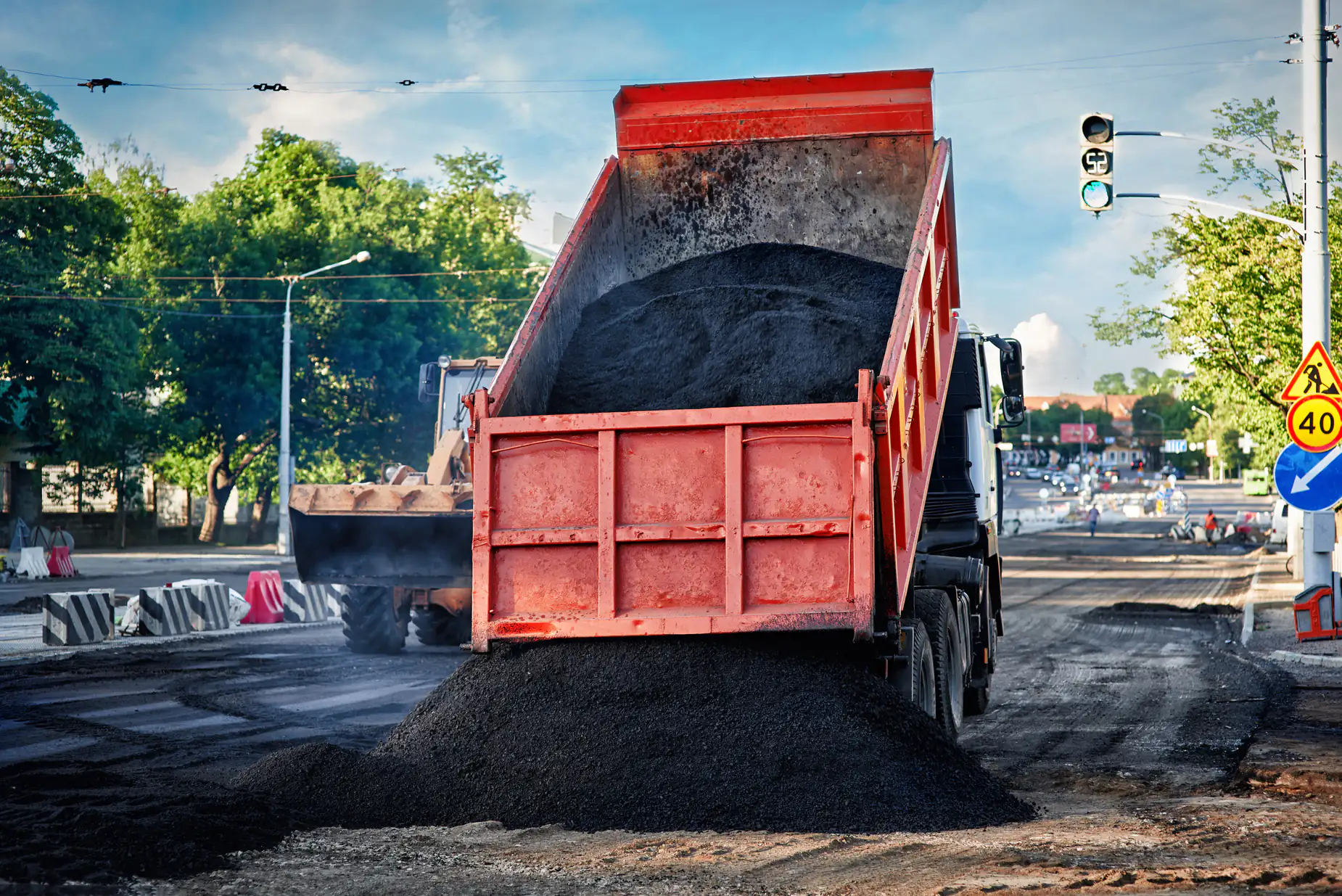
If you move forward, we start with excavation. We’re removing old material and digging down to stable soil. Then comes the base layer—crushed stone that’s compacted properly. This is where most cheap jobs cut corners. We don’t.
Next is grading for drainage. Water needs somewhere to go that isn’t your foundation or pooling on the surface. We slope everything correctly before any asphalt goes down.
The asphalt itself is high-grade hot mix applied at the right temperature and thickness for your specific use. Residential driveways get different specs than commercial parking lots. We’re not using the same approach for both.
Final pass is compaction and edging. Then you wait a day or two before driving on it. That’s it. The whole process typically takes two to three days depending on size.
Ready to get started?
Every job includes proper excavation, base preparation with compacted crushed stone, grading for drainage, and hot mix asphalt laid at proper thickness. You’re also getting cleanup when we’re done. We haul away old material and leave your property cleaner than we found it.
Sussex County weather is brutal on asphalt. Winter freeze-thaw cycles expand and contract the ground. Summer heat oxidizes the surface. We account for this with proper base depth and asphalt thickness that matches local conditions.
For commercial properties, we’re talking about parking lots that see heavy traffic and need to handle snow removal equipment. That means thicker asphalt, reinforced edges, and drainage systems that prevent pooling. Your customers notice a smooth, well-maintained lot. They definitely notice a cracked, potholed mess.
Residential driveways get the same attention to base prep and drainage, just scaled to your needs. We’re looking at how water runs off your roof, where your property slopes, and how to keep everything flowing away from your house.
A properly installed asphalt driveway in Sussex County typically lasts 20 to 30 years with regular maintenance. That maintenance means sealcoating every three to five years and filling cracks before they spread.
The lifespan depends entirely on installation quality. If the base wasn’t deep enough or the drainage is wrong, you’ll see problems within five years. Sussex County’s freeze-thaw cycles are unforgiving. Water gets into small cracks, freezes, expands, and turns minor issues into major failures.
Cheap installations skip steps. They don’t excavate deep enough. They use thin asphalt. They ignore drainage. Those driveways might look fine for a year or two, but they won’t make it to ten years without significant repairs. You’re not saving money—you’re just delaying the real cost.
There’s no practical difference. Blacktop and asphalt are the same material—hot mix asphalt. The terms get used interchangeably, though “blacktop” is more common in residential conversations and “asphalt” is the technical term.
What actually matters is the quality of the mix and how it’s installed. Hot mix asphalt needs to be applied at the right temperature. If it’s too cool, it won’t compact properly. If the base underneath isn’t prepared correctly, the best asphalt in the world won’t save you.
Some contractors will try to upsell you on different “types” of asphalt. What you really need to focus on is thickness, base preparation, and drainage. Those three factors determine whether your driveway lasts five years or twenty-five years. The rest is marketing.
Residential driveways in Sussex County typically run between $3 and $7 per square foot depending on site conditions, access, and current material removal needs. A standard two-car driveway is usually 600 to 800 square feet, so you’re looking at $2,400 to $5,600 for most projects.
That range exists because every property is different. If we need to remove old concrete, that adds cost. If your property has drainage issues that need addressing, that’s additional work. If access is tight and we can’t get equipment in easily, that affects pricing.
The lowest bid isn’t usually the best value. A contractor who comes in significantly cheaper is either cutting corners on base depth, using thinner asphalt, or skipping drainage work. You’ll pay for those shortcuts within a few years when you’re patching cracks and dealing with water damage. We price jobs based on doing them right the first time, which costs less over the life of your driveway.
Late spring through early fall is ideal for asphalt paving in New Jersey. You want temperatures consistently above 50 degrees, and you want to avoid rain for at least 24 hours after installation.
Asphalt needs heat to be workable and to compact properly. Cold weather makes the material harder to work with and it doesn’t bond as well. We’re busiest from May through October for good reason.
That said, scheduling flexibility matters. If you wait until peak season, you might be looking at longer lead times. Early spring or late fall can work fine if the weather cooperates. We don’t schedule jobs when conditions aren’t right because we’re not interested in callbacks for preventable problems. You want your driveway installed when it’ll cure properly, not just when it’s convenient.
Yes, but not immediately. New asphalt needs six to twelve months to cure before the first sealcoating. After that, you should sealcoat every three to five years depending on traffic and sun exposure.
Sealcoating protects against oxidation from UV rays, prevents water penetration, and fills small surface cracks before they become bigger problems. Sussex County weather accelerates asphalt aging. Summer sun breaks down the binder. Winter freeze-thaw cycles exploit any weakness. Sealcoating is cheap insurance against expensive repairs.
Skipping sealcoating doesn’t mean your driveway falls apart immediately. It means you’re shortening its lifespan and increasing the chance of needing repairs. A driveway that could last 25 years with maintenance might only make it 15 years without it. The cost of sealcoating every few years is a fraction of what you’d spend on premature replacement.
It depends on the condition of what’s there now. If your existing driveway has a solid base and only surface damage, we can overlay new asphalt on top. If the base is failing or there are major structural issues, we need to remove everything and start fresh.
Overlaying saves money and time. You’re adding two inches of new asphalt over the old surface after we’ve repaired any significant cracks or holes. This works when the existing driveway is structurally sound but just worn out on top.
Full removal is necessary when you’ve got base failure, major settling, or drainage problems. Paving over a failing base just hides the problem temporarily. Within a year or two, the new asphalt will crack and fail in the same spots because the underlying issue wasn’t addressed. We’ll tell you honestly what your driveway needs after we look at it. There’s no point in doing a job that won’t last.