
Hear from Our Customers
A driveway or parking lot that holds up means fewer repairs, no premature cracking, and a surface that handles New Jersey’s freeze-thaw cycles without falling apart in three years. That’s the difference between asphalt installed correctly and asphalt slapped down by someone in a hurry.
Newton sits in Sussex County, where clay soil expands when wet and contracts when dry. If your base isn’t prepared right, your asphalt will crack and settle no matter how nice it looks on day one. Proper compaction, the right mix temperature, and a solid base layer aren’t optional—they’re what separate a 15-year driveway from a 5-year disaster.
You also get clear communication. No disappearing after the deposit. No surprise charges when the job’s half done. You’ll know what’s happening, when it’s happening, and exactly what it costs before we show up with a paver.
Platinum Paving is a third-generation, family-owned asphalt contractor serving Morris, Sussex, and Somerset Counties. We’ve been handling residential driveways, commercial parking lots, and municipal paving projects across Newton and surrounding towns for over 20 years.
We’re not new to Sussex County’s soil conditions or weather patterns. We know what works here and what doesn’t. That experience shows up in how we prep your base, what asphalt mix we use, and how we time the work so everything cures properly.
You’re not getting a crew that shows up in an unmarked truck with no insurance. You’re working with a licensed contractor who carries $2 million in liability coverage and actually answers the phone after the job’s done.
First, we look at your existing surface and base. If there’s an old driveway, we’ll tell you whether it needs to come out or if we can mill it down and pave over it. If the base has settled or there’s a drainage issue, we’ll explain what needs fixing and why.
Next comes site prep. That means grading for proper water runoff, compacting the base with heavy equipment, and making sure everything’s level before any asphalt goes down. Shortcuts here guarantee problems later, so we don’t skip steps.
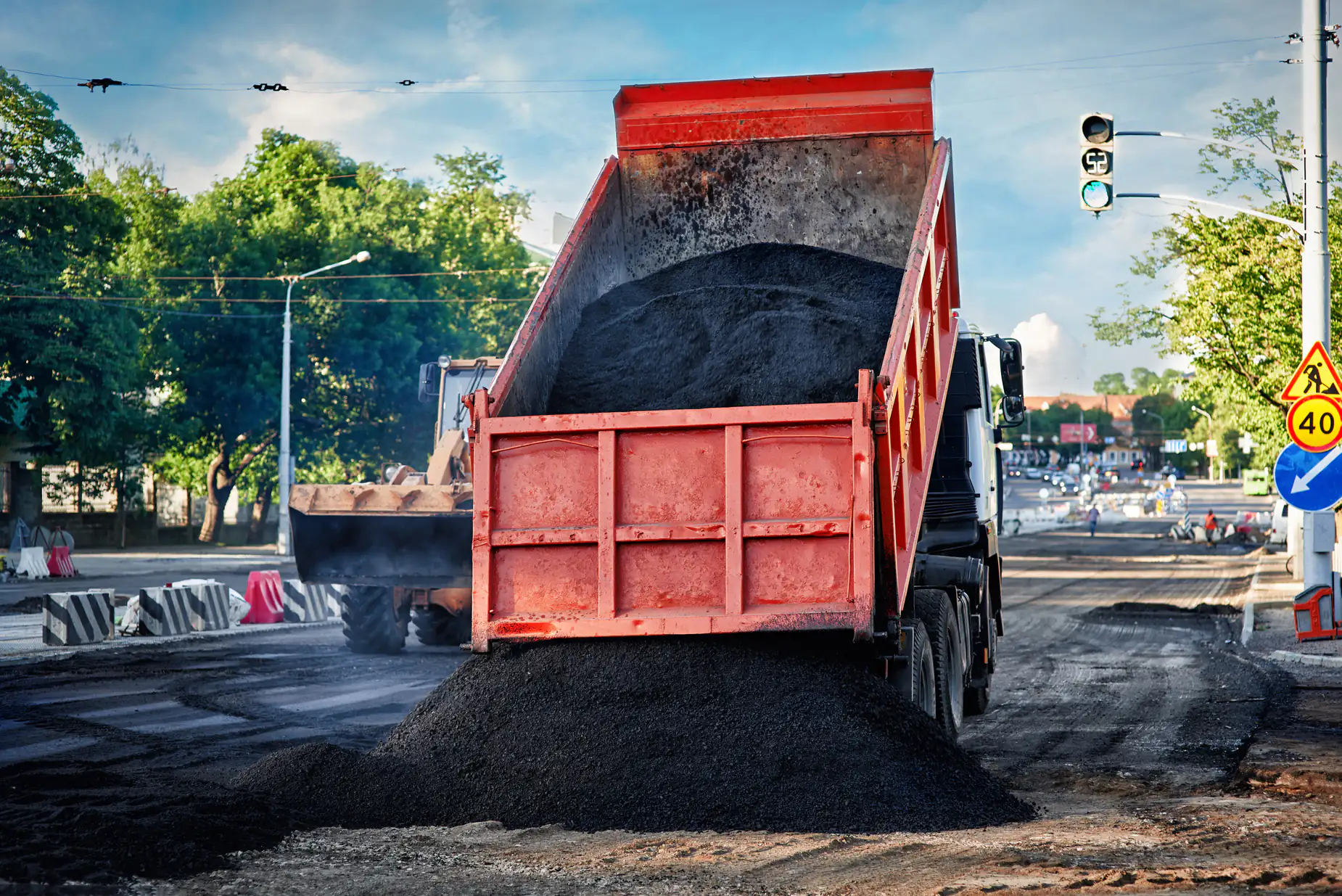
Then we pave using high-grade hot mix asphalt applied at the right temperature. The asphalt gets compacted in layers with rollers to hit the density it needs for strength and water resistance. Once it’s down, we’ll tell you exactly how long to stay off it and what to expect as it cures.
You’ll get a timeline before we start, and we’ll stick to it. If weather delays things, you’ll know immediately. No ghosting, no vague updates.
Ready to get started?
Every job starts with a site assessment. We measure the area, check drainage, and look at soil conditions. In Newton and Sussex County, that means accounting for clay soil that shifts with moisture. If your base isn’t stable, we’ll rebuild it before paving.
You’ll get a written estimate that breaks down materials, labor, and timeline. No hidden fees. If we find something unexpected once we start, we’ll call you before doing extra work.
For driveways, that typically means excavation if needed, a compacted stone base, and two inches of hot mix asphalt compacted to proper density. For parking lots, we’ll add striping, ADA-compliant spaces, and proper drainage grading. Sealcoating can be scheduled separately once the asphalt has cured for several months.
We also handle repairs, resurfacing, and patching if you don’t need a full replacement. Sometimes milling off the top layer and adding fresh asphalt is enough. We’ll tell you what makes sense for your situation and budget, not just what makes us the most money.
Most residential driveways in Newton run between $7 and $15 per square foot depending on site conditions, base work, and driveway size. A standard two-car driveway around 600 square feet typically costs between $4,200 and $9,000.
That range exists because not every driveway is the same. If your existing base is solid and drains well, costs stay lower. If we need to excavate, rebuild the base, or address drainage issues, costs go up. Clay soil in Sussex County often requires more base prep than other areas.
We’ll give you an exact price after looking at your property. No ballpark guessing, no “it depends” without explanation. You’ll know what you’re paying and what you’re getting before we start.
A properly installed asphalt driveway in New Jersey lasts 15 to 20 years with basic maintenance. That means sealcoating every few years and filling cracks before water gets underneath the surface.
New Jersey’s freeze-thaw cycles are tough on pavement. Sussex County sees 40 to 50 freeze-thaw events every winter. Water seeps into small cracks, freezes, expands, and breaks the asphalt apart. If you stay on top of sealcoating and crack filling, you’ll get the full lifespan out of your driveway.
Asphalt that fails early usually fails because of poor base prep, bad compaction, or the wrong mix applied at the wrong temperature. Those aren’t maintenance issues—they’re installation issues. That’s why working with an experienced asphalt contractor matters more than finding the cheapest bid.
Asphalt costs less upfront, handles freeze-thaw cycles better, and can be repaired more easily. Concrete lasts longer but costs significantly more and cracks if the base shifts. In Newton’s climate, asphalt is usually the better choice for driveways.
Concrete driveways run $8 to $18 per square foot compared to $7 to $15 for asphalt. Concrete also takes longer to install and requires more curing time before you can use it. If it cracks, repairs are more visible and expensive.
Asphalt is more forgiving with ground movement, which matters in areas with clay soil. It also handles road salt better, and you can sealcoat it to extend its life. For most homeowners in Sussex County, asphalt makes more sense unless you specifically want the look of concrete or decorative pavers.
If your driveway has surface cracks and wear but the base is still solid, resurfacing works. If you’ve got deep potholes, major settling, or base failure, you need full replacement. We’ll tell you which one applies after looking at your driveway.
Resurfacing means milling off the top layer of asphalt and paving a new surface over the existing base. It costs less than full replacement and adds years to your driveway’s life if the foundation is sound.
Full replacement is necessary when the base has failed, usually from poor drainage or inadequate compaction during the original install. You’ll see large sunken areas, alligator cracking, or edges that have completely broken away. Paving over a failed base just delays the problem—it’ll fail again within a year or two.
Check for a valid business license, proof of insurance, and references you can actually contact. Ask how they handle base preparation and what mix they use. If they can’t explain the process or rush you into signing, walk away.
A legitimate paving company will give you a written estimate that details materials, labor, timeline, and warranty. They’ll explain why they’re recommending certain work and what happens if they skip it. They should also carry general liability insurance and workers’ comp—ask to see certificates.
Watch out for crews in unmarked trucks offering deals because they “have leftover asphalt from another job.” That’s a common scam. Real paving contractors order materials for your specific job and don’t show up unannounced offering discounts. If the price seems too good compared to other quotes, there’s usually a reason—and it’s not because they’re being generous.
Late spring through early fall is ideal for asphalt paving in New Jersey. Asphalt needs warm temperatures to compact properly and cure correctly. We can pave in cooler weather, but conditions have to be right.
Asphalt should be applied when ground temperatures are above 50°F and rising. If it’s too cold, the asphalt cools too quickly and won’t compact to the density it needs. That leads to premature cracking and surface failure.
Summer is the busiest season for paving contractors, so if you’re planning work, schedule it early. We can often get better pricing and more flexible scheduling in late spring or early fall when demand isn’t as high. Winter paving is possible for emergency repairs, but it’s not ideal for new installations.