Summary:
Your driveway has seen better days. The cracks are spreading, the surface is fading, and you’re starting to wonder if patching individual spots is just throwing money at a losing battle. But a full replacement sounds expensive and disruptive. You’ve heard about resurfacing, but you’re not sure if it’s a real solution or just a temporary band-aid that’ll fail in two years.
Here’s what matters: resurfacing works incredibly well when your driveway’s foundation is still solid but the surface has deteriorated. It can add 8 to 15 years of life at a fraction of replacement cost. But if your base has failed, resurfacing is money down the drain. The trick is knowing which situation you’re dealing with—and that’s exactly what we’re covering here.
What Is Asphalt Driveway Resurfacing and How Does It Work
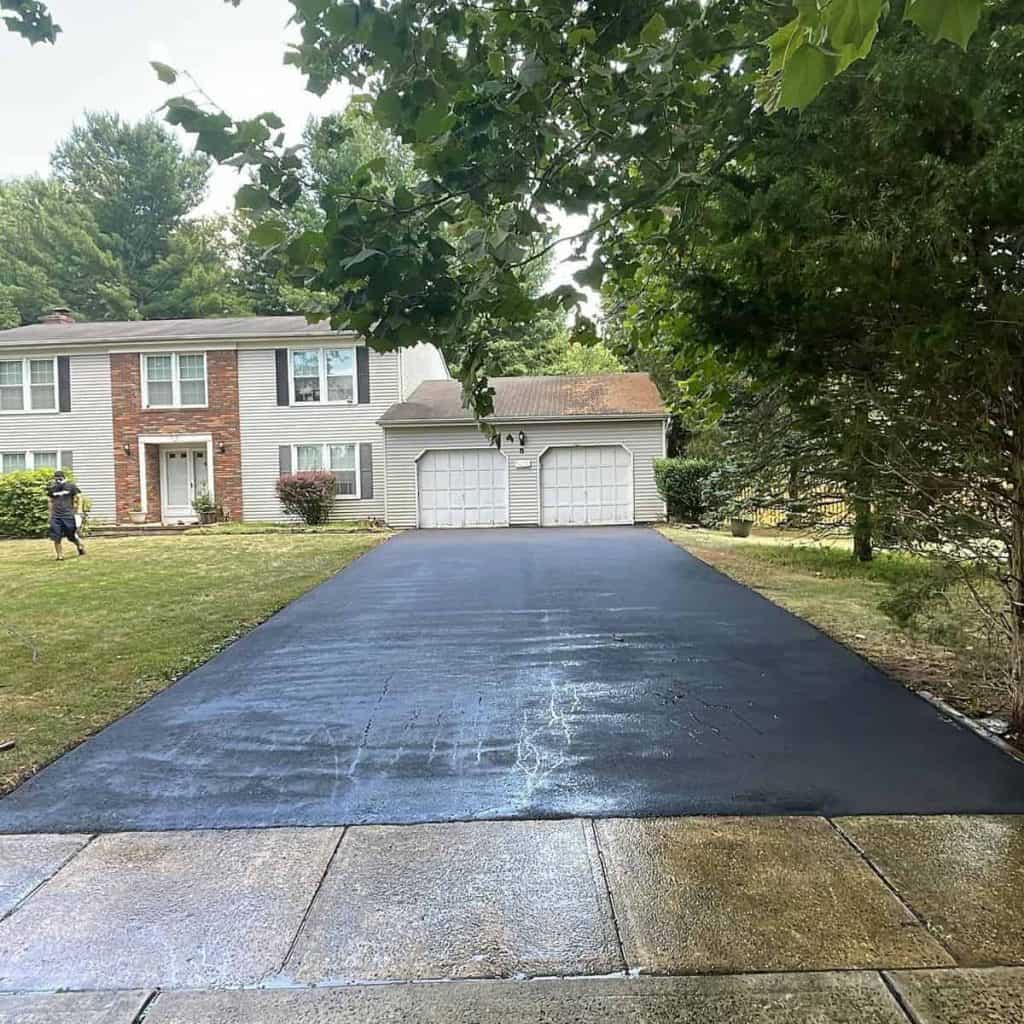
Asphalt driveway resurfacing means removing the top layer of damaged asphalt and replacing it with a fresh 1.5 to 2 inch layer. Think of it as giving your driveway a new skin while keeping the bones intact. The existing base stays in place, which is why it costs so much less than starting over.
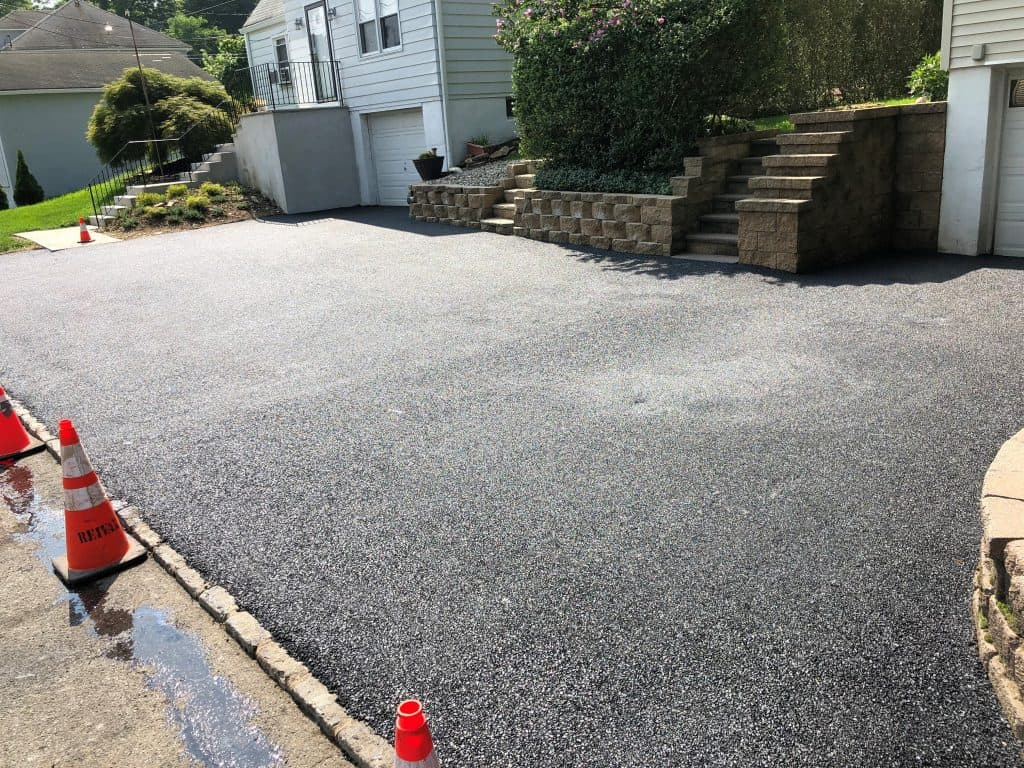
The process starts with a professional assessment to confirm your base layer is still structurally sound. If it is, we mill off the deteriorated top surface, repair any underlying damage, and apply a new asphalt layer that bonds to the foundation below. When done right, you end up with a surface that looks brand new and performs like it too.
What makes this different from simple patching is the comprehensive approach. You’re not just filling cracks—you’re replacing the entire wearing surface in one shot, which eliminates the patchwork appearance and gives you a uniform, durable result that can handle another decade or more of use.
When Is Asphalt Resurfacing the Right Solution
Resurfacing works best when your driveway meets specific conditions. Your asphalt should be less than 15 to 20 years old, with surface damage affecting less than 25 to 30 percent of the total area. The cracks you’re seeing should be relatively shallow—less than three-quarters of an inch wide and under two inches deep.
The foundation underneath is what really matters. If your driveway is relatively flat without major dips, bumps, or drainage problems, that’s a good sign the base is still doing its job. You might have spiderweb cracks across the surface or some fading and weathering, but if the pavement isn’t sinking or buckling, resurfacing can restore it completely.
Here in Sussex County, the freeze-thaw cycle is particularly brutal. Water seeps into cracks during the day, freezes overnight when temperatures drop, and expands with enough force to split rock. Ice takes up 9 percent more space than water, generating thousands of pounds of pressure per square inch. That’s why even minor surface cracks need attention before they become major structural problems. If you’re catching the damage at the surface level before it reaches the base, resurfacing is exactly the right move.
On the flip side, resurfacing won’t work if you have widespread alligator cracking—those interconnected cracks that look like reptile scales covering large sections. That pattern signals base failure underneath. Same goes for multiple deep potholes, significant settling where sections of driveway have sunk, or edges that are crumbling away. Those issues mean the foundation has failed, and putting new asphalt on top would be like putting new carpet over rotten floorboards.
A professional assessment is worth it because what looks like surface damage might actually indicate deeper problems. We understand how Sussex County conditions affect driveways differently than other parts of New Jersey. The temperature swings near Lake Hopatcong, the heavy snow loads, the road salt exposure—all of it accelerates wear in specific patterns that experienced eyes can read.
The age factor matters too. If your driveway is pushing 20 years old, even if it looks okay, the materials have been through countless stress cycles. At that point, resurfacing might only buy you a few more years before the base gives out anyway. Sometimes the smarter long-term investment is replacement, even if resurfacing seems cheaper right now.
How the Blacktop Resurfacing Process Actually Works
Understanding what actually happens during blacktop resurfacing helps you know what to expect and why it takes a few days. The process is methodical, and each step matters for long-term performance.
First comes the site assessment and preparation. We inspect your driveway to identify any obstacles, check drainage patterns, and confirm the base is sound. We’ll mark utility lines, adjust any pipes or wires that might interfere, and clear the area of debris. For most residential driveways in Sussex County, this happens on day one.
Next is milling—removing the top layer of old asphalt. Specialized equipment grinds off roughly 1.5 to 2 inches of the deteriorated surface, creating space for the new layer without raising the overall height of your driveway. This matters because you don’t want a step-up where your driveway meets the street or garage. The milling also exposes the sublayers so we can address any damage that’s developed below the surface.
After milling, we clean everything thoroughly and make repairs to the exposed base layer. We’ll fill any cracks, patch potholes, and seal problem areas. The goal is creating a smooth, even surface that’s ready to receive new asphalt. This step is critical—if the base has issues and they’re not addressed now, those problems will telegraph through the new surface within a year or two.
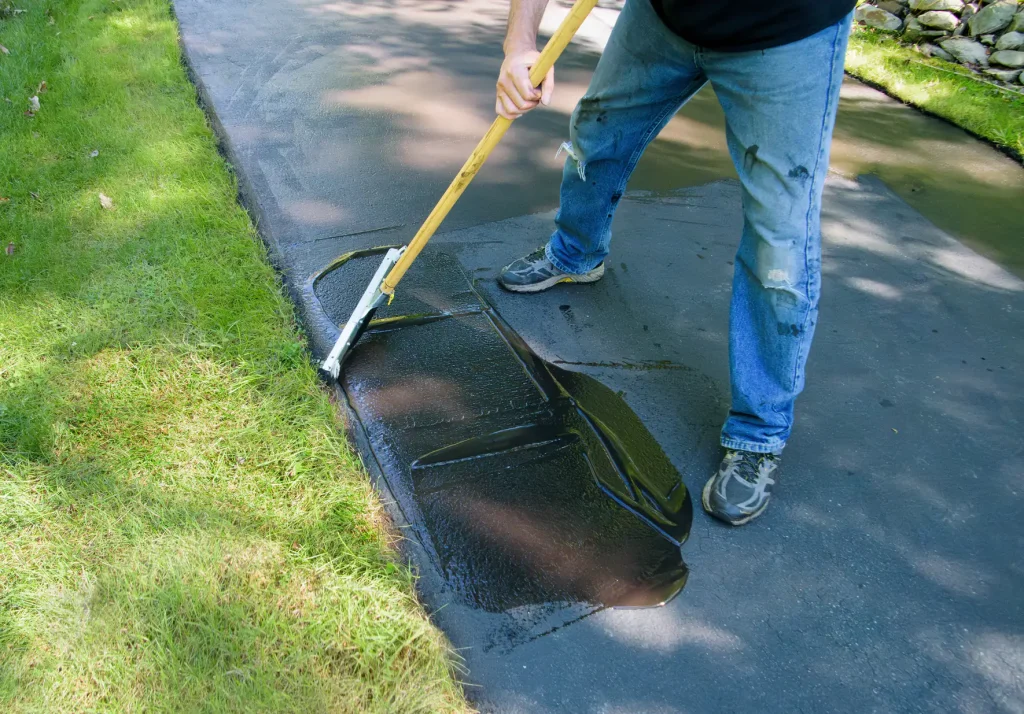
Then comes the tack coat, which is a sticky liquid asphalt emulsion sprayed over the prepared surface. This acts like glue, helping the new asphalt layer bond properly to the old one. Without it, the layers can separate over time, especially during temperature swings when materials expand and contract at different rates.
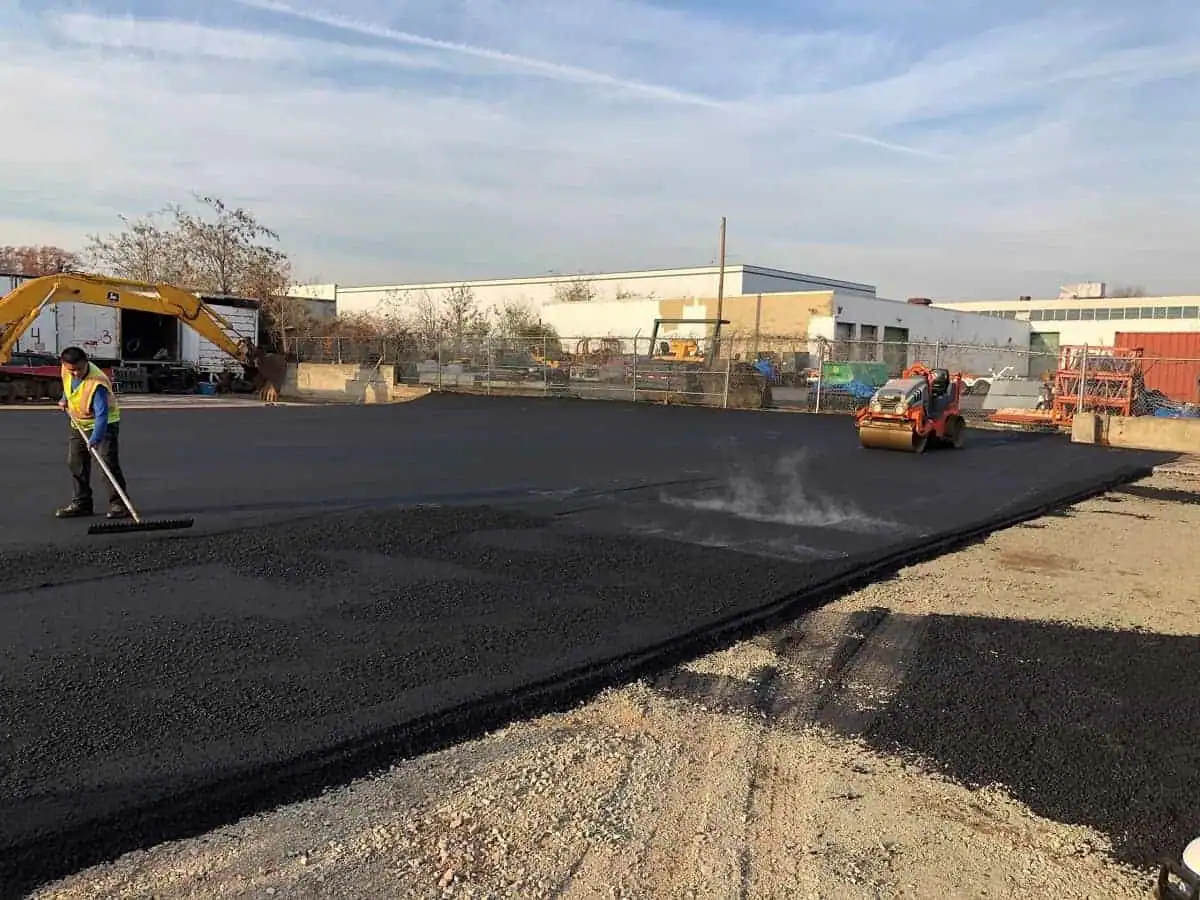
The new asphalt arrives hot—usually around 300 degrees—and gets spread evenly across the surface. We use paving equipment to lay it down in a uniform thickness, typically that 1.5 to 2 inch layer we mentioned. The asphalt needs to stay hot during application so it compacts properly and creates a dense, water-resistant surface.
Compaction happens immediately while the asphalt is still warm. Heavy rollers press the material down, eliminating air pockets and creating a smooth, solid surface. This step determines how well your driveway will hold up to traffic and weather. Proper compaction is why professional equipment matters—you can’t achieve the same results with DIY methods.
Finally comes the curing period. You’ll need to stay off the new surface for at least 24 to 48 hours, though 72 hours is better. The asphalt needs time to cool and harden before bearing weight. Even after that initial period, the surface continues curing for months. You might notice it’s slightly softer in hot weather during the first summer—that’s normal. Full cure takes six to twelve months, but you can use the driveway normally after that first few days.
For a typical residential driveway, the whole process takes two to three days from start to finish. Day one is prep and milling, day two is the new asphalt application, and day three is waiting for it to cure enough for use. Weather can affect the timeline—we need temperatures above 50 degrees for proper application, which is why late spring through early fall is ideal for this work in New Jersey.
Want live answers?
Connect with a Platinum Paving expert for fast, friendly support.
Asphalt Resurfacing vs Full Replacement: Making the Right Call
The decision between resurfacing and replacement comes down to what’s happening beneath the surface. Resurfacing addresses top-layer damage while preserving a solid foundation. Replacement rebuilds everything from the ground up when that foundation has failed.
Cost is obviously a factor—resurfacing runs $1 to $3 per square foot while replacement costs $8 to $18 per square foot. For a typical two-car driveway, that’s the difference between $1,500 to $4,000 versus $8,000 to $15,000 or more. But choosing based on price alone can backfire if you resurface a driveway that actually needs replacement.
Think about it this way: resurfacing is the right move when your driveway’s problems are skin-deep. Replacement is necessary when the bones are broken. The question is figuring out which situation you have before you commit to a solution.
Resurfacing Cost vs Replacement: The Real Numbers
Let’s talk real numbers. Asphalt resurfacing typically costs between $1 and $3 per square foot, depending on your location, driveway size, and how much prep work is needed. For a standard 600 square foot driveway, you’re looking at $600 to $1,800, with most homeowners landing around $1,200 to $1,500.
Full replacement costs significantly more—$8 to $18 per square foot. That same 600 square foot driveway would run $4,800 to $10,800, with the average closer to $7,000 to $9,000. The higher cost reflects the additional labor and materials involved in removing all the old asphalt, potentially regrading the base, adding new aggregate, and building the entire structure from scratch.
But here’s where it gets interesting: the long-term value calculation isn’t just about upfront cost. Resurfacing adds 8 to 15 years of life to your driveway when done on a solid foundation. Replacement gives you 20 to 30 years with proper maintenance. So if your driveway is already 15 years old and showing moderate damage, resurfacing might give you another decade—taking you to 25 years total, which is right around the typical lifespan anyway.
On the other hand, if you’re at year 10 with significant surface damage but a solid base, resurfacing could extend your total lifespan to 25 years for a fraction of replacement cost. That’s where the value really shines. You’re essentially getting most of the remaining useful life for 20 to 30 percent of replacement cost.
The mistake homeowners make is resurfacing when the base has already failed. You spend $2,000 to $3,000 on resurfacing, get two or three years out of it before base problems cause the new surface to crack and fail, then you’re back to square one needing replacement anyway. Now you’ve spent $2,000 on resurfacing plus $8,000 on replacement—$10,000 total when you could have just done replacement once for $8,000.
This is why the professional assessment matters so much. We’ll tell you when replacement makes more sense, even though resurfacing would be an easier sale. We understand that our reputation depends on recommending the solution that actually works for your situation.
In Sussex County specifically, the harsh winters mean driveways often show more wear at younger ages than in milder climates. A 12-year-old driveway here might look like a 15-year-old driveway in central Jersey. That accelerated aging affects the resurfacing versus replacement calculation. Local contractors who understand regional conditions can give you more accurate guidance on which option makes sense for your specific property.
One more factor: if you’re planning to sell your home in the next few years, resurfacing can be a smart investment. It dramatically improves curb appeal for a relatively modest cost, and potential buyers see a driveway that looks new. They don’t need to know it’s been resurfaced rather than replaced—what matters is it looks good and functions properly. That $1,500 to $2,500 investment can make your property significantly more attractive without the need for a full $8,000 replacement.
Warning Signs You Need Replacement Not Resurfacing
Certain warning signs tell you that resurfacing won’t cut it and replacement is the only real solution. Recognizing these patterns can save you from wasting money on a fix that won’t last.
Alligator cracking is the biggest red flag. This pattern of interconnected cracks that resembles reptile scales indicates the base layer has failed. The asphalt on top is cracking because the foundation underneath can no longer support it properly. Resurfacing over alligator cracking is pointless—the new surface will develop the same pattern within a year or two because the underlying problem remains.
Multiple deep potholes signal similar issues. A pothole isn’t just surface damage—it means the base has deteriorated to the point where the asphalt above collapsed into the void. One or two small potholes might be repairable, but if you have several deep ones scattered across your driveway, the base has widespread problems that resurfacing can’t address.
Significant settling or sunken areas mean the subgrade—the soil foundation below everything—has shifted or eroded. You’ll notice sections of your driveway sitting noticeably lower than others, often with water pooling in those areas. This isn’t something you can fix by adding a new top layer. The entire structure needs to be removed, the subgrade needs to be properly compacted and leveled, and then new base and asphalt layers need to be installed.
Edge deterioration where the sides of your driveway are crumbling away also indicates structural problems. Properly installed driveways have adequate thickness at the edges. When edges crumble, it usually means they were too thin to begin with or the base has eroded from underneath. Either way, it’s a foundation issue that requires rebuilding.
Widespread surface raveling—where the asphalt surface is disintegrating into loose gravel—shows the asphalt has reached the end of its chemical life. The binders that hold everything together have broken down to the point where the material can no longer function. You might see this as large areas where the surface looks sandy or gravelly, with loose aggregate coming away easily. This level of deterioration goes too deep for resurfacing to address.
Age is a factor too. If your driveway is 20 years old or more, even if it doesn’t show all these severe symptoms, the materials have been through so many stress cycles that their remaining life is limited. Resurfacing a 22-year-old driveway might give you another three to five years, but you’ll be facing replacement soon anyway. At that point, the math often favors just doing replacement now and getting 20 to 30 fresh years instead of limping along with a temporary fix.
The freeze-thaw cycle in Sussex County accelerates all these problems. What might take 20 years to develop in a milder climate can happen in 15 years here. The constant expansion and contraction from temperature swings, combined with water infiltration and road salt, breaks down both the asphalt and the base layer faster than in areas with more stable weather. Properties near Stanhope, Franklin, and Hopatcong often see particularly aggressive deterioration due to the temperature fluctuations around the lake areas.
Here’s the honest truth: if you’re seeing multiple warning signs—some alligator cracking plus a couple of potholes plus some settling—replacement is almost certainly the right call. Resurfacing might seem more affordable, but it’s not a good value if it fails in two years. Sometimes spending more upfront to fix the problem correctly costs less in the long run than repeatedly trying to patch a failing system.
We’ll walk your property, point out these issues if they exist, and explain why resurfacing would or wouldn’t work in your specific situation. If someone tries to sell you resurfacing without really examining your driveway’s condition, that’s a red flag. The assessment should be thorough, and the recommendation should be based on what your driveway actually needs, not what’s easier to sell.
Getting Your Driveway Resurfacing Decision Right
Asphalt driveway resurfacing can be an excellent investment when your foundation is solid but your surface has deteriorated. You get 8 to 15 more years of life at a fraction of replacement cost, your driveway looks brand new, and the project wraps up in a few days with minimal disruption.
But it only works when the conditions are right—less than 20 years old, less than 30 percent surface damage, no major base failure. If your driveway shows signs of structural problems like alligator cracking, multiple potholes, or significant settling, replacement is the smarter move even though it costs more upfront.
The key is getting an honest assessment from someone who understands how Sussex County conditions affect driveways. The freeze-thaw cycles, the road salt, the temperature swings near the lake—all of it matters when determining whether resurfacing will actually last or if you’re just delaying the inevitable. When you’re ready to figure out which direction makes sense for your property, we’ll give you a straightforward evaluation based on what will actually work long-term, not just what’s easiest to sell.