
Hear from Our Customers
A concrete driveway installed right means you’re not dealing with cracks every other year. You’re looking at 30 to 40 years of service life with minimal maintenance compared to asphalt that needs resealing every few years.
Concrete doesn’t soften in summer heat. It doesn’t develop those annoying low spots that pool water after every rain. And when winter hits, a properly reinforced concrete driveway with the right mix and thickness handles the freeze-thaw cycles that destroy cheaper installations.
You also get options. Stamped patterns that look like brick or stone. Exposed aggregate finishes. Staining for color. Your driveway doesn’t have to look like every other gray slab on the block, and it’ll still perform better than most of them because the foundation work matters more than the finish.
The real benefit shows up in year five, year ten, year fifteen. You’re not calling contractors for repairs. You’re not watching your neighbors redo their driveways while yours still looks solid. That’s what proper installation and quality materials get you.
We’ve been handling driveway installations across Morris County and surrounding areas for over 20 years. We’re a family-owned operation, fully licensed and insured, and we’ve built our reputation on doing the work right the first time.
Watsessing homeowners deal with specific challenges. The area’s older housing stock often means existing driveways weren’t built to current standards. Drainage issues are common. The soil composition here requires proper base preparation or you’ll see settling and cracking within a few years.
We know this because we’ve been working in this area long enough to see what fails and what lasts. Every driveway we install comes with a 5-year warranty because we’re confident in our work. We handle everything in-house, so you’re not coordinating between multiple contractors for excavation, grading, and pouring.
First, we assess your existing driveway and property. We’re looking at drainage patterns, soil conditions, slope, and how the new driveway will tie into your garage and street. This determines the base depth, reinforcement needs, and whether we need to address drainage before we pour.
Next comes excavation and base preparation. We remove the old driveway if there is one, dig down to stable soil, and build up a compacted aggregate base. This is the most important part of the job. Skip this or do it wrong, and your driveway will crack no matter how good the concrete is. We use proper compaction equipment and the right base materials for North Jersey soil conditions.
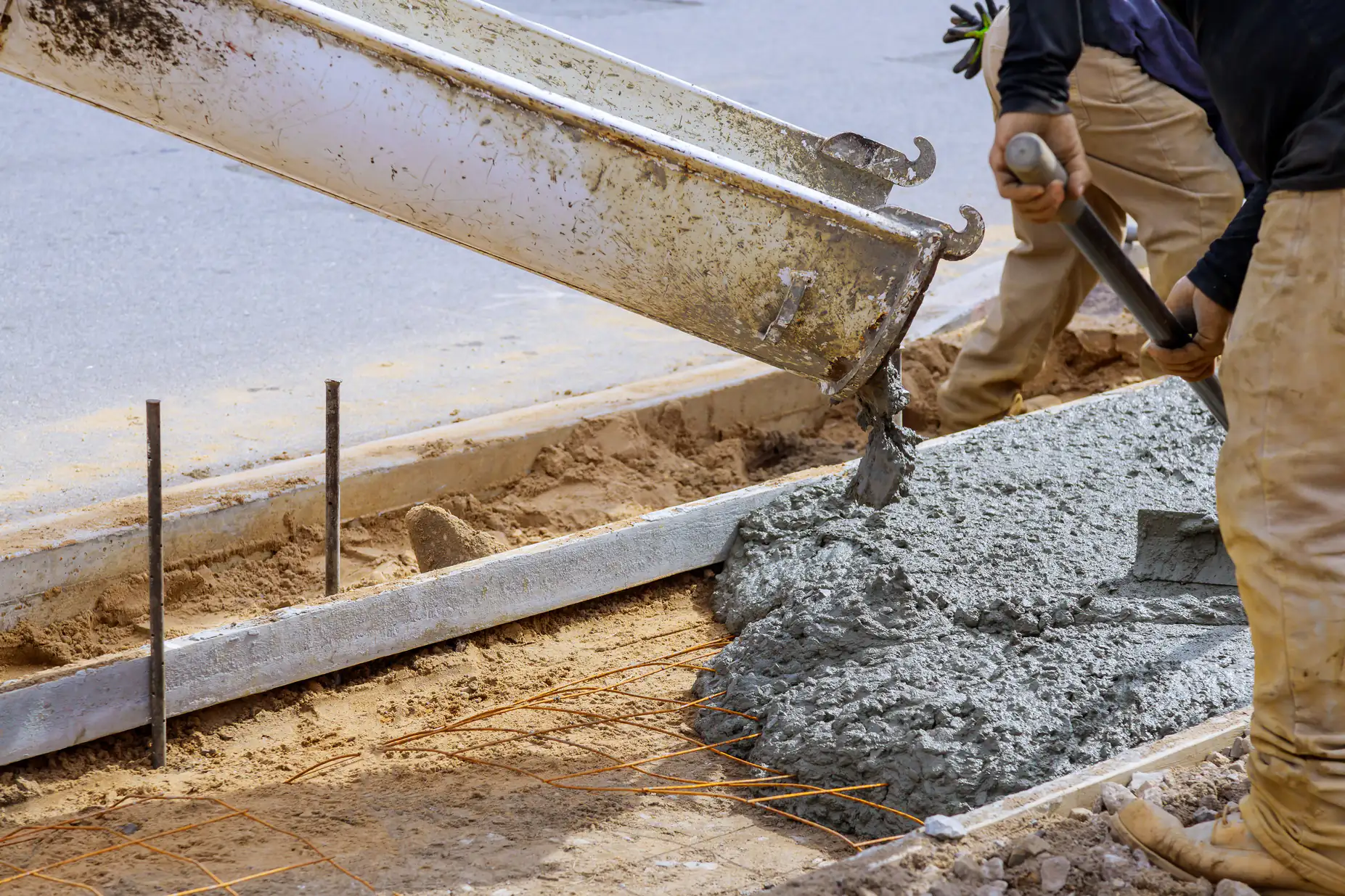
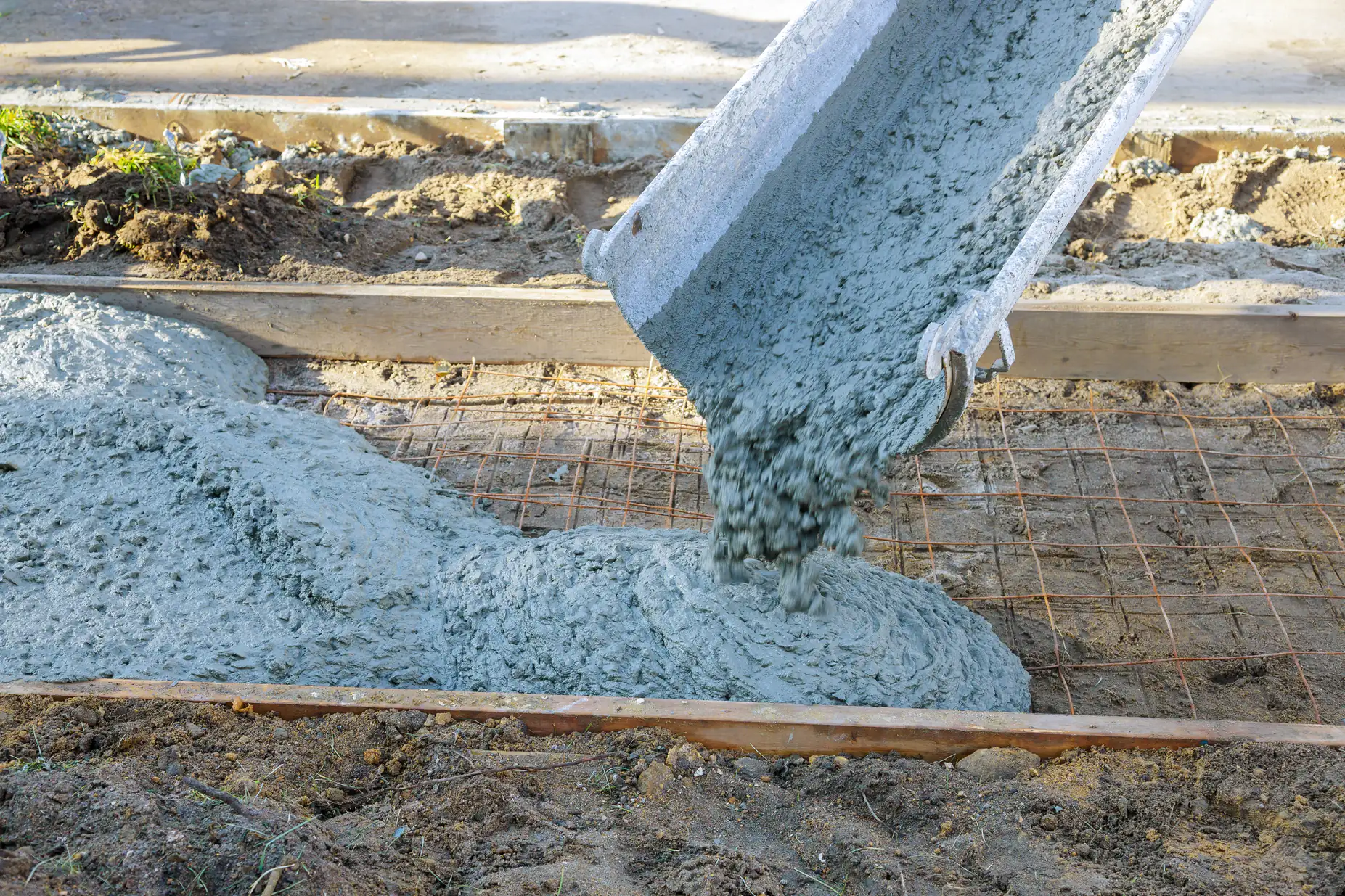
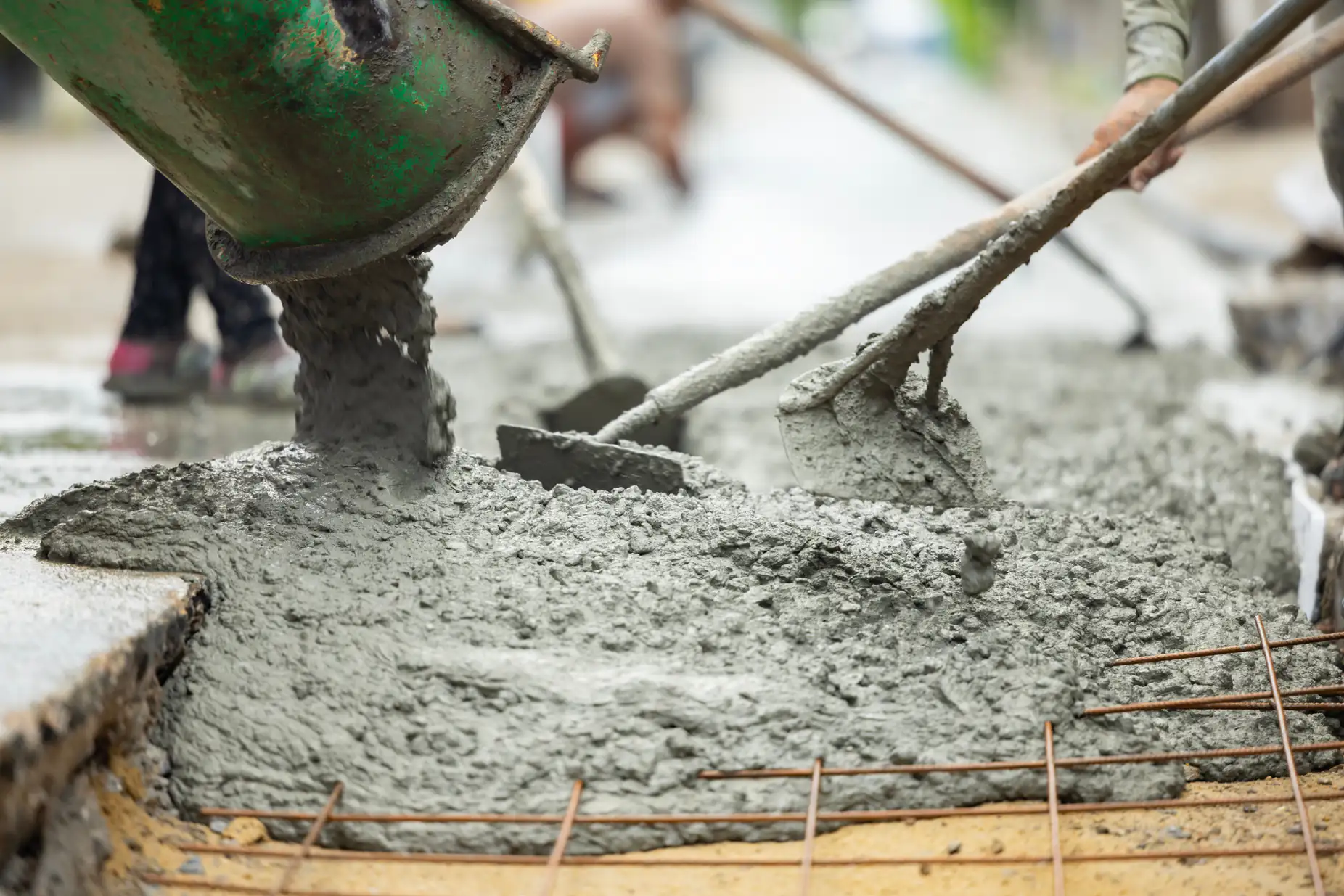
Then we set forms, install rebar or wire mesh reinforcement, and pour the concrete. We use quality Portland cement mixes at the right thickness for your specific use. Residential driveways typically need 4 to 6 inches depending on vehicle weight and soil conditions. We finish the surface to your specs, whether that’s a basic broom finish, exposed aggregate, or stamped patterns.
After pouring, concrete needs time to cure properly. We’ll tell you exactly when you can walk on it and when you can park on it. Rush this and you’ll damage the surface before it reaches full strength. Most driveways are ready for light use in 3 to 7 days and full use in about 28 days.

Ready to get started?
You get complete removal of your existing driveway if needed. We handle all the hauling and disposal. Then comes proper excavation to the depth required for your specific property conditions, followed by aggregate base installation with mechanical compaction.
Reinforcement is standard. We install rebar or wire mesh depending on the project specs. Forms are set to the exact dimensions and slope needed for proper drainage. The concrete itself is a quality mix delivered at the right temperature and poured at the proper thickness.
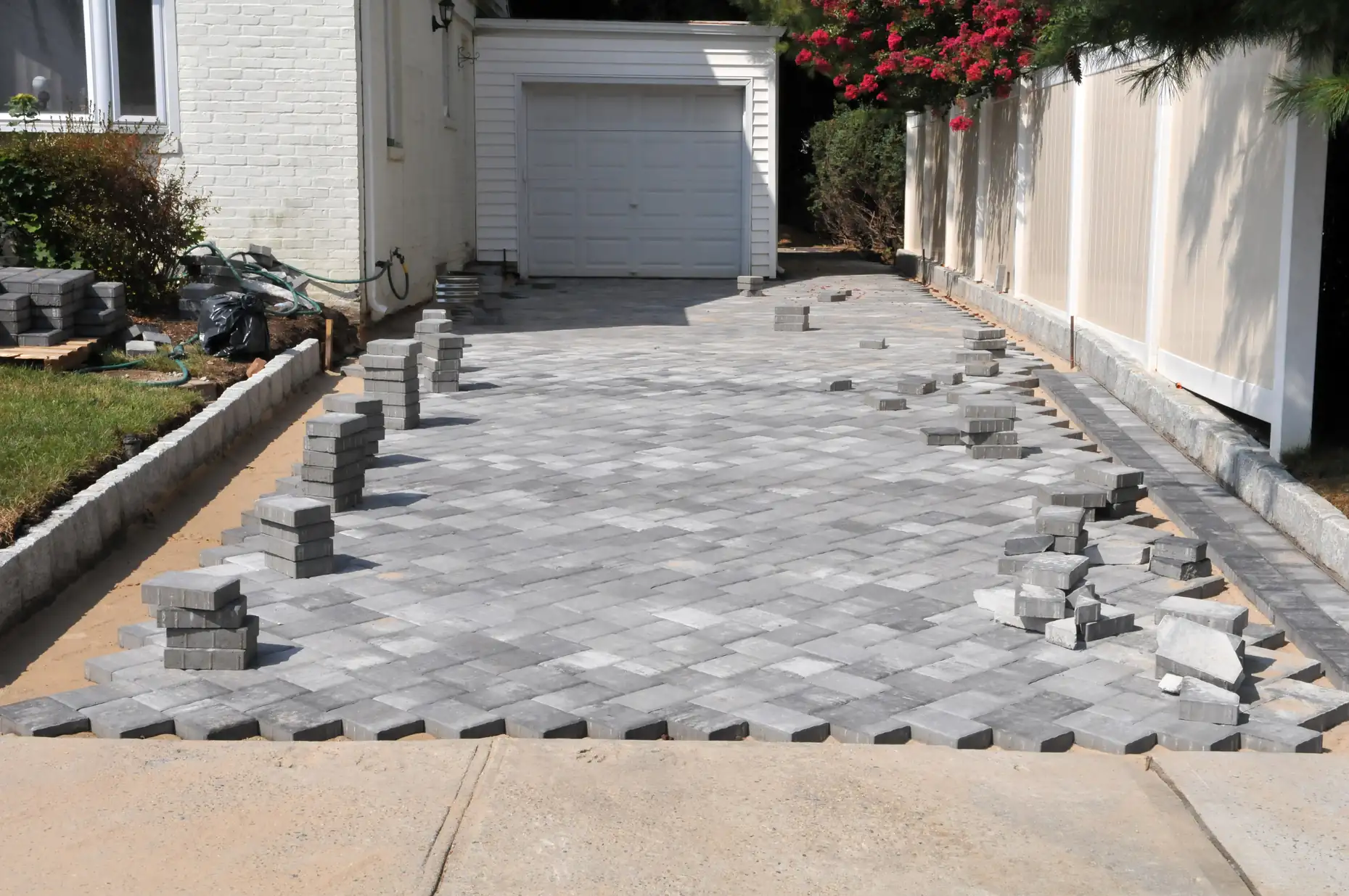
Finishing options include standard broom finish, exposed aggregate, stamped concrete patterns, or decorative staining. We can also install concrete patios, walkways, or add flagstone pavers and Belgard pavers to complement your new driveway. If you want a complete outdoor upgrade, we handle that too.
For Watsessing specifically, we pay attention to local requirements. Many homes here have mature trees with root systems that affect driveway stability. We address that during base prep. The neighborhood’s older infrastructure sometimes means coordinating with local utilities before we dig. We handle those details so you don’t have to.
Every installation includes a 5-year warranty. We provide clear upfront pricing with no surprise charges. And we typically respond to quote requests within 24 to 48 hours because we know you’re comparing options and don’t want to wait a week for a callback.
Concrete driveway installation in Watsessing typically runs between $7 and $12 per square foot for a standard finish. A typical two-car driveway around 400 to 600 square feet will cost roughly $3,000 to $7,000 depending on site conditions and finish options.
That price includes demolition of your old driveway, proper base preparation, reinforcement, concrete materials, labor, and finishing. If you want decorative options like stamped patterns or exposed aggregate, expect to add $3 to $6 per square foot. Staining adds another $2 to $4 per square foot.
What affects the price most is what we find when we dig. Poor soil conditions mean more base work. Difficult access for equipment adds labor time. Significant grading to fix drainage issues increases cost. We give you an accurate quote after assessing your specific property, not a generic estimate based on square footage alone.
Compare that to asphalt at $5 to $8 per square foot installed. Asphalt looks cheaper upfront, but factor in resealing every 2 to 3 years at $0.50 to $1 per square foot, plus more frequent repairs, and concrete becomes cost-competitive over a 20-year period while lasting significantly longer.
A properly installed concrete driveway in New Jersey lasts 30 to 40 years with minimal maintenance. That assumes correct base preparation, proper concrete mix, adequate thickness, appropriate reinforcement, and good drainage design.
New Jersey’s freeze-thaw cycles are tough on concrete. Water gets into small cracks, freezes, expands, and makes those cracks bigger. Over years, this breaks down poorly installed driveways. The key is starting with a solid base that doesn’t shift, using air-entrained concrete that handles freeze-thaw better, and ensuring water drains away instead of pooling.
Maintenance is minimal but matters. Seal your concrete every few years to protect against water penetration and deicing salt damage. Fix small cracks promptly before they spread. Avoid using metal shovels or harsh deicing chemicals in winter. Do that and you’ll get the full lifespan out of your driveway.
Compare that to asphalt driveways that last 15 to 20 years in New Jersey with regular maintenance, or 10 to 15 years if neglected. Concrete costs more upfront but lasts roughly twice as long, which changes the math on total cost of ownership.
Concrete performs better in hot weather, lasts longer, and requires less maintenance. Asphalt costs less upfront and can be installed faster. The right choice depends on your budget, how long you plan to stay in your home, and what you value more.
Concrete doesn’t soften in summer heat like asphalt does. It resists oil stains better. It maintains its appearance for decades with minimal upkeep. And it offers design flexibility with stamped patterns, colors, and textures that asphalt can’t match. If you’re planning to stay in your Watsessing home long-term and want something that adds curb appeal while lasting 30+ years, concrete makes sense.
Asphalt is the practical choice if you need to minimize upfront cost or if you’re planning to sell within 5 to 10 years. It’s also easier to repair in small sections, though you’ll be doing those repairs more often. In North Jersey’s climate, asphalt needs resealing every 2 to 3 years and typically requires resurfacing or replacement around the 15-year mark.
For Watsessing’s upper-middle income neighborhood where median home values are around $492,000, most homeowners choose concrete because it matches the quality of the homes and provides better long-term value. The initial cost difference becomes less significant when you’re making a 30-year decision instead of a 15-year one.
Concrete can be installed in winter, but it’s not ideal and requires special precautions that increase cost. The best time for concrete driveway installation in New Jersey is late spring through early fall when temperatures consistently stay above 50°F during the day and above 40°F at night.
Concrete needs to cure properly to reach full strength. Cold temperatures slow the curing process significantly. If concrete freezes before it cures, the water inside expands and damages the internal structure, leading to a weak surface that will deteriorate quickly. Below 40°F, you need heated enclosures, insulating blankets, and sometimes special concrete mixes with accelerators.
All of that adds cost and complexity. We won’t pour concrete when temperatures are forecast to drop below 40°F within the first few days after installation. We don’t work with concrete at all between December and March in North Jersey.
If you need driveway work done in winter, asphalt is actually more forgiving in cold weather as long as temperatures are above freezing at installation. But if you’re set on concrete, plan for spring installation. You’ll get better results, lower cost, and we’ll have more availability to schedule your project without weather delays.
Most concrete driveway replacements in Watsessing require a permit from Bloomfield Township since Watsessing is part of Bloomfield. The permit ensures your driveway meets local codes for setbacks, drainage, and stormwater management.
Requirements typically include maintaining proper drainage so water doesn’t flow onto neighboring properties or into the street, meeting setback distances from property lines, and sometimes installing pervious pavers or drainage systems if you’re increasing impervious surface area significantly. Bloomfield has been updating stormwater requirements in recent years, so what was allowed 20 years ago might not be permitted now.
We handle permit applications as part of the project. We submit site plans, drainage plans, and specifications to the township, pay the permit fees, and schedule required inspections. This protects you because inspectors verify the work meets code before you make final payment.
Skipping permits is risky. If the township finds out, they can require you to remove the driveway or bring it into compliance at your expense. It can also create issues when you sell your home if the buyer’s inspector or title company discovers unpermitted work. The permit cost is minor compared to the total project cost and the risk of doing it wrong.
Concrete driveways need sealing every 2 to 3 years to protect against water penetration, staining, and surface damage from deicing salts. Clean the surface first, let it dry completely, then apply a quality concrete sealer. This is the single most important maintenance task for extending your driveway’s lifespan in New Jersey’s climate.
Address cracks promptly when they appear. Small hairline cracks are normal and can be filled with concrete crack filler to prevent water intrusion. Larger cracks or areas where sections have settled indicate bigger problems that need professional assessment. Catching these early prevents minor issues from becoming major repairs.
In winter, avoid using metal shovels that can chip the surface. Don’t use deicing salts containing ammonium nitrate or ammonium sulfate, which damage concrete. Calcium chloride is safer than rock salt, but sand or kitty litter for traction is gentler on the surface. Clear snow promptly so it doesn’t melt and refreeze repeatedly in the same spot.
Clean oil stains quickly before they penetrate the surface. Pressure washing once or twice a year removes dirt and prevents buildup. Avoid parking heavy vehicles or equipment in the same spot repeatedly, especially during the first year when the concrete is still gaining strength. That’s it. Concrete is low maintenance compared to asphalt, but the maintenance you do matters.