
Hear from Our Customers
You stop worrying about cracks spreading every winter. You stop apologizing for how your property looks when someone pulls up. You stop second-guessing whether you should’ve replaced it years ago.
A properly installed concrete driveway in Voorhees handles what New Jersey throws at it—40+ freeze-thaw cycles, salt, de-icers, heavy vehicles, and decades of use. That means 4,000 PSI minimum compressive strength, air entrainment for freeze-thaw resistance, rebar reinforcement on 24-inch centers, and a compacted aggregate base that won’t shift or settle.
When the base is prepared correctly and the concrete is mixed and poured to spec, you’re looking at 25 to 30 years of service. Maybe more. That’s not marketing talk—that’s what happens when the work is done by people who know what they’re doing in this climate.
Your driveway becomes something you don’t think about anymore. It just works.
We’ve spent over 40 years working in Morris, Sussex, and Somerset Counties. We’ve seen what works and what fails in New Jersey. We know the soil conditions around Voorhees, the drainage quirks in older neighborhoods, and how local freeze-thaw cycles punish concrete that wasn’t installed correctly.
We’re not the cheapest option, and we don’t pretend to be. What you get is transparent pricing, realistic timelines, and concrete work that meets or exceeds local building codes. We handle permits, coordinate inspections, and use materials designed for this climate—not whatever’s on sale.
When you call, you’ll hear back within 24 to 48 hours. When we give you a quote, it’s detailed and upfront. When we start the job, we finish it without dragging it out or adding surprise charges.
First, we assess your property. That means looking at drainage, checking the existing base, measuring the area, and identifying any issues that could cause problems later. If your driveway needs proper grading to move water away from your foundation, we handle that.
Next comes excavation and base preparation. We remove the old surface if needed, dig down to stable soil, and install a compacted aggregate base. This step matters more than most people realize—a weak base leads to cracking and settling no matter how good the concrete is.
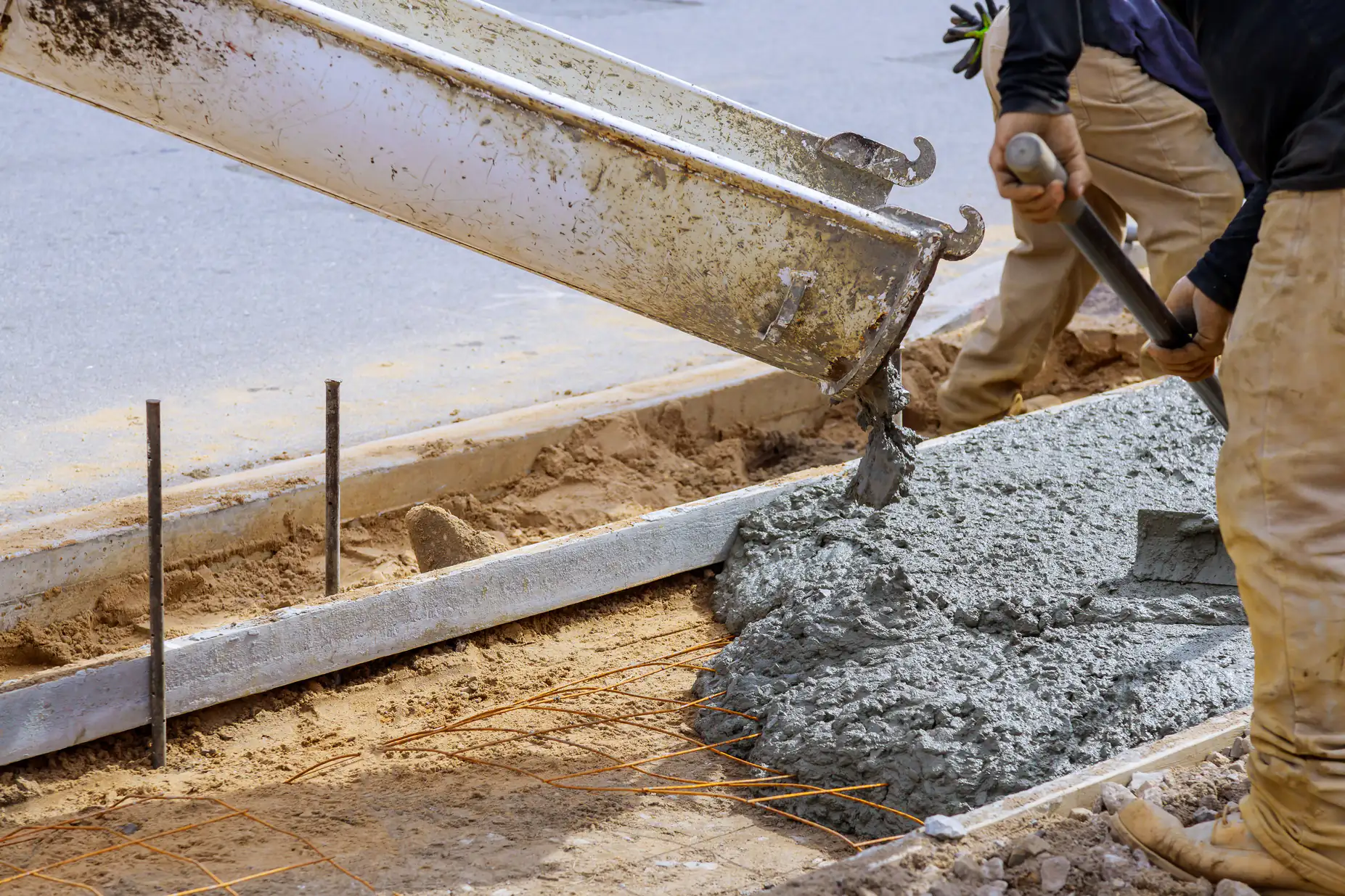
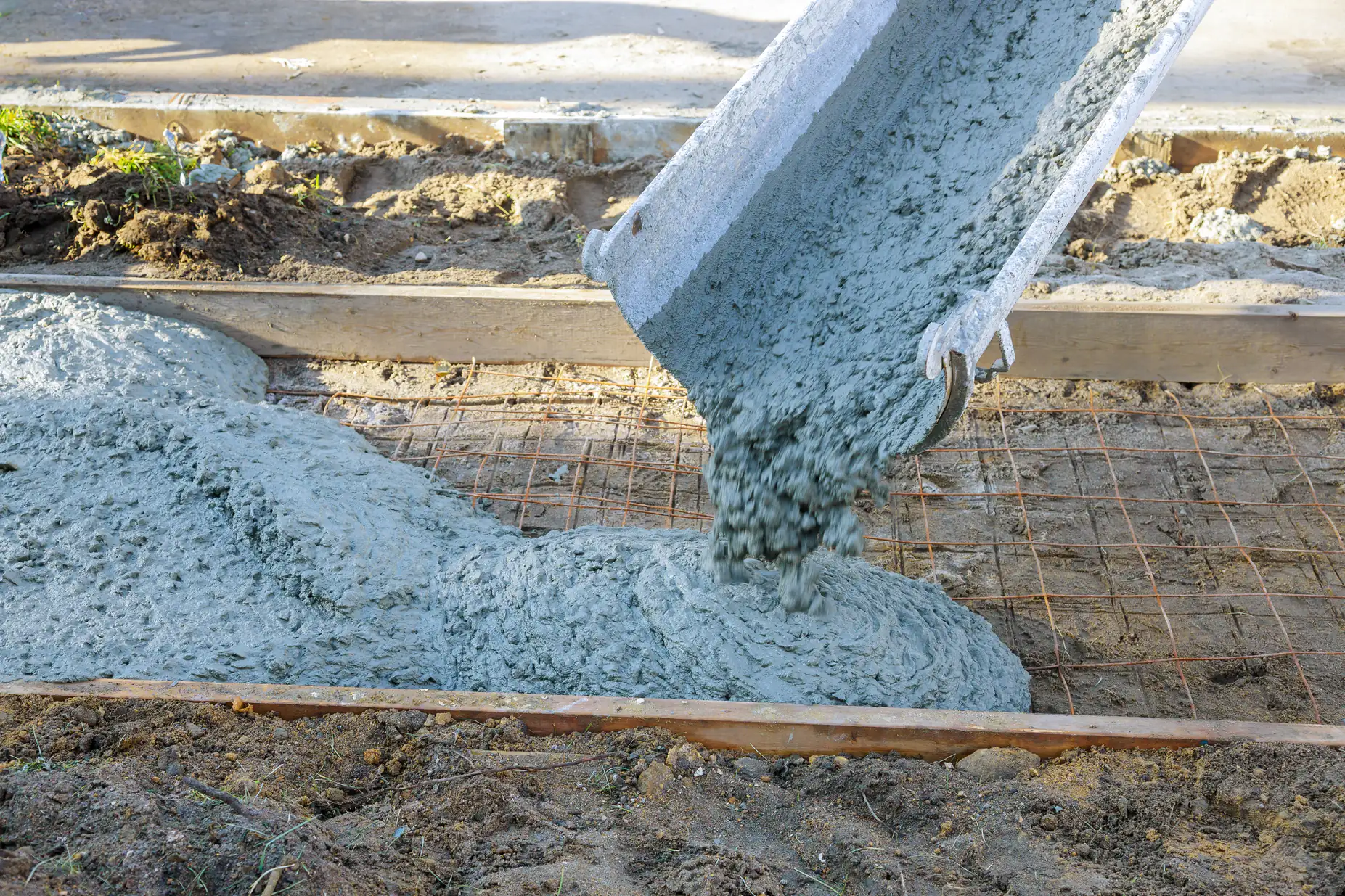
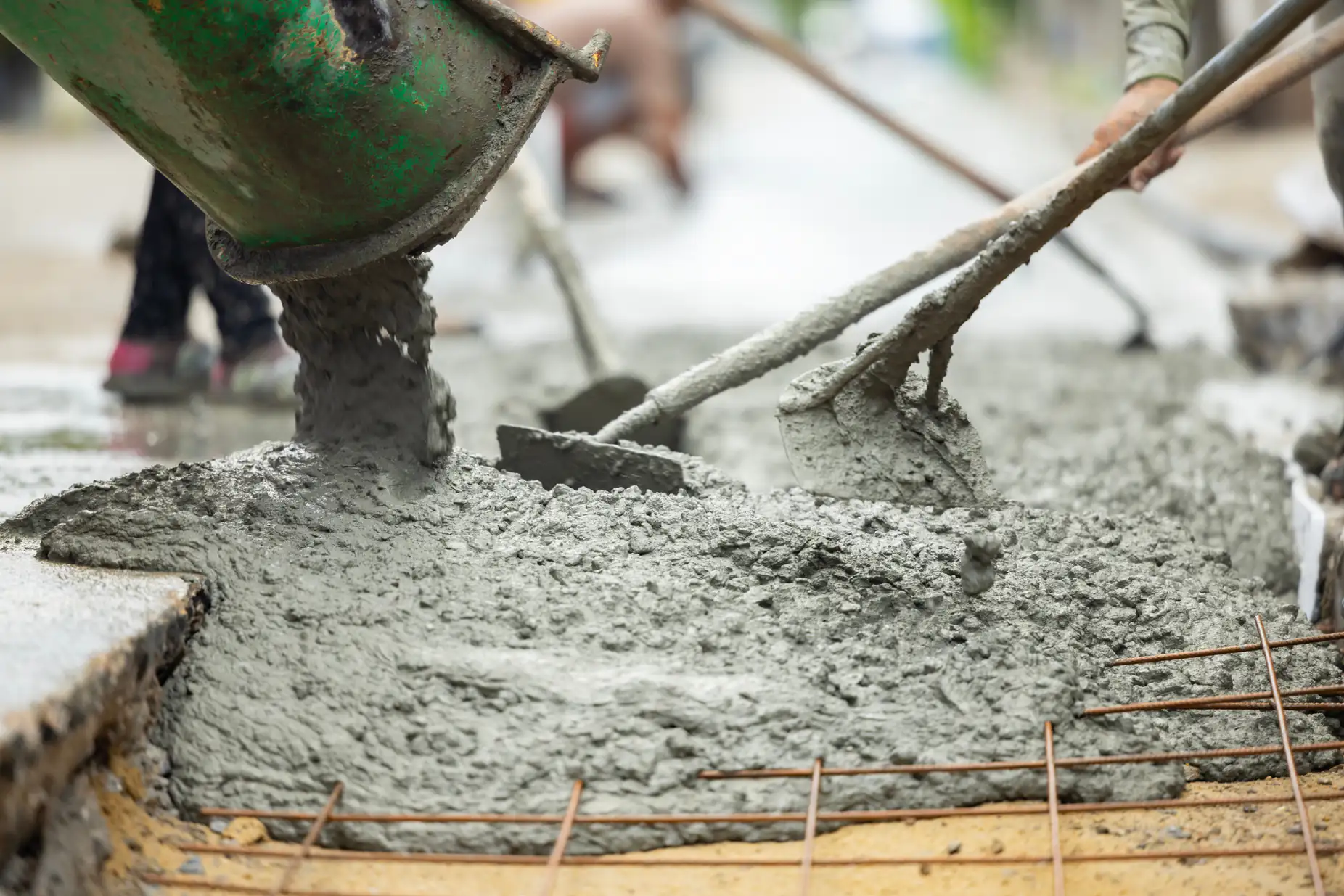
Then we set up forms, install rebar or wire mesh for reinforcement, and pour the concrete. We’re using Portland cement mixes with the right PSI rating and air content for New Jersey winters. The concrete gets finished to your preference—standard broom finish, exposed aggregate, or stamped patterns if you want something decorative.
Most residential driveway projects take two to three days from start to finish. After the pour, the concrete needs time to cure before you can drive on it—usually about seven days for full strength.

Ready to get started?
Every concrete driveway installation includes site preparation, proper grading for drainage, a compacted aggregate base, rebar reinforcement, and the concrete pour itself. We’re not cutting corners on materials—you’re getting high-grade Portland cement with 4,000 PSI minimum compressive strength and 5-7% air entrainment.
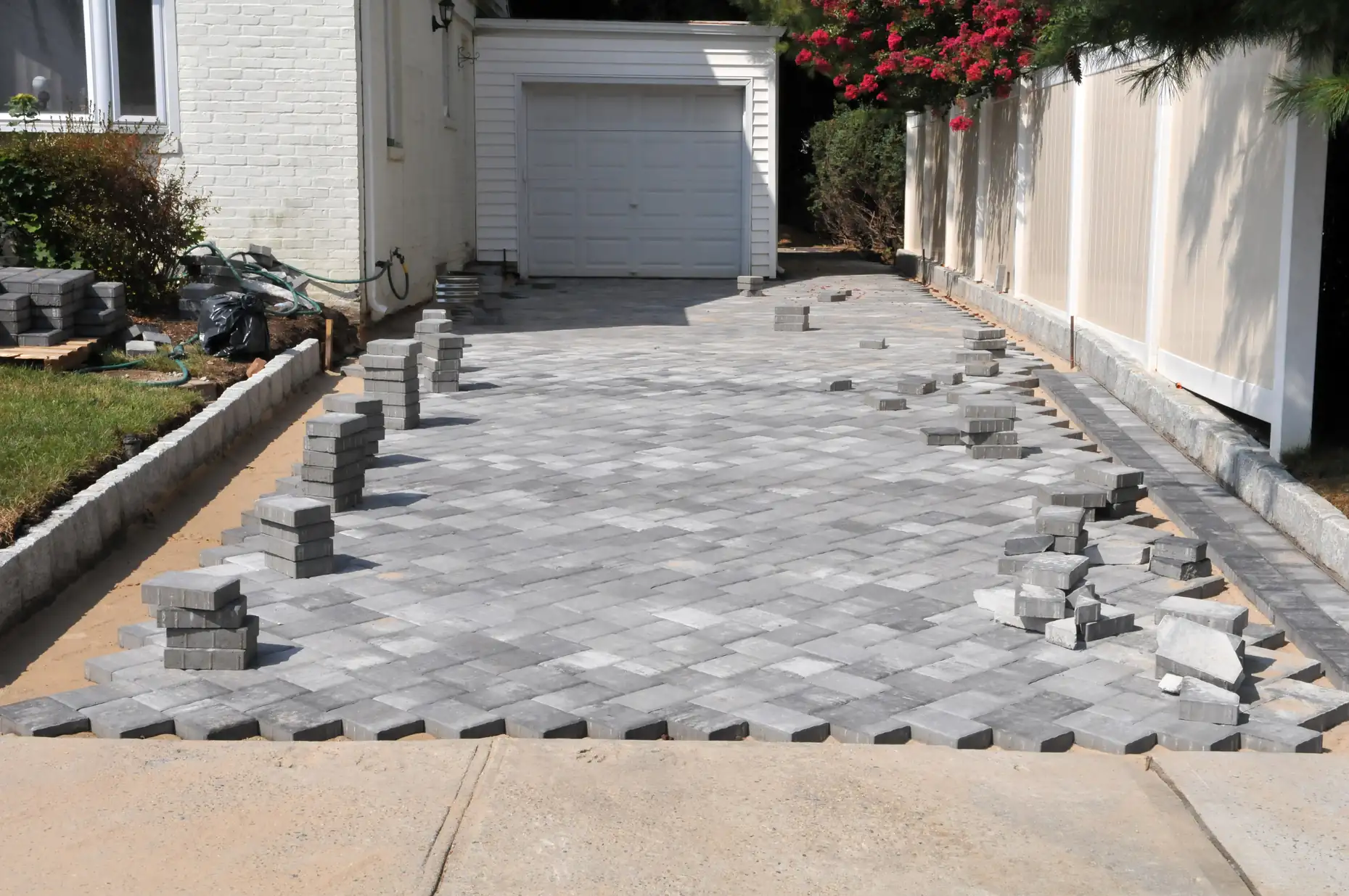
If you want decorative options, we handle stamped concrete in multiple patterns, exposed aggregate finishes, or colored concrete. We also install concrete patios, walkways, and other flatwork using the same standards.
For properties in Voorhees and the surrounding area, drainage is often a concern. Poor drainage causes water to pool on your driveway, which accelerates deterioration and can compromise the base layer. We make sure water moves away from your driveway and foundation—not toward it.
We also handle repairs for driveways that aren’t too far gone. If you’ve got localized cracking or minor surface damage, targeted repairs can extend the life of your driveway without the cost of full replacement. But if the damage is widespread or the base has failed, replacement is the smarter move. We’ll tell you which option makes sense for your situation.
Most concrete driveways in Voorhees run between $4 and $8 per square foot, depending on the size, site conditions, and finish you choose. A standard two-car driveway typically costs between $1,600 and $4,600 for basic installation. If you want stamped patterns or decorative finishes, expect to pay more.
The price includes excavation, base preparation, rebar reinforcement, the concrete pour, and finishing. If your property has drainage issues or requires significant grading work, that can add to the cost. Same goes for removing an old driveway or dealing with difficult access.
We give you a detailed written estimate that breaks down every cost before we start. No surprises, no hidden fees. You’ll know exactly what you’re paying for and why.
A properly installed concrete driveway lasts 25 to 30 years in New Jersey, sometimes longer. The key phrase is “properly installed.” That means the right concrete mix, adequate reinforcement, proper base preparation, and correct installation techniques for this climate.
New Jersey winters are brutal on concrete. You’re dealing with 40+ freeze-thaw cycles every year, plus salt and de-icers that corrode the surface. Concrete that wasn’t mixed with air entrainment or poured over a weak base will start cracking within a few years.
High-quality concrete with 4,000 PSI compressive strength, 5-7% air content, and rebar reinforcement can handle the stress. Add in proper drainage and regular maintenance—like sealing every few years and avoiding harsh de-icers—and you’re looking at decades of service. That’s why the upfront investment in quality installation pays off.
If the damage is localized to one section and the rest of the driveway is solid, repairs make sense. Small cracks, minor surface spalling, or isolated settling can often be fixed without replacing the entire driveway. Repairs are faster and cheaper, and they can add years to your driveway’s life.
But if you’ve got widespread cracking, multiple sunken areas, or significant deterioration across the whole surface, replacement is the better option. Trying to patch extensive damage is like putting bandaids on a broken bone—it might look better temporarily, but the underlying problem is still there.
We’ll assess your driveway and tell you honestly which approach makes sense. If repairs will buy you another five to ten years, we’ll say so. If the base has failed and you’re just delaying the inevitable, we’ll tell you that too. The goal is to help you make the right decision for your property and budget, not to upsell you on work you don’t need.
Stamped concrete uses the same structural materials as regular concrete—same PSI rating, same reinforcement, same base preparation. The difference is purely aesthetic. Before the concrete fully hardens, we press patterns into the surface to mimic brick, stone, slate, or other textures. We can also add color.
Stamped concrete costs more because it requires additional labor and materials. But it gives you the look of pavers or natural stone without the maintenance headaches. There are no joints to weed, no individual pavers to reset, and no uneven surfaces from settling.
The durability is the same as regular concrete if it’s installed correctly. You still need proper base prep, adequate reinforcement, and the right concrete mix for New Jersey weather. The stamped pattern doesn’t weaken the driveway—it just makes it look better. If you want your driveway to stand out without sacrificing performance, stamped concrete is worth considering.
You can walk on your new concrete driveway after about 24 to 48 hours. But you shouldn’t drive on it for at least seven days. That’s how long it takes for the concrete to reach sufficient strength to handle vehicle weight without damage.
Concrete continues curing and gaining strength for weeks after it’s poured, but the first week is critical. Driving on it too early can cause surface damage, cracking, or permanent impressions. It’s frustrating to wait, but it’s a lot more frustrating to damage a brand-new driveway because you couldn’t wait a few extra days.
We’ll give you a specific timeline based on weather conditions and the concrete mix we’re using. Cooler temperatures slow down curing, so a driveway poured in October might need a bit more time than one poured in July. We’ll make sure you know exactly when it’s safe to use your driveway normally.
Yes. We handle all necessary permits and coordinate any required inspections with local municipalities. Different towns in New Jersey have different requirements, and Voorhees is no exception. Some projects need permits, some don’t—it depends on the scope of work and local codes.
We know what’s required because we’ve been doing this in the area for decades. We’ll pull the permits, schedule inspections, and make sure the work meets all local building codes. That’s part of what you’re paying for when you hire a licensed contractor instead of trying to DIY or hiring someone working under the table.
Proper permitting protects you. It ensures the work is done to code, and it prevents issues if you ever sell your property. Buyers and their inspectors will look for permitted work, especially on major improvements like driveways. We make sure everything is documented and above board so you don’t have problems down the road.