
Hear from Our Customers
You’re tired of watching cracks spread wider every spring. Tired of calling someone out for another patch job that barely lasts two winters. Tired of wondering if this is the year you’ll need to replace the whole thing.
Concrete changes that equation completely. We’re talking 30 to 40 years of service life when it’s installed right. No sealcoating every few years. No soft spots forming in July heat. No constant maintenance eating into your weekends and your wallet.
The difference shows up in how your driveway handles weight. Trucks, RVs, heavy equipment—concrete takes it without developing ruts or becoming pliable. And when Silver Lake CDP goes through another freeze-thaw cycle, properly installed concrete with the right base and reinforcement just sits there doing its job.
That’s what you get when the installation is done correctly from the start. A surface that actually matches the investment you’re making.
We’ve been installing driveways across Morris, Essex, and Somerset counties for over 20 years. Third-generation family business, which means we’re not learning on your property—we’re applying decades of combined experience to every project.
Essex County soil doesn’t drain well. Clay-heavy ground that holds water and creates problems if you don’t account for it during installation. We know this because we’ve worked here long enough to see what fails and what lasts.
You’ll get Portland cement mixes with proper rebar reinforcement. You’ll get a base that’s prepared for your specific soil conditions. And you’ll get clear pricing upfront, with a 24-48 hour callback guarantee when you request a quote online. We’re based in Dover and we’ve built our reputation on doing what we say we’ll do.
First, we assess your property and existing driveway situation. Soil type, drainage patterns, slope—these factors determine how we prepare your base. Most failures happen because someone skipped this step or didn’t account for local conditions.
Next comes excavation and base preparation. We remove old material, grade for proper drainage, and compact the subbase. In Silver Lake CDP and surrounding Essex County areas, this often means addressing clay soil that wants to hold water. We build in solutions during this phase, not after problems develop.
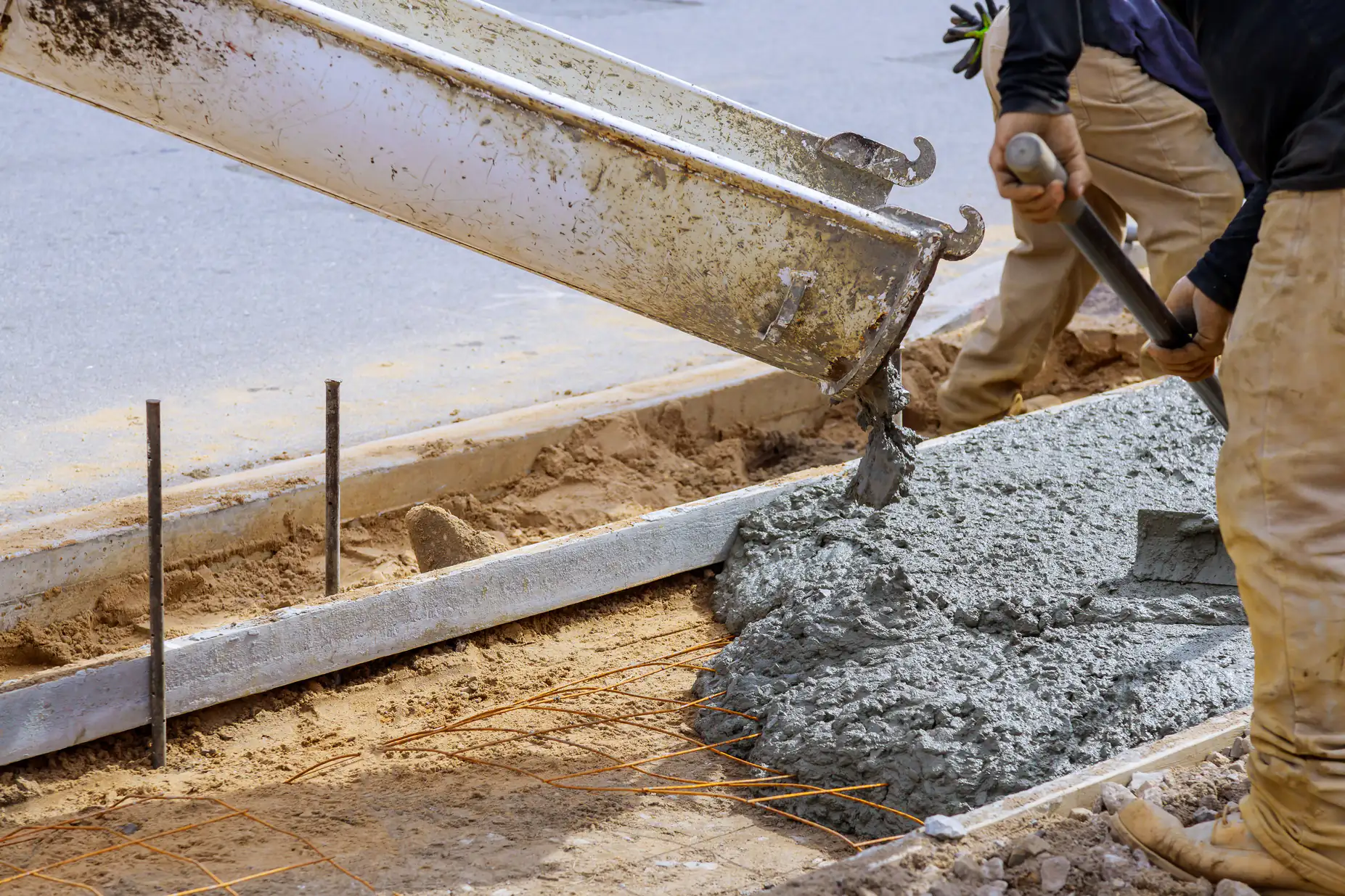
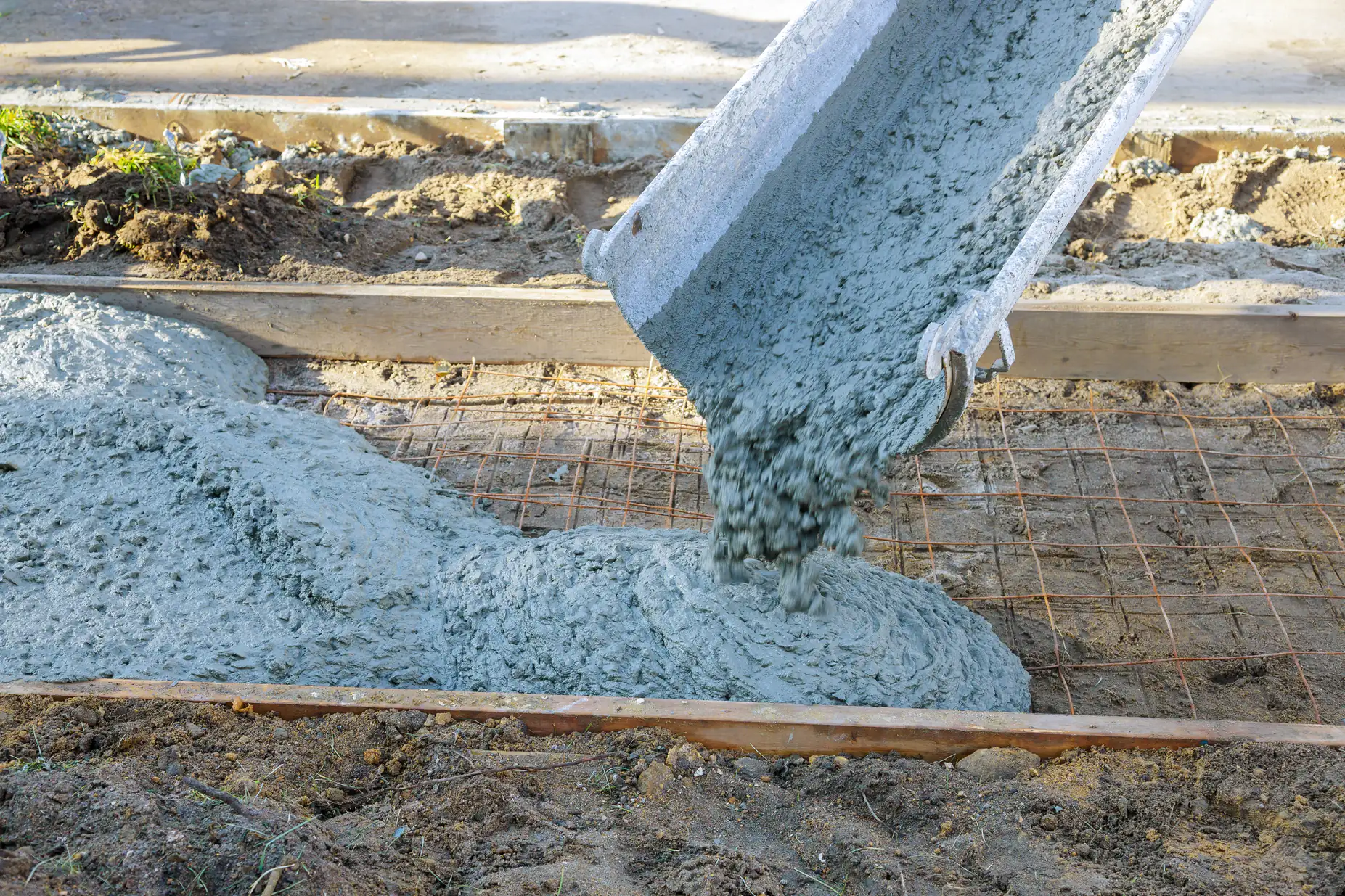
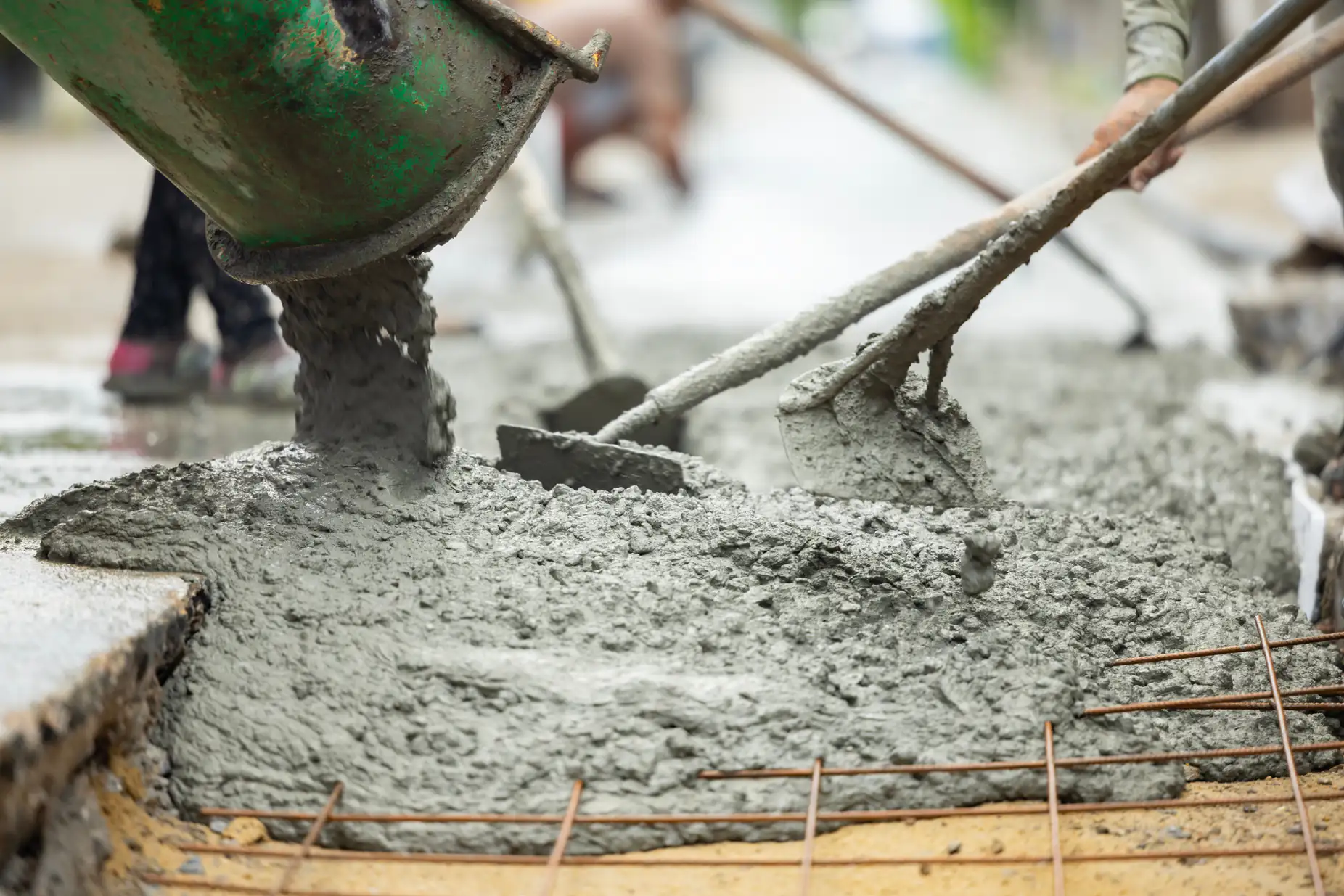
Then we install forms, place rebar reinforcement, and pour high-grade concrete mixed to the right specifications. Thickness matters. Reinforcement placement matters. Cure time matters. We don’t rush any of it.
After pouring, the concrete needs time to cure properly—usually several days depending on weather. We control the curing process to prevent surface cracking. Once cured, we remove forms and finish edges. If you’re adding decorative elements like stamped patterns or colored concrete, that work happens during the pour and finishing stages.
You’ll know the timeline before we start. You’ll know when you can use the driveway. And you’ll have direct communication throughout the project, not a runaround when you have questions.

Ready to get started?
Standard concrete driveways come with proper base preparation, rebar reinforcement, and a smooth trowel finish. That’s your baseline—a durable surface that’ll handle daily use for decades.
But you’re not limited to plain gray concrete. Stamped concrete gives you the look of brick, stone, or custom patterns without the maintenance those materials require. Color options range from earth tones to bolder choices that complement your home’s exterior. Borders and inlays add definition and can incorporate contrasting colors or textures.
Essex County homeowners are moving toward these decorative options more than ever. The 2025 trend is textured finishes that mimic natural materials while keeping concrete’s durability and low maintenance. You get the aesthetic without the headaches.
We also handle concrete patios, walkways, and other flatwork that ties into your driveway project. Matching materials and coordinated design make your entire property look intentional, not pieced together over time.
Every project includes our workmanship guarantee and clear communication from estimate through completion. You’ll get a detailed quote that breaks down materials, labor, and timeline. No surprise charges. No vague “we’ll figure it out as we go” approach.
You’re looking at $10 to $15 per square foot for standard concrete in 2025, depending on site conditions and any customization you add. A typical two-car driveway runs about 400 to 600 square feet, putting most projects between $4,000 and $9,000.
Stamped patterns, color staining, or decorative borders increase that cost. But here’s the thing—you’re comparing that to asphalt that’ll need sealcoating every 3-5 years at $200-400 per application, plus eventual replacement in 15-20 years. Concrete costs more upfront and often costs less over the life of your driveway.
Site-specific factors affect your final price. Poor drainage that needs correction, difficult access for equipment, or removal of old material that’s particularly stubborn—these things add to the project cost. That’s why we assess your property before giving you a quote. You get accurate numbers based on your actual situation, not a generic estimate that changes once we start digging.
Properly installed concrete driveways last 30 to 40 years in New Jersey, even with our freeze-thaw cycles. Some last longer. The key phrase there is “properly installed”—because shortcuts during installation are what cause early failure.
New Jersey weather is tough on driveways. Water gets into small cracks, freezes, expands, and turns minor issues into major structural problems. That’s why base preparation and reinforcement matter so much. We’re building a system that handles water movement and temperature swings, not just pouring concrete and hoping for the best.
You’ll need to seal your concrete every few years to protect the surface, but that’s minimal maintenance compared to asphalt. No sealcoating. No patching soft spots every summer. Just occasional cleaning with a hose or pressure washer and resealing to keep water from penetrating the surface. Do that basic maintenance and your driveway will likely outlast your ownership of the home.
Concrete wins on longevity and total cost of ownership. Asphalt wins on upfront cost. That’s the honest comparison.
Asphalt costs less to install initially—usually $3 to $7 per square foot versus $10 to $15 for concrete. But asphalt needs sealcoating every 3-5 years and typically needs replacement after 15-20 years. Concrete lasts 30-40 years with minimal maintenance beyond occasional sealing.
Concrete also handles heavy loads better. If you park trucks, RVs, or heavy equipment on your driveway, concrete won’t develop ruts or become soft in summer heat the way asphalt can. And concrete gives you more design options—colors, patterns, textures that asphalt can’t match.
The choice often comes down to your timeline. If you’re planning to sell in the next few years, asphalt might make sense. If you’re staying put and want to stop dealing with driveway problems, concrete is the better investment. We install both, so we’re not pushing you toward one or the other—we’re telling you what actually makes sense for your situation.
Base preparation determines whether your driveway lasts 40 years or starts failing in five. This is where most problems originate—not in the concrete itself, but in what’s underneath it.
We excavate to proper depth, typically 8-12 inches depending on soil conditions. Essex County’s clay-heavy soil doesn’t drain naturally, so we often install a gravel base that allows water to move away from the concrete instead of pooling underneath. That gravel gets compacted in layers to create a stable foundation that won’t shift or settle.
Proper grading is critical. Water needs to flow away from your home and off the driveway surface. We establish the right slope during base prep—usually a 2% grade minimum. Too flat and water sits. Too steep and you’re dealing with other issues.
Then comes rebar or wire mesh reinforcement before we pour. This gives the concrete tensile strength to handle stress without cracking. We’re not just meeting minimum requirements—we’re building a base system that accounts for your specific property conditions and local climate challenges.
Yes, and more homeowners in Essex County are choosing decorative concrete over plain gray finishes. Stamped concrete is the most popular option—we can make your driveway look like brick, cobblestone, slate, or custom patterns while keeping all of concrete’s durability.
Color options include integral color mixed into the concrete or color hardeners applied to the surface. Earth tones like tan, brown, and terra cotta are popular because they complement most home exteriors. You can also add borders in contrasting colors or textures to define edges and add visual interest.
The work happens during installation, not after. Stamping and coloring are done while the concrete is still workable, which is why you need to decide on these elements before we pour. Once concrete cures, your options become limited.
Decorative concrete costs more than standard finishes—usually adding $3-8 per square foot depending on complexity. But you’re getting a custom look that increases curb appeal and property value. And unlike pavers or natural stone, you’re not dealing with weeds growing between joints or individual pieces settling unevenly over time.
You can walk on your new driveway after 24-48 hours in normal weather conditions. But you need to wait at least seven days before driving on it, and we recommend waiting a full month before parking heavy vehicles or equipment on the surface.
Concrete reaches about 70% of its full strength in seven days, which is enough for regular vehicle traffic. But it continues curing and gaining strength for weeks after that. Putting heavy loads on it too early can cause surface damage or cracking that won’t show up immediately but will shorten your driveway’s lifespan.
Weather affects curing time. Hot, dry conditions can cause concrete to cure too quickly and develop surface cracks. Cold weather slows the curing process. We control these variables as much as possible during installation and give you specific guidance based on actual conditions during your project.
Plan accordingly if you’re replacing an existing driveway. You’ll need alternative parking for about a week. Most homeowners coordinate with neighbors or use street parking during this period. It’s a short-term inconvenience for a driveway that’ll last decades, but it’s something to factor into your timeline when scheduling the work.