
Hear from Our Customers
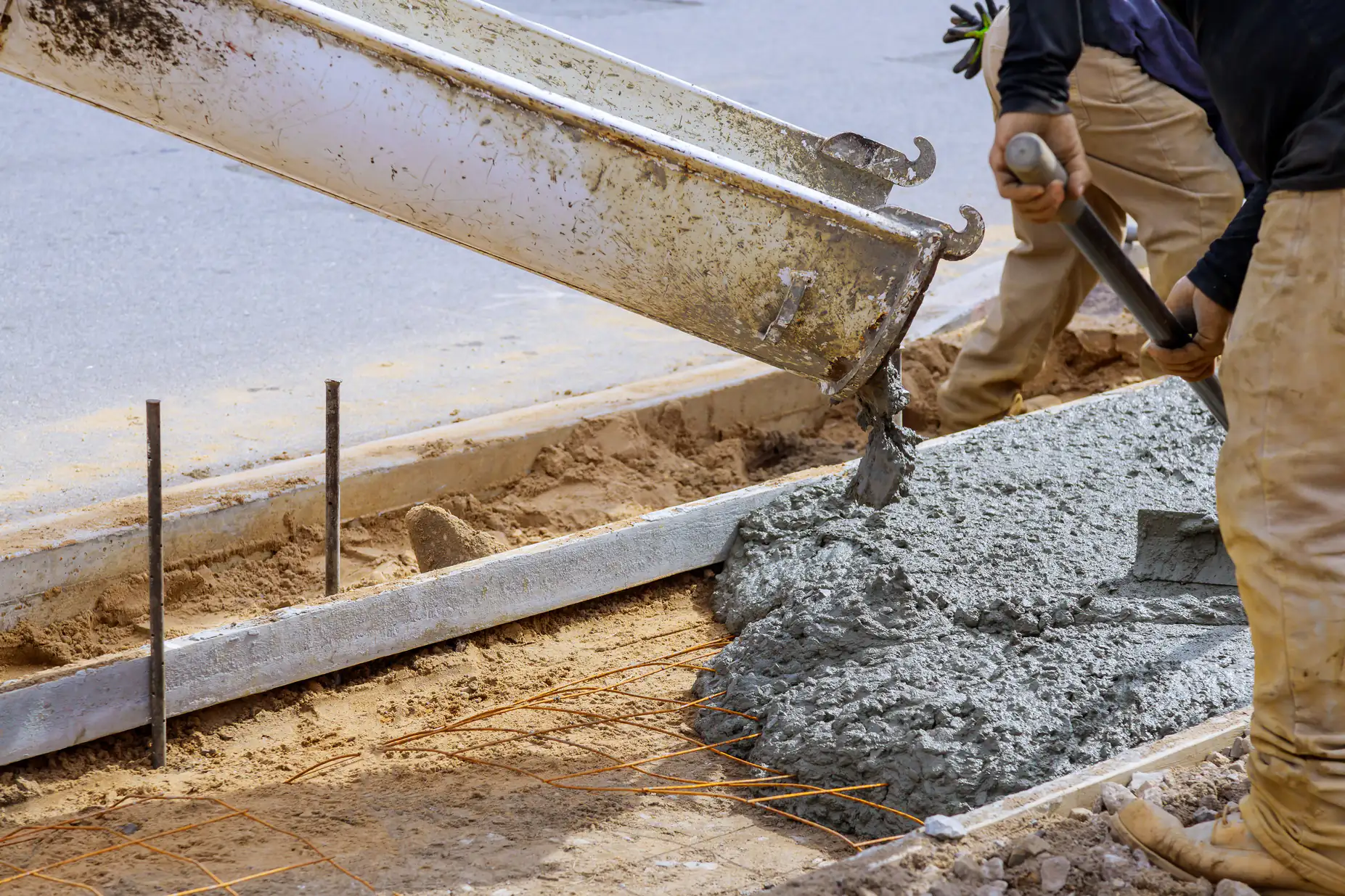
You pull up to a smooth, level surface that doesn’t crack after one winter. Water drains where it should. Your property looks finished, not like someone gave up halfway through.
That’s what happens when the base is prepared correctly and the concrete is poured at the right depth with proper reinforcement. Most problems homeowners deal with—settling, cracking, pooling water—trace back to shortcuts during installation. You’re not just paying for concrete. You’re paying for excavation done to the right depth, a compacted stone base that won’t shift, and a pour that’s thick enough to handle New Jersey winters.
When we finish a driveway in Newark or Caldwell or Morristown, it’s not about checking a box. It’s about creating something that performs for decades, handles freeze-thaw cycles without falling apart, and actually adds value to your property instead of becoming another thing you need to explain away.
We’ve been handling concrete and asphalt work across Morris, Sussex, and Somerset Counties for years. We’re not the company that shows up, takes your deposit, and disappears when the job gets complicated.
We know the soil conditions in Caldwell. We understand drainage quirks in older Newark neighborhoods. We’ve poured driveways on steep slopes in Upper Montclair and dealt with the clay soil issues that cause settling in Parsippany. That’s not something you get from a contractor who works everywhere and specializes nowhere.
You’ll work with a licensed, insured team that handles permits, shows up when we say we will, and doesn’t triple the price once your old driveway is ripped out. We’re local, we’re accountable, and we’ve built our reputation on doing what we say we’re going to do.
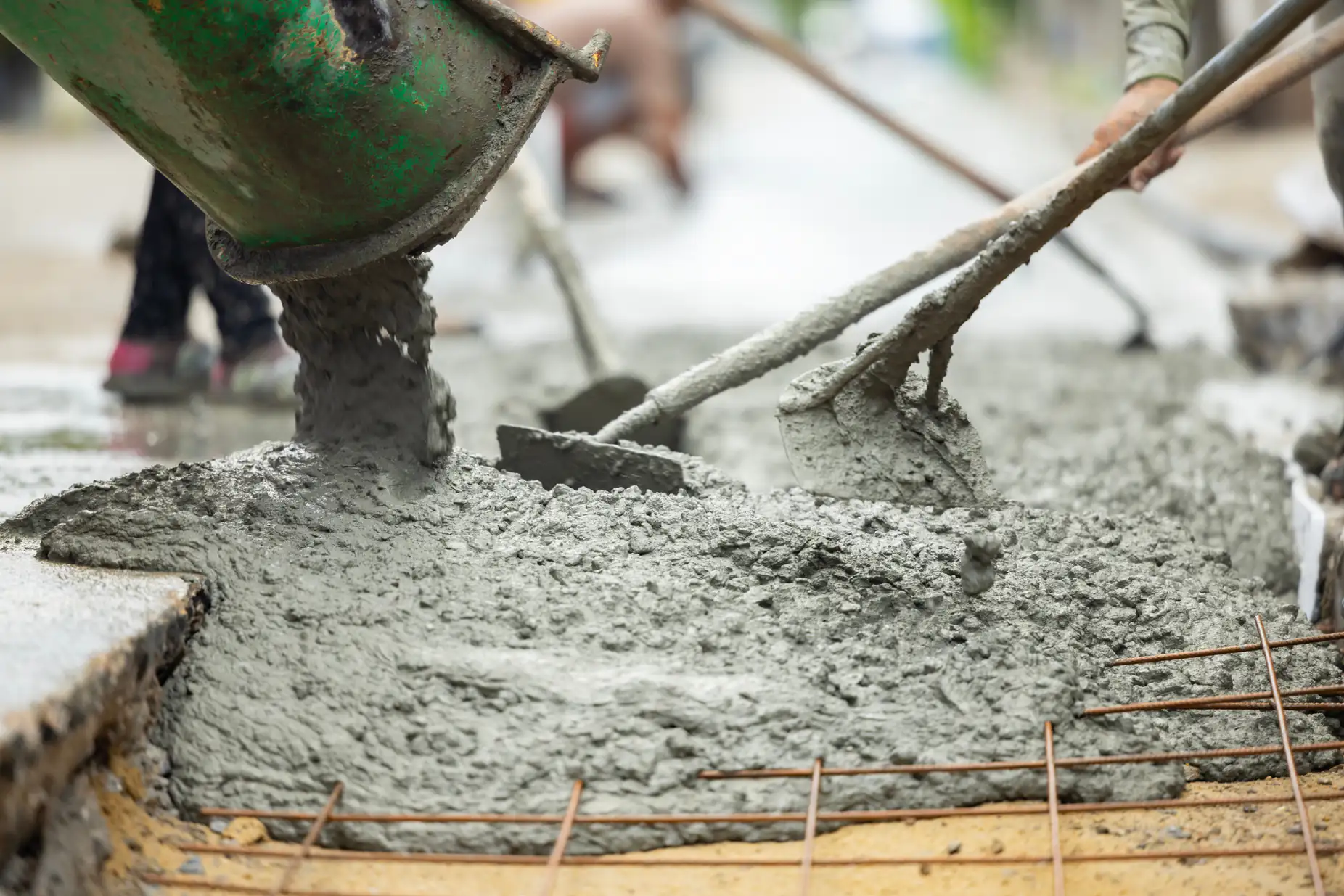
Most residential concrete driveway projects take two to three days. Day one is excavation and base prep—we remove the old surface, dig down to the right depth, and install a compacted stone base that won’t shift or settle. This is where most contractors cut corners, and it’s why driveways fail early.
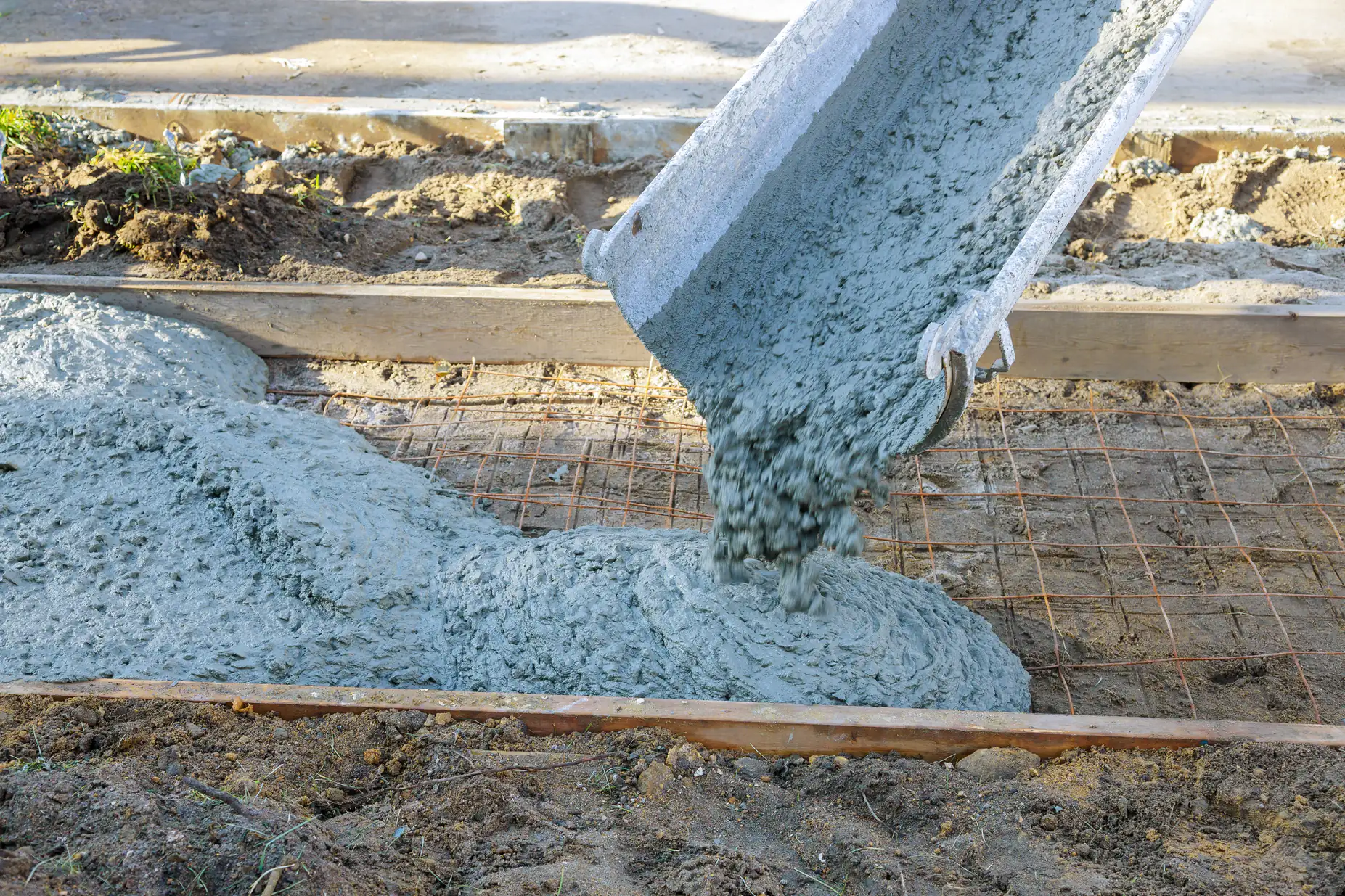
Day two is the concrete pour. We use Portland cement mixes, often with rebar reinforcement for added strength, poured at a minimum seven-inch thickness per Montclair building code. The surface is finished based on what you need—standard broom finish for traction, or stamped concrete if you want something decorative. We also make sure the grade is correct so water flows away from your foundation, not toward it.
Day three is cleanup, final grading, and a walkthrough so you understand how to maintain what you just invested in. We’re not gone the second the concrete sets. You get a callback guarantee within 24 to 48 hours if you reach out with questions, and we handle all the permitting and inspections your town requires.

Ready to get started?
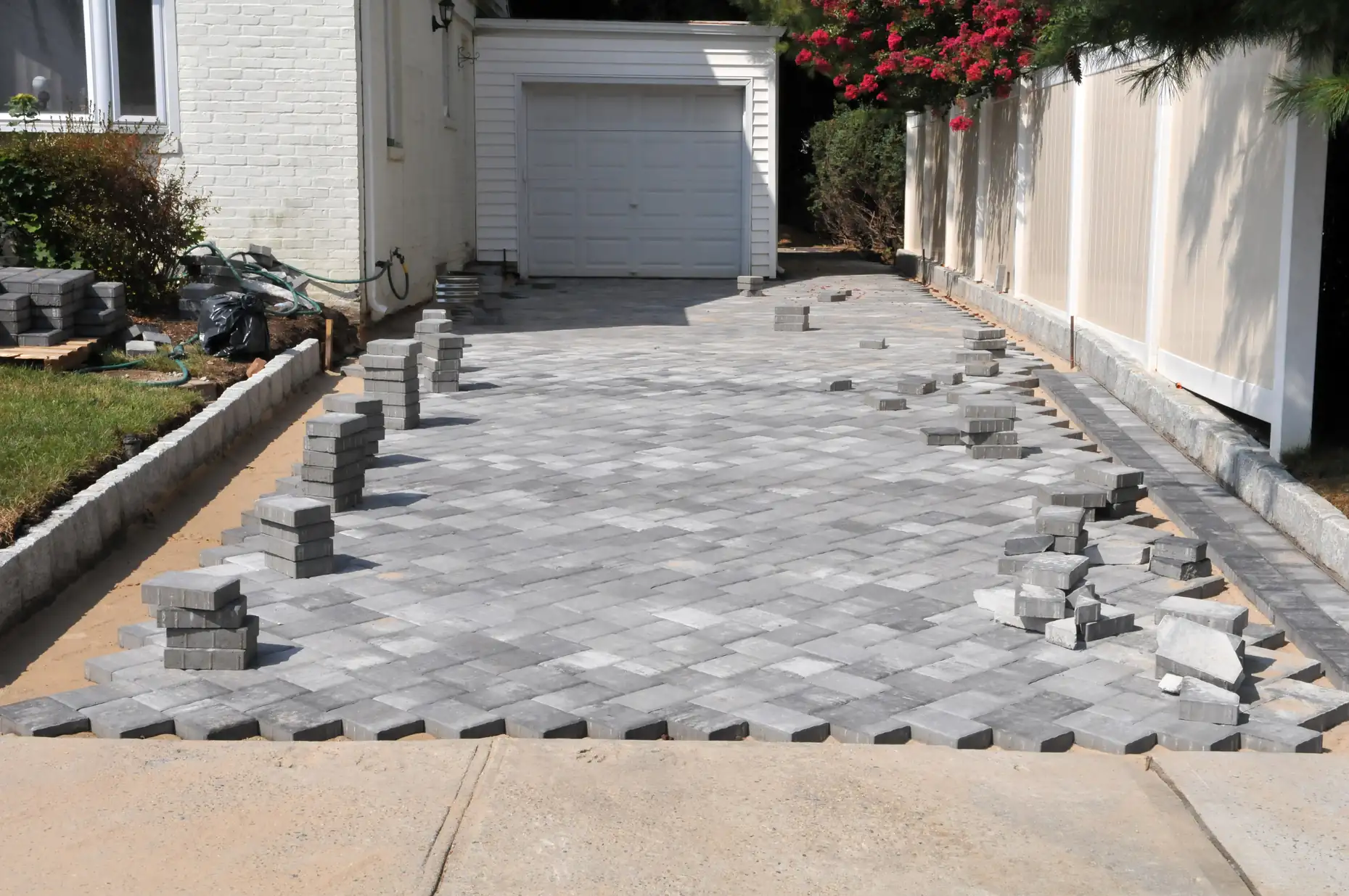
You’re getting full-service concrete work—driveway installation, driveway repair, stamped concrete patios, and decorative paver installations using Belgard pavers or flagstone pavers depending on your preference. We also handle concrete aprons, walkways, and anything else that needs a solid, long-lasting surface.
Every project includes proper site preparation, which means excavation, grading for drainage, and a compacted aggregate base. We’re using high-grade materials designed for New Jersey’s freeze-thaw cycles, not the cheapest mix we can source. For decorative work, stamped concrete gives you the look of brick or stone at a lower cost, and it’s durable enough to handle snow plows and road salt without falling apart.
Morris County has specific requirements for driveway thickness, expansion joints, and curb cuts. We handle that. Essex County has drainage standards that need to be met. We handle that too. You’re not dealing with permits, inspections, or figuring out whether your contractor actually knows local building codes. We take care of it because that’s part of doing the job correctly.
If you’re in Short Hills, Basking Ridge, or Bernardsville and want something beyond a standard driveway, we also install patio pavers and design outdoor spaces that tie into your property. Same process—proper base, proper materials, professional installation.
Concrete driveway costs in northern New Jersey typically run between $6 and $12 per square foot, depending on thickness, reinforcement, and finish. A standard two-car driveway—around 400 to 576 square feet—will generally cost between $2,400 and $6,900 for a basic installation.
That price includes excavation, stone base, concrete pour, and finishing. If you want stamped concrete or decorative borders, expect to add $2 to $4 per square foot. Repairs are different—patching cracks or resurfacing a section costs significantly less than a full replacement, but it depends on how much damage exists and whether the base is still solid.
We give you transparent pricing upfront. No surprises, no doubling the quote once we’ve already torn out your old driveway. You’ll know what it costs before we start, and that number doesn’t change unless you change the scope.
A properly installed concrete driveway lasts 30 years or more in New Jersey, even with freeze-thaw cycles, road salt, and heavy use. That’s significantly longer than asphalt, which typically needs replacement every 15 to 20 years.
The key is installation quality. If the base isn’t compacted correctly, or if the concrete is poured too thin, you’ll see cracks and settling within a few years. New Jersey requires a minimum seven-inch thickness for driveway aprons, and that’s not arbitrary—it’s what’s needed to handle the weight and weather conditions here.
Maintenance extends lifespan. Sealing your concrete every few years protects against water infiltration and surface damage. Fixing small cracks early prevents them from becoming bigger problems. But if the foundation is solid and the pour was done right, you’re looking at decades of use before you need to think about replacement.
Concrete costs more upfront but lasts longer and requires less maintenance. Asphalt is cheaper initially but needs sealing every few years and typically requires replacement sooner. If you’re planning to stay in your home long-term, concrete usually makes more financial sense.
Concrete handles New Jersey winters well. It doesn’t soften in summer heat the way asphalt does, and it’s more resistant to oil stains and surface damage. The tradeoff is that repairs are more visible—you can’t just patch and seal concrete the way you can with asphalt.
Asphalt is a better choice if you need a faster installation or you’re working with a tighter budget. It’s also easier to repair in sections. But for durability, longevity, and curb appeal, concrete wins. That’s especially true if you’re in a higher-end area like Bernardsville, Chatham, or Basking Ridge where property values justify the investment.
Yes, but it requires more planning and expertise than a flat installation. Slopes create drainage challenges, and if the grade isn’t managed correctly, water will pool or run toward your foundation instead of away from it.
We’ve installed driveways on steep slopes throughout Morris and Essex Counties, including properties in Upper Montclair and the hills around Morristown. The process involves careful grading, sometimes adding retaining walls or drainage solutions, and making sure the concrete is poured at the right thickness to handle the angle.
Slopes also affect cost. You’re doing more excavation, more base work, and sometimes adding features like textured finishes for traction or drainage channels to manage water flow. But it’s absolutely doable, and when it’s done right, you end up with a driveway that’s as functional and durable as one on flat ground.
Yes. Most towns in Morris, Essex, and Somerset Counties require permits for driveway installation, and Montclair specifically has building codes that dictate thickness, curb cuts, and drainage standards. Skipping permits isn’t just illegal—it can cause problems when you sell your property or file an insurance claim.
We handle permits as part of the job. That includes submitting plans, coordinating inspections, and making sure everything meets local requirements. Montclair requires a seven-inch thickness for concrete driveway aprons, four inches of crushed stone base, and proper expansion joints. We know those specs because we work in these towns regularly.
If a contractor tells you permits aren’t necessary or offers to skip them to save money, that’s a red flag. You’re the one who’ll deal with the consequences if the town finds out, and unpermitted work can be expensive to fix or remove. We do it right from the start so you don’t have to worry about it later.
You can typically walk on a new concrete driveway after 24 hours, but you should wait at least seven days before driving on it. Full curing takes about 28 days, and that’s when the concrete reaches its maximum strength.
Driving on it too early can cause surface damage, cracking, or impressions that don’t go away. We’ll give you specific guidance based on weather conditions—hot, dry weather speeds up curing, while cool or humid conditions slow it down.
During that first week, keep heavy vehicles off the surface and avoid dragging anything across it. After seven days, normal use is fine, but the concrete is still gaining strength. By the end of the first month, it’s fully cured and ready to handle everything New Jersey winters can throw at it.