
Hear from Our Customers
Your driveway stops being a problem. No more watching small cracks turn into potholes every winter because water froze, expanded, and destroyed what was already weak.
When cement driveway contractors who know Lake Hopatcong’s terrain do the job, you get proper base preparation that accounts for shifting ground. You get drainage solutions that move water away instead of letting it pool and seep. You get a surface built to last 25-30 years, not one that needs patching in three.
The difference shows up in February when your neighbor’s driveway is crumbling and yours isn’t. It shows up when you sell and buyers see a well-maintained property. It shows up every time you pull in and don’t worry about what winter will do this year.
We’re a third-generation, family-owned contractor based in Dover, NJ, serving Morris County for over 20 years. We’ve installed driveways throughout Lake Hopatcong long enough to know exactly what this area does to pavement.
The hills, the proximity to the lake, the freeze-thaw cycles that hit harder here than in flatter areas—we account for all of it. We’re not the crew that shows up, pours concrete, and disappears. We’re the ones who come back if there’s ever an issue, and we warranty our work because we know how we build.
You’re not getting a sales pitch. You’re getting clear upfront pricing, a 24-48 hour callback guarantee when you request a quote, and a crew that knows the difference between doing it fast and doing it right.
First, we assess your property. That means looking at your terrain, drainage patterns, and any existing damage to understand what’s causing problems. If your old driveway failed because of poor grading or inadequate base prep, we fix that before pouring anything new.
Next comes excavation and base preparation. We remove old material, grade for proper drainage, and install a compacted aggregate base that creates a stable foundation. This step matters more than most homeowners realize—it’s what prevents your driveway from shifting and cracking when the ground moves.
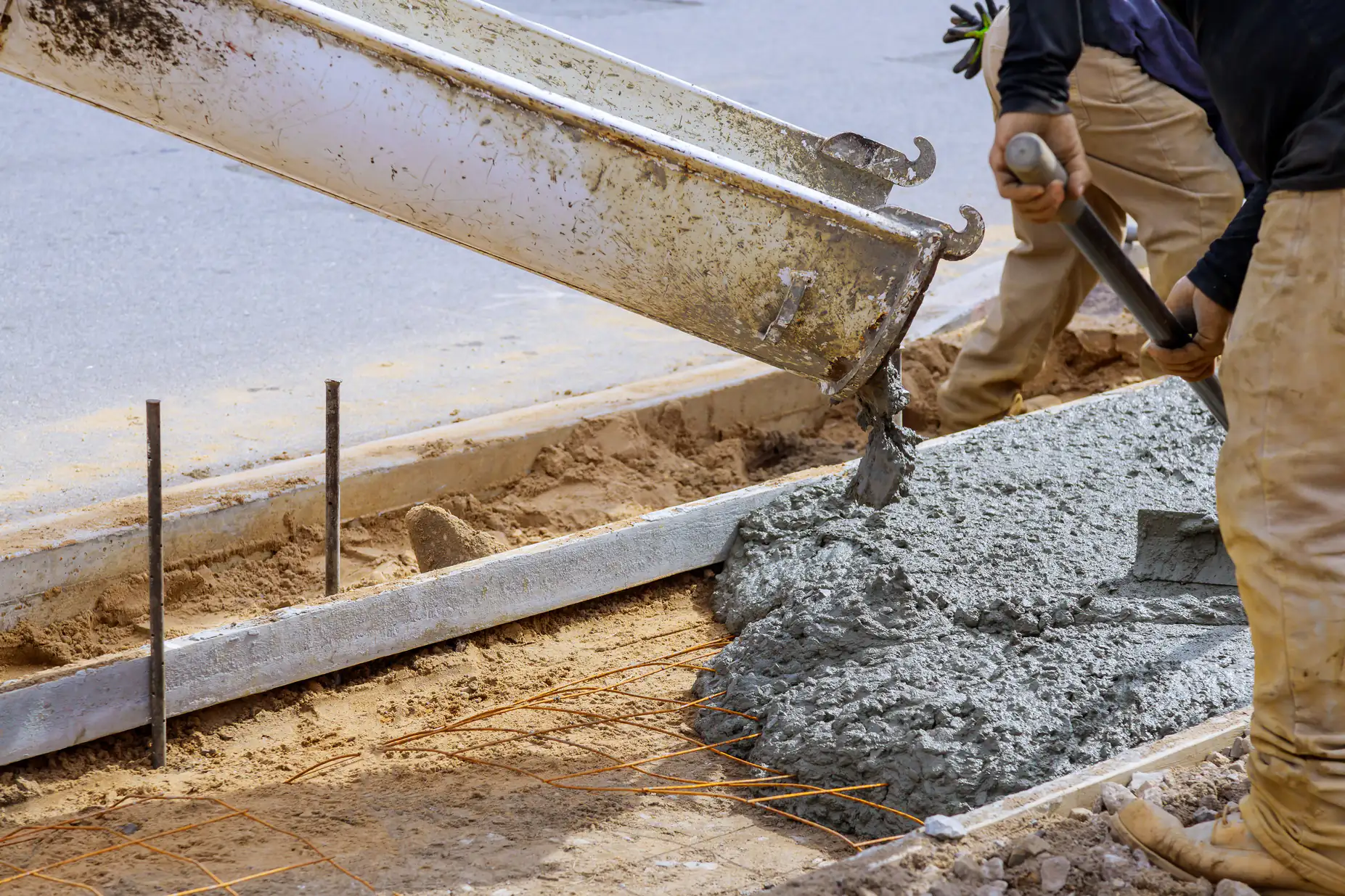
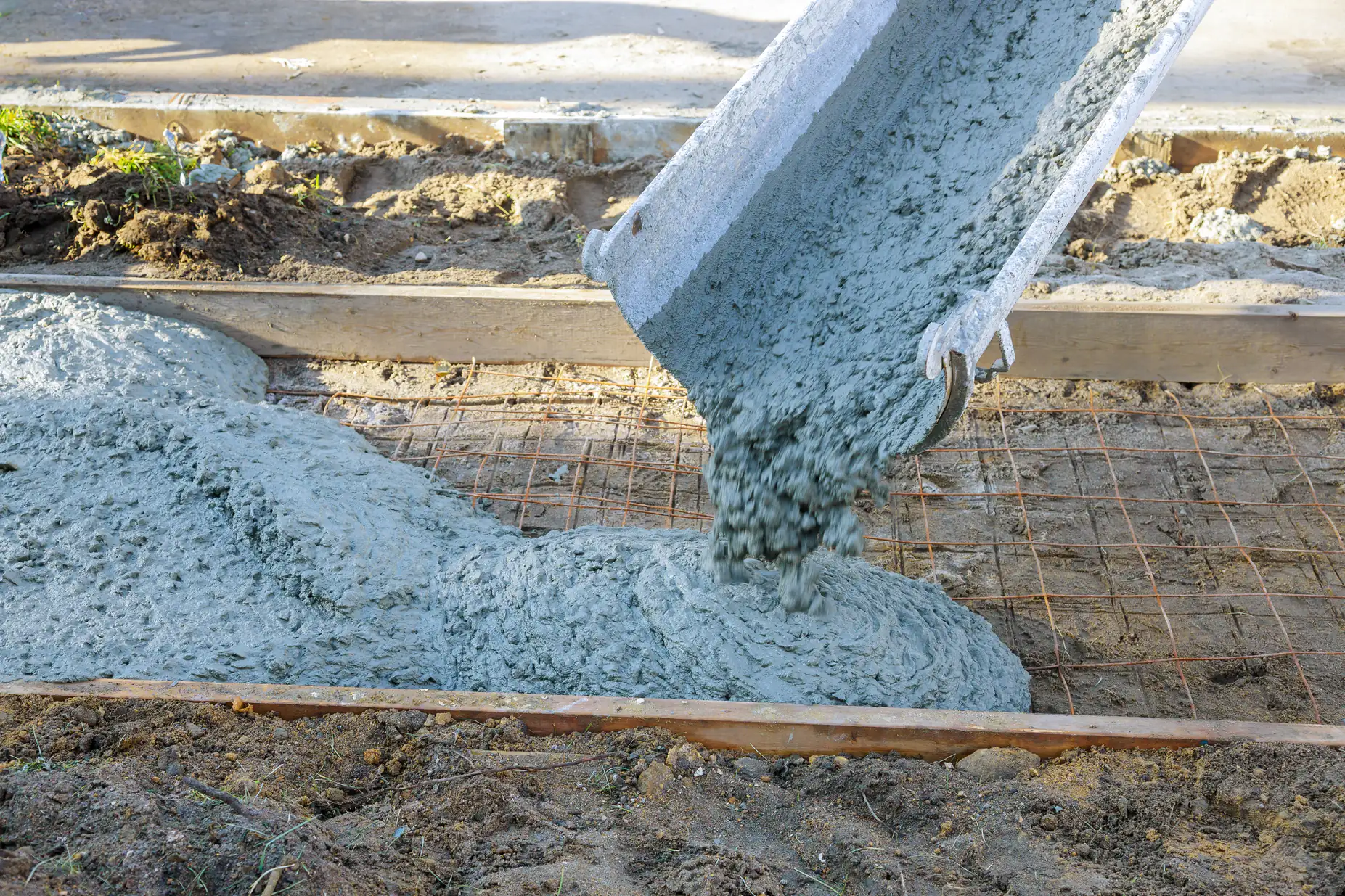
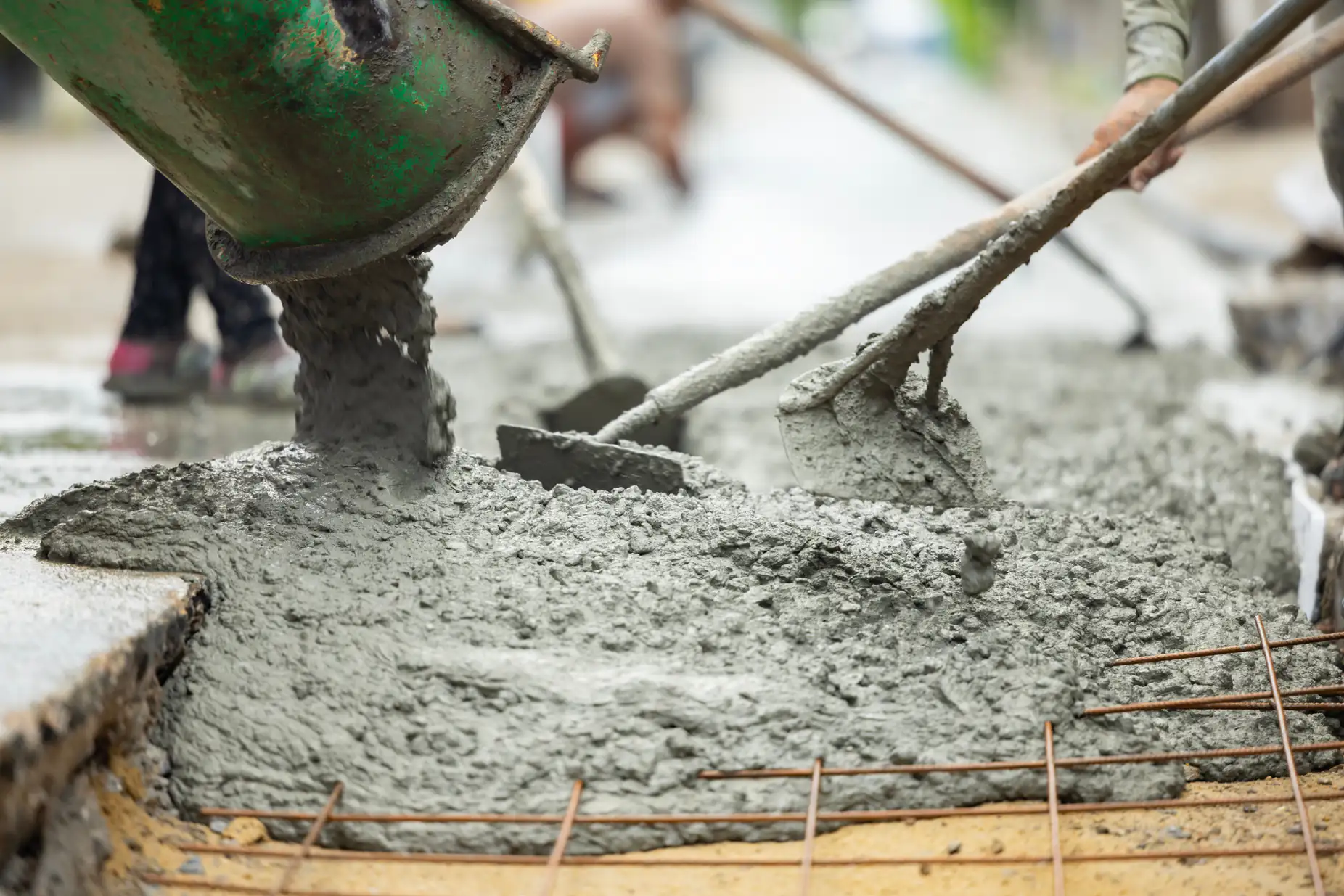
Then we pour and finish the concrete. We use Portland cement mixes with rebar reinforcement for strength and apply it at the right thickness for your specific use. If you want decorative stamped concrete patterns, we handle that too. The concrete needs time to cure properly, which means staying off it for about a week.
After curing, your driveway is ready. We walk you through maintenance basics—sealing every few years, addressing small cracks early—so you get the full 25-30 year lifespan concrete offers when it’s installed correctly.

Ready to get started?
Every concrete driveway installation includes full base preparation with proper excavation, grading, and compacted aggregate. You’re also getting drainage solutions designed specifically for your property’s slope and water flow patterns—critical in Lake Hopatcong where runoff from hills can destroy a driveway in a few seasons.
We include rebar reinforcement in the concrete mix for structural integrity and proper thickness based on whether you’re parking cars, trucks, or heavier vehicles. The finish work includes edging, control joints to manage cracking, and your choice of standard or decorative stamped patterns if you want the look of stone or brick.
You’ll get a detailed estimate before we start that breaks down exactly what’s included—no surprise charges for “sealing” or other add-ons that should’ve been part of the job. And you get a warranty that actually means something because we’re local, we’re established, and we’ll be here if you need us.
For Lake Hopatcong specifically, we account for the elevation changes and proximity to water that make this area tougher on driveways than flatter parts of Morris County. That means extra attention to base stability and drainage—the two things that fail first when contractors cut corners.
Most concrete driveways in Lake Hopatcong run between $7-12 per square foot, which puts a standard two-car driveway around $5,500-$12,000 depending on size, site conditions, and whether you want decorative finishes. That’s higher than asphalt at $4-7 per square foot, but concrete lasts 25-30 years compared to asphalt’s 15-20.
The cost varies based on how much excavation and base prep your property needs. If you’ve got drainage issues or unstable ground—common around here—you’ll pay more upfront but avoid constant repairs later. Properties on hills or with significant grading challenges cost more because the prep work is more involved.
Stamped or decorative concrete adds $3-5 per square foot but gives you the look of pavers or stone without the maintenance. Most homeowners in Lake Hopatcong who choose concrete do it for longevity and lower lifetime cost, not because it’s the cheapest option today.
Lake Hopatcong’s freeze-thaw cycles are brutal on driveways. Water seeps into small cracks, freezes when temperatures drop, expands, and makes those cracks bigger. This happens repeatedly all winter, and by spring you’ve got serious damage.
The area’s terrain makes it worse. You’ve got hills, shifting ground, and water runoff that pools if drainage isn’t handled right. When water sits on or under your driveway and freezes, it lifts and cracks the surface. Poor base preparation compounds the problem—if the foundation isn’t stable and properly compacted, the whole driveway shifts as the ground moves.
Most cracking comes down to two things: inadequate base prep and poor drainage. Contractors who skip proper excavation, use thin aggregate bases, or don’t grade for water flow set you up for failure. The concrete itself is fine—it’s everything underneath that determines whether your driveway lasts three years or thirty.
The actual installation takes 3-5 days for most residential driveways, but you’ll need to stay off it for about a week while it cures. Day one is excavation and base prep. Days two and three involve grading, compacting the aggregate base, and setting up forms and rebar. Day four is the concrete pour and finishing. Then it sits.
Curing time matters more than people think. Concrete reaches full strength over 28 days, but you can typically drive on it after 7 days for standard vehicles. We’ll tell you exactly when it’s safe based on weather conditions and the specific mix we used.
Timeline can stretch if we hit complications—unexpected drainage issues, ledge rock that needs removal, or weather delays. Lake Hopatcong’s terrain sometimes surprises us during excavation, which is why we assess thoroughly upfront. Most projects finish on schedule, but we’d rather take an extra day to do it right than rush and create problems you’ll deal with for years.
Concrete costs more upfront but lasts longer and needs less maintenance. Asphalt is cheaper initially but requires resealing every 2-3 years and typically needs replacement after 15-20 years. Concrete gives you 25-30 years with minimal upkeep if it’s installed correctly.
For Lake Hopatcong specifically, concrete handles freeze-thaw cycles better than asphalt. Asphalt softens in summer heat and can develop ruts, and it’s more prone to cracking from ice expansion. Concrete stays stable across temperature swings and doesn’t need the regular resealing that asphalt demands.
The decision usually comes down to budget and timeline. If you need the lowest cost today and plan to move in 10 years, asphalt might work. If you’re staying long-term and want to stop thinking about your driveway, concrete makes more sense. We install both, so we’ll give you honest input based on your property and priorities—not just push you toward the more expensive option.
Concrete driveways need sealing every 2-3 years to protect against water penetration and freeze-thaw damage. You’ll also want to address small cracks as soon as they appear—filling them prevents water from getting in and making them worse. Beyond that, regular cleaning and avoiding harsh de-icing chemicals in winter keeps the surface in good shape.
Sealing is the big one. It creates a barrier that stops water from seeping into the concrete and causing problems when it freezes. In Lake Hopatcong’s climate, this isn’t optional if you want your driveway to last. The cost is minimal compared to what you’ll spend fixing damage from skipped maintenance.
Watch for standing water after rain—if you see pooling, you might have a drainage issue developing that needs attention before it causes real damage. And don’t use metal shovels or salt-based de-icers in winter. Metal scratches the surface and creates entry points for water. Salt accelerates deterioration. Sand or calcium-based products work better and won’t destroy your driveway.
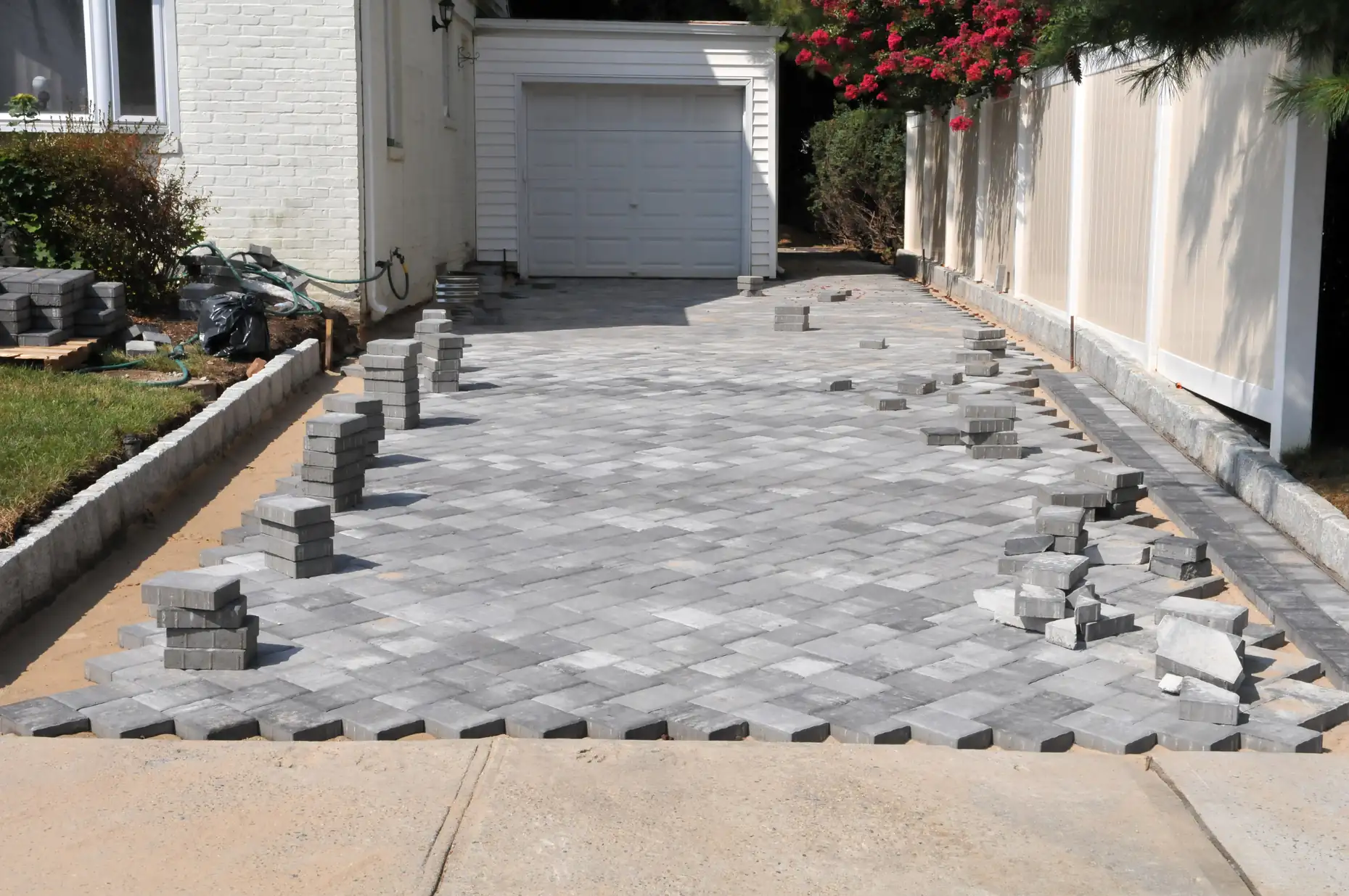
Yes. The same principles that make a driveway last—proper base prep, good drainage, quality materials—apply to concrete patios and walkways. We handle full patio pavers installation, stamped concrete patios, and walkways that connect your driveway to your home or outdoor spaces.
Patios actually give you more design flexibility than driveways because they don’t need to support vehicle weight. You can go with thinner pours, more decorative patterns, and finishes that wouldn’t hold up under car traffic. Stamped concrete works especially well for patios—you get the look of flagstone pavers or brick without the cost or maintenance of actual pavers.
If you’re doing a driveway, it often makes sense to handle patio or walkway work at the same time. We’re already on site with equipment, we can tie the projects together visually, and you avoid paying mobilization costs twice. Most Lake Hopatcong homeowners who do concrete driveways end up adding a patio or walkway within a few years anyway—might as well do it right the first time.