
Hear from Our Customers
You stop worrying about whether that hairline crack is going to turn into a pothole by spring. You stop getting estimates from contractors who disappear after cashing your check. You get a driveway that handles what Morris County throws at it—freeze-thaw cycles, summer heat, heavy vehicles—without falling apart in three years.
That’s what happens when the base is done right. When the grading directs water away from your foundation instead of pooling near your garage. When we use Portland cement mixes with rebar reinforcement instead of cutting corners to save a few bucks.
A properly installed concrete driveway in Kenvil, NJ lasts 30 to 40 years. That’s not marketing talk—that’s what happens when you excavate deep enough, compact the base to 92-96% density, and pour at the right thickness for your soil conditions. Most driveways fail because of what you can’t see. The base prep. The drainage. The shortcuts that save time during installation but cost you thousands in repairs later.
Platinum Paving works throughout Morris, Sussex, and Somerset Counties. We’re based here, we know what winter does to pavement here, and we’ve seen what happens when contractors from out of the area don’t account for how much freeze-thaw action your driveway takes between December and March.
Kenvil, NJ sits right in an area that gets hit harder than Central or South Jersey—about 40% more freeze-thaw cycles. That means water gets into small cracks, freezes, expands, and turns minor issues into major problems fast. If your base isn’t compacted right or your drainage isn’t graded properly, you’ll see it within two seasons.
We handle residential driveways, concrete patios, and commercial paving projects. You’ll get a written estimate that explains what needs to be done and why. No surprises, no vague line items, no disappearing after the deposit clears.
First, we evaluate your site. That means looking at drainage, soil conditions, and how much excavation is needed. If water pools near your foundation or your current driveway has settled unevenly, we’ll tell you why and what it takes to fix it.
Next comes excavation and base prep. This is where most contractors cut corners. We excavate deep enough to remove unstable soil, then bring in crushed stone base material and compact it with heavy vibratory rollers. Target density is 92-96% of maximum theoretical density. Hit that number and your driveway won’t settle or crack prematurely. Miss it and you’re looking at problems within a few years.
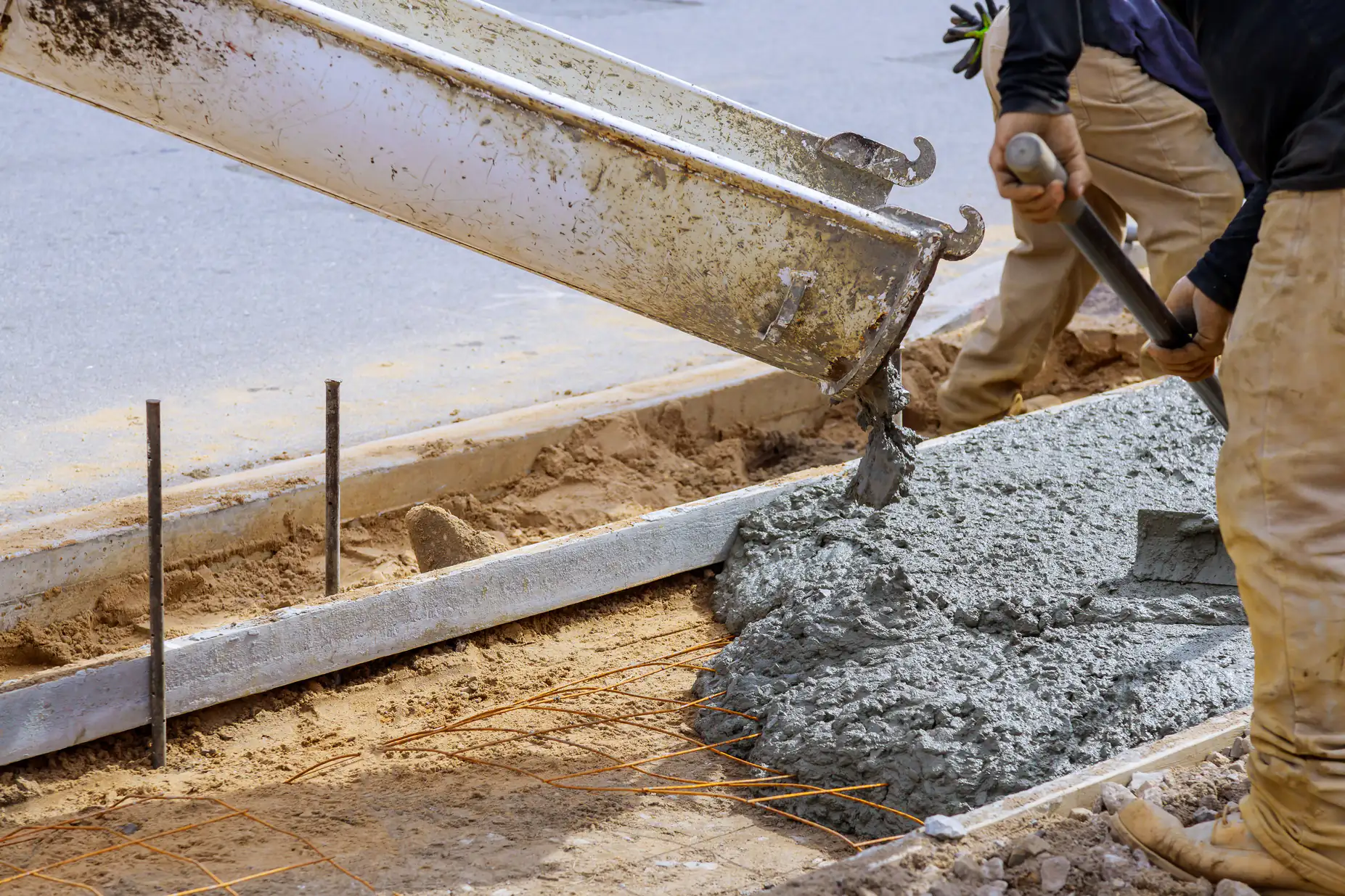
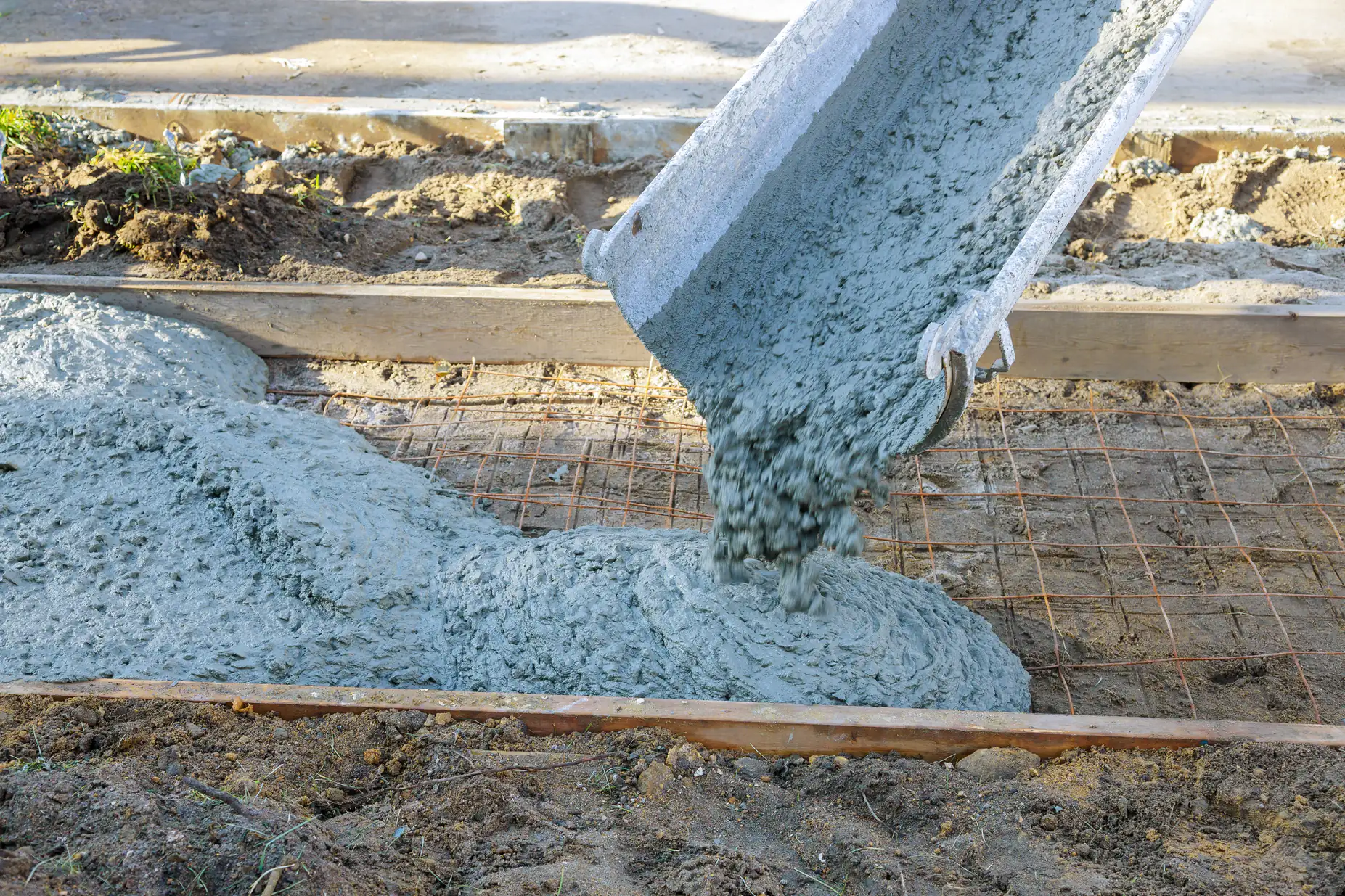
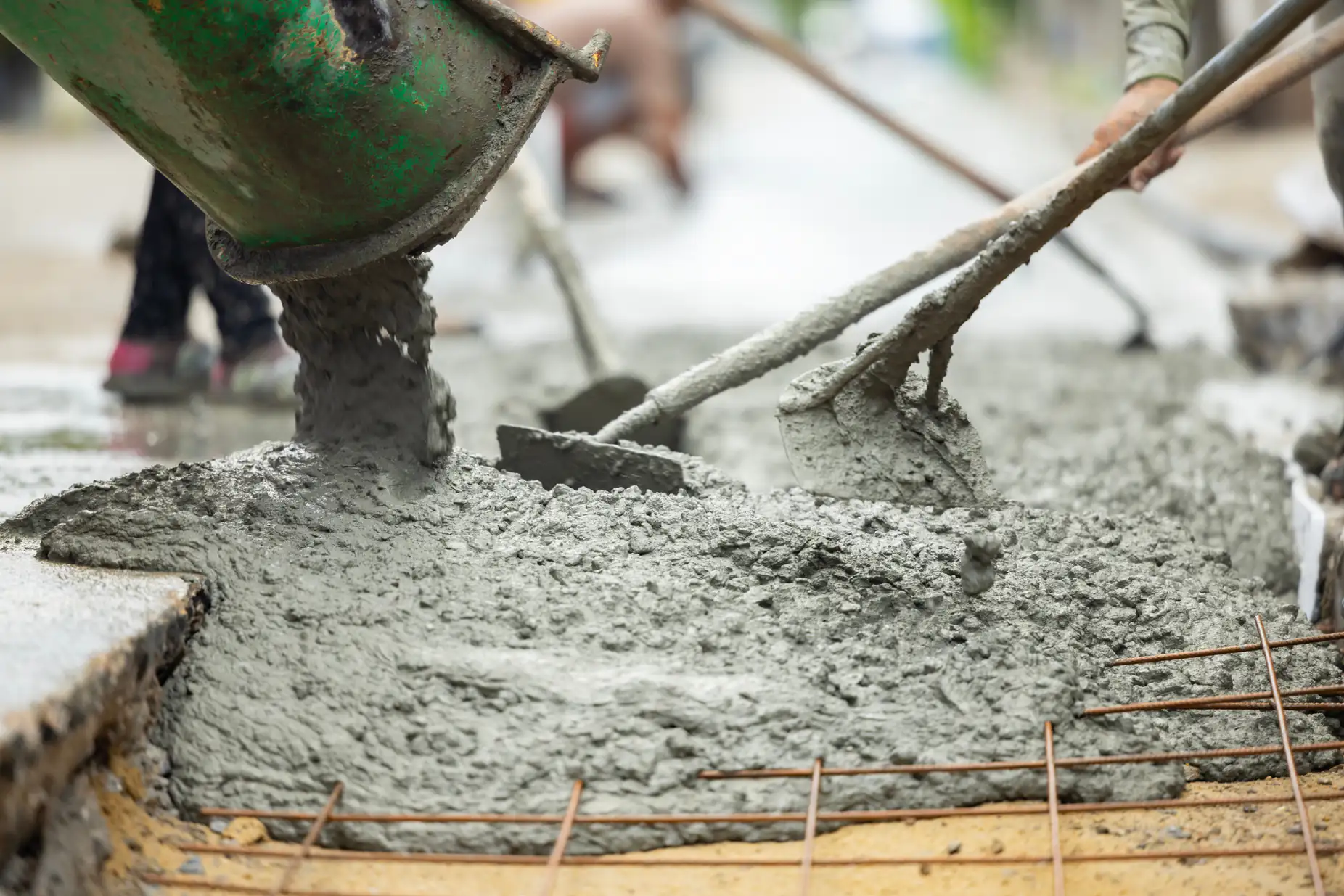
Then we form, pour, and finish the concrete. We use Portland cement mixes with rebar reinforcement for strength. If you want decorative stamped concrete patterns, we can do that too. The concrete needs to cure properly—that means staying off it for at least seven days, longer in cooler weather.
Finally, we handle cleanup and walk you through maintenance. You’ll know when to seal it, how to spot issues early, and what to expect over the next few decades.

Ready to get started?
You get a full site evaluation before we start. That includes checking drainage, measuring the area, and identifying any issues with your current driveway or the soil underneath. If tree roots are pushing up sections or water isn’t draining properly, we’ll tell you upfront.
Base preparation is included—excavation, grading, crushed stone base, and compaction to the right density. This is the part that determines whether your driveway lasts five years or forty. We don’t skip it to save time.
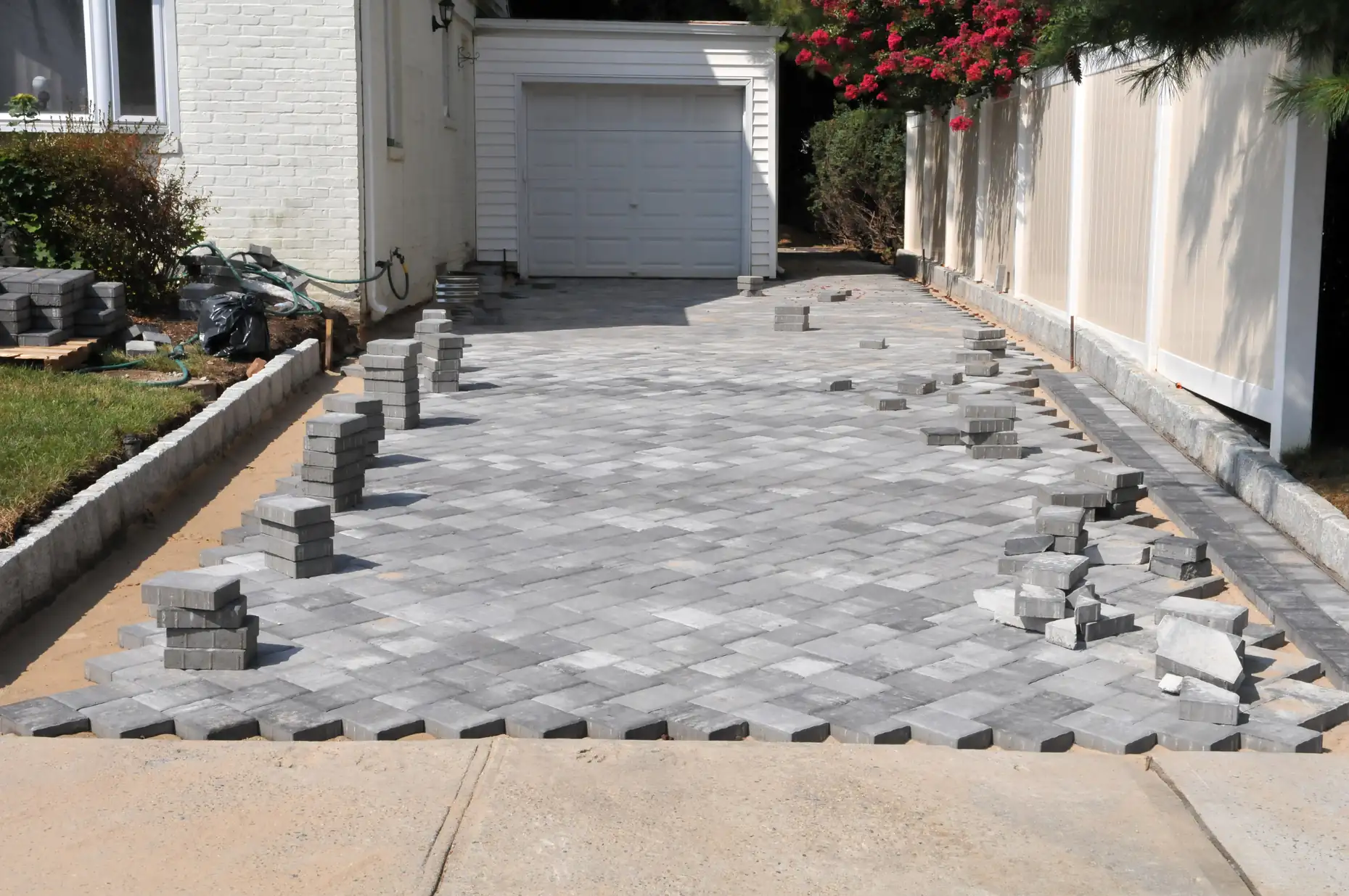
Concrete installation includes forming, pouring Portland cement mix with rebar reinforcement, and finishing. If you want decorative stamped concrete, we handle that too. Belgard pavers and flagstone pavers are options if you’re looking at patio work or want a different look for walkways.
Kenvil, NJ properties often need drainage solutions—catch basins, French drains, or regrading to direct water away from foundations. Morris County gets enough rain and snowmelt that ignoring drainage leads to problems. We’ll include that in the estimate if your site needs it.
Cleanup is part of the job. We haul away old material, grade around the new driveway, and leave your property ready to use once the concrete cures.
Concrete driveways in New Jersey typically run $7 to $13 per square foot for basic installation. A standard two-car driveway around 600 square feet costs somewhere between $4,200 and $7,800 depending on site conditions, thickness, and whether you need decorative finishes like stamped concrete.
That’s higher than asphalt, which runs $5 to $8 per square foot. But concrete lasts longer—30 to 40 years with proper installation versus 20 to 30 for asphalt. The upfront cost difference is usually 15-20%, but you’re looking at fewer repairs and less maintenance over the life of the driveway.
If your site needs extra excavation, drainage work, or has poor soil conditions, expect the price to go up. Same goes if you’re in an area that’s hard to access or requires a lot of prep work. We’ll give you a written estimate that breaks down exactly what you’re paying for so there’s no confusion later.
A properly installed concrete driveway lasts 30 to 40 years in North Jersey. That assumes the base was compacted correctly, drainage was handled, and the concrete was poured at the right thickness for your soil and vehicle load.
Most driveways fail early because of poor base preparation or drainage issues. If the base isn’t compacted to 92-96% density, it settles unevenly and causes cracks. If water pools on the surface or seeps underneath, freeze-thaw cycles do the rest. Kenvil, NJ gets about 40% more freeze-thaw action than Central or South Jersey, so those issues show up faster here.
Maintenance matters too. Sealing your concrete every few years protects it from water infiltration and surface damage. Fixing small cracks before they spread keeps minor issues from becoming expensive problems. A driveway that gets ignored for ten years won’t last as long as one that gets basic upkeep.
Concrete costs more upfront but lasts longer and needs less maintenance. Asphalt is cheaper to install but requires resealing every few years and typically needs replacement sooner. For a 600-square-foot driveway, you’re looking at around $3,000 to $4,800 for asphalt versus $4,200 to $7,800 for concrete.
Concrete handles heavy loads better and doesn’t soften in summer heat the way asphalt does. It also offers more design options—you can do stamped patterns, decorative finishes, or different colors. Asphalt is black, and that’s pretty much it.
Asphalt is easier to repair if you get cracks or potholes. You can patch it and it blends in reasonably well. Concrete repairs are more visible and harder to match. But if the installation is done right, you shouldn’t need many repairs for decades. It comes down to whether you want lower upfront cost or longer-term durability with less ongoing maintenance.
Most residential driveway projects in Morris County don’t require a permit if you’re replacing an existing driveway in the same footprint. If you’re expanding the driveway, changing drainage patterns, or doing work near the street, you’ll likely need a permit from the local building department.
Commercial projects almost always require permits. That includes parking lots, loading areas, and any paving work for businesses or multi-family properties. Getting permits wrong creates expensive problems—sometimes you have to redo completed work if it doesn’t meet code.
We handle permit applications when they’re required. That includes submitting site plans, coordinating inspections, and making sure the work meets local building codes. It’s easier to do it right the first time than deal with violations or fines later. If your project needs a permit, we’ll tell you upfront and include it in the timeline.
You need to stay off a new concrete driveway for at least seven days. Concrete reaches about 70% of its full strength in that time, which is enough for light vehicle traffic. Full strength takes about 28 days, so avoid heavy vehicles or equipment during that first month if possible.
Cooler weather slows curing, so if your driveway is poured in late fall or early spring, expect to wait longer before driving on it. Hot weather speeds things up but can cause surface cracking if the concrete dries too fast. We’ll tell you exactly how long to wait based on weather conditions during your pour.
Walking on the driveway is fine after 24 to 48 hours, but keep vehicles off until it’s fully cured. Driving on concrete too early causes surface damage, cracking, and premature wear. It’s tempting to use it sooner, especially if your driveway is your only way in and out, but waiting those seven days protects your investment for the next few decades.
Poor base preparation is the main reason. If the base isn’t compacted properly or the soil underneath isn’t stable, the concrete settles unevenly and cracks. Freeze-thaw cycles make it worse—water gets into small cracks, freezes, expands, and turns hairline cracks into bigger problems.
Drainage issues cause a lot of failures too. If water pools on the surface or seeps under the slab, it weakens the base and accelerates cracking. Kenvil, NJ gets enough rain and snowmelt that drainage matters. Grading the driveway so water runs off instead of sitting there makes a big difference.
Tree roots, heavy loads, and skipping control joints also cause cracks. Control joints are intentional weak points that let concrete crack in straight lines where you want it to instead of randomly across the surface. Some cracking is normal over time, but if your driveway is cracking within the first few years, it’s usually because something wasn’t done right during installation.