
Hear from Our Customers
You know the drill. Temperatures drop in November, everything looks fine. Then March hits and you’re staring at cracks zigzagging across your driveway like a road map.
Those hairline fractures you ignored? They’re potholes now. And that “simple fix” just became a few thousand dollars you weren’t planning to spend.
Here’s what actually prevents that: proper base prep that accounts for freeze-thaw cycles, professional drainage that stops water from sitting under your concrete, and quality materials that don’t crack the first time temperatures swing 40 degrees in a week. Most driveways in Flanders fail because contractors skip one of those three things. We don’t skip any of them.
When your driveway is built right from the start, you’re not calling for emergency repairs every spring. You’re getting two decades of use with basic maintenance. That’s the difference between a concrete pour and a concrete driveway that actually works in North Jersey.
We’ve been handling driveway paving in Flanders and throughout Morris County since before stamped concrete was the trend it is now. That’s over 20 years of watching what works in this climate and what doesn’t.
We’re licensed, insured, and we handle the permits. Our crews use high-grade Portland cement mixes with rebar reinforcement because that’s what holds up here. We’re not the guys who show up with leftover materials from another job and hope it works out.
You’re hiring a family-owned paving company that knows the difference between a driveway that looks good for two years and one that’s still solid after 20. We’ve poured thousands of driveways from Flanders to Newark, and the reason people keep calling us is simple: we do it right the first time, and we don’t disappear after the check clears.
First, we come out and assess your property. We’re looking at drainage angles, soil conditions, and how your existing surface is holding up. If there’s a problem that’s going to cause issues later, we tell you now—not after we’ve already poured.
Next comes site prep. We excavate to the right depth, compact the base in layers (not all at once like some crews do), and set up proper drainage so water moves away from your foundation. This part takes time, and it’s the part that determines whether your driveway lasts five years or twenty-five.
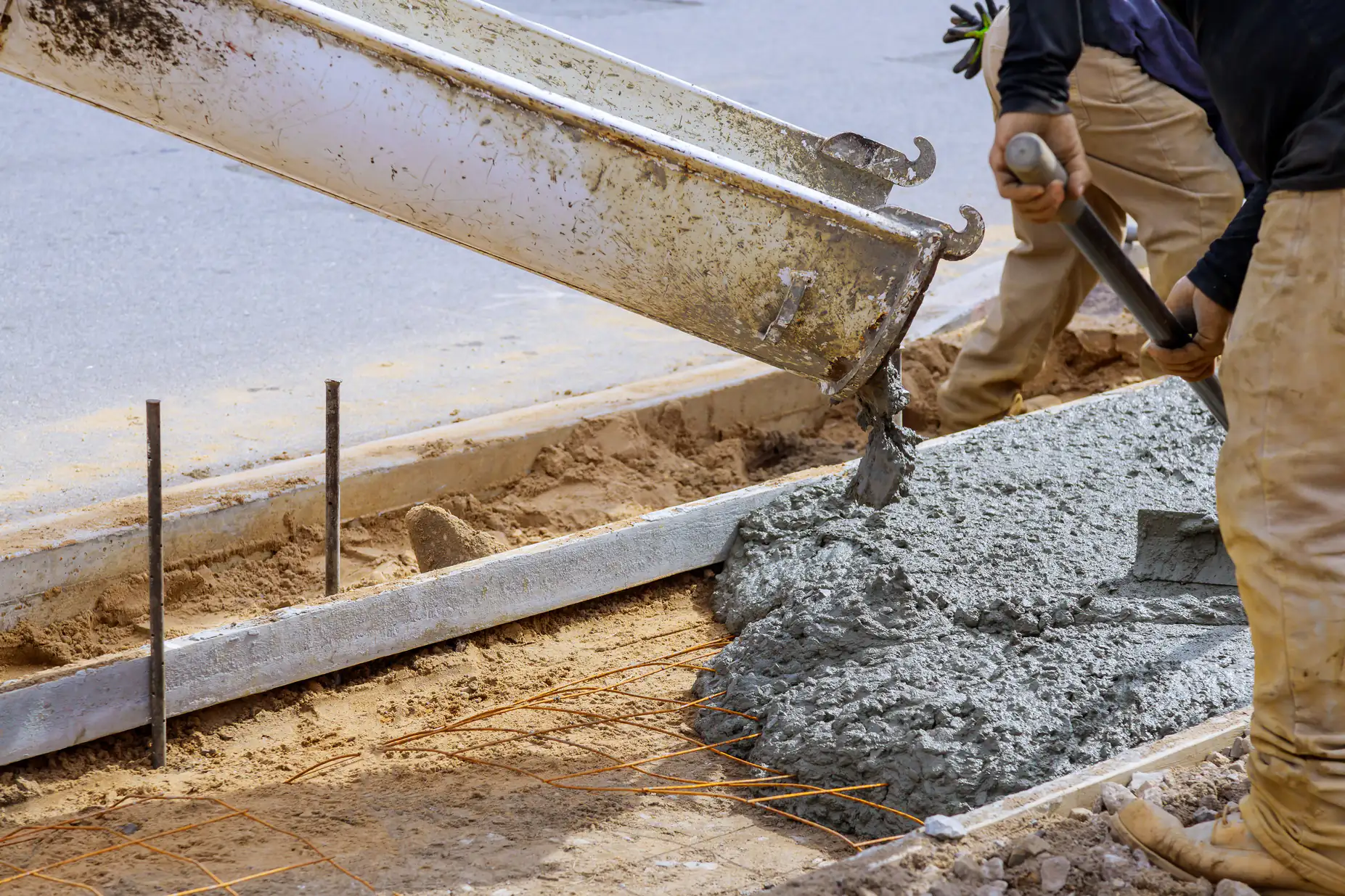
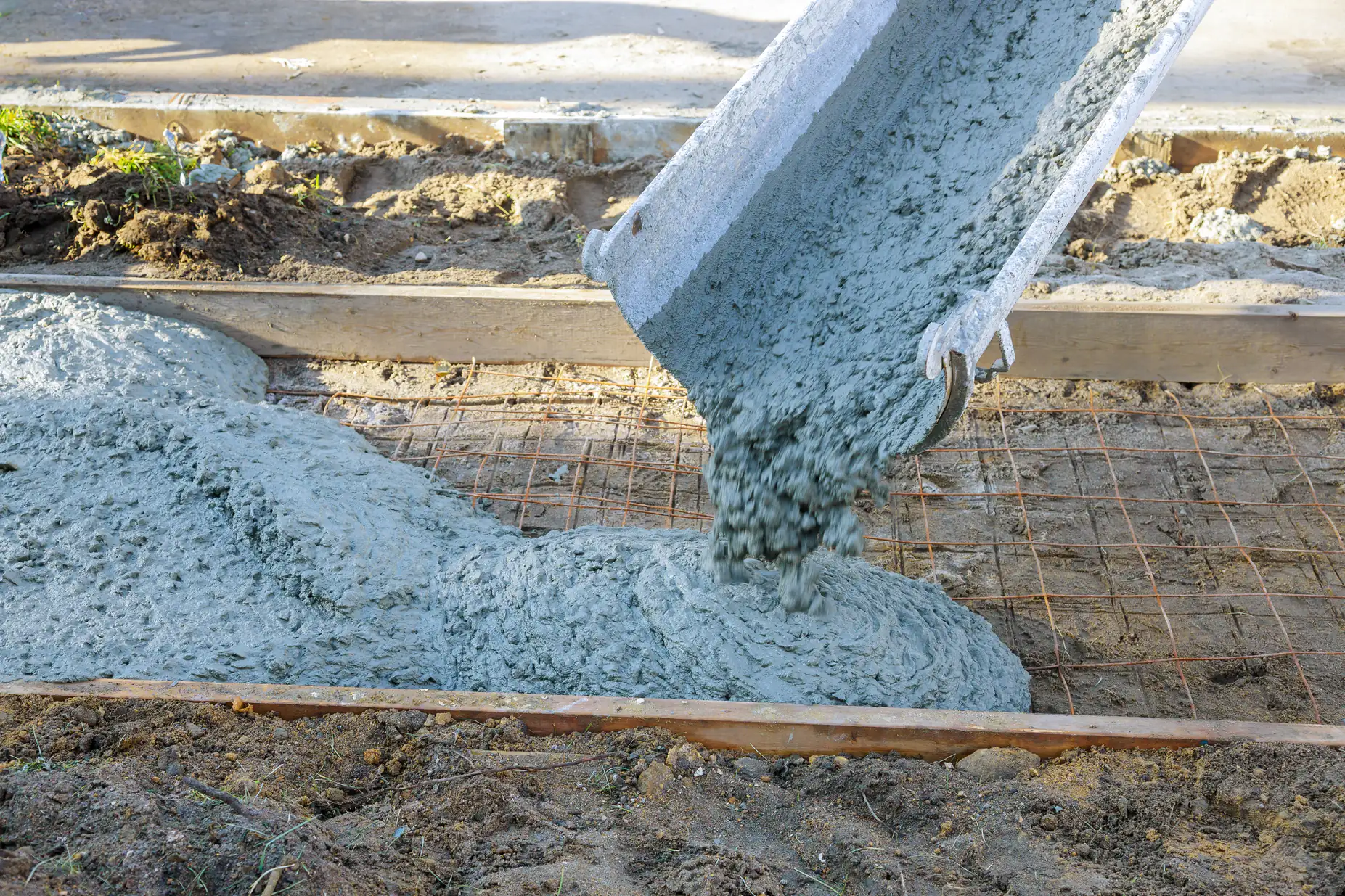
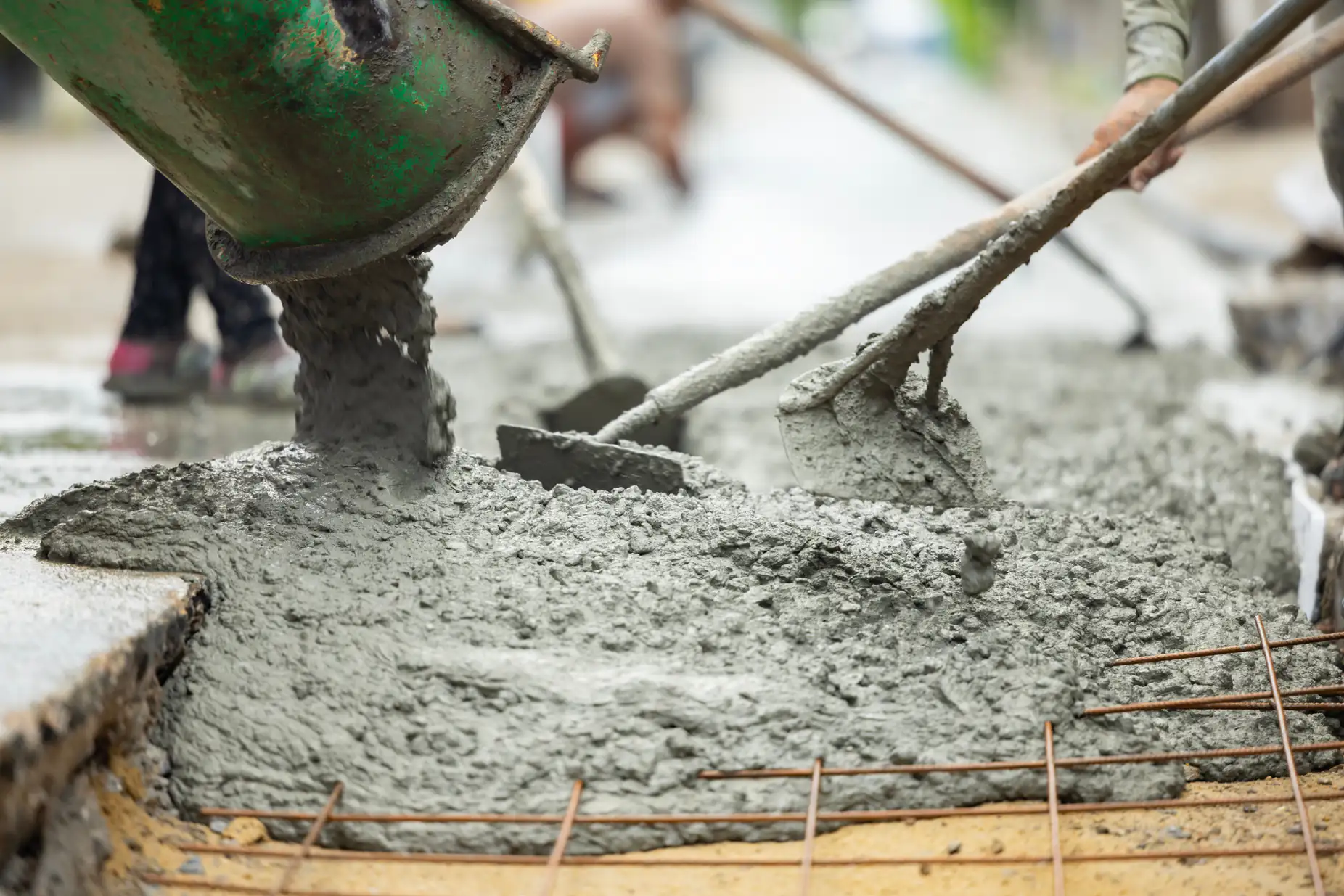
Then we pour. We use Portland cement mixes designed for New Jersey weather, applied at the right temperature, with rebar reinforcement where it’s needed. If you want stamped patterns or decorative finishes, that happens while the concrete is still workable. Our crews have done this enough times that they know exactly how long they have before the window closes.
After the pour, there’s a curing period. Concrete needs time to reach full strength—usually about a week before you can drive on it. We’ll walk you through the timeline and what to expect. Once it’s cured, we clean up completely and give you maintenance guidance so you know how to protect your investment.
Most driveways are done in under three days of active work. We’re fast, but we don’t skip steps to get there.

Ready to get started?
Standard concrete driveways in Flanders run between $7 and $13 per square foot depending on site conditions and thickness. That’s for a plain gray finish with proper base prep, rebar reinforcement, and professional installation. It’s the most cost-effective option and it’ll outlast asphalt by a decade if it’s done right.
If you want something that looks less industrial, stamped concrete is an option. We can mimic brick, stone, or custom patterns while keeping the durability of concrete. Decorative finishes typically add $3 to $8 per square foot depending on complexity. Popular in Morris County right now: patterns that look like natural stone but don’t require the maintenance.
We also handle concrete patios, walkways, and any other flatwork you need done at the same time. If we’re already setting up equipment and pulling permits, it makes sense to knock out multiple projects in one shot. Saves you money on mobilization and keeps everything consistent.
Every project includes a detailed written estimate that breaks down costs so you know exactly what you’re paying for. No surprise charges, no “we didn’t realize” conversations halfway through. We handle all township permits and inspections, and our work meets local building codes because we actually know what those are.
Most concrete driveways in Flanders last 20 to 30 years with basic maintenance. That’s assuming proper installation—correct base prep, adequate thickness, rebar reinforcement, and professional drainage.
The driveways that fail early usually have one thing in common: shortcuts during installation. Thin concrete, no rebar, poor compaction, or drainage that sends water under the slab instead of away from it. Those driveways start cracking within five years.
Morris County weather is tough on concrete. Freeze-thaw cycles, temperature swings, and heavy snow all put stress on the surface. But when a driveway is engineered for those conditions from the start, it holds up. You’ll need to reseal it every few years and fix minor cracks as they appear, but you’re not looking at replacement for decades.
Concrete costs more upfront but lasts longer. Asphalt is cheaper initially but needs more maintenance and typically requires replacement sooner.
In Flanders, concrete driveways last 20 to 30 years. Asphalt driveways last 15 to 20 years and need resealing every few years to prevent cracking and deterioration. If you’re planning to stay in your home long-term, concrete usually makes more financial sense.
Concrete also handles heavy vehicles better, doesn’t soften in summer heat, and gives you more design options if you want stamped or colored finishes. Asphalt is faster to install and easier to repair, but it doesn’t have the same curb appeal. We install both, so we’re not trying to upsell you—it depends on your budget, timeline, and how long you plan to be in the house.
Standard concrete driveways in Flanders typically cost between $7 and $13 per square foot. Decorative or stamped concrete runs $10 to $21 per square foot depending on the pattern and finish.
For a typical two-car driveway (around 600 square feet), you’re looking at $4,200 to $7,800 for plain concrete, or $6,000 to $12,600 for stamped. Those numbers include proper base prep, rebar reinforcement, and professional installation.
Cost depends on a few factors: site conditions, thickness requirements, decorative options, and how much prep work is needed. If we’re tearing out an old driveway or dealing with drainage issues, that adds to the total. We give you a detailed written estimate before starting so there’s no confusion about what you’re paying for.
Yes, most driveway projects in Flanders require a permit from the township. Requirements vary depending on the size of the driveway and whether you’re replacing an existing surface or adding new pavement.
We handle all permit applications and inspections as part of our service. We know what the township requires, we submit the paperwork, and we make sure the work meets local building codes. You don’t have to deal with any of it.
Skipping permits is a bad idea. If the township finds out, they can make you tear out the driveway and start over. Plus, unpermitted work can cause problems when you sell your home. It’s not worth the risk, and it’s not something you have to worry about when you hire a licensed contractor who does things the right way.
You can walk on your new concrete driveway after 24 to 48 hours. You should wait at least seven days before driving on it.
Concrete reaches about 70% of its full strength in the first week. After seven days, it’s strong enough to handle normal vehicle traffic. Full curing takes about 28 days, but you don’t need to wait that long to use your driveway.
We’ll give you a specific timeline based on weather conditions and the mix we used. Colder temperatures slow down curing, so if we’re pouring in early spring or late fall, we might recommend waiting a few extra days. The key is not rushing it—driving on concrete before it’s ready can cause surface damage that turns into bigger problems later.
Late spring through early fall is ideal for concrete work in Flanders. We’re looking for consistent temperatures above 50°F during the day and above 40°F at night.
Concrete needs warmth to cure properly. If it’s too cold, curing slows down and the surface doesn’t reach full strength. If it’s too hot, the concrete can dry too fast and crack. April through October gives us the best conditions in North Jersey.
That said, we can work outside those months if weather cooperates. We just need a stretch of decent temperatures and no heavy rain in the forecast. If you’re planning a driveway project, reach out in late winter or early spring so we can get you on the schedule before the busy season fills up.