
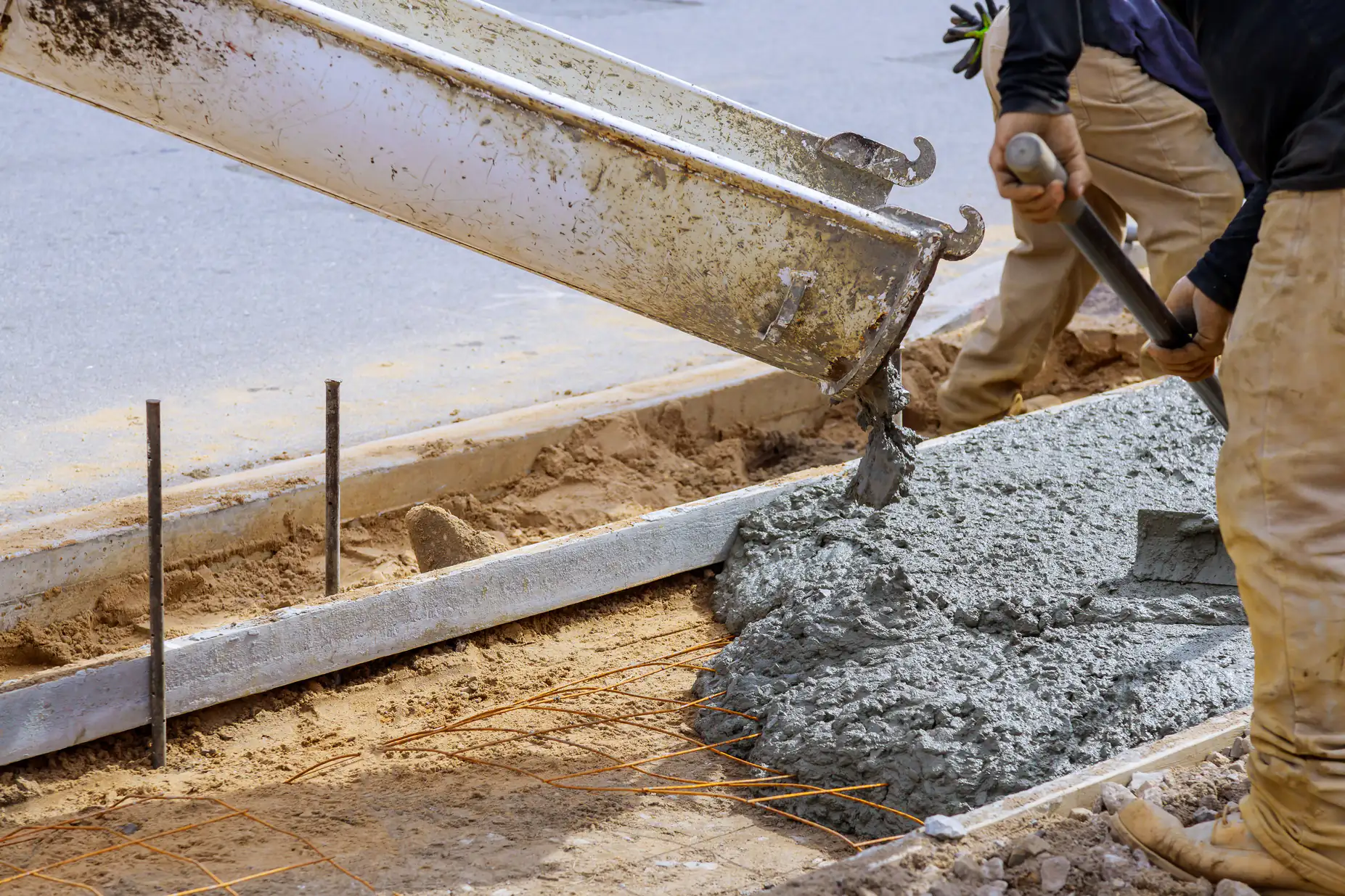
Hear from Our Customers
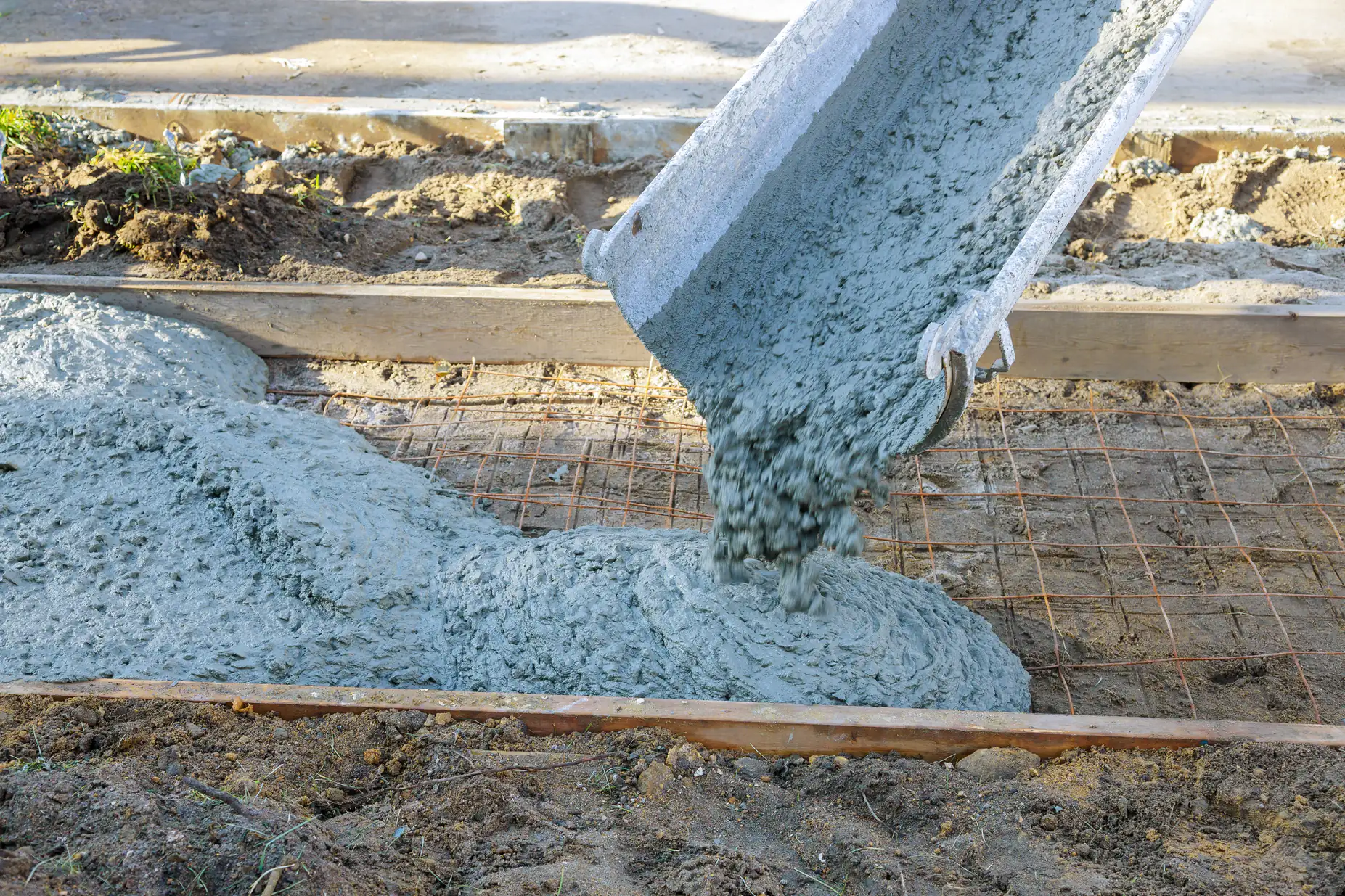
You’re looking at 30 to 50 years of use when concrete is installed correctly. That’s double what asphalt gives you, and it means fewer repairs, less maintenance, and no resealing every few years.
Dover’s housing stock—44% of it built between the 1940s and 1960s—means a lot of driveways are showing their age. Cracks, settling, weeds pushing through. It’s not just cosmetic. A deteriorating driveway affects your property value and creates a poor first impression every single day.
Concrete handles New Jersey winters better than most materials when it’s mixed and poured by contractors who understand local conditions. We use air-entrained concrete and schedule installations when temperatures support proper curing. That means your driveway won’t crack apart after the first hard freeze.
You also get options. Stamped patterns, exposed aggregate, color finishes—whatever fits your home’s style. And once it’s in, maintenance is minimal. A garden hose or pressure washer once or twice a year keeps it looking clean.
We’ve spent over two decades working in Morris, Sussex, and Somerset counties. We’re not a national franchise or a crew that shows up from three states away. We’re based here, and we know how Dover’s soil, drainage patterns, and weather affect concrete work.
That local experience matters when you’re pouring a driveway that needs to last. We know which base materials work best, how deep to excavate for stability, and when to schedule the pour so curing conditions are right. We also know the building codes and permit requirements specific to Morris County.
Every project we take on is fully insured, and all work comes with a guarantee. We don’t ask for cash upfront or give you quotes that expire in two hours. You get clear pricing, realistic timelines, and a callback within 24 to 48 hours when you request a quote online.
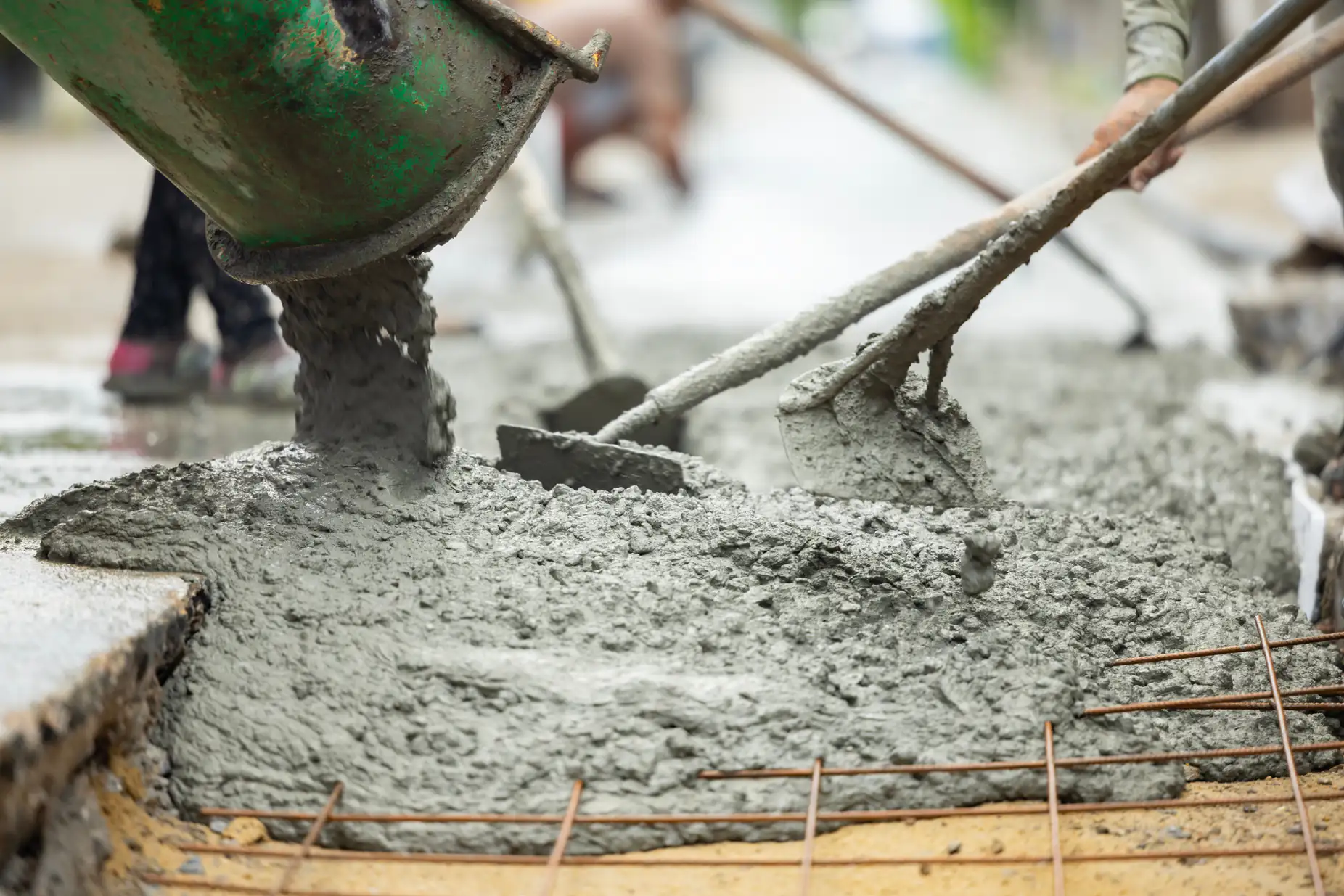
First, we remove your existing driveway if there’s one to take out. That includes hauling away old asphalt, concrete, or pavers—whatever’s there. Then we grade and compact the base. This step determines how well your driveway holds up over time, so we don’t rush it.
Next comes forming and reinforcement. We set forms to the exact dimensions and slope needed for proper drainage. Rebar or wire mesh goes in to reinforce the concrete and prevent cracking. For driveways in Dover, we typically use Portland cement mixes designed for freeze-thaw resistance.
The pour happens on a day when weather conditions are right—temperatures above 50°F at night, no rain in the forecast, and ideally during late spring through early fall. We finish the surface according to your preference: broom finish for traction, smooth trowel, stamped patterns, or exposed aggregate.
Curing takes about a week before you can drive on it, and full strength develops over 28 days. We’ll walk you through the timeline and what to expect at each stage so there are no surprises.

Ready to get started?
Every concrete driveway project includes site preparation, base grading and compaction, forming, reinforcement installation, concrete pouring, finishing, and cleanup. We handle permits if they’re required in Dover, and we coordinate inspections.
You’re not paying for just the concrete. You’re paying for proper drainage design so water doesn’t pool or run toward your foundation. You’re paying for a base that’s been compacted to the right density. You’re paying for contractors who know that night temperatures below 50°F compromise curing, and who won’t pour concrete when conditions aren’t right.
Dover homeowners typically spend between $7 and $15 per square foot for concrete driveway installation, depending on thickness, reinforcement, decorative finishes, and site accessibility. A standard two-car driveway runs about 400 to 600 square feet. We give you upfront pricing with no hidden charges for “unexpected” site conditions that any experienced contractor should have spotted during the estimate.
We also install concrete patios, walkways, and decorative paver installations using Belgard pavers and flagstone. If you’re upgrading your driveway, it often makes sense to address your patio or front walkway at the same time.
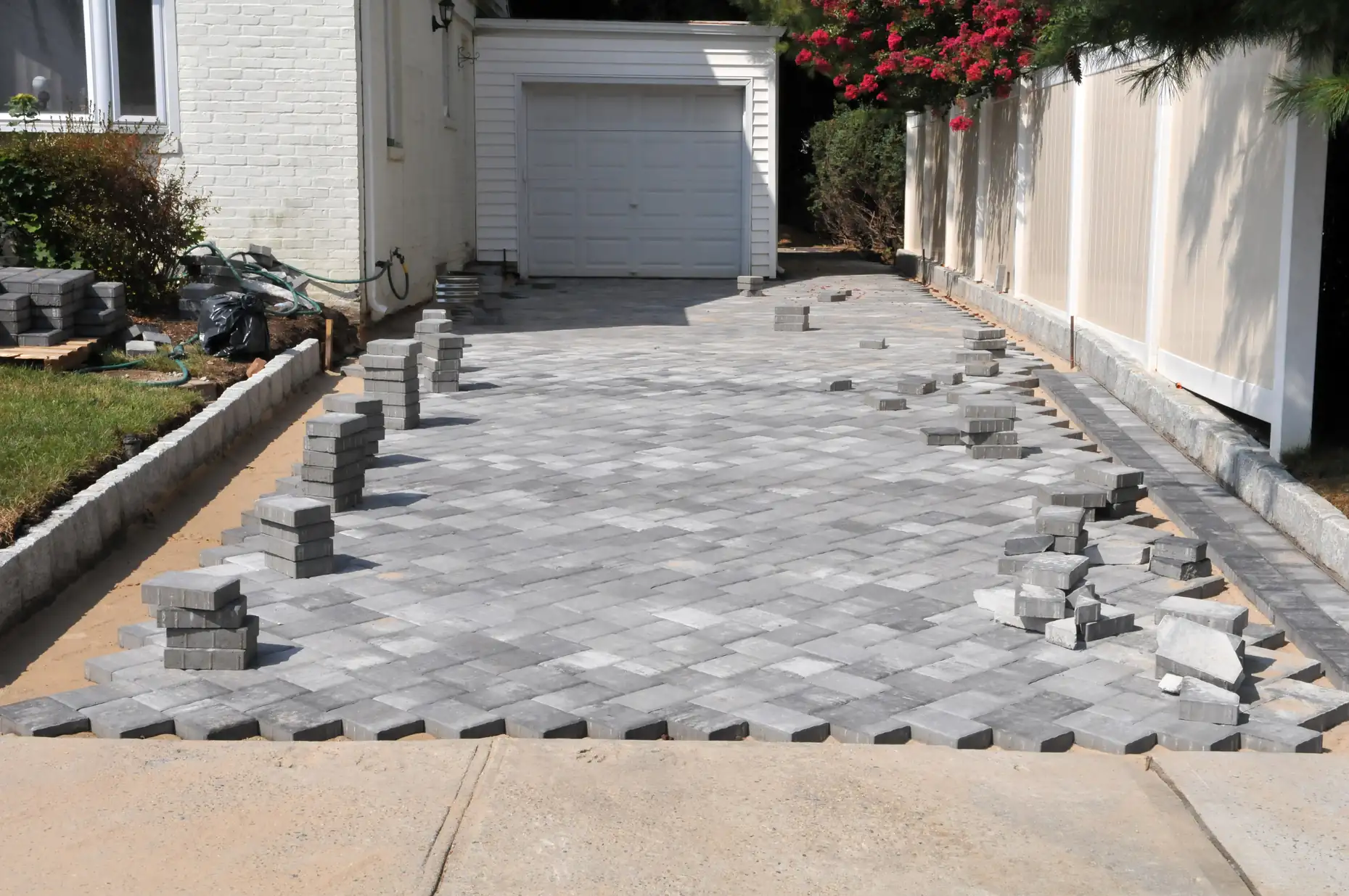
Concrete driveways in Dover typically cost between $7 and $15 per square foot installed. That price includes removal of your old driveway, site prep, base work, forming, reinforcement, concrete, finishing, and cleanup.
For a standard two-car driveway of about 500 square feet, you’re looking at $3,500 to $7,500 depending on thickness, decorative options, and site conditions. Stamped concrete or exposed aggregate finishes add $2 to $5 per square foot. If your property has drainage issues or requires significant grading work, that affects the total.
The wide price range exists because not all concrete work is equal. Thicker concrete with proper rebar reinforcement costs more than a thin slab with wire mesh. A driveway poured during optimal weather with proper curing time costs more than a rush job done in less-than-ideal conditions. You’re paying for longevity and performance, not just square footage.
A properly installed concrete driveway in New Jersey lasts 30 to 50 years. That’s significantly longer than asphalt, which typically needs replacement after 15 to 20 years even with regular maintenance and resealing.
The key phrase is “properly installed.” Concrete that’s poured too thin, reinforced inadequately, or installed without air entrainment won’t make it through many New Jersey winters. Freeze-thaw cycles are brutal on concrete that wasn’t mixed or cured correctly.
Dover’s climate requires contractors who understand local conditions. We use air-entrained concrete that can handle freeze-thaw cycles, and we only pour when temperatures support proper curing. We also make sure the base is compacted correctly and drainage is designed to move water away from the concrete. These details determine whether your driveway lasts 15 years or 45 years.
Late spring through early fall is the best window for concrete driveway installation in Dover. Specifically, May through October gives you the most reliable weather conditions for proper curing.
Concrete needs temperatures above 50°F at night for at least a week after pouring. If it gets too cold too fast, the curing process gets compromised and you end up with weaker concrete that’s more prone to cracking. If it’s too hot—above 90°F—the concrete can cure too quickly and develop surface cracks.
September and early October are often ideal because temperatures are moderate and there’s less chance of extreme heat. Spring works well too, but you’re more likely to deal with rain delays. Winter installation is possible with special cold-weather concrete mixes and insulated blankets, but it adds cost and complexity. Most Dover homeowners schedule concrete work for late spring or early fall to get the best results without weather complications.
Dover typically requires permits for new driveway installation or significant driveway replacement work. The exact requirements depend on the scope of your project and whether it affects drainage, curb cuts, or right-of-way areas.
Morris County building codes govern most residential concrete work, and Dover’s local ordinances add specific requirements about setbacks, drainage, and impervious surface coverage. If your new driveway increases the amount of impervious surface on your property significantly, you may need to address stormwater management.
We handle permit applications and coordinate inspections as part of our service. It’s not something you need to figure out on your own. Most permits get approved within a week or two as long as the plans meet code requirements. Skipping permits might seem like a shortcut, but it creates problems when you sell your home or if a neighbor complains. Better to do it right from the start.
Concrete lasts 30 to 50 years with minimal maintenance. Asphalt lasts 15 to 20 years and requires resealing every two to three years. That’s the main difference, and it’s significant.
Asphalt costs less upfront—usually $3 to $7 per square foot compared to $7 to $15 for concrete. But when you factor in resealing costs every few years and earlier replacement, concrete often costs less over the life of the driveway. Asphalt also softens in summer heat and can develop ruts where cars park regularly.
Concrete gives you more design options. Stamped patterns, colors, exposed aggregate—none of that works with asphalt. Concrete also handles heavy vehicles better and doesn’t need the regular maintenance that asphalt demands. The tradeoff is that concrete takes longer to install and costs more upfront. For Dover homeowners planning to stay in their homes long-term, concrete usually makes more sense.
We don’t recommend pouring concrete over asphalt, and here’s why: asphalt flexes and shifts with temperature changes. Concrete doesn’t. When you bond a rigid material to a flexible one, the concrete cracks as the asphalt moves underneath it.
Asphalt also breaks down over time, especially if it’s already cracked or deteriorating. Pouring concrete over failing asphalt means your new driveway is only as stable as the old surface underneath it. That’s not a foundation you want for a 30-year investment.
The right approach is to remove the existing asphalt, grade and compact the base properly, and then pour concrete on a stable foundation. Yes, removal adds cost—usually $1 to $3 per square foot depending on thickness and disposal fees. But it’s the only way to ensure your new concrete driveway performs the way it should. Shortcuts here lead to expensive problems within a few years.