
Hear from Our Customers

You’re not dealing with cracks by next spring. The surface drains properly, so water doesn’t pool near your foundation. Your driveway looks clean, even, and finished—not patched together or fading after one season.
That’s what happens when the base is compacted correctly and the asphalt mix is applied at the right temperature. Most problems start underneath, where you can’t see them. Poor drainage or weak aggregate means you’re looking at potholes and heaving within two years.
We handle the engineering first. Grading for drainage. Proper base depth. Dense compaction. Then we lay high-grade hot mix asphalt that’s designed to handle Morris County’s temperature swings. The result is a surface that doesn’t crack under pressure and doesn’t need emergency repairs when the weather turns.
We’ve been working in Morris, Sussex, and Somerset Counties since before most paving companies had websites. We know the soil conditions here. We know how clay-heavy ground retains moisture and creates prolonged freeze-thaw stress. We know what fails and why.
You’re hiring a contractor who shows up when they say they will, gives you a clear quote upfront, and finishes on schedule. No surprise charges. No delays while we figure out what went wrong. We’re based in Dover, and we’ve paved hundreds of driveways, parking lots, and roadways across this area.
If you request a quote online, you’ll hear back within 24 to 48 hours. That’s not a marketing promise—it’s how we operate.

First, we assess your site. That means looking at drainage, checking the existing base, and measuring for proper grading. If water isn’t flowing away from your foundation, we fix that before anything else happens.
Next, we prepare the base. This involves excavation if needed, laying a compacted aggregate foundation, and ensuring the surface is level and stable. Shortcuts here lead to settling, cracking, and costly repairs down the road.
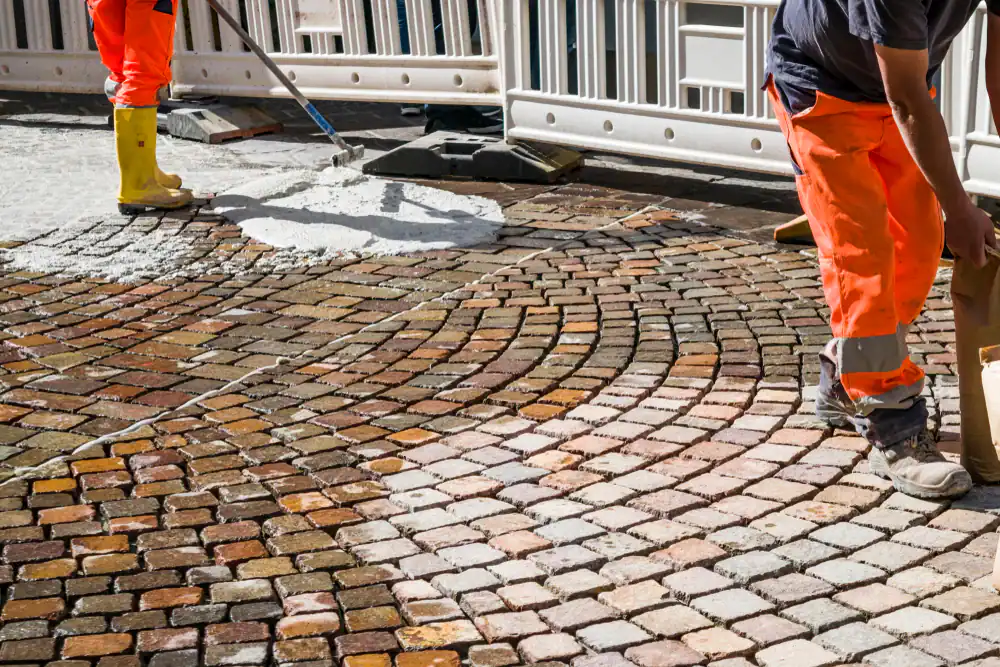
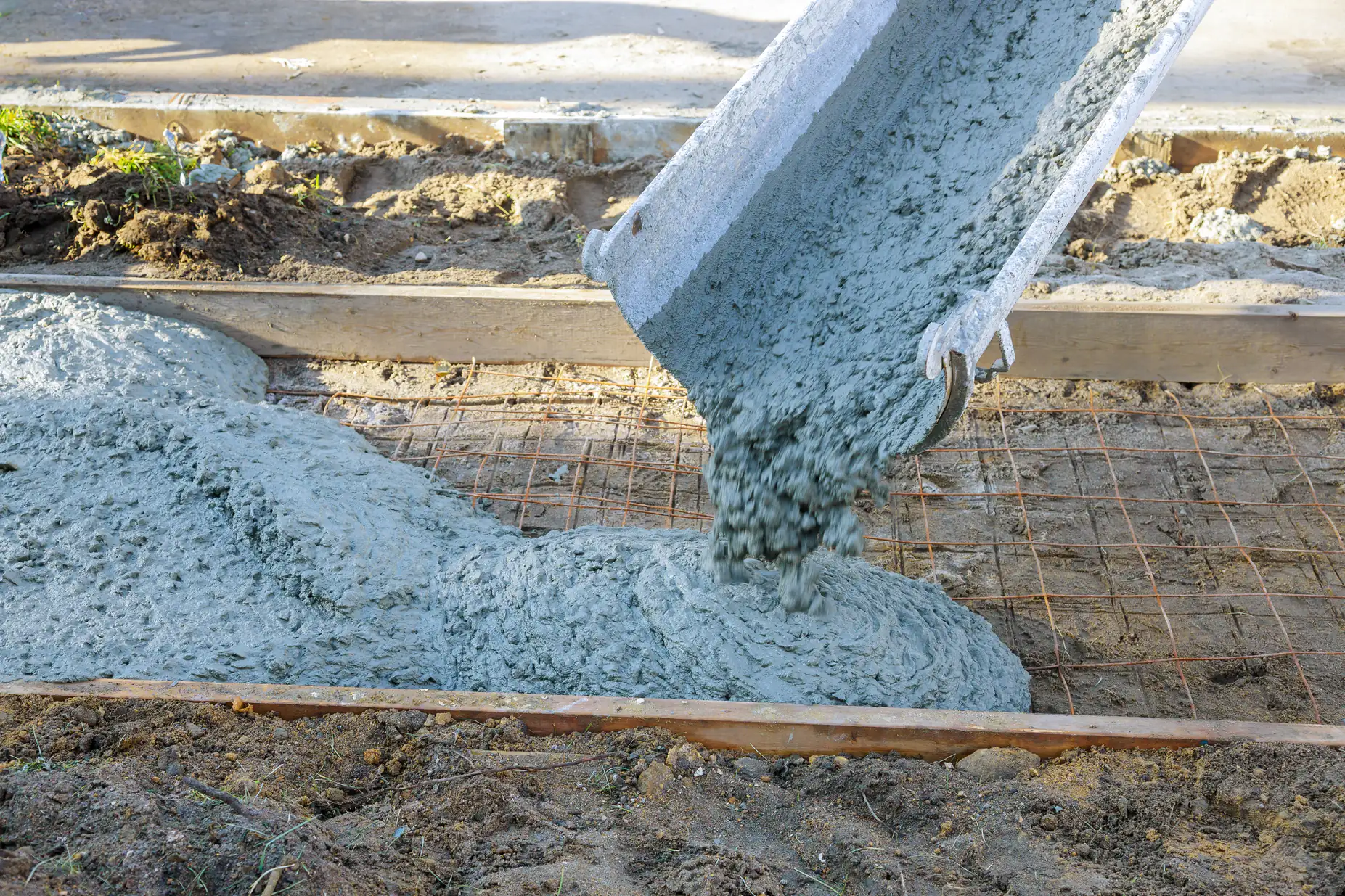
Then we apply the asphalt or concrete. For asphalt, that’s hot mix applied at the correct temperature and compacted with heavy equipment for a dense, resilient finish. For concrete, we use Portland cement mixes reinforced with rebar where needed. If you want decorative stamped patterns, we handle that too.
Finally, we clean up and walk you through maintenance. Sealcoating every few years extends your driveway’s lifespan from 8-12 years to 15-20 years. Small cracks filled in the fall prevent major structural damage by spring. We’ll tell you exactly what to watch for and when to call.
Ready to get started?
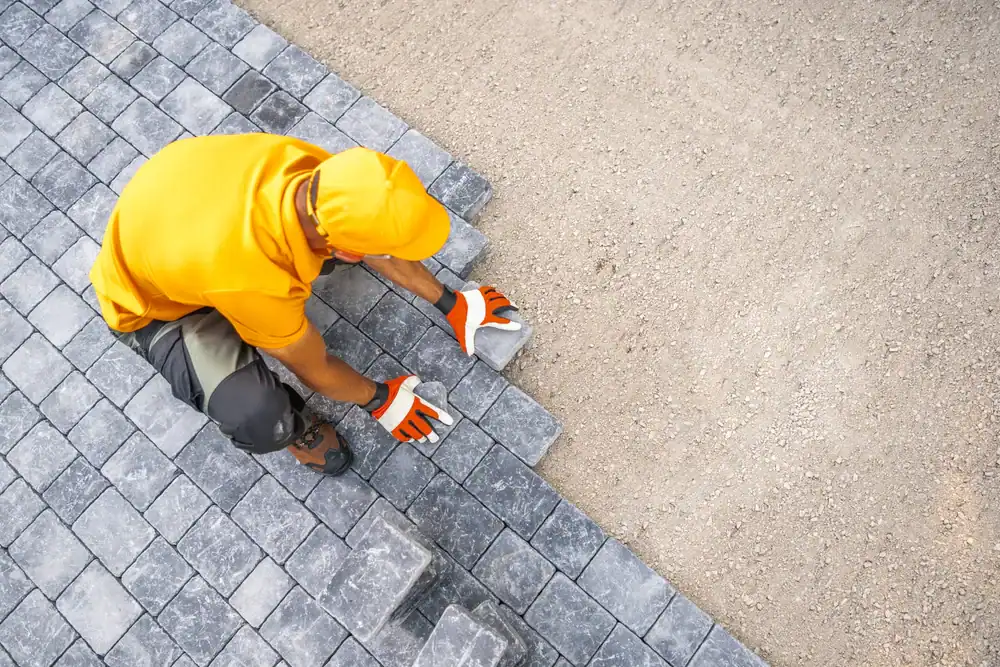
You’re getting driveway paving, parking lot construction, road resurfacing, patching, and sealcoating. We work on residential driveways and commercial asphalt parking areas. If you need decorative paver patios or stamped concrete, we do that too.
In Pompton Plains, where the median home value sits around $539,000 and property taxes average $10,800 annually, your driveway isn’t just functional—it’s part of your property’s value. A cracked, uneven surface tells buyers and neighbors that maintenance has been deferred. A smooth, well-maintained driveway signals the opposite.
Morris County’s freeze-thaw cycles repeat dozens of times each winter. Water gets into small cracks, freezes, expands with about 30,000 PSI of pressure, and widens those cracks by roughly 10%. That’s why a crack you notice in October becomes a pothole by March. Our job is to prevent that cycle from starting.
We also know the window for quality paving work is narrow. Asphalt needs to be applied when temperatures are consistently above 50°F and the ground isn’t frozen. That gives you a limited number of weeks in spring and fall to get the work done right. Waiting until winter means waiting until spring—and dealing with whatever damage happens in between.
A properly installed asphalt driveway lasts 15 to 20 years with regular maintenance. Without sealcoating, that drops to 8 to 12 years.
The lifespan depends on three things: base preparation, material quality, and maintenance. If the base isn’t compacted correctly or drainage isn’t addressed, you’ll see cracking and settling within the first few years. If the asphalt mix isn’t applied at the right temperature, it won’t bond properly and will deteriorate faster.
Sealcoating every 2 to 3 years protects the surface from UV damage, water penetration, and oxidation. It’s a few hundred dollars that prevents thousands in resurfacing costs. Most driveways that fail early weren’t maintained—they were ignored until small cracks became structural problems.
Asphalt is more flexible, easier to repair, and better suited for areas with freeze-thaw cycles. Concrete is more rigid, lasts longer without maintenance, and offers more decorative options.
In Morris County, asphalt is the more common choice because it handles temperature swings better. When water freezes and expands, asphalt flexes slightly. Concrete cracks. That’s why you see more concrete driveways in warmer climates and more asphalt in the Northeast.
Concrete costs more upfront but requires less maintenance over time. Asphalt costs less initially but needs sealcoating every few years. If you want decorative patterns or a specific look, concrete gives you more options with stamped finishes. If you want something that’s easy to patch and repair, asphalt is the better choice. Both work—it depends on your budget, your timeline, and how much maintenance you’re willing to handle.
Late spring through early fall—specifically when temperatures are consistently above 50°F during the day and above 40°F at night.
Asphalt needs heat to cure properly. If it’s too cold, the material doesn’t compact correctly and you end up with a weaker surface. If it’s too hot, the asphalt can become soft and susceptible to damage before it fully sets.
Fall is ideal because the ground is dry, temperatures are moderate, and you’re sealing your driveway before winter hits. Spring works too, but you’re competing with everyone else who waited out the winter. By late October, the window is closing. If you’re seeing cracks now, waiting until spring means those cracks will widen over winter and cost more to fix. The narrow weather window is real, and every week you wait increases the risk of freeze-thaw damage starting before you can address it.
Most residential driveways in Pompton Plains cost between $3,000 and $7,000 depending on size, material, and site conditions.
A standard two-car driveway is roughly 600 to 800 square feet. Asphalt typically runs $3 to $5 per square foot installed. Concrete costs more—usually $6 to $10 per square foot. If your site requires significant excavation, drainage work, or base repair, that adds to the cost.
The price also depends on access. If we can’t get equipment close to the work area, labor costs go up. If the existing surface needs to be removed and hauled away, that’s an additional expense. We give you a clear, upfront quote that breaks down what’s included. No surprise charges. No vague estimates that double once the work starts. You’ll know exactly what you’re paying for before we begin.
Sealcoating isn’t optional if you want your driveway to last. It’s the difference between 8 years and 20 years.
Asphalt deteriorates when it’s exposed to UV rays, water, and oxygen. Sealcoating creates a protective barrier that slows that process. It fills small surface cracks before they become deep structural cracks. It prevents water from penetrating the base, which is where freeze-thaw damage starts.
Most driveways should be sealcoated every 2 to 3 years. If you skip it, the surface oxidizes—turns gray, becomes brittle, and starts cracking. Once water gets into those cracks and freezes, you’re looking at pothole repairs and eventually resurfacing. Sealcoating costs a few hundred dollars. Resurfacing costs thousands. It’s not upselling—it’s basic maintenance that protects your investment.
If the damage is surface-level—small cracks, minor pitting, or isolated areas—repair works. If the base has failed or there’s widespread cracking and heaving, replacement makes more sense.
Surface cracks can be filled and sealed. Potholes can be patched. But if you’re seeing alligator cracking (a web of interconnected cracks), that means the base has failed. Patching won’t fix it. The problem is structural, and the only real solution is to remove the damaged asphalt, repair the base, and repave.
We’ll tell you honestly what makes sense. If a repair buys you another 5 years, we’ll recommend that. If you’re going to be calling us back next season with the same problem, we’ll tell you that too. The goal is to give you a solution that actually works, not just the cheapest option that fails in six months.