
Hear from Our Customers

Most driveways in North Plainfield fail because of bad drainage and cheap base prep. Water gets underneath, freezes, expands by 9%, and cracks the surface from below. You patch it, it cracks again, and eventually you’re looking at a $5,000 to $10,000 replacement.
Proper installation changes that cycle. When your base is compacted correctly and graded for drainage, water moves away from the pavement instead of sitting under it. That means fewer cracks, fewer potholes, and a surface that lasts 15 to 20 years instead of needing repairs every other spring.
You’re not just getting new asphalt or concrete. You’re getting a driveway or parking lot that doesn’t turn into a maintenance problem the moment temperatures drop. That’s what happens when the work is done right the first time.
We’ve worked in Morris, Sussex, and Somerset County for more than two decades. That means we’ve seen what happens when contractors skip steps, use cold-mix asphalt in summer, or ignore drainage entirely. We’ve also fixed those jobs.
Being local matters because North Plainfield gets 55 to 75 freeze-thaw cycles every winter. Contractors from out of state don’t always account for that. We do, because we live here and we’ve been repairing pavement through these conditions for years.
When you call, you’re talking to people who know your street, your weather, and what it actually takes to build something that holds up. No surprises, no excuses, just work that lasts.

First, we evaluate your site. That means looking at drainage, checking the existing base, and figuring out what needs to be removed or repaired before any new material goes down. If the foundation is bad, the pavement will fail no matter how good the top layer looks.
Next, we prep the base. We excavate if needed, grade for proper water runoff, and compact a strong aggregate base that won’t shift or settle. This step is where most cheap jobs fall apart, and it’s also where we spend the most time getting it right.
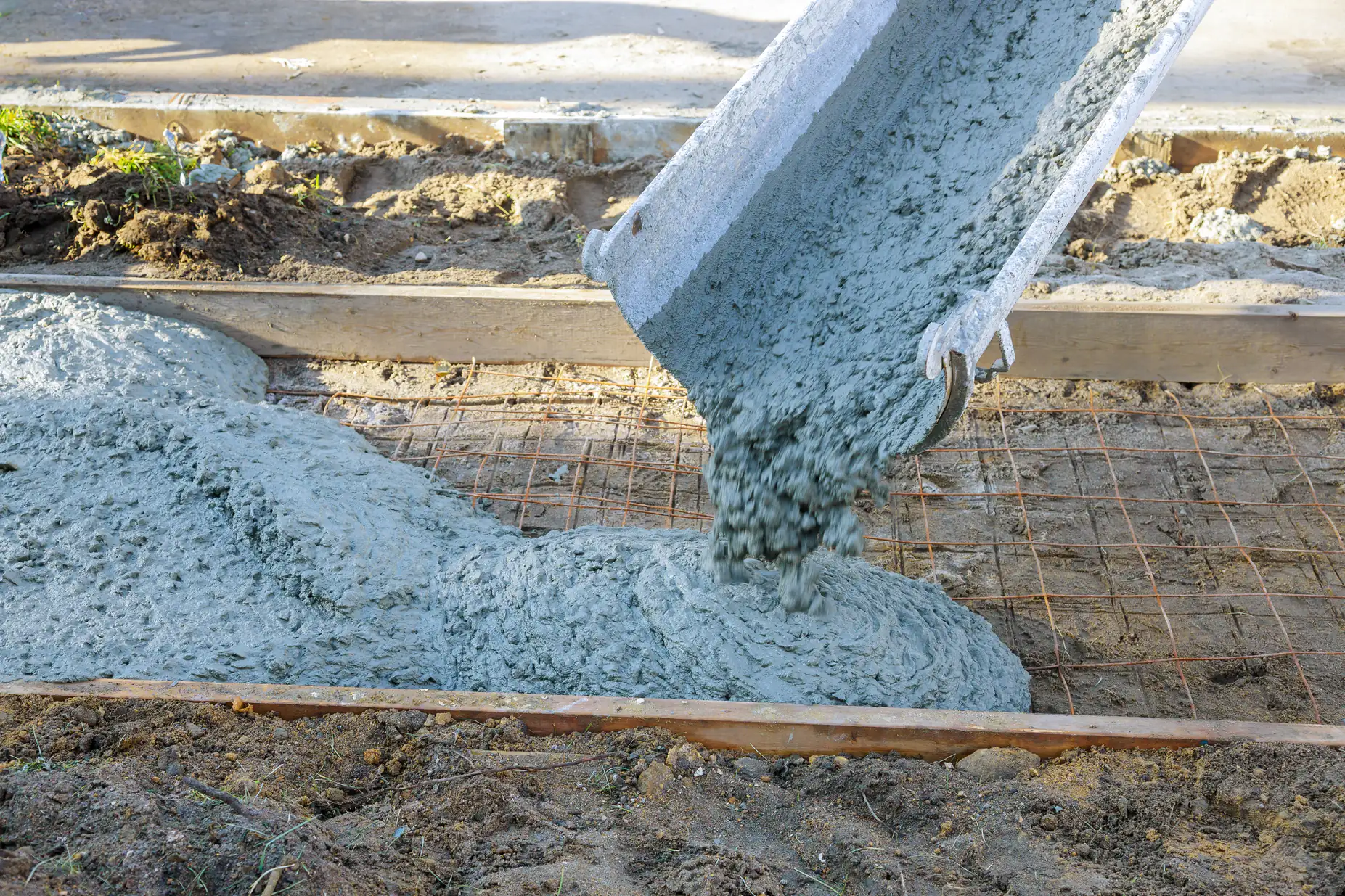
Then we install. For asphalt, that means hot-mix applied at the right temperature and compacted while it’s still workable. For concrete, it’s Portland cement with rebar reinforcement and control joints to manage cracking. Both get finished with clean edges and proper transitions to existing surfaces.
Finally, we clean up and walk the site with you. No debris left behind, no half-finished details. You get exactly what was promised, on the timeline we agreed to.
Ready to get started?
Every project starts with site evaluation and drainage assessment. You’re not guessing whether water will pool or where cracks might form. We identify those issues before work begins and design the grading to handle them.
You also get proper base preparation, which is the difference between pavement that lasts and pavement that fails in three years. That includes excavation when necessary, aggregate base installation, and compaction to prevent settling. This isn’t optional if you want the surface to hold up.
For asphalt jobs in North Plainfield, you’re getting high-grade hot-mix asphalt designed for residential or commercial use, applied at proper temperature, and compacted with professional equipment. For concrete, that’s Portland cement mixes with rebar reinforcement, control joints, and optional decorative stamping if you want it.
You also get a 24 to 48 hour callback guarantee when you request a quote online, clear upfront pricing with no surprise charges, and cleanup that leaves your property better than we found it. The work gets done on schedule, and we’re licensed and insured to handle projects of any size in Morris, Sussex, and Somerset County.
Asphalt typically lasts 15 to 20 years in North Plainfield if it’s installed correctly and maintained. That means proper base prep, good drainage, and sealcoating every two to three years after installation.
Most driveways fail early because of poor installation, not bad materials. If the base isn’t compacted or the grading doesn’t move water away from the surface, you’ll see cracks and potholes within a few years no matter how good the asphalt looks on top.
New Jersey’s freeze-thaw cycles are brutal. Water gets into small cracks, freezes, expands, and makes those cracks bigger. Over time, that destroys pavement from the inside out. Proper installation prevents water from getting under the surface in the first place, which is why the base and drainage matter more than almost anything else.
Hot-mix asphalt is heated to around 300 degrees and applied while it’s still hot. It compacts tightly, bonds to the base, and creates a durable surface that lasts for decades. This is what you use for new driveways, parking lots, and permanent repairs.
Cold-patch asphalt comes in bags and can be used at any temperature. It’s convenient for temporary fixes during winter when you can’t apply hot-mix, but it doesn’t compact as well and won’t last as long. It’s a stopgap, not a solution.
If a paving company near me offers to install your driveway with cold-patch in the middle of summer, that’s a red flag. Hot-mix is the standard for quality work, and it’s what you should expect for any permanent installation. Cold-patch is fine for emergency pothole repairs in January, but it’s not what you want for a project you’re paying thousands of dollars to complete.
Most homeowners in North Plainfield pay between $3,000 and $10,000 for a full driveway replacement, depending on size, material, and site conditions. Asphalt is usually less expensive than concrete, but both require proper base prep to last.
New Jersey prices run about 15% to 25% higher than the national average because of labor costs, material costs, and local regulations. If your driveway has drainage problems or needs significant excavation, that adds to the cost. If the base is in good shape and only the surface needs replacing, you might pay closer to the lower end.
The real cost isn’t just the installation. It’s what happens after. A cheap job that cracks in three years means you’re paying for repairs or another replacement sooner than you should. A properly installed driveway costs more upfront but saves you thousands over the next 15 to 20 years because you’re not constantly fixing it. That’s the difference between hiring asphalt companies near me that do it right versus contractors who just want to finish fast and move on.
Late spring through early fall is the best window for asphalt paving in New Jersey. You need consistent temperatures above 50 degrees for installation, and ideally above 70 degrees for the asphalt to compact properly and cure.
Summer is the most popular time, which also means it’s the most expensive and hardest to schedule. Spring and fall offer better availability and sometimes better pricing, as long as the weather cooperates. Winter is off the table for hot-mix asphalt because the material won’t bond or compact correctly in cold temperatures.
If your driveway is damaged and you need a temporary fix during winter, cold-patch can hold you over until spring. But don’t let anyone install permanent asphalt or pour concrete when it’s too cold. The work won’t last, and you’ll end up paying twice. Timing matters as much as the quality of the crew doing the work.
Most residential driveway paving projects in North Plainfield don’t require a permit if you’re repaving an existing driveway in the same footprint. But if you’re expanding the driveway, changing the grade, or affecting drainage that impacts neighboring properties, you may need approval from the local building department.
Commercial projects almost always require permits, especially for parking lots, because they involve stormwater management, ADA compliance, and site plan approvals. We know what’s required and handle the permitting process when needed.
It’s worth confirming with the township before work starts. Skipping a required permit can lead to fines, and in some cases, you might have to remove the work and start over. We’ll tell you upfront whether permits are necessary and help you get them. If a contractor says “don’t worry about it” without checking, that’s a warning sign.
If your driveway has surface cracks, minor potholes, or fading but the base is still solid, resurfacing might be enough. That means milling off the top layer and applying fresh asphalt over the existing base. It’s cheaper than full replacement and can add another 8 to 10 years of life.
If you have deep cracks, major settling, drainage problems, or a base that’s failing, resurfacing won’t fix it. You’re just putting new asphalt over a bad foundation, and the problems will come back within a year or two. In those cases, full replacement is the only option that makes sense.
The way to know for sure is to have someone evaluate the base. We’ll tell you honestly whether resurfacing will work or if you’re wasting money on a temporary fix. If multiple pavement contractors near me are all recommending replacement, that’s usually a sign the base is shot. Don’t let someone talk you into resurfacing just because it’s cheaper if the underlying structure won’t support it.