
Hear from Our Customers

A driveway or parking lot that holds up through Byram Center winters isn’t about luck. It’s about base prep, drainage, and using materials that match the climate.
When water has somewhere to go and your base is compacted correctly, you’re not dealing with cracks every spring. You’re not watching sections sink after a freeze. You’re getting years of use without constant repairs eating into your budget or your time.
That’s what happens when the work is done by people who understand North Jersey weather. Freeze-thaw cycles hit this area harder than most places. Water gets into cracks, expands when it freezes, and pushes pavement apart. If your contractor skips proper grading or uses subpar materials, you’ll see the damage within a year or two. If we do it right, your driveway or lot stays intact season after season.
We’ve been handling residential and commercial paving across Morris, Sussex, and Somerset counties for over 20 years. We’re licensed, insured, and based right here in Morris County.
Byram Center sits in an area where winter does real damage to pavement. We’ve seen what happens when contractors cut corners on base work or use cold asphalt in conditions that require hot mix. We’ve also seen what lasts, and that’s what we install.
You’ll get a clear quote upfront. No surprise charges. No excuses about why the crew didn’t show. We handle the work ourselves with our own trained teams, and we’re available to answer questions throughout the process.

First, we evaluate your site. That means looking at drainage, checking the existing base, and identifying any issues that need addressing before new pavement goes down. If water pools on your current driveway or parking lot, we’re fixing that problem at the source.
Next comes base preparation. This is the most important step and the one most contractors rush. We excavate to the proper depth, install a compacted stone base, and make sure everything is graded correctly. Without this foundation, even the best asphalt or concrete will fail.
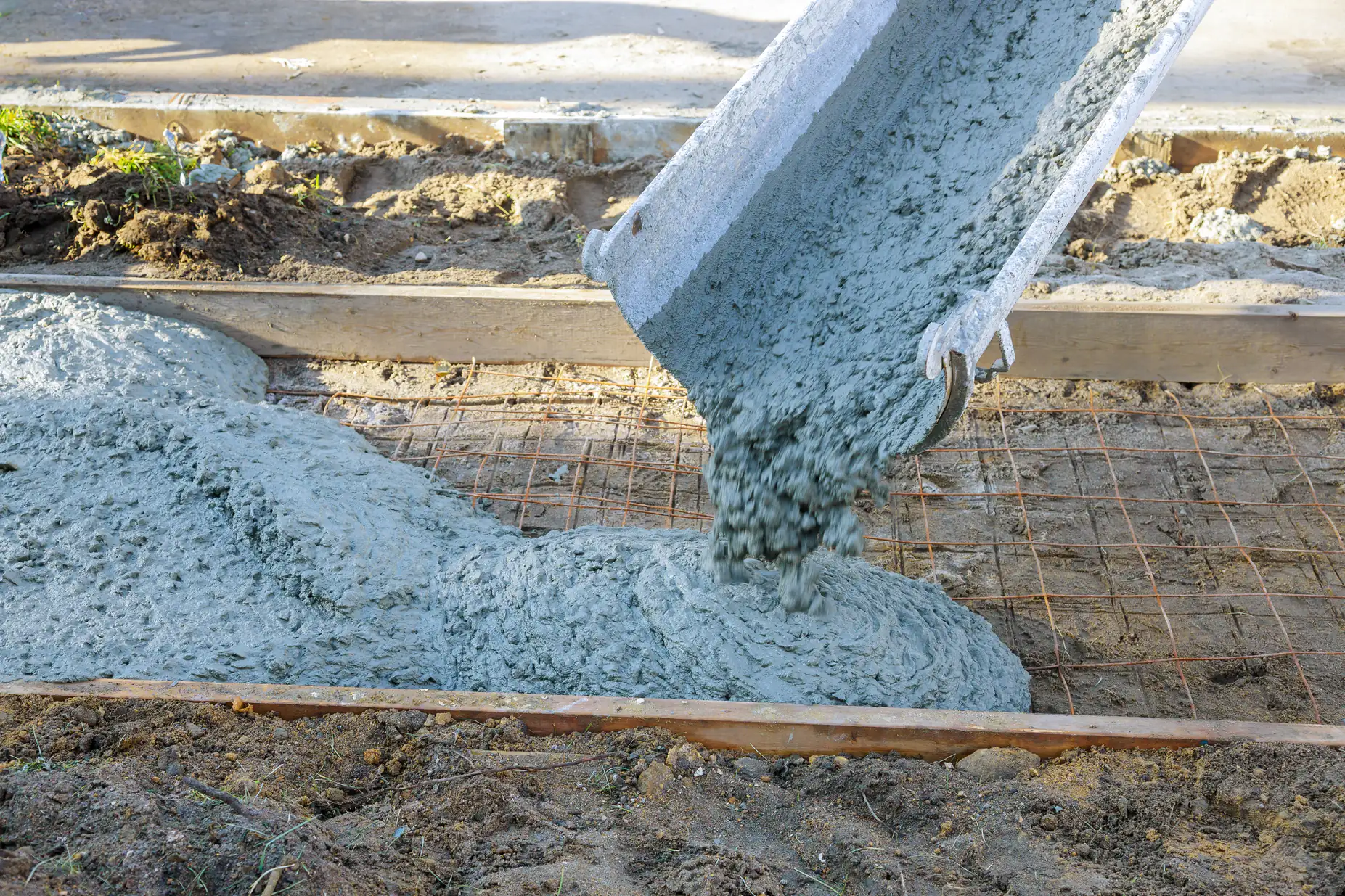
Then we install the pavement. For asphalt, that means high-grade hot mix asphalt applied at the right temperature and compacted properly. For concrete, we use Portland cement mixes with rebar reinforcement. Both are built to handle the freeze-thaw cycles that define this region.
Finally, we make sure drainage systems are in place. Catch basins, proper slope grades, and subsurface drainage where needed. Water is the enemy of pavement, and managing it correctly is what separates work that lasts from work that fails.
Ready to get started?
Every paving job we do in Byram Center includes proper site evaluation, base preparation, and drainage planning. You’re not getting a crew that shows up and slaps down asphalt without checking what’s underneath.
For residential driveways, that means excavation to proper depth, compacted stone base installation, and hot mix asphalt or reinforced concrete depending on your needs. We also offer decorative stamped concrete if you want something beyond standard finishes.
For commercial properties, we handle parking lot installation and resurfacing with ADA compliance built into the planning. That includes proper slope grades, accessible parking space dimensions, and pathway connections that meet New Jersey requirements. You’ll also get warranty coverage on both materials and workmanship.
Byram Center properties face specific challenges. The area experiences more freeze-thaw cycles than central or southern New Jersey, which means pavement takes more abuse. We account for that in material selection and installation methods. The goal is a surface that doesn’t need major repairs every few years because it was built correctly from the start.
Properly installed asphalt in this area typically lasts 15 to 20 years before needing replacement. That assumes correct base preparation, adequate drainage, and reasonable maintenance like sealcoating every few years.
The freeze-thaw cycle is the biggest factor affecting lifespan here. Byram Center sees significantly more freeze-thaw events than areas further south in New Jersey. When water gets into small cracks and freezes, it expands with enough force to break apart pavement. That’s why proper installation matters so much. If your base isn’t compacted correctly or drainage isn’t addressed, you’ll see damage much sooner.
Maintenance extends life considerably. Sealcoating protects the surface from water infiltration and UV damage. Filling cracks before they expand prevents water from reaching the base layer. Most driveways that fail early do so because of deferred maintenance or poor initial installation, not because asphalt can’t handle the climate.
Hot mix asphalt is heated to around 300 degrees and applied while hot, allowing proper compaction and a durable bond. Cold patch is a temporary repair material that can be applied without heating. The difference in longevity is significant.
Hot mix asphalt, when installed correctly, becomes a solid, uniform surface that resists water penetration and handles traffic loads. It’s what you want for driveways, parking lots, and any permanent paving application. Cold patch is useful for emergency repairs in winter when hot mix can’t be applied, but it’s not a permanent solution.
Some contractors use cold patch or inferior asphalt mixes to cut costs. You’ll pay less upfront, but you’ll be dealing with failures much sooner. For new installation or proper repairs, hot mix asphalt applied at the correct temperature is the only option that makes sense. It costs more initially because it requires specialized equipment and proper conditions, but it’s the difference between a driveway that lasts 15 years and one that needs work in three.
Drainage is the single most important factor in pavement longevity. Water that can’t escape will find its way into the base layer, causing settling, cracking, and eventual failure.
Proper drainage starts with correct grading. Your driveway or parking lot needs to slope away from buildings and toward designated drainage points. In some cases, that means installing catch basins or subsurface drainage systems to handle water that can’t be managed by surface slope alone. Without this, water pools on the surface, seeps through small cracks, and compromises the base.
In Byram Center, where freeze-thaw cycles are frequent, poor drainage accelerates damage. Water in the base layer freezes and expands, pushing pavement upward. When it thaws, the pavement settles unevenly. This cycle repeats throughout winter and early spring, creating progressively worse damage. A driveway with proper drainage avoids this entirely because water never accumulates where it can cause problems. That’s why we evaluate drainage before any paving work begins.
Both materials work well in North Jersey when installed correctly. The choice usually comes down to budget, aesthetics, and how you plan to use the surface.
Asphalt costs less upfront and can be installed faster. It handles freeze-thaw cycles well when properly maintained with sealcoating every few years. It’s the standard choice for most residential driveways and commercial parking lots. Concrete costs more initially but requires less maintenance over its lifespan. It also offers more design options if you want decorative finishes like stamped patterns or colored surfaces.
For heavy vehicle traffic or commercial applications, both materials perform well with proper base preparation. Asphalt is slightly more forgiving of ground movement, which can be an advantage in areas with expansive soils. Concrete provides a harder surface that resists petroleum stains better. Either way, the base preparation and drainage matter more than the surface material. A poorly installed concrete driveway will fail just as quickly as poorly installed asphalt. Focus on finding a contractor who does the prep work correctly, then choose the surface material based on your preferences and budget.
New Jersey requires paving contractors to carry specific licensing and insurance. For commercial projects, that includes a home improvement contractor license and surety bonds ranging from $10,000 to $50,000 depending on project value. General liability insurance of at least $500,000 is also required.
You can verify licensing through the New Jersey Division of Consumer Affairs. Any legitimate contractor will provide their license number without hesitation. We provide proof of insurance, including both liability coverage and workers’ compensation. If a contractor is evasive about licensing or suggests you don’t need to worry about it, that’s a red flag.
Unlicensed contractors are a real problem in this industry. They often underbid legitimate companies because they’re cutting corners on insurance, bonding, and proper business operations. If something goes wrong, you have no recourse. If someone gets injured on your property, you could be liable. The money you save upfront isn’t worth the risk. Work with licensed, insured contractors who operate legally and stand behind their work with real accountability.
Residential driveway paving typically ranges from $3 to $7 per square foot for asphalt and $8 to $15 per square foot for concrete. The wide range reflects differences in site conditions, material quality, and scope of work.
A standard two-car driveway of about 600 square feet might cost $2,000 to $4,000 for asphalt or $5,000 to $9,000 for concrete. But those numbers assume straightforward site conditions. If significant excavation is needed, if drainage systems need to be installed, or if the existing base is inadequate, costs increase. That’s why detailed site evaluation matters before providing a quote.
Be skeptical of quotes that seem unusually low. Proper paving requires specific materials, equipment, and labor. Contractors who significantly underbid the market are cutting corners somewhere, whether that’s inadequate base depth, subpar materials, or skipping drainage work. You’ll pay for those shortcuts within a few years when repairs become necessary. Get detailed quotes that break down what’s included, and make sure you’re comparing equivalent scopes of work. The cheapest bid is rarely the best value.