
Hear from Our Customers

Your driveway drains properly instead of pooling water near your foundation. The surface stays smooth and level, not spongy or cracked within months. You’re not calling around trying to find the contractor who disappeared after taking your money.
That’s what happens when the foundation gets excavated to the right depth, graded for runoff, and built to handle freeze-thaw cycles. When the asphalt goes down at the proper temperature and gets compacted into a dense, resilient finish. When the crew shows up when they say they will and actually completes what they promised.
You’re investing in your property. The work should reflect that—not fall apart before you’ve made the first payment. Whether it’s your driveway, parking lot, or a full road resurface, the outcome matters more than the price. And around here, with 19% of Morris County properties facing severe flooding risk over the next 30 years, drainage and durability aren’t optional.
We work across Morris, Sussex, and Somerset Counties. We’re grounded in Morris County, so we know what happens when a contractor doesn’t account for soil conditions, drainage issues, or how temperature swings affect asphalt performance.
We’re BBB accredited. We use high-grade hot mix asphalt applied at the right temperature, Portland cement mixes reinforced with rebar when needed, and we offer decorative stamped concrete if that’s your preference. You get an upfront quote that details the work—no surprise charges later.
When you request a quote online, you’ll hear back within 24 to 48 hours. We’re not the cheapest option, and that’s intentional. You’re paying for materials that last and installation that doesn’t require a redo in two years.

First, we assess your property. We’re checking drainage, soil stability, and the condition of any existing pavement. If there’s an underlying issue—like poor base prep or water that’s not being directed away from the structure—we identify it before we start tearing things up.
Next, we design the paving plan. That includes excavation depth, grading for water runoff, and material selection. We’re choosing asphalt grades and concrete mixes based on what your site actually needs, not what’s easiest to install.
Then we prep the site. Old pavement and debris get removed. The area gets leveled and sloped correctly. If the base isn’t stable, nothing on top of it will hold up—so we handle that first.
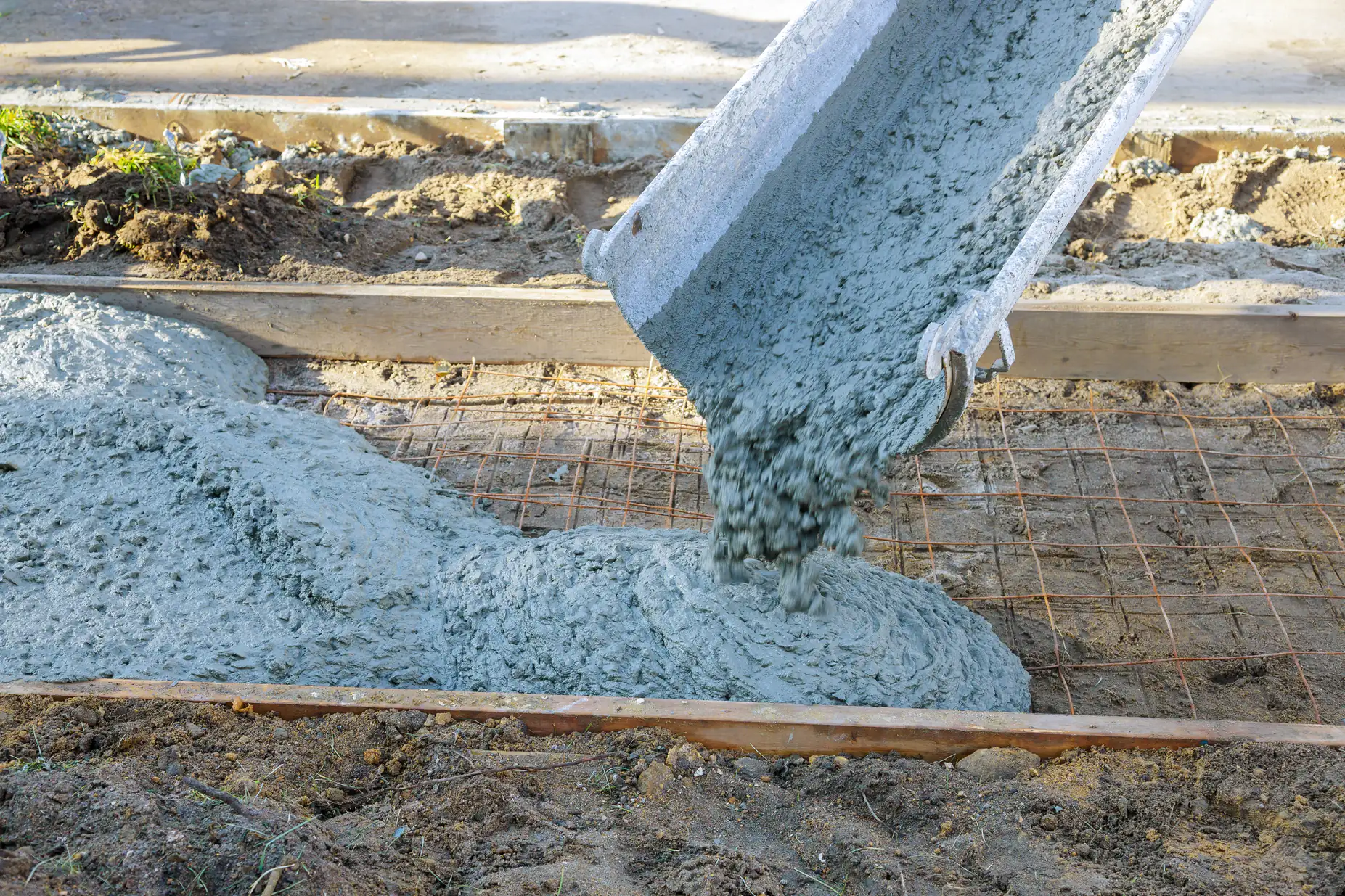
After that, we install. For asphalt, that means applying hot mix at the proper temperature and compacting it into a dense finish. For concrete, it’s pouring strong Portland cement mixes, often with rebar, and finishing it to your specs—whether that’s a standard broom finish or a decorative stamped pattern.
Finally, we clean up and walk you through what’s been done. You’re not left guessing whether the work was completed correctly.
Ready to get started?
You’re getting materials selected for Morris County weather. That means asphalt that can handle temperature swings from summer heat to winter freezes without cracking apart. It means concrete that’s mixed and reinforced to resist settling and surface damage.
You’re also getting proper site prep—not a quick patch job. We excavate to the necessary depth, install a stable base, and grade everything so water moves away from your property instead of pooling on the surface or seeping into your foundation. Around here, with major wind risks from hurricanes and severe flooding risks affecting nearly one in five properties, that’s not a detail you skip.
The work covers residential driveways, commercial parking lots, road resurfacing, and patching. We handle both asphalt and concrete, so if you need blacktop for your driveway and a concrete apron at the street, we’re managing both.
And if you’re in Brookside, NJ or nearby towns like Morristown, Madison, Chatham, or Dover, we’re familiar with local codes, soil conditions, and the specific challenges that come with paving in this area. Your project gets scheduled during optimal conditions—we’re not laying asphalt in the rain or when temperatures drop too low, because that’s how you end up with a driveway that fails in six months.
If it’s installed correctly, you’re looking at 15 to 20 years for a residential driveway and 20 to 30 years for a commercial parking lot. That assumes proper base preparation, quality materials, and regular maintenance like sealcoating every few years.
The problem is most failures happen because the base wasn’t prepped right or the asphalt wasn’t applied at the correct temperature. If the foundation shifts or water gets trapped underneath, you’ll see cracking and sinking within the first couple of years. That’s not a material issue—it’s an installation issue.
New Jersey weather accelerates wear if the work isn’t done right. Freeze-thaw cycles, temperature swings, and heavy precipitation all put stress on asphalt. That’s why we excavate to the proper depth, grade for drainage, and use high-grade hot mix asphalt that’s designed to handle local conditions.
Asphalt is more flexible, which helps it handle freeze-thaw cycles without cracking as easily. It’s also faster to install and typically costs less upfront. You’ll need to sealcoat it every few years to protect the surface, but maintenance is straightforward.
Concrete is more rigid and can last longer if it’s reinforced properly. It handles heavy loads well and doesn’t need sealcoating, but it’s more prone to cracking if the ground shifts or if it wasn’t poured with adequate reinforcement. It also takes longer to cure—you’re waiting at least a week before you can drive on it.
For Morris County, both work. Asphalt tends to be the go-to for driveways because it’s cost-effective and performs well in our climate. Concrete makes sense if you want a decorative finish or if you’re prioritizing longevity over upfront cost. We’ll walk you through both options based on your property and what you’re trying to accomplish.
Usually it’s because the base wasn’t prepared correctly. If the soil underneath isn’t stable or compacted, or if the contractor didn’t excavate deep enough, the pavement will settle unevenly. Water infiltration is another common culprit—if drainage isn’t addressed, water gets trapped under the surface and weakens the base.
You also see this when contractors cut corners on material quality or don’t apply asphalt at the right temperature. Cold asphalt doesn’t compact properly, which leaves air pockets that lead to premature cracking. Same issue if they’re using a substandard mix or skipping steps to finish the job faster.
Around here, with nearly 20% of properties facing severe flooding risk, drainage is critical. If water isn’t directed away from your driveway, it’s going to cause problems no matter how good the asphalt is. That’s why we assess the site first, address drainage issues, and make sure the base is stable before we pour or pave anything.
It depends on size, material, site conditions, and what prep work is needed. A standard residential asphalt driveway typically runs between $3 and $7 per square foot, but that can go higher if there’s significant excavation, drainage work, or if you’re dealing with difficult access.
Concrete costs more upfront—usually $8 to $15 per square foot—but it lasts longer and doesn’t require sealcoating. If you want decorative stamped concrete, that’s on the higher end of the range.
The real cost comes from shortcuts. If a contractor gives you a rock-bottom price, they’re either skipping the base prep, using cheaper materials, or not planning to come back if something goes wrong. You’ll spend more fixing it later than you would’ve spent doing it right the first time. We provide upfront quotes that detail exactly what’s included, so you know what you’re paying for before work starts.
It depends on the condition of what’s already there. If the existing pavement is structurally sound—no major cracks, no sinking, no drainage issues—then an overlay can work. That’s where we apply a new layer of asphalt on top of the old surface. It’s faster and costs less than a full removal.
But if the base is compromised, if there’s significant cracking, or if water is pooling, an overlay just covers up the problem temporarily. You’ll end up with the same issues resurfacing within a year or two. In those cases, we remove the old pavement, address the underlying issues, and rebuild from the base up.
We assess the site before recommending a solution. If an overlay makes sense and will actually hold up, we’ll tell you. If it doesn’t, we’ll explain why and what needs to happen instead. You’re not getting upsold on a full removal if a resurface will do the job—but you’re also not getting a quick fix that fails in six months.
Start with licensing and insurance. If they’re not properly licensed in New Jersey or they can’t provide proof of insurance, walk away. You’re liable if something goes wrong on your property and they’re not covered.
Next, ask about their process. A legitimate paving contractor will assess your site, explain what prep work is needed, and provide a detailed quote. If they’re giving you a price over the phone without seeing the property, that’s a red flag. Every site is different—soil conditions, drainage, access, existing pavement condition—all of that affects the work.
Check references and look for complaints. BBB accreditation matters. So does how long they’ve been operating locally. A company that’s been serving Morris County for 20+ years has a reputation to protect. A crew that just showed up with a low bid and no local history? You’re taking a risk.
Finally, pay attention to communication. If they’re hard to reach before the job starts, they’ll be impossible to reach if something goes wrong after. You want a contractor who’s transparent about timelines, materials, and what happens if weather delays the project. We guarantee a callback within 24 to 48 hours when you request a quote, and we keep you informed throughout the process.