
Hear from Our Customers

When your driveway is installed right, you’re not calling someone back in three years to fix cracks or pooling water. You’re getting two to three decades of performance because the base was excavated deep enough, the drainage was planned correctly, and the asphalt was applied at the right temperature with the right compaction.
Most pavement failures don’t come from traffic or age. They come from shortcuts during installation—thin bases, poor grading, no attention to water flow. In Bernardsville, where freeze-thaw cycles hit 40 to 50 times a year, those shortcuts show up fast.
Proper installation means your driveway sheds water instead of trapping it. It means the surface stays level and smooth because the base won’t shift. And it means you’re not dealing with expensive repairs when you should still be in the warranty period.
We’ve been handling residential and commercial paving projects throughout Morris County and Somerset County for over 20 years. We’re not a traveling crew working out of a motel. We live here, work here, and our reputation depends on the driveways and parking lots we install holding up year after year.
Bernardsville properties come with specific challenges—longer driveways, steeper grades, high expectations. We’ve worked in this area long enough to know what the soil does, how water moves across these properties, and what it takes to get permits through the township without delays.
You’ll get a detailed written estimate that breaks down every cost. You’ll get a callback within 24 to 48 hours when you request a quote online. And you’ll work with licensed, insured contractors who handle the permits, follow local codes, and back the work with a real five-year warranty.

First, we assess your property and talk through what you need—new installation, resurfacing, or full replacement. We look at drainage, grading, and any issues with the existing surface. Then we give you a transparent estimate that outlines the full scope so there are no surprises later.
Once the project starts, we excavate to the proper depth based on your soil conditions and intended use. For most residential driveways in Bernardsville, that means removing 10 to 12 inches and replacing it with compacted aggregate base. If drainage is an issue, we install catch basins or French drains before anything else goes down.
Next comes the asphalt or concrete. We use high-grade hot mix asphalt applied at the right temperature, then compact it with heavy vibratory and steel-wheeled rollers to hit 92 to 96 percent density. That’s what determines whether your driveway develops premature cracking or lasts decades. For concrete, we use Portland cement mixes with rebar reinforcement and proper control joints to prevent random cracking.
After installation, we clean up the site completely and handle any final grading or striping if it’s a commercial job. You’re left with a surface that’s ready to use and built to perform through New Jersey’s toughest weather.
Ready to get started?
Every project starts with a site assessment and ends with a clean, finished surface. In between, we handle permits, coordinate inspections, and manage the timeline so you’re not left guessing when crews will show up.
For asphalt paving, that includes full excavation, aggregate base installation, proper compaction, and hot mix asphalt application. We’re not just laying blacktop over dirt. We’re building a system that manages water, handles freeze-thaw cycles, and supports the weight of vehicles without settling or cracking.
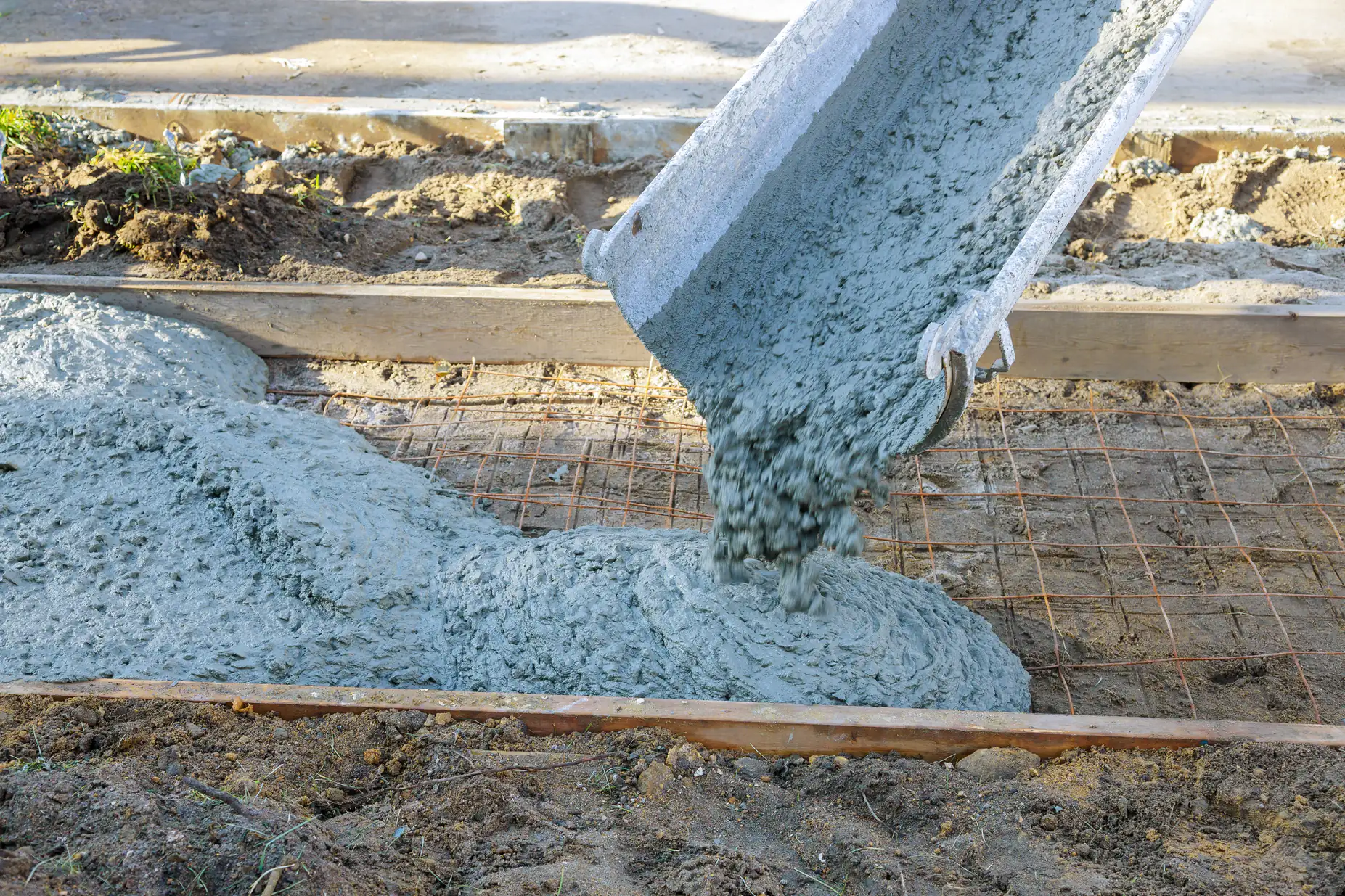
For concrete paving, we pour Portland cement mixes reinforced with rebar and install control joints in the right locations to direct cracking where it won’t affect performance. If you want decorative stamped concrete, we offer patterns that add curb appeal without sacrificing durability.
Bernardsville properties often need more than just a standard driveway. Longer runs, steeper slopes, and higher-end finishes are common here. We’ve handled projects throughout Somerset County that required custom drainage solutions, decorative borders, and coordination with landscaping crews. Whatever your property needs, we’ve likely done it before and know how to do it right.
A properly installed asphalt driveway in Bernardsville typically lasts 20 to 30 years with regular maintenance. That lifespan depends entirely on the quality of the base preparation, proper drainage, and correct installation techniques—not just the asphalt itself.
North Jersey’s climate is tough on pavement. You’re looking at 40 to 50 freeze-thaw cycles every year, summer surface temperatures that hit 140 degrees, and heavy precipitation that tests drainage systems constantly. If the base wasn’t excavated deep enough or the asphalt wasn’t compacted to the right density, you’ll see failures in three to five years instead of decades.
Regular maintenance extends that lifespan significantly. Sealcoating every two to three years protects the surface from UV damage and water penetration. Filling cracks as they appear prevents water from getting underneath and causing bigger problems. But even with perfect maintenance, a poorly installed driveway won’t last. The installation is what matters most.
Asphalt costs less upfront and handles freeze-thaw cycles better because it has some flexibility. Concrete costs more but lasts longer and offers decorative options like stamped patterns. Both work well in Bernardsville if installed correctly.
Asphalt driveways typically run $7 to $13 per square foot installed. They’re ready to use in a day or two, and they perform well in cold climates because the material can flex slightly as the ground moves. The tradeoff is that asphalt needs sealcoating every few years and shows oil stains more easily.
Concrete driveways cost $8 to $15 per square foot and last 30 to 40 years with minimal maintenance. They don’t need sealcoating, they reflect heat better in summer, and you can add decorative finishes that aren’t possible with asphalt. But concrete is rigid, so it requires more attention to control joints and proper base preparation to prevent cracking. It also takes longer to cure—usually seven days before you can drive on it.
Ask for their license number and insurance certificate directly. A legitimate paving company will provide both without hesitation. You can verify the license through New Jersey’s Division of Consumer Affairs and call the insurance company listed on the certificate to confirm coverage is active.
Licensed contractors have accountability. They’ve met state requirements, they carry proper insurance, and they’re registered businesses you can track down if something goes wrong. Unlicensed contractors—especially traveling crews that show up claiming they have leftover materials—disappear the moment a problem surfaces.
Insurance matters just as much as licensing. If someone gets hurt on your property or if equipment damages your home, you need to know the contractor’s insurance will cover it. Don’t accept a photo of a certificate. Call the insurance company and verify the policy is current and covers the scope of work being done on your property. It takes five minutes and protects you from massive liability.
Because they’re cutting corners somewhere—thinner base, less compaction, cheaper materials, no permits, or no insurance. The lowest bid almost always costs more in the long run when the driveway fails early and needs replacement.
A proper driveway installation in Bernardsville requires 10 to 12 inches of excavation, several inches of compacted aggregate base, and two to three inches of hot mix asphalt applied at the correct temperature and compacted to 92 to 96 percent density. That process requires equipment, time, skilled labor, and quality materials. There’s no way to do it right and undercut everyone else by 30 or 40 percent.
When a contractor bids significantly lower, they’re either skipping steps or planning to add costs later through change orders. Common shortcuts include inadequate excavation, no base layer, thin asphalt, and poor compaction. Those shortcuts aren’t visible when the job is finished, but they show up within a few years as cracking, settling, and drainage problems. At that point, you’re paying for a full replacement instead of just an installation.
A detailed breakdown of every phase—excavation depth, base material and thickness, asphalt or concrete specs, compaction methods, drainage work, and timeline. Vague estimates that just list a total price are a red flag.
The estimate should specify how deep we’re excavating, what type of base material we’re using, how thick the base will be, and how we’re compacting it. For asphalt, it should state the thickness of the asphalt layer and the type of mix. For concrete, it should specify the mix design, rebar placement, and control joint spacing.
It should also outline what happens with drainage. Are we regrading the surface? Installing catch basins? Adding French drains? If your property has drainage issues and the estimate doesn’t mention them, that’s a problem waiting to happen. Finally, the estimate should include a timeline, payment schedule, and warranty terms. If any of those are missing or vague, ask for clarification before signing anything.
Late spring through early fall—roughly May through October—when temperatures are consistently above 50 degrees. Asphalt needs warm weather to cure properly, and concrete needs moderate temperatures to set without cracking.
Asphalt is applied hot and needs to stay warm long enough to compact correctly. If the ground is too cold or the air temperature drops too low, the asphalt cools too fast and won’t reach the density it needs for long-term performance. That’s why most paving companies in North Jersey focus on spring and fall when conditions are ideal.
Concrete is less temperature-sensitive but still needs moderate weather. If it’s too hot, the surface dries too fast and can crack. If it’s too cold, it takes too long to cure and can be damaged by early frost. Late spring and early fall offer the best conditions—warm days, cool nights, and lower humidity. If you’re planning a paving project in Bernardsville, reach out in early spring to get on the schedule before the busiest months fill up.