
Hear from Our Customers
You’ve seen it happen. A hairline crack in November becomes a pothole by March. Water seeps in, freezes at 30,000 PSI of pressure, and splits your asphalt wider with every temperature swing.
Morris County doesn’t give you sustained cold. You get constant melting and refreezing all winter long, and that’s what destroys driveways. Not the snow itself, but the cycle.
Professional sealcoating creates a waterproof barrier before winter hits. It keeps moisture out of existing cracks and prevents new ones from forming. Your driveway stays intact through the freeze-thaw punishment, and you avoid the spring repair bills that hit your neighbors who waited too long.
A sealed driveway lasts 15-20 years with proper maintenance. An unsealed one? You’re looking at 8-12 years before replacement. That’s the difference between a few hundred dollars every couple years and dropping $8,000-$15,000 on a full replacement a decade early.
We’ve spent two decades working specifically in Morris County. We know what happens to asphalt here when December through February delivers constant temperature swings around freezing.
You’re not getting a crew that learned their trade in Florida or Texas. You’re getting contractors who understand that Towaco’s clay-heavy soils hold moisture longer than sandy soils, creating prolonged stress on your driveway foundation. We prep differently because of it.
We show up when we say we will, finish when we promise, and guarantee a callback within 24-48 hours when you request a quote online. No surprises on pricing, no excuses about weather delays we should have anticipated.
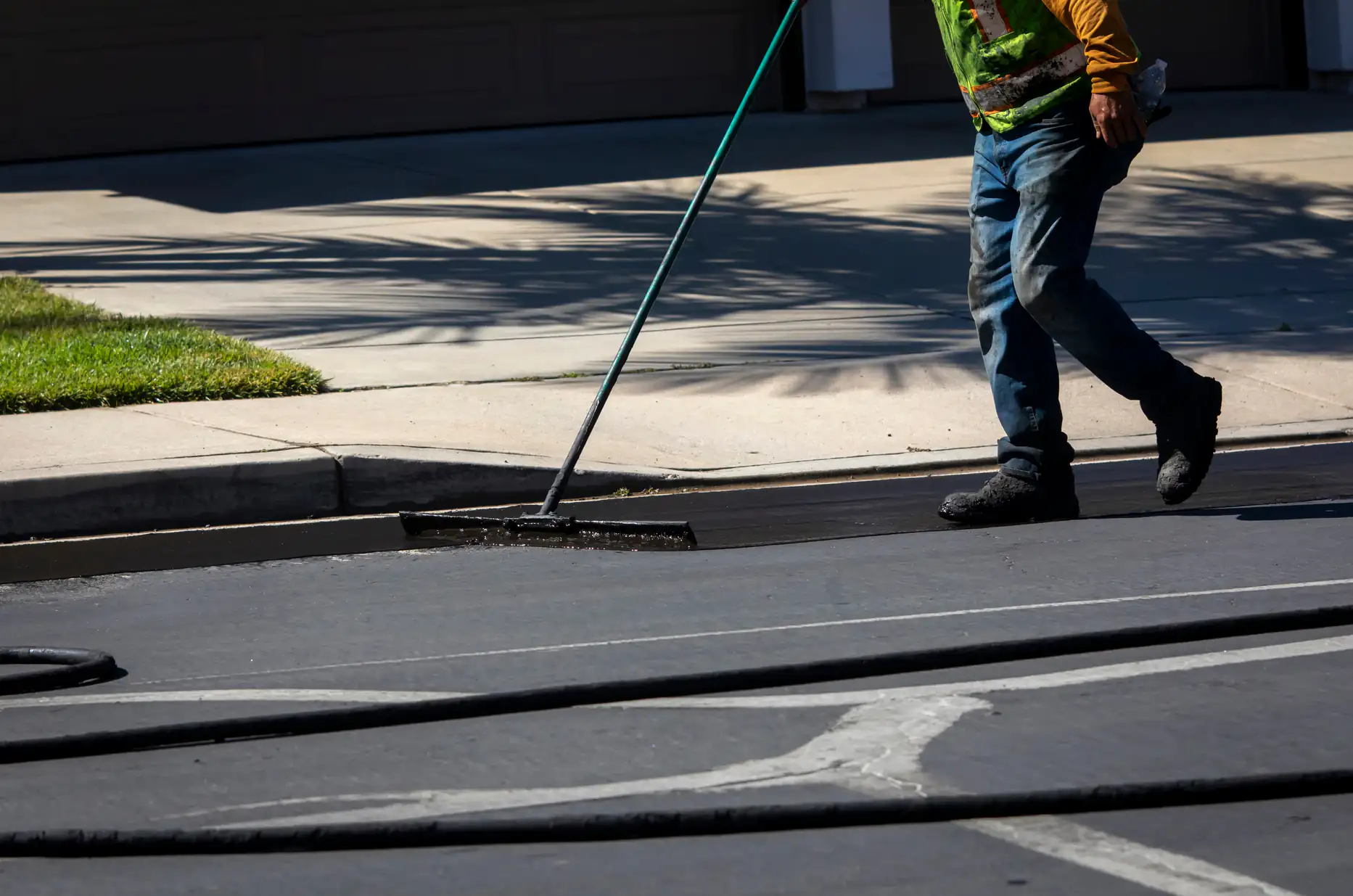
First, we inspect your driveway for existing damage. Small cracks get filled before we seal because sealcoating isn’t a crack filler—it’s a protective coating. If we find structural issues, we tell you before we start, not after.
Next, we clean the surface completely. Oil stains, dirt, debris, vegetation—everything comes off. Sealant won’t bond to a dirty surface, and we’re not going to waste your money on a job that fails in six months because someone skipped this step.
We apply professional-grade sealant in two thin coats, not one thick one. Thin coats cure properly and create a flexible, durable finish. Thick coats crack and peel. Temperature and humidity have to be right for application—we don’t force it just to stay on schedule.
You’ll need to stay off the driveway for 24-48 hours depending on weather conditions. We’ll tell you exactly when it’s safe to park on it again. Then you’re protected for the next 2-3 years before the next application.
Ready to get started?
Professional driveway sealcoating in Towaco means surface inspection, crack filling for anything under a quarter-inch, complete cleaning and debris removal, and two coats of commercial-grade sealant applied at the right temperature.
We’re not showing up with a bucket from the hardware store. We use high-grade materials designed for Morris County’s climate—products that stay flexible through temperature changes instead of turning brittle and cracking.
Fall is your best window for this work. Temperatures are moderate, conditions are typically dry, and the sealant has time to cure properly before winter stress begins. Spring sealing works too, but you’ve already taken a winter’s worth of damage by then.
The cost of asphalt sealing runs $490-$570 for most residential driveways in Towaco, with the full range from $160 for very small areas to $1,000 for larger or more damaged surfaces. That’s significantly less than the $3,000-$5,000 you’ll spend on major crack repairs or the full replacement cost when neglect catches up.
Your property value depends on curb appeal, and nothing kills curb appeal faster than a deteriorating driveway. Buyers see a cracked, faded driveway and immediately start negotiating down or walking away entirely.
Every 2-3 years is the standard recommendation for residential driveways in Morris County. Some homeowners push it to 3-4 years if their driveway doesn’t get heavy use, but you’re gambling with weather damage at that point.
New asphalt needs 6-12 months to cure before the first sealcoating. After that, you’re on the regular schedule. If you’re not sure when your driveway was last sealed, look at the color—faded gray instead of deep black means you’re overdue.
The 2-3 year schedule isn’t arbitrary. That’s how long the protective coating lasts under normal conditions before UV rays, rain, snow, and traffic wear it down enough that water can penetrate again. Miss that window and you’re back to unprotected asphalt taking damage.
Crack filling repairs existing damage. Sealcoating prevents future damage. You need both, but they’re not interchangeable.
Cracks wider than a quarter-inch need to be filled with rubberized crack filler before sealcoating happens. The filler is flexible and designed to move with temperature changes without breaking apart. Sealcoating goes over the entire surface after crack repairs are done.
If someone offers to “seal your driveway” without mentioning existing cracks, they’re either planning to fill them as part of the job (ask to confirm) or they’re going to seal right over them. Sealing over cracks without filling them first means those cracks will continue spreading under the sealant, and you’ve wasted your money.
You can buy sealant at any home improvement store and do it yourself. Whether you should depends on whether you want it done right.
DIY sealcoating usually means one thick coat instead of two thin ones, inadequate surface cleaning, and application in less-than-ideal weather conditions because you’re working around your schedule instead of the weather’s. The result looks fine for a few months, then starts failing.
Professional driveway sealing contractors have commercial-grade equipment for surface cleaning, proper mixing equipment for the sealant, and experience reading weather conditions. We know what temperature and humidity ranges work and which ones don’t. The cost difference between DIY and professional is a few hundred dollars—not enough to justify a job that fails early and needs to be redone.
Plan on 24-48 hours before you park on it, depending on temperature and humidity. Warmer, drier conditions mean faster curing. Cool or humid weather slows it down.
The surface might feel dry to the touch after 4-6 hours, but that doesn’t mean it’s cured. Parking on it too early leaves tire marks, and you can actually pull the sealant right off the asphalt in spots. Then you’ve got an uneven finish and reduced protection.
We’ll give you a specific timeframe based on the forecast when we finish the job. If conditions change and it takes longer than expected, we’ll let you know. Most homeowners in Towaco schedule sealcoating for a Thursday or Friday so they have the weekend for curing without needing their driveway for work commutes.
Sealcoating requires minimum temperatures of 50°F during application and for 24 hours afterward. Below that, the sealant won’t cure properly and you’ll end up with a soft, tacky surface that never fully hardens.
Fall is ideal in Morris County—September and October usually give you consistent temperatures in the 60s and 70s with lower humidity than summer. Spring works too, typically late April through May, but you’ve already taken winter damage by then.
Some contractors will try to seal driveways in marginal conditions because they need the work. That’s not doing you any favors. If we tell you it’s too cold or the forecast looks problematic, we’re protecting your investment, not trying to reschedule for convenience.
Water gets in. That’s the simple answer, and everything else follows from there.
Unsealed asphalt develops small cracks from UV exposure and normal wear. Water seeps into those cracks, freezes when temperatures drop, and expands with enough force to widen the cracks by 10% or more. The next thaw lets more water in deeper, and the cycle repeats all winter.
Within 2-3 years of skipping sealcoating, you’re looking at significant crack networks across your driveway. Within 5-7 years, you’ve got potholes and edge crumbling. At that point, you’re past preventive maintenance and into repair or replacement territory where costs jump from hundreds to thousands. The property value impact hits even sooner—buyers notice a deteriorating driveway immediately.