
Hear from Our Customers
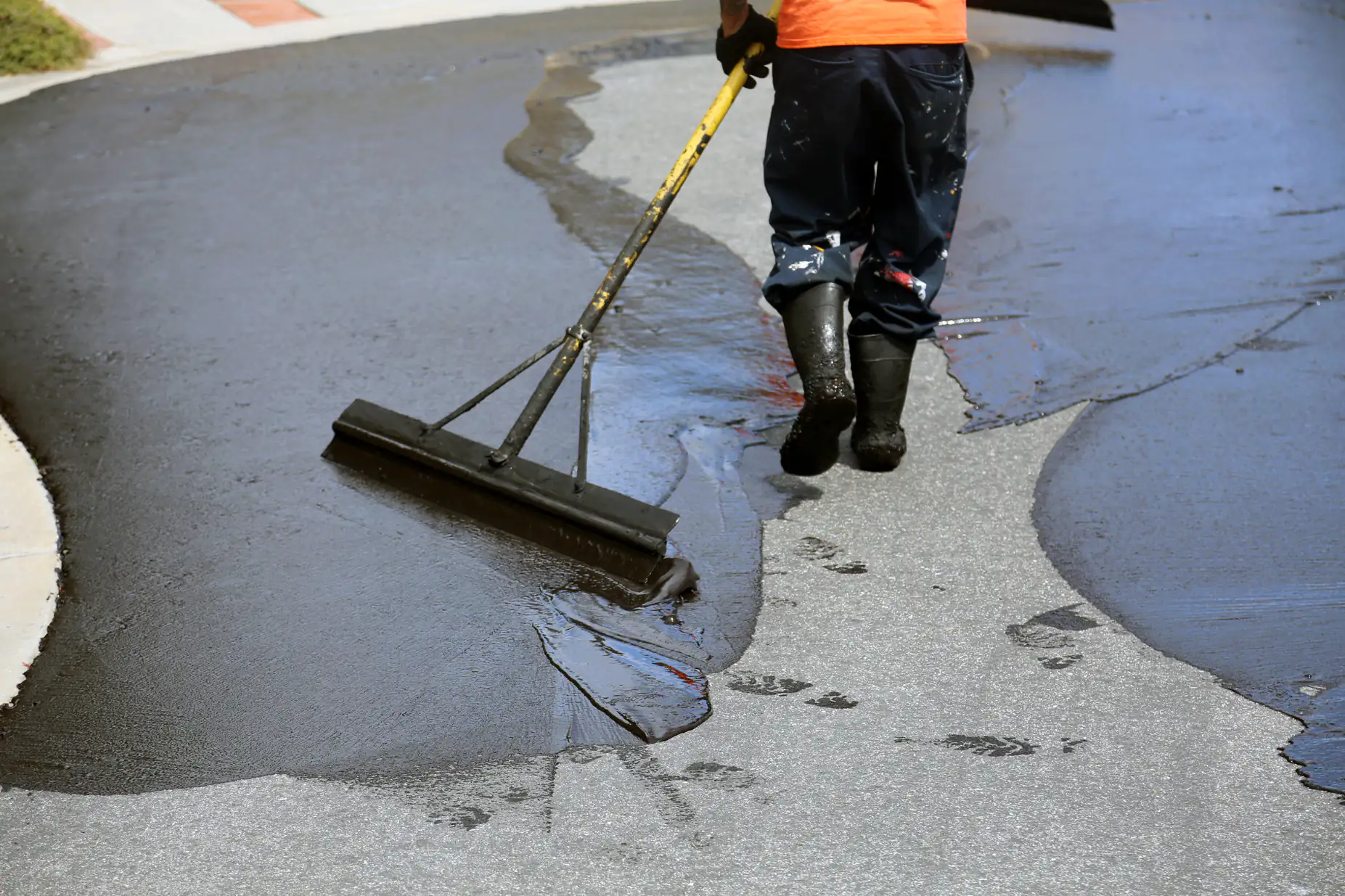
Every spring in Stanhope, you see it. Driveways that looked fine in October are suddenly cracked and pitted after another harsh winter. Those hairline fractures you ignored last fall become potholes by March, and what should’ve been a simple maintenance job turns into a full repaving project.
Here’s what most homeowners don’t realize until it’s too late: water gets into those small cracks, freezes, expands by 9%, and literally pushes your asphalt apart from below. Morris County sees 60 to 80 freeze-thaw cycles every winter. That’s 60 to 80 chances for minor damage to become major expense.
Professional asphalt driveway sealing stops that cycle before it starts. The rubberized sealant creates a waterproof barrier that flexes with temperature changes instead of cracking under pressure. You’re not just making your driveway look better—you’re adding 10+ years to its lifespan and avoiding a $5,000 replacement down the road.
We’ve been sealing and maintaining asphalt driveways across Stanhope, Hopatcong, Netcong, and the surrounding Morris County area for over two decades. That means we’ve seen what works and what fails when winter hits.
Most driveway sealing companies use whatever’s cheapest. We don’t. We use professional-grade asphalt emulsion sealers heated to the right temperature and applied at the right thickness because we know what Morris County weather does to shortcuts.
You’re not hiring a crew that just showed up with a truck. You’re working with contractors who understand local climate conditions, know which materials hold up to our winters, and have the equipment to do the job correctly the first time.
First, we inspect your driveway for cracks, potholes, and base damage. Any crack wider than a quarter-inch gets filled with hot-pour rubberized material heated to approximately 400 degrees. This creates a flexible, waterproof seal that moves with your asphalt through temperature swings instead of breaking apart.
Next, we clean the entire surface. Oil stains, dirt, vegetation—anything that would prevent proper adhesion gets removed. Most failed sealcoating jobs fail because this step gets rushed or skipped entirely.
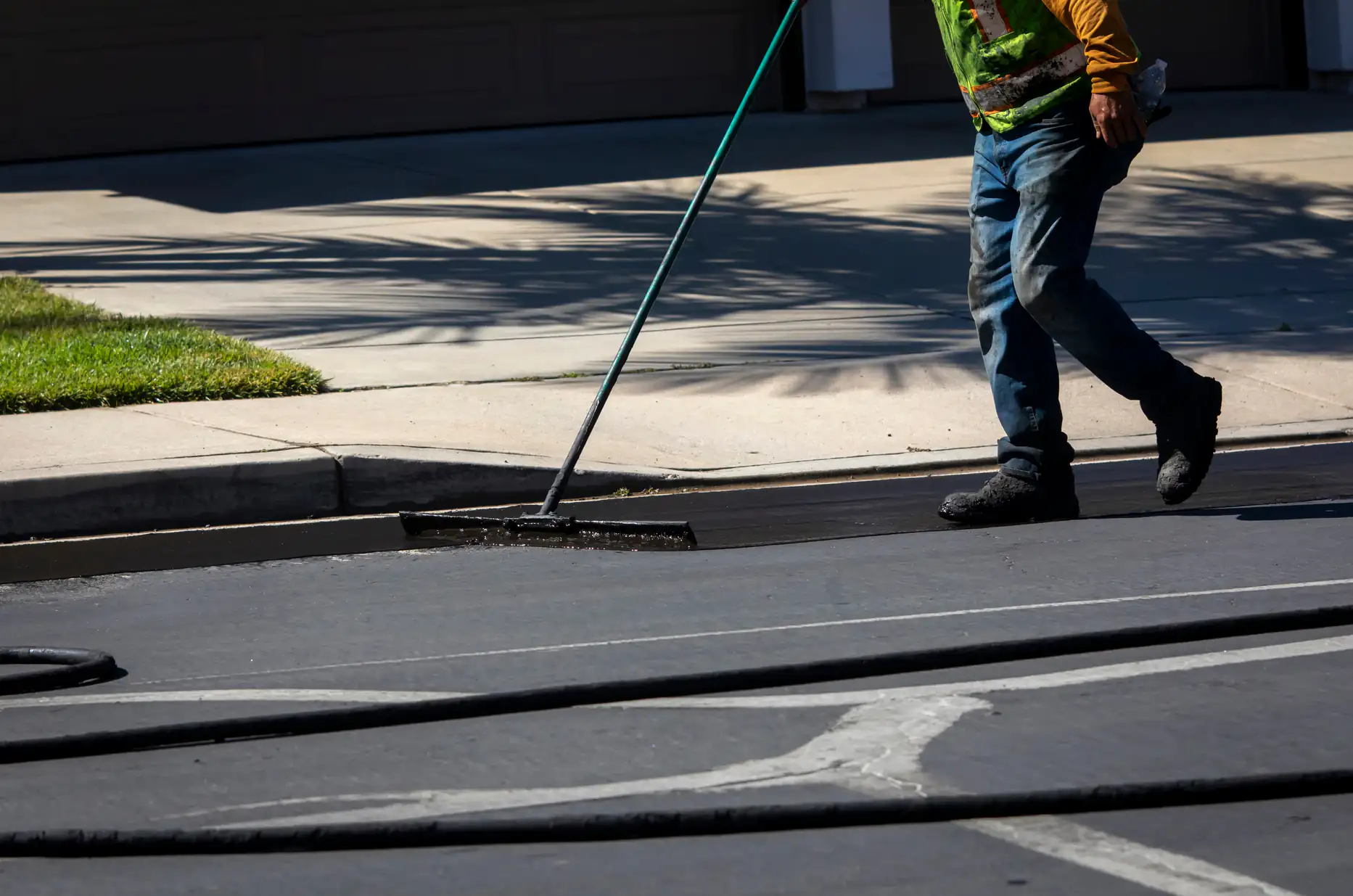
Then we apply two coats of commercial-grade asphalt emulsion sealer. Not the stuff you buy in buckets at the hardware store—professional material that actually protects against UV damage, gas and oil spills, and moisture penetration. The first coat soaks into the asphalt and restores flexibility. The second coat creates the protective barrier.
The whole process takes one to two days depending on driveway size and condition. You’ll need to stay off it for 24 to 48 hours while it cures. After that, you’ve got a driveway that’s protected for the next two to three years and looks like it was just installed.
Ready to get started?
Driveway sealcoating in Stanhope typically runs between 15 and 40 cents per square foot depending on current condition and size. A standard two-car driveway averages around $300 to $600 for complete crack filling and two-coat sealing. That’s significantly less than the $3,000 to $10,000 you’d spend on full replacement.
Here’s what that price includes: thorough crack filling with hot-pour rubberized material, complete surface cleaning and prep, two coats of professional-grade asphalt emulsion sealer, and proper curing time. We don’t use coal tar sealants—they’re restricted in many New Jersey municipalities due to environmental concerns and water contamination issues.
Timing matters more than most people think. Once temperatures drop below 50 degrees, sealers don’t cure properly. That means you’ve got a window from late spring through early fall to get this done. Wait too long and you’re stuck dealing with winter damage instead of preventing it.
The return on investment is straightforward. Sealed driveways last 25+ years instead of 15. They maintain better curb appeal, which according to the National Association of Realtors translates to about 7% higher property values. And you avoid the emergency repair calls that always seem to happen at the worst possible time.
Every two to three years for residential driveways in Morris County. That timeline assumes normal wear and proper installation. If your driveway sees heavier use—multiple vehicles, frequent turning, commercial equipment—you might need to reseal closer to every two years.
Here’s how to tell if you’re due: look at the color. Fresh asphalt is deep black. As sealant wears off, it fades to gray. Once you’re seeing more gray than black, you’re overdue. Check for small cracks too. If you’re seeing hairline fractures starting to form, seal before next winter or those cracks will turn into potholes.
The biggest mistake Stanhope homeowners make is waiting until damage is obvious. By then you’re paying for repairs plus sealing instead of just preventive maintenance. The two-to-three-year schedule keeps you ahead of problems instead of chasing them.
Materials and equipment. The buckets you buy at hardware stores contain thin, water-based sealer designed for small touch-ups. Professional sealcoating uses commercial-grade asphalt emulsion that’s significantly thicker and more durable.
We also heat the material to the right temperature and apply it at the correct thickness—usually two coats. DIY sealing typically goes on too thin in one coat, which means it wears off faster and doesn’t provide adequate protection. The crack filler is another major difference. Hot-pour rubberized material creates a waterproof seal that flexes with temperature changes. Cold-pour crack filler from a caulk gun doesn’t.
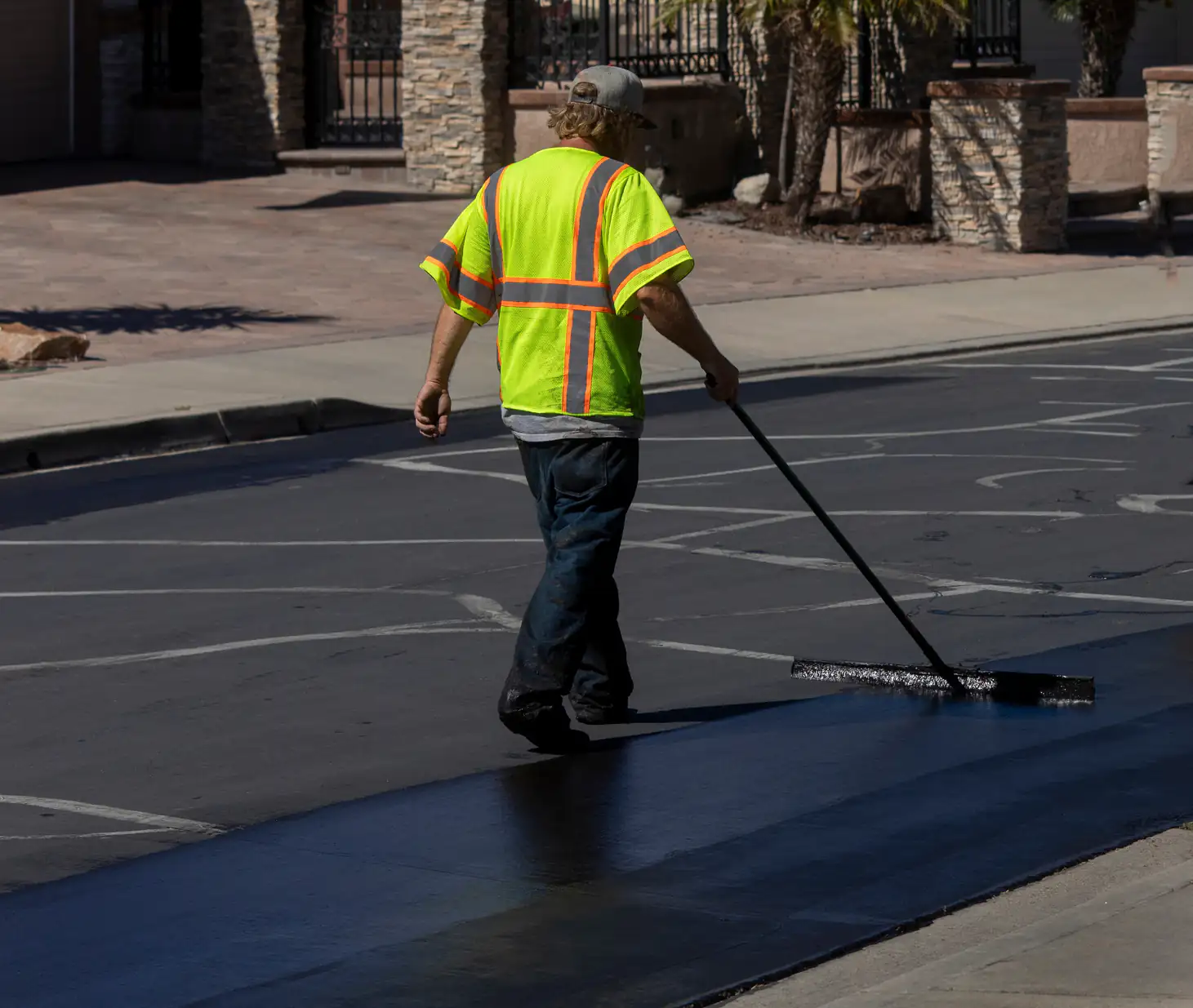
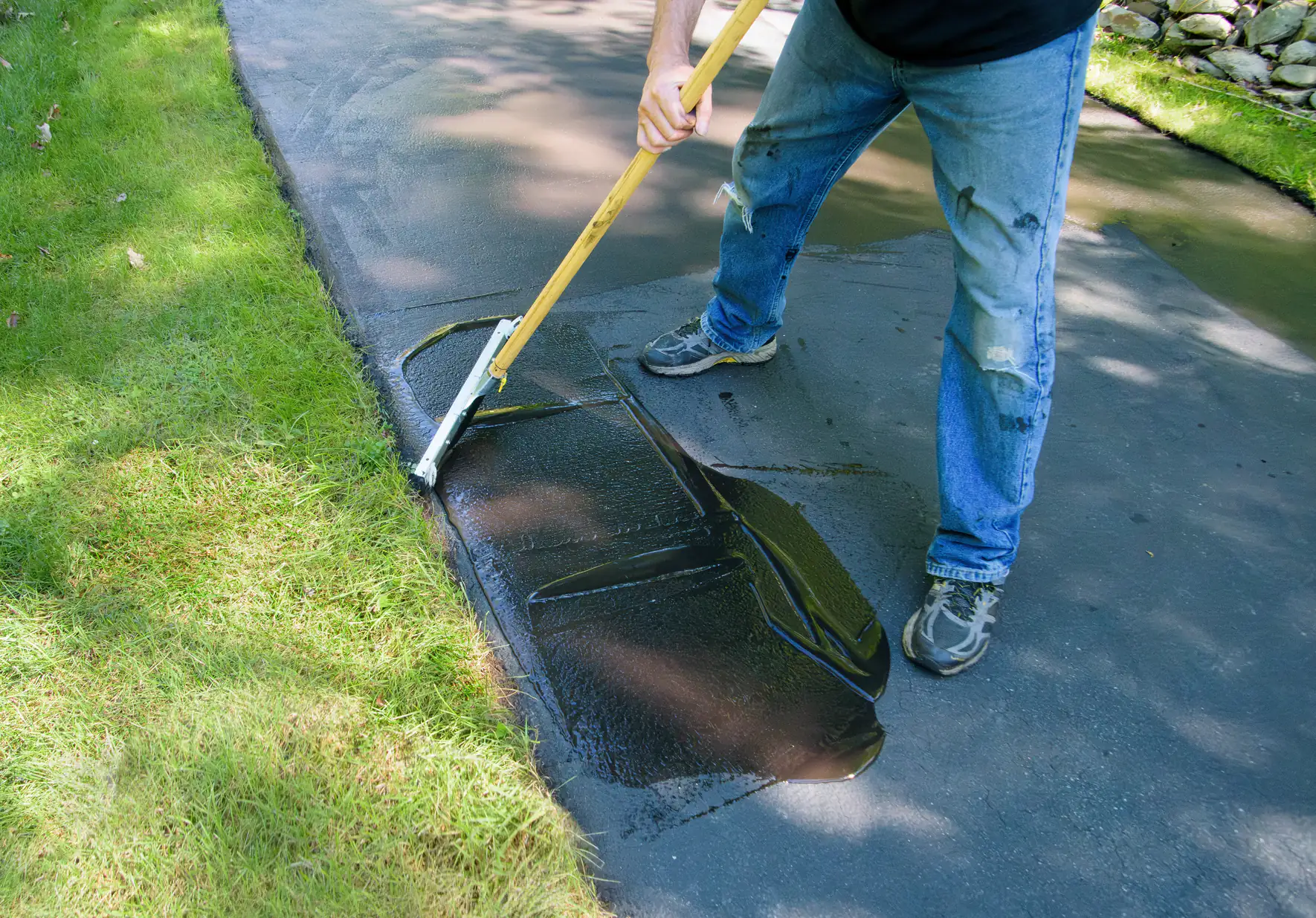
Equipment matters too. Professional squeegees and spray systems ensure even coverage without thin spots or pooling. Most homeowners end up with streaky application that looks bad and performs worse. If your driveway is in good shape and you’re just maintaining it, DIY might work. If you’ve got cracks, weather damage, or it’s been more than three years since the last seal, hire professionals.
Sealcoating prevents damage—it doesn’t repair structural problems. If you’ve got cracks, we fill them first with hot-pour rubberized material before applying sealer. That fixes the immediate issue and prevents water infiltration. But if the base underneath your asphalt is compromised, sealing won’t solve it.
Here’s the reality: a quarter-inch crack can be filled and sealed effectively. A two-inch pothole with base damage needs patching or replacement of that section. Sealcoating goes over the top of everything and protects what’s there. It can’t rebuild failed sections or fix drainage problems.
During the initial inspection, we’ll tell you what’s fixable with crack filling and sealing versus what needs more extensive repair. Most Stanhope driveways we see are in the preventive maintenance category—some minor cracking that gets filled, then sealed to prevent future damage. If your driveway has major structural issues, we’ll explain what actually needs to happen instead of selling you a sealcoating job that won’t solve the problem.
Late spring through early fall when temperatures stay consistently above 50 degrees. Sealers need warmth to cure properly. Too cold and they don’t bond to the asphalt or harden correctly. You end up with a sticky mess that tracks into your house and fails by the next season.
Most contractors in Morris County are busiest in late summer and early fall because homeowners finally realize winter is coming and they should’ve scheduled this months ago. If you book in May or June, you get better scheduling flexibility and aren’t rushing to beat the first freeze.
Weather matters beyond just temperature. We need at least 24 hours of dry conditions before application and 24 to 48 hours after for proper curing. If rain is in the forecast, we reschedule. A rushed job in bad conditions will fail faster than no sealing at all. Plan ahead, book early in the season, and give yourself buffer time in case weather doesn’t cooperate.
Application takes four to eight hours depending on driveway size and current condition. Crack filling and prep work happen first, then two coats of sealer with drying time between coats. The actual work day is usually one full day for standard residential driveways.
Curing time is where most people get impatient. You need to stay completely off the driveway for 24 to 48 hours. No foot traffic, no vehicles, nothing. The sealer needs time to harden and bond to the asphalt. Drive on it too soon and you’ll leave tire marks, track sealer everywhere, and compromise the protective barrier you just paid for.
After 48 hours, it’s safe for normal use. Avoid sharp turns and heavy loads for the first week if possible—the sealer continues to harden over the first several days. We’ll give you specific timing based on weather conditions and the products we use. If you absolutely need access to your driveway during this time, tell us before we start so we can plan the job in sections.
Both, and the financial impact is measurable. The National Association of Realtors reports that homes with strong curb appeal sell for about 7% more than comparable properties with poor exterior appearance. A well-maintained driveway is one of the first things potential buyers notice.
Beyond resale value, you’re protecting a significant investment. Replacing an asphalt driveway in Morris County costs $3,000 to $10,000 depending on size and site conditions. Regular sealcoating extends the life of your existing driveway from 15 years to 25+ years. That’s a decade of avoided replacement costs for a maintenance expense that runs a few hundred dollars every two to three years.
There’s also the liability factor. Deteriorated driveways with cracks and potholes create trip hazards. If someone falls on your property, you’re potentially liable for damages. Proper maintenance reduces that risk. Think of sealcoating like changing the oil in your car—it’s not exciting, but it prevents expensive failures and keeps everything running longer than it would otherwise.